










Executive Overview
In a seismic shift that challenges the traditional private equity buyout model dominant in the high-end travel sector, elite luxury tour operator Black Tomato has transitioned the vast majority of its enterprise into the hands of those who build its itineraries every day. According to regulatory filings and an exclusive executive interview, the company has sold 75% of its business into an Employee Ownership Trust (EOT).
The transaction, which was finalized in early July and formally communicated to the company’s global workforce on a Monday morning, marks a watershed moment for independent luxury travel. While the structural majority now belongs to the EOT—designed to hold shares on behalf of eligible employees—the company’s original founders have strategically retained a 25% minority stake. This is structured through a newly minted class of ‘B’ shares, detailed in the updated 2026 articles of association recently published on Companies House. Crucially, the founders have also retained definitive decision-making power, ensuring continuity of vision as the company steps into its next operational chapter.
Advisory powerhouse Grant Thornton spearheaded the complex transaction, orchestrating an independent valuation of the high-net-worth travel firm before the ink dried in early July. While co-founder Tom Marchant declined to publicly disclose the precise financial valuation of the deal, the move signals a mature evolution for a brand that has spent nearly two decades curating ultra-exclusive, bespoke experiences for discerning travelers, high-net-worth individuals, and corporate leaders alike.
This structural overhaul places Black Tomato firmly within a growing, yet still select, group of travel enterprises choosing employee stewardship over external trade sales or private equity monetization. By embedding a sense of collective ownership into the corporate DNA, Black Tomato is attempting to future-proof its creative culture, secure institutional longevity, and insulate its bespoke approach from the homogenization that often plagues acquired boutique travel brands.
Detailed Chronology: From Concept to Corporate Transformation
The journey toward employee ownership was not a sudden pivot, but rather the culmination of years of strategic deliberation regarding succession, legacy, and long-term corporate governance.
The Genesis of the Plan
Discussions surrounding the structural future of Black Tomato began in earnest as the travel industry rebounded from the unprecedented disruptions of the global pandemic. Having successfully navigated the post-pandemic travel boom, the leadership team found themselves evaluating the classic dilemma facing successful independent operators: how to institutionalize success without selling out to a faceless conglomerate or private equity firm that might dilute the brand’s hyper-focused, creative ethos.
Advisory firm Grant Thornton was brought on board to assess various corporate architectures. Following comprehensive consultations, the EOT model emerged as the optimal vehicle. Unlike a Management Buyout (MBO) financed by debt or a private equity acquisition that typically demands aggressive 3-to-5-year exit timelines, an EOT offers a patient, stable mechanism for transferring ownership while keeping the business anchored to its foundational values.

The Valuation and Structuring Phase
During the first half of the year, Grant Thornton conducted a rigorous, independent valuation of Black Tomato. This valuation was critical to establishing a fair market price for the 75% stake that would be acquired by the trust, funded via future company profits.
Simultaneously, legal and corporate restructuring experts drafted the necessary amendments to the company’s governance framework. This resulted in the 2026 articles of association filed with Companies House, which formally established the new ‘B’ share class reserved for the founders, guaranteeing them a minority equity stake alongside continued strategic voting power.
Completion and Disclosure
The transaction officially reached completion in early July, executing quietly behind the scenes while internal communications were meticulously prepared. On a Monday morning, employees across Black Tomato’s offices—spanning London, New York, and beyond—gathered for a landmark company-wide announcement.
For a workforce accustomed to the traditional corporate hierarchy of travel agencies and tour operators, the news that they were now indirect co-owners of a premier luxury travel brand represented a profound culture shift. The disclosure to the wider market followed shortly after, positioning Black Tomato as a trailblazer in alternative corporate structuring within the luxury travel vertical.
Supporting Context & Metrics: The Mechanics of an EOT in Luxury Travel
To understand the magnitude of Black Tomato’s transition, one must examine both the mechanics of Employee Ownership Trusts and the broader macroeconomic climate of the luxury travel sector.
How the Black Tomato EOT Functions
An Employee Ownership Trust is a form of indirect employee ownership where a trust holds a controlling stake in a company on behalf of all eligible employees.
- The Financial Model: The EOT typically acquires its shares from the founding shareholders using funds generated by the business itself over time (funded out of future trading profits). Employees do not need to buy shares out of their own pockets; rather, they benefit from the long-term growth of the company.
- Cultural Alignment: The primary objective of an EOT is to foster deep engagement. Because the employees share in the financial upside and the governance ethos, productivity, retention, and service excellence naturally align with individual incentives.
- Stability and Independence: By ring-fencing 75% of the equity within a trust, Black Tomato has effectively made itself immune to hostile takeovers or short-termist corporate raiding.
Navigating the M&A Landscape of High-End Travel
The luxury travel sector has been a primary target for private equity and large travel conglomerates over the past decade. Mega-consolidation has seen independent agencies swallowed up by larger platforms seeking scale and technological synergy.
However, scale in mass-market travel often comes at the expense of the bespoke, hyper-personalized touch that defines true luxury. Black Tomato’s decision to pursue an EOT rather than a trade sale is a direct rebuttal to this trend. It demonstrates that independent operators can choose a sophisticated corporate structure that preserves their independence while rewarding the workforce responsible for client satisfaction.
| Dimension | Traditional Private Equity Buyout | Employee Ownership Trust (Black Tomato Model) |
|---|---|---|
| Time Horizon | Short-term (3–5 year exit strategy) | Long-term, generational sustainability |
| Culture Impact | Often disruptive, risk of cost-cutting | Enhances engagement, protects brand ethos |
| Control | Transferred entirely to investors/new owners | Retained by founders (25%) & trust for employees |
| Employee Benefit | Rare, restricted to senior executive stock options | Broad-based participation in future financial upside |
Official Statements and Leadership Vision
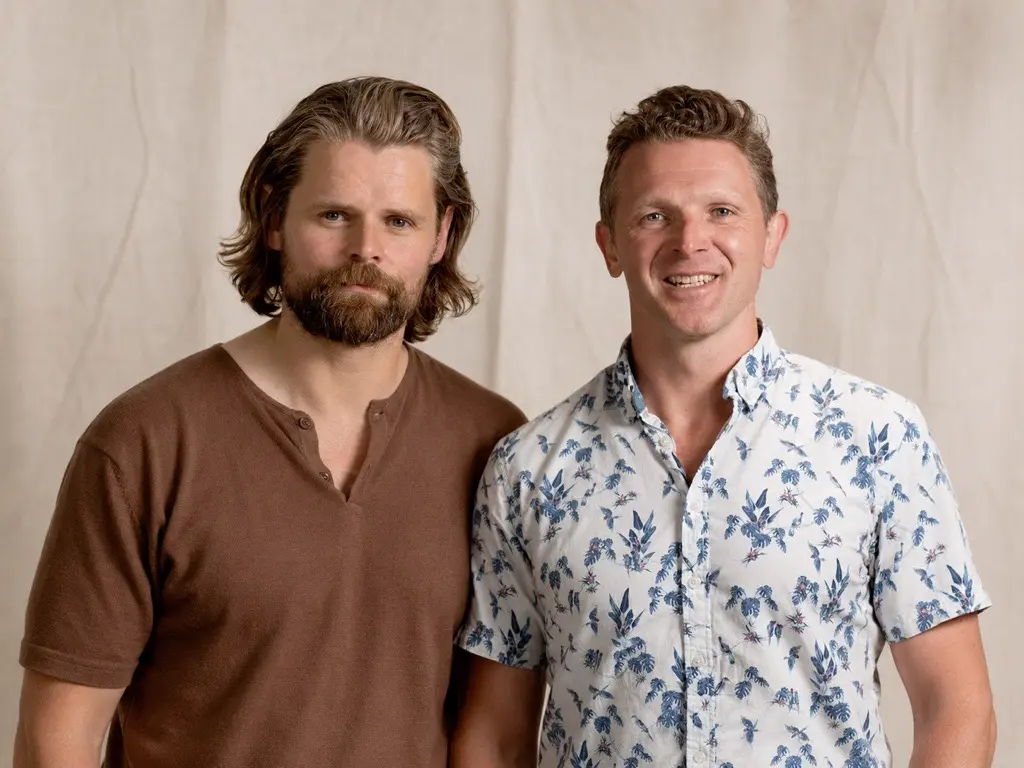
The transition is deeply personal for the leadership team, who have spent nearly twenty years building Black Tomato into a globally recognized symbol of experiential luxury. In an exclusive interview with industry publication Skift, co-founder Tom Marchant articulated the strategic philosophy underpinning the move.
"Establishing the Black Tomato Employee Ownership Trust was a smart way of evolving the business while giving staff confidence that its spirit and its approach will be protected—and also offering potential upside down the line."
— Tom Marchant, Co-Founder, Black Tomato
Marchant’s remarks emphasize a dual mandate: safeguarding the intangible cultural assets of the company—its meticulous attention to detail, innovative itinerary design, and uncompromising standard of client care—while providing tangible economic incentives for the staff.
By retaining a 25% minority stake through the new B share class and maintaining executive decision-making power, the founders have ensured that there is no leadership vacuum. The day-to-day operations will continue under the seasoned guidance that built the brand, while the EOT acts as a stabilizing anchor that binds the entire organization to a shared destiny.
Industry analysts have praised this hybrid approach. While pure EOTs sometimes face criticism for diluting executive agility, Black Tomato’s retention of founder voting power strikes a pragmatic balance. It combines the entrepreneurial drive of visionary leadership with the collective loyalty of an empowered employee base.
Future Outlook: What Lies Ahead for Black Tomato
With the EOT now fully operational and the workforce aligned under a renewed sense of ownership, Black Tomato is poised to accelerate its strategic roadmap for the remainder of the decade and beyond.
1. Enhanced Talent Acquisition and Retention
In the hyper-competitive luxury travel advisory space, retaining top-tier talent is one of the most significant operational challenges. Elite designers, concierges, and destination specialists are the lifeblood of companies like Black Tomato. By offering a structural stake in the company’s long-term financial success, Black Tomato instantly elevates its employer value proposition, making it a magnet for the industry’s brightest minds.
2. Doubling Down on Bespoke Innovation
With internal friction minimized and employee engagement maximized, the company is uniquely positioned to push the boundaries of experiential travel. Whether pioneering remote expeditions, deepening commitments to sustainable tourism, or expanding its footprint in high-net-worth hubs across North America and Europe, Black Tomato’s staff-driven culture will act as a wellspring for creative itinerary design.
3. Setting a Precedent for the Industry
Perhaps the most lasting impact of Black Tomato’s 75% EOT transition will be its ripple effect across the broader travel economy. As independent luxury operators grapple with succession planning and the pressures of industry consolidation, Black Tomato has provided a blueprint for how to transition ownership gracefully. It proves that businesses built on human creativity and personal relationships can choose a path of institutional permanence over quick financial exits.
As Black Tomato enters this exciting new chapter, the message to the luxury travel market is clear: the future of high-end travel belongs not just to those who own the capital, but to those who live, breathe, and deliver the journey every single day.