






Executive Overview
As the devastating war with Iran drags on, threatening to destabilize the Middle East and plunge the global economy into a severe energy-driven inflationary spiral, an extraordinary and highly hazardous maritime operation has emerged in the shadows of the Persian Gulf. Middle Eastern oil producers are quietly executing a massive, coordinated "dark shuttle" trade. By ferrying vast volumes of crude through the heavily contested Strait of Hormuz undetected and transferring the cargoes onto waiting international tankers in the Gulf of Oman, these exporters have managed to maintain a steady flow of oil to global markets.
This clandestine logistical network has defied the expectations of energy analysts, who had braced for catastrophic supply disruptions at the onset of the war. Instead of the $150-per-barrel price spikes predicted by some of Wall Street’s most pessimistic forecasters, Brent crude futures have remained remarkably stable, trading between $80 and $90 a barrel for much of August 2026.
However, this stability comes at a immense cost. The operations are conducted under constant threat of military hostility, missile strikes, and drone attacks. While Western naval forces provide limited defensive cover, the merchant seafarers navigating these waters are facing unprecedented perils. This investigative report details the mechanics of this parallel shipping economy, the regional actors driving it, the quantitative reality of the flows, and the mounting environmental and human toll of keeping the world’s energy channels open.
The Mechanics of the "Dark Shuttle" Trade
The Strait of Hormuz, a narrow waterway separating the Persian Gulf from the Gulf of Oman, is widely considered the world’s most vital energy chokepoint. In peacetime, it accommodates the transit of roughly 20 percent of global petroleum consumption. In wartime, it has become a gauntlet of drone swarms, sea mines, and anti-ship missiles.
To bypass this threat, regional state-owned oil companies and independent shipping operators have institutionalized a highly sophisticated "shuttle" system. Rather than sending large, vulnerable Very Large Crude Carriers (VLCCs) directly into the Persian Gulf to load at terminal ports, exporters utilize smaller, highly agile shuttle tankers.
[Persian Gulf Ports]
       │ (Loading onto agile shuttle tankers)
       ▼
[Strait of Hormuz]  ◄─── Transponders OFF (AIS Dark Transit)
       │
       ▼
[Gulf of Oman]      ◄─── Ship-to-Ship (STS) Transfer
       │
       ├───► [Waiting VLCCs / International Tankers] ───► Global Markets
The operational blueprint of a typical dark shuttle run involves several coordinated steps:
- The Stealth Transit: Shuttle tankers load crude at terminals in the UAE, Iraq, Kuwait, or Saudi Arabia. Before departing, crews deactivate their Automatic Identification System (AIS) transponders—a practice known as "going dark."
- The Hormuz Gauntlet: Navigating without electronic signatures, these vessels slip through the Strait of Hormuz under the cover of night, often hugging territorial waters or utilizing physical coastal topography to evade radar detection and target-acquisition systems.
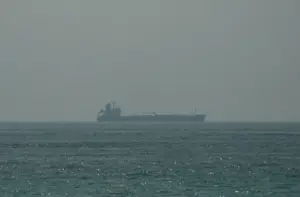
- The Ship-to-Ship (STS) Transfer: Once clear of the Strait and safely positioned in the deeper, open waters of the Gulf of Oman, the shuttle tankers rendezvous with massive international VLCCs. Under silent running conditions, the crude is pumped from the shuttle vessels to the larger tankers.
- Dispersal: The international tankers, having never technically entered the high-risk Persian Gulf zone, turn their transponders back on and set sail for refineries in Asia, Europe, and North America, keeping their insurance policies intact.
This parallel shipping economy is vividly captured by satellite intelligence. European Union Sentinel-1 radar satellite imagery reveals a massive congregation of vessels floating off the coast of Oman. In January, before the system reached its current scale, roughly 40 ships were anchored in these waters. By mid-August 2026, that number has surged to approximately 150 vessels—ranging from giant supertankers to bulk carriers—all waiting in a holding pattern for clandestine ship-to-ship transfers.
Detailed Chronology of Escalation and Adaptation
The emergence of the dark shuttle network is the result of months of tactical adaptation by regional producers, vessel operators, and international navies.
2026 CHRONOLOGY OF MARITIME ADAPTATION
┌────────────────────────────────────────────────────────────────────────┐
│ JANUARY: War outbreaks. Standard shipping halts. Brent spikes.          │
├────────────────────────────────────────────────────────────────────────┤
│ MARCH: First primitive "dark" runs attempted by UAE & Iraqi vessels.   │
├────────────────────────────────────────────────────────────────────────┤
│ MAY: Western coalition establishes limited defensive corridors.        │
├────────────────────────────────────────────────────────────────────────┤
│ JUNE: Saudi Arabia pivots, shifting focus away from Red Sea routes.    │
├────────────────────────────────────────────────────────────────────────┤
│ JULY: Satellite data reveals over 100 ships waiting off Oman's coast.  │
├────────────────────────────────────────────────────────────────────────┤
│ AUGUST: Shuttles reach record volumes; Brent stabilized at $80-$90.    │
└────────────────────────────────────────────────────────────────────────┘- January 2026: Following the outbreak of the war, international commercial shipping lines immediately suspend voyages through the Strait of Hormuz. War risk insurance premiums skyrocket, making standard transits economically unfeasible. Brent crude surges toward $110 a barrel.
- March 2026: In response to the freeze, state-owned entities, led by the United Arab Emirates’ Abu Dhabi National Oil Co. (ADNOC), experiment with localized shuttle runs. Early operations are highly disorganized, relying on a patchwork of older, "shadow fleet" tankers willing to operate without standard insurance.
- May 2026: As regional tensions deepen, Western coalition forces establish limited defensive corridors. While these naval escorts deter some state-sponsored harassment, they are insufficient to protect the volume of traffic required to feed global demand. The "dark transit" protocol becomes the industry standard for Persian Gulf exporters.
- June–July 2026: The network expands rapidly. Iraq, Kuwait, and Qatar integrate their export logistics into the shuttle system. The concentration of vessels off the coast of Oman swells from dozens to over a hundred, transforming the Gulf of Oman into a massive, floating offshore oil terminal.
- August 2026: Despite a series of highly publicized attacks on commercial vessels, the system achieves maximum operational efficiency. US Energy Secretary Chris Wright shocks the market by revealing that nearly half of pre-war volumes are successfully transiting the Strait, cementing the dark shuttle as a critical pillar of global economic stability.
Quantitative Assessment: Volume, Flow, and Pricing Metrics
Quantifying the exact volume of oil moving through this shadow network is an ongoing challenge for maritime intelligence firms, commodity traders, and energy analysts. Because the vessels operate with deactivated transponders, standard tracking algorithms are ineffective.
However, data compiled by Bloomberg, Kpler, and Vortexa, alongside recent disclosures from government officials, paint a picture of a massive supply operation. Prior to the war, approximately 20 million barrels of oil per day (mb/d) transited the Strait of Hormuz. In the immediate aftermath of the outbreak of hostilities, analysts feared that flow would drop to near zero.
According to industry insiders speaking on the condition of anonymity, the dark shuttle network is currently moving volumes significantly higher than the conservative market estimate of 4 million barrels per day. This assessment was reinforced by US Energy Secretary Chris Wright, who stated that approximately 9 million barrels per day had successfully transited the Strait over a seven-day period in early August—nearly 45 percent of pre-war capacity.
| Metric / Timeframe | Pre-War Baseline | Post-Outbreak Panic Est. | August 2026 Actual (Est.) |
|---|---|---|---|
| Hormuz Daily Volume | ~20 million b/d | < 2 million b/d | 9 million b/d |
| Brent Crude Price | $70 – $75 / bbl | $150+ / bbl (projected) | $80 – $90 / bbl |
| Oman Anchor Count | ~40 vessels | N/A | ~150 vessels |
| ADNOC Cumulative Sales | N/A | N/A | 135 million barrels |
This unexpected volume has acted as a powerful buffer for global markets. Combined with strategic petroleum reserve releases from OECD nations, domestic pipeline workarounds, and a minor reduction in global demand, the dark shuttle has successfully kept Brent crude futures within a manageable $80 to $90 range.
Country-by-Country Operational Breakdown
REGIONAL SHUTTLE CONTRIBUTIONS
┌─────────────────────────────────────────────────────────────┐
│ UAE (ADNOC): Lead pioneer, 135M barrels sold via shuttles   │
├─────────────────────────────────────────────────────────────┤
│ SAUDI ARABIA: 16 supertankers off Oman; Ras Tanura active   │
├─────────────────────────────────────────────────────────────┤
│ IRAQ: Utilizing third-party shuttles to bypass bottlenecks │
├─────────────────────────────────────────────────────────────┤
│ QATAR & KUWAIT: Steady flow of LNG/Crude via dark transits  │
└─────────────────────────────────────────────────────────────┘
United Arab Emirates (ADNOC)
The UAE has been the operational pioneer of the dark shuttle trade. Operating through its state-owned giant, Abu Dhabi National Oil Co. (ADNOC), the emirate has maintained an aggressive export posture. ADNOC has successfully sold and delivered approximately 135 million barrels of crude to international buyers since the conflict began, issuing another major round of spot sales in mid-August.
This resilience has come at a severe cost: ADNOC confirmed that 23 of its vessels have been targeted in the Strait since the start of the war, resulting in one fatality and 20 injuries among crew members.
Saudi Arabia (Aramco & Bahri)
Historically, Saudi Arabia has relied on its East-West Pipeline to transport crude from its Eastern Province to the Red Sea port of Yanbu, bypassing the Strait of Hormuz entirely. However, with Yemen’s Iran-backed Houthi militants actively targeting shipping in the Red Sea, the kingdom has been forced to re-evaluate its logistics.
There are now clear signs that Saudi Arabia is quietly entering the dark shuttle trade. Last week, two supertankers were spotted loading at the massive Ras Tanura export hub in the Persian Gulf. Concurrently, the state-owned national shipping company, Bahri, has begun positioning its fleet off the coast of Oman. Currently, 16 Saudi supertankers—with a collective capacity of 38 million barrels—are anchored off Oman, with three more en route.
Iraq, Qatar, and Kuwait
For landlocked or geographically restricted Gulf producers, the dark shuttle network is an absolute existential necessity. Iraq, which lacks significant pipeline alternatives to the Mediterranean or Red Sea, has struggled the most to move its Basra Light and Medium grades. Recently, a handful of independent international trading houses have stepped in, purchasing Iraqi barrels at a steep discount and utilizing their own dark shuttles to move the crude out of the Gulf.
Similarly, Qatar has quietly integrated its liquefied natural gas (LNG) and condensate carriers into the shuttle system, while Kuwait continues to route its crude through the same channels, utilizing specialized insurers willing to underwrite the high-risk voyages.
Official Statements and Industry Perspectives
The geopolitical sensitivity of these operations has kept most state officials and corporate executives silent. However, the rare public statements issued by key players highlight the high-stakes nature of the trade.
In an official statement to Bloomberg, ADNOC articulated the industry’s determination to maintain operations despite the physical dangers to its workforce:
"Despite the repeated targeting of our vessels, we are determined to continue meeting our responsibility to safely deliver energy to global markets and to meet our customer commitments and needs as much as possible. Like other energy companies in the region, we continue to bear the direct consequences of unprovoked attacks on our people, our ships, and our facilities—attacks that place employees, contractors, and seafarers at increased risk while disrupting critical energy flows."
— Abu Dhabi National Oil Co. (ADNOC)
ADNOC further emphasized the global macroeconomic stakes involved in the security of these shipping lanes:
"An attack on the infrastructure that keeps energy flowing is not simply an attack on a company. The disruption in the Strait of Hormuz is inflicting profound damage far beyond those directly impacted in this region."
From the logistics side, shipping executives describe the trade as an unavoidable reality of modern wartime energy markets. Pankaj Khanna, Chief Executive Officer of Heidmar Maritime Holdings Corp., commented on the necessity of the shadow operations:
"It’s a dark trade. It’s the only option right now as not all owners are willing to take the risk."
Geopolitical Risks, Environmental Fallout, and Future Outlook
While the dark shuttle network has successfully prevented a global economic crisis, it operates on a razor’s edge. The risks—human, geopolitical, and environmental—are compounding daily.
The Human and Geopolitical Cost
The human toll is mounting. Seafarers navigating the Strait of Hormuz are operating under wartime conditions without the standard protections of international maritime law. Because ships are transiting with their transponders deactivated, search-and-rescue operations in the event of a strike are exceptionally difficult to coordinate.
Furthermore, the clandestine nature of the trade increases the risk of miscalculation. Western naval forces, task-organized to protect commercial shipping, must constantly distinguish between civilian shuttle tankers running dark and hostile military assets, creating a highly volatile operational environment.
The Environmental Ticking Time Bomb
The environmental consequences of this shadow trade are already beginning to manifest. Ship-to-ship transfers of crude oil are delicate operations under the best of circumstances, typically requiring calm waters, specialized equipment, and highly trained harbor masters. Conducting these transfers at scale in the open ocean with minimal lighting and communications is a recipe for ecological disaster.
ENVIRONMENTAL & OPERATIONAL RISKS
┌────────────────────────────────────────────────────────┐
│ AIS DEACTIVATION: Collisions in high-traffic corridors │
├────────────────────────────────────────────────────────┤
│ STS TRANSFERS: High-seas spills during cargo pumping   │
├────────────────────────────────────────────────────────┤
│ UNINSURED VESSELS: Shadow fleet lacks salvage backup   │
└────────────────────────────────────────────────────────┘
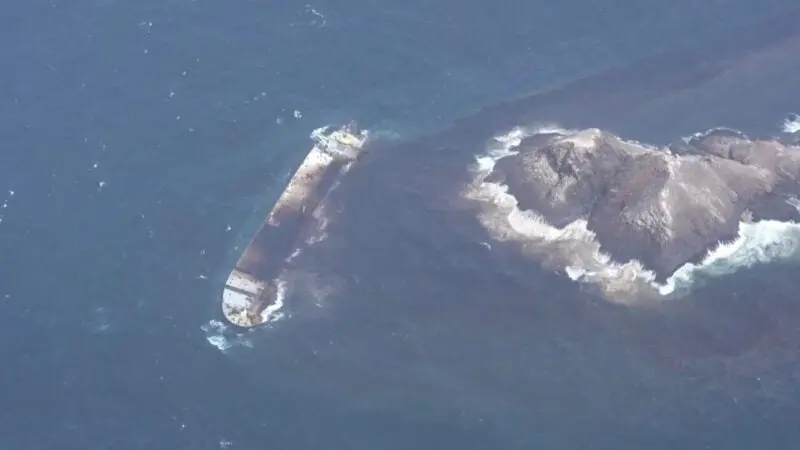
Satellite imagery recently detected a massive oil spill drifting through the Gulf of Oman. Because of the secretive nature of the transits in the area, authorities have been unable to identify the source vessel or determine the exact volume of the discharge.
Making matters worse, many of the tankers participating in the shuttle are older "shadow fleet" vessels that lack comprehensive protection and indemnity (P&I) insurance. If one of these vessels were to suffer a catastrophic hull failure or be sunk in an attack, there would be no clear legal framework or financial backing to fund a major salvage and clean-up operation, risking an ecological disaster that could rival the Exxon Valdez.
Future Outlook
As long as the war with Iran continues, the dark shuttle network will remain the indispensable circulatory system of the global energy market. However, industry experts warn that the current equilibrium is fragile. A single high-casualty attack on a major supertanker off the coast of Oman, or a catastrophic oil spill closing down the offshore transfer zones, could bring the entire system to a grinding halt.
For now, the global economy owes its stable inflation rates and $85 oil to a fleet of silent ships, operating in the dark, crewed by mariners risking their lives to bridge one of the most dangerous gaps on earth.