










Executive Overview
For decades, the invisible plumbing of the global travel industry operated on a simple, immutable law of gravity: scale wins. In the world of business-to-business (B2B) hotel wholesaling—the opaque, high-volume ecosystem of "bed banks" that aggregate rooms and sell them on to tour operators, airlines, and online travel agencies (OTAs)—market dominance was historically synonymous with pricing power. If you controlled the inventory, you controlled the economics.
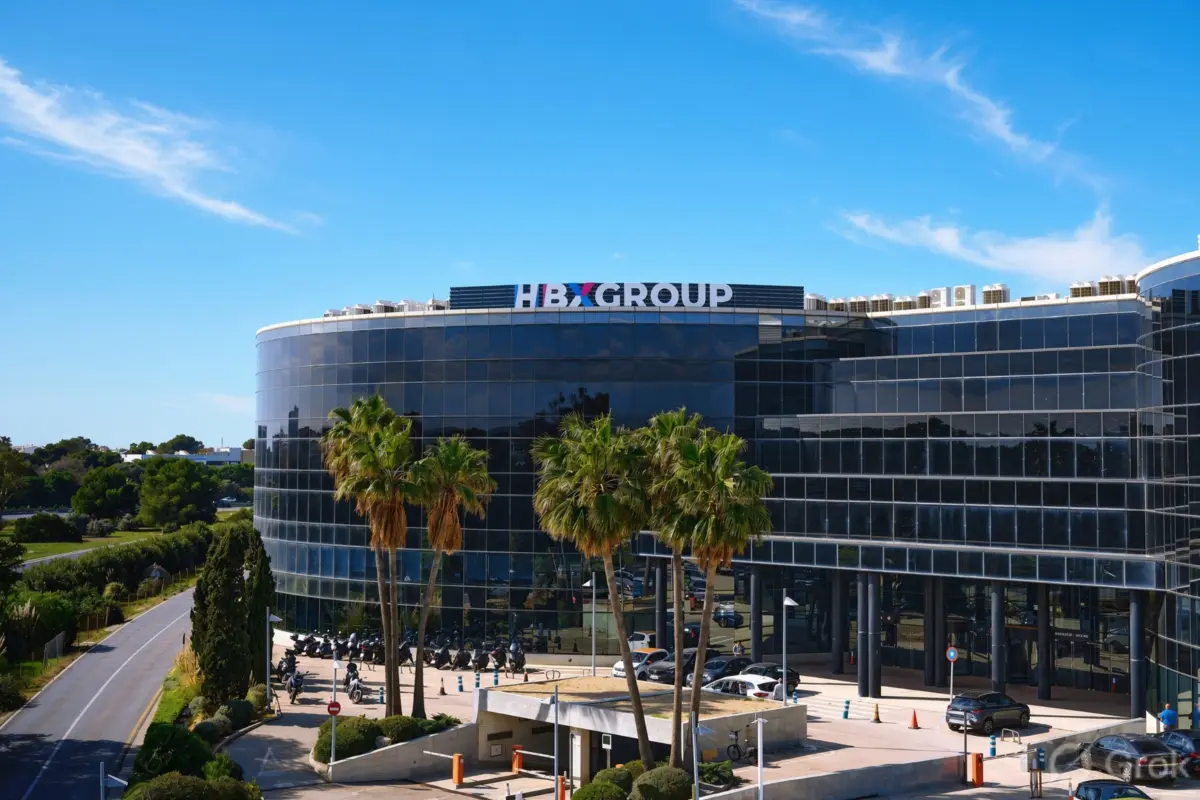
No company embodied this philosophy more completely than Hotelbeds. Over the years, through aggressive consolidation, strategic acquisitions, and relentless expansion, it became the undisputed heavyweight champion of independent bed banks. Today, operating under its parent umbrella as HBX Group, it remains the largest independent hotel wholesaler on earth. By all traditional metrics, the machine is still roaring. On a constant-currency basis, HBX expects to process more than €1 billion in additional travel volume this year.
Yet, beneath the impressive veneer of top-line growth lies a sobering financial reality that has sent shockwaves through travel-tech investment circles. Despite handling billions of euros more in transactions, HBX expects to generate no more revenue and less adjusted EBITDA than it did during the previous fiscal year. Wall Street has taken swift, merciless notice: the company’s shares have plummeted nearly a third from their February 2025 initial public offering (IPO) price of €11.50.
When pressed by analysts and industry publications regarding this glaring divergence between operational volume and financial return, HBX’s leadership offered a concise, telling explanation: "The main change versus our original assumptions has been the greater impact of take-rate dynamics."
This is not a story of a business in decline, nor is it a cautionary tale of flagging consumer demand. HBX is securing the bookings. It is processing the transactions. It is capturing the market share. The paradox—and the crisis—lies in the fact that it is retaining a rapidly shrinking slice of every euro that passes through its digital tollbooths. As take-rate compression bites deep into its margins, HBX Group’s current trajectory serves as a stark warning to the entire intermediary economy: in the modern travel landscape, sheer size is no longer an adequate shield against margin erosion.
Detailed Chronology: From Private Equity Darling to Public Market Reality
To understand how the world’s premier bed bank arrived at this existential crossroads, one must trace the corporate evolution of Hotelbeds from its days as a corporate subsidiary to its tumultuous baptism in the public equities market.
The Genesis and Ascent of Hotelbeds
Long before it was known as HBX Group, Hotelbeds operated as the accommodation and destination management arm of Europe’s sprawling TUI Group. Recognizing that its core tour-operating business required a separate, hyper-scalable technological engine to distribute excess hotel inventory globally, TUI spun off Hotelbeds.

In 2016, a consortium led by private equity heavyweights Cinven and Canada Pension Plan Investment Board (CPPIB) acquired Hotelbeds for roughly €1.2 billion. Under private equity stewardship, the playbook was clear: consolidate, digitize, and conquer. Hotelbeds went on a buying spree, swallowing up key rivals like Tourico Holidays and GTA (Bedbank), effectively consolidating the fragmented global B2B accommodation market. By forging direct, API-driven connections with hundreds of thousands of hotels and matching them with thousands of demand partners, Hotelbeds established a virtual monopoly on independent wholesale distribution.
The Rebranding and the Pivot to Ecosystems
As the post-pandemic travel boom roared back to life in 2022 and 2023, leadership sought to reposition the company away from the legacy, somewhat dated moniker of a mere "bed bank." The enterprise rebranded as HBX Group, signaling a strategic pivot toward a broader travel technology ecosystem. Beyond just beds, the company began bundling car rentals, transfers, excursions, and ticketing into its B2B marketplace, positioning itself as a comprehensive travel-tech infrastructure provider.
Parallel to this operational expansion, its private equity backers began plotting an exit strategy. The travel technology sector was commanding rich multiples, and public markets were seemingly hungry for cash-generative, asset-light tech platforms that sat at the center of the global tourism rebound.
The February 2025 IPO and Immediate Headwinds
In February 2025, HBX Group officially made its debut on the public markets, pricing its shares at €11.50 each. The IPO was heralded as a milestone for European travel tech—a rare, large-scale listing that promised investors direct exposure to the unglamorous yet lucrative plumbing of global tourism.
However, the euphoria was short-lived. Almost immediately, the harsh realities of public reporting exposed a widening chasm between management’s pre-IPO growth projections and the actual mechanics of their revenue collection. As quarterly disclosures rolled in, investors realized that while gross booking values (GBV) were trending upward, the net margins were quietly eroding. The stock price began an unyielding downward slide, culminating in its current valuation—down nearly 33% from its debut price.
The timeline reveals a classic private-to-public disconnect: private equity models had historically focused on top-line consolidation and synergy realization, while public market analysts immediately homed in on the structural deterioration of unit economics caused by compressed take rates.
Supporting Context & Metrics: Decoding the "Take-Rate" Trap
To fully grasp the magnitude of HBX Group’s current predicament, one must decode the financial anatomy of a bed bank and examine the structural forces eroding its profit margins.
What is a Bed Bank, Exactly?
For the uninitiated traveler, the term "bed bank" sounds like a financial institution, but it is actually a crucial B2B commercial intermediary.
Hotels frequently find themselves with empty rooms—perishing inventory that yields zero revenue if left unoccupied. Rather than marketing these rooms individually to the public (which can dilute their brand or undercut direct-booking pricing integrity), hotels sell blocks of rooms at deep, confidential discounts to bed banks.
Bed banks aggregate these discounted rooms into vast, digital catalogues. They then sell this inventory to downstream travel sellers: regional tour operators, corporate travel management companies (TMCS), airline vacation packages, and smaller online travel agencies that lack the technology or scale to negotiate directly with tens of thousands of global hoteliers.
The Economics of Wholesaling: Gross vs. Net
For decades, the business model was remarkably lucrative. A bed bank would acquire a room at a heavily discounted wholesale rate, mark it up slightly, and pass it on to a distributor, capturing a healthy commission—known as the take rate—on every transaction.
Mathematically, a bed bank’s revenue ($R$) is a function of Gross Booking Value ($GBV$) multiplied by its take rate ($TR$):
$$textRevenue = textGBV times textTR$$
For years, bed banks enjoyed relatively stable take rates because they held a near-monopoly on the distribution technology connecting remote hoteliers to fragmented global buyers. If a regional OTA wanted access to inventory in Southeast Asia or the Mediterranean, going through a dominant bed bank was practically the only viable option.
Why the Take Rate is Collapsing
Today, that technological moat has sprung leaks from multiple directions. HBX Group’s admission regarding "take-rate dynamics" points to several structural shifts in the global travel marketplace:
- Direct Connectivity and API Integration: Major hotel chains (Marriott, Hilton, IHG) have invested heavily in proprietary technology, making it easier for smaller B2B buyers to connect directly with hotel property management systems (PMS), bypassing wholesalers entirely.
- Intense B2B Competition: Even among independent bed banks, competition has fierce pricing pressures. Wholesalers are increasingly undercutting one another on commissions to secure exclusive or high-volume distribution contracts with major OTAs and airlines.
- The Rise of Super-Apps and Alternative Channels: Modern travel distribution is no longer neatly divided between retail and wholesale. Mega-platforms and super-apps command immense customer acquisition power, shifting bargaining leverage away from bed banks and back toward the demand generators, who now demand higher commission splits.
- Inflation and Hotel Margin Squeezes: Following post-pandemic price surges, hoteliers face their own rising operational costs (labor, energy, financing). Eager to protect their own net RevPAR (Revenue Per Available Room), hotels are pushing back against wholesaler markups, forcing bed banks to compress their take rates just to keep inventory competitively priced.
The mathematical consequence of this environment is brutal. If HBX Group’s GBV grows by €1 billion, but its average take rate drops by even a fraction of a percentage point, the absolute revenue gained can be completely neutralized—while the operational costs of processing billions of additional transactions continue to rise. Hence: more volume, flat revenue, declining EBITDA.
Official Statements and Industry Analysis
The tension between volume growth and margin compression has ignited fierce debate across the travel-tech and financial analyst communities.
When questioned directly by Skift about the stark variance between its initial business plan and its current financial realities, HBX Group’s corporate communications team issued a measured, transparent acknowledgment of the market shift:
"The main change versus our original assumptions has been the greater impact of take-rate dynamics."
Industry analysts have been quick to dissect this admission. Speaking on condition of anonymity, a London-based travel technology equity analyst noted:
"When a company of HBX’s scale tells you that take-rate dynamics are beating their models, they are admitting that the pricing power has shifted. For years, bed banks operated under the assumption that volume built an unassailable moat. But if you are forced to surrender a larger share of your margin just to maintain that volume, you are running faster on a treadmill that is steadily accelerating under your feet."
Furthermore, industry veterans point out that HBX Group’s diversification efforts—pushing into non-accommodation verticals like car rentals and destination activities—were designed, in part, to offset this exact vulnerability. By offering a broader "ecosystem" of travel products, management hoped to cross-sell higher-margin services that could cushion the blow of compressing hotel take rates. However, the latest financial disclosures indicate that these ancillary streams have not yet scaled quickly enough to plug the widening hole left by core accommodation margin erosion.
Future Outlook: Can the Giant Adapt?
As HBX Group navigates the remainder of its fiscal year as a publicly traded entity, the central question facing leadership is whether scale can be successfully weaponized in a new way to restore profitability, or if the fundamental business model of the independent bed bank requires radical reinvention.
Strategic Imperatives for HBX Group
- Value-Add Services Over Pure Distribution: To defend its take rates, HBX must evolve from a low-margin transactional switchboard into an indispensable software-as-a-service (SaaS) partner for hoteliers. By offering advanced revenue management tools, real-time market intelligence, and AI-driven dynamic pricing directly to independent hotels, HBX can justify retaining a higher take rate based on value delivered, rather than mere inventory access.
- Rationalizing Volume: Management may need to make the painful decision to walk away from low-margin, high-volume contracts that contribute to top-line vanity metrics while dragging down EBITDA. Prioritizing margin health over sheer gross booking value will be essential to winning back skittish public market investors.
- Deepening Ecosystem Integration: The push into ancillary travel services must accelerate. Wholesaling a hotel room yields a razor-thin margin; bundling that room with exclusive destination experiences, seamless transit, and tailored travel insurance creates a bundled basket of services where overall take rates can be successfully defended.
The Broader Implications for Travel Intermediaries
HBX Group’s struggles serve as a bellwether for the entire B2B travel sector. The era of unthinking, volume-chasing intermediation is drawing to a close. As artificial intelligence, direct-connect APIs, and hyper-consolidated travel ecosystems reshape how inventory moves from supplier to consumer, middlemen must prove their economic utility beyond simple aggregation.
For HBX Group, the road ahead is steep. The stock market has signaled its verdict on the "scale-at-all-costs" thesis. To prove the skeptics wrong, HBX must demonstrate that the world’s largest bed bank can transform its immense plumbing into an intelligent, high-margin engine of innovation—before take-rate compression completely drains the economic lifeblood from its balance sheet.