










Executive Overview
French hospitality giant Accor is actively recalibrating its expansion strategy in the burgeoning Indian market following the collapse of its high-profile partnership talks with budget-hotel network Treebo Hospitality Ventures. Despite the setback, the multinational lodging operator remains aggressively committed to scaling its presence across the South Asian subcontinent, banking on a mix of targeted acquisitions, greenfield developments, and alternative local alliances.
In an exclusive interview with industry publication Skift, Duncan O’Rourke, Accor’s Chief Executive Officer for the Middle East, Africa, and Asia Pacific (MEAAP) region, confirmed that the group’s ambitions in India have not been dampened by the aborted Treebo deal. Instead, the French powerhouse is viewing the development as a momentary detour rather than a roadblock. Accor is now systematically evaluating a slate of alternative joint ventures, asset-light management agreements, and corporate acquisitions to propel its footprint—particularly for mid-scale and economy brands like Ibis and Mercure—into India’s fast-growing Tier-2 and Tier-3 urban centers.
This strategic pivot comes at a critical juncture for the global hospitality sector. India is currently experiencing an unprecedented domestic and international travel boom, underpinned by rapid infrastructural investments, rising disposable incomes, and an expanding middle class. For international hotel operators like Accor, Marriott, Hilton, and IHG, securing a dominant footprint in the Indian domestic travel market is no longer merely an option; it is an existential imperative for long-term regional dominance. However, navigating the highly fragmented, price-sensitive, and operationally complex Indian hospitality landscape requires local dexterity—a reality that makes Accor’s next strategic move in the region intensely scrutinized by industry analysts.
Detailed Chronology: The Rise and Fall of the Accor-Treebo Partnership
To understand Accor’s current strategic crossroads, one must examine the trajectory of its relationship with Treebo Hospitality Ventures, a prominent player in India’s technology-enabled budget hotel segment.
The Strategic Rationale for the Alliance
The proposed partnership between Accor and Treebo was conceptualized as a masterclass in market synergy. For Accor, scaling an economy or mid-scale hotel footprint across secondary and tertiary Indian cities through traditional organic development is a notoriously slow and capital-intensive process. Land acquisition costs, regulatory hurdles, and local compliance issues frequently slow down greenfield projects.
Treebo, backed by prominent venture capital firms including Sequoia Capital (now Peak XV Partners) and Matrix Partners, had built a robust technological backbone and a vast network of franchised budget properties across India. By partnering with Treebo, Accor intended to fast-track the expansion of its internationally recognized economy and mid-scale brands—such as Ibis and Mercure—by integrating hundreds of existing Treebo-affiliated properties into its global distribution, loyalty, and management ecosystem. This arrangement would have instantly vaulted Accor into the upper echelons of India’s domestic budget and mid-tier lodging segments, providing immediate scale and geographic diversification.
The Breakdown and Mutual Dissolution
Negotiations between the two entities spanned months, with executives on both sides working out the intricate framework required to marry an international institutional giant with a nimble, tech-first Indian startup. However, as discussions progressed into advanced due diligence and structural alignment, insurmountable hurdles emerged.

While neither Accor nor Treebo has publicly detailed every friction point, industry insiders point to classic structural roadblocks inherent in cross-border hospitality tie-ups: valuation discrepancies, divergent long-term strategic visions, operational integration challenges regarding quality control standards, and complex governance structures.
Ultimately, both parties mutually agreed to walk away from the negotiating table. The deal was called off, leaving a noticeable strategic void in Accor’s immediate roadmap for Indian market penetration. Rather than dragging out a compromised negotiation, Accor leadership made the executive decision to pull the plug, preserving operational agility and capital for alternative opportunities.
Supporting Context & Metrics: The High-Stakes Indian Hospitality Landscape
Accor’s urgency to establish scale in India is driven by hard macroeconomic data and an explosive resurgence in post-pandemic travel demand across the subcontinent.
The Macroeconomic Case for India
India is currently the fastest-growing major economy in the world, a status reflected directly in its aviation and tourism sectors. According to data from the Ministry of Tourism and industry trackers like HVS Anarock, domestic air passenger traffic has shattered pre-pandemic records, with domestic carriers continuously placing historic aircraft orders to meet soaring demand.
Key metrics highlighting the allure of the Indian hospitality market include:
- Undersupplied Market: Despite rapid growth, India remains vastly undersupplied in branded hotel rooms compared to markets like China, the United States, or even smaller Southeast Asian nations. India possesses fewer branded hotel rooms than a single major city like New York or London, distributed across a population of over 1.4 billion people.
- The Rise of Tier-2 and Tier-3 Cities: While gateway cities (Mumbai, New Delhi, Bengaluru) remain lucrative, the engine of future hospitality growth lies in secondary and tertiary cities (such as Jaipur, Pune, Ahmedabad, Kochi, and Indore). Infrastructure developments, including regional airports under the government’s UDAN scheme, have connected remote economic hubs to major metropolitan centers, unleashing a wave of domestic business and leisure travel.
- The Shift Toward Branded Intermediation: Indian consumers and independent hotel owners are increasingly migrating away from unorganized, standalone accommodations toward branded chains that promise standardized hygiene, reliable technology, and robust loyalty programs.
Accor’s Current Footprint in India
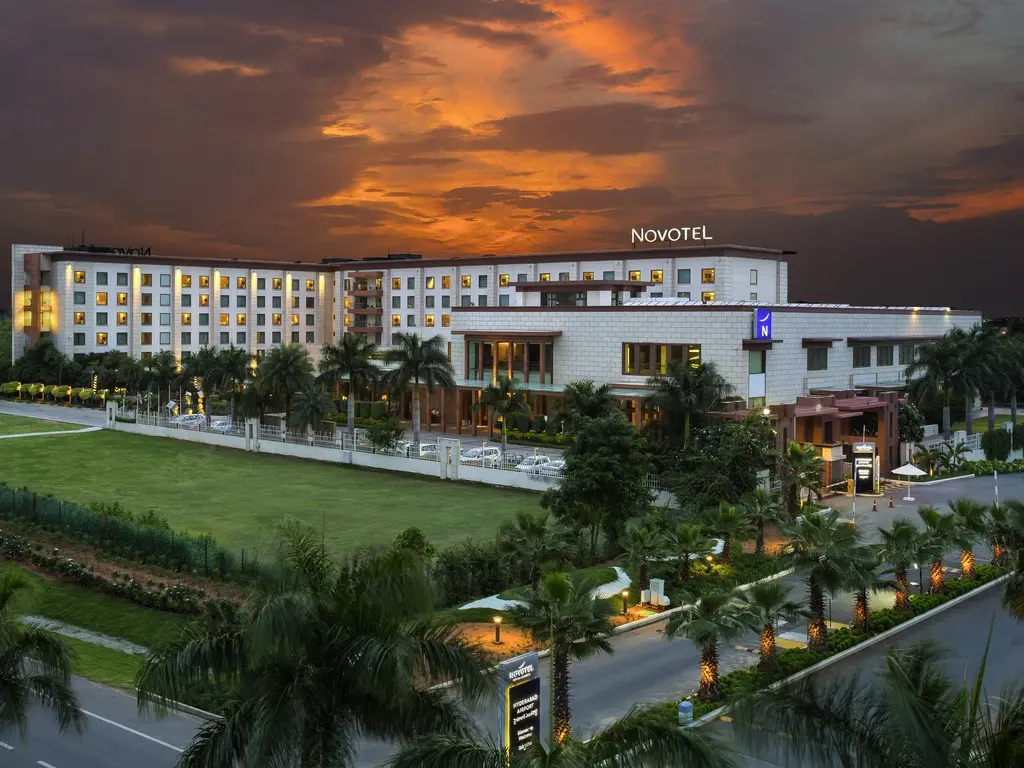
Accor is not a newcomer to India. The group has maintained a physical presence in the country for years, anchored primarily by its successful Ibis brand (which has cultivated a reputation for consistency among business travelers) alongside upscale and luxury properties under brands like Novotel, Mercure, Grand Mercure, Pullman, and Fairmont.
However, Accor’s historical footprint has leaned heavily toward upper-midscale and upscale segments in major metropolitan business hubs. To capture the massive wave of domestic middle-class consumption, the group urgently needs a robust portfolio of economy and mid-market properties spread across the length and breadth of the country—the exact strategic gap that the Treebo partnership was designed to fill.
Official Statements and Leadership Vision
In his candid conversation with Skift, Duncan O’Rourke articulated a resilient, entrepreneurial ethos that defines Accor’s corporate culture under global CEO Sébastien Bazin. Far from lamenting the failed Treebo transaction, O’Rourke signaled an immediate return to the drawing board with an aggressive appetite for growth.
“Our history has always been entrepreneurial. We like to do acquisitions, we like to grow,” O’Rourke stated plainly. “We’re not going to stop because this didn’t work out.”
When pressed on whether Accor’s appetite for partnerships in India remains intact following the Treebo fallout, O’Rourke’s response was unambiguous, emphasizing that strategic alliances and inorganic growth are core pillars of Accor’s global playbook, rather than isolated regional tactics.
“We are, we always do. But not only in India, everywhere,” he affirmed, underlining the group’s decentralized, opportunistic approach to global expansion.
This leadership stance reflects Accor’s broader global strategy of asset-light transformation. Over the past decade, Accor has systematically spun off its real estate asset ownership (via HotelInvest/AccorInvest) to focus entirely on hotel management, franchising, digital services, and brand building. Consequently, deploying capital in India will likely not take the form of heavy real estate purchases, but rather corporate mergers, brand acquisitions, master franchise agreements, and strategic equity investments in regional hospitality platforms that possess pre-existing scale and localized operational expertise.
Future Outlook: What Lies Ahead for Accor in India
As Accor regroups following the conclusion of the Treebo chapters, industry analysts are closely watching to see which direction the French hospitality giant will pivot next. Several distinct pathways are available to O’Rourke and his regional executive team:
1. Pursuing Alternative Domestic Aggregators
The budget and mid-scale hotel aggregation space in India remains active, featuring several regional players, tech-enabled property management startups, and localized chains that are eager to partner with global distribution powerhouses. While replicating the exact scale of Treebo in a single transaction may be difficult, Accor could pursue smaller, highly targeted acquisitions or form strategic distribution alliances with regional hotel networks in specific high-growth geographic clusters (such as South or West India).
2. Doubling Down on Organic and Management-Contract Growth
Accor may accelerate its traditional growth levers by aggressively courting independent property developers and asset owners across Tier-2 and Tier-3 cities. By offering flexible management contracts and leveraging the immense pull of its ALL (Accor Live Limitless) loyalty program—which boasts tens of millions of members globally—Accor can convince local owners to convert their unbranded or competing franchise properties into Ibis or Mercure flagships.
3. Joint Ventures and Multi-Brand Master Franchising
Another viable pathway involves structuring joint ventures with well-capitalized Indian real estate development conglomerates. Indian developers often possess land banks and capital but lack specialized hospitality operational expertise. Partnering with a domestic real estate titan allows Accor to scale rapidly while insulating itself from localized regulatory and development risks.
4. Leveraging the Luxury and Lifestyle Segments
While economy expansion is critical, Accor continues to see stellar performance in its premium, luxury, and lifestyle portfolios in India (such as Fairmont and Raffles). The group may choose to concurrently fortify its high-end positioning while quietly building out its mid-scale infrastructure, ensuring a balanced portfolio that captures both the rising middle class and the exploding luxury leisure segment.
Conclusion
The collapse of the Treebo Hospitality Ventures deal is undoubtedly a temporary speed bump for Accor in India, but it is far from the end of the road. Backed by leadership that views inorganic expansion as part of its corporate DNA, Accor is actively scanning the horizon for new partners, acquisition targets, and innovative operating models. As India solidifies its position as one of the world’s most dynamic travel markets, Accor’s next strategic maneuver in the region will be a definitive test of adaptability, resilience, and long-term vision.