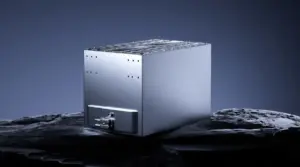
For years, the Lone Star State’s electricity infrastructure has been a frequent punching bag for national media, synonymous with sudden catastrophic failures, political posturing, and grid vulnerability. Built as an intentional "island" to bypass federal oversight, the Electric Reliability Council of Texas (ERCOT) grid has long operated without the safety net of neighboring interstate power-sharing networks. That structural isolation turned disastrous during Winter Storm Uri in 2021, cementing a public narrative of perennial grid instability.
Yet, a profound structural transformation has quietly flipped the script. Despite a complex regulatory environment and federal headwinds facing the wind energy sector, a powerful combination of utility-scale solar and advanced Battery Energy Storage Systems (BESS) is rapidly dominating new capacity additions across the United States—with Texas leading the charge.
The proof is in the data. Following a historically punishing summer season that pushed electricity demand past an unprecedented 91 gigawatts (GW), ERCOT achieved what would have been unthinkable just three years prior: it sailed through the peak cooling months without issuing a single "Conservation Appeal."
Far from relying on emergency consumer cutbacks to prevent rolling blackouts, grid operators are increasingly leaning on a decentralized web of renewable generation, utility-scale batteries, and hyper-scalable Virtual Power Plants (VPPs). This technological evolution is not only stabilizing the grid but is also exerting downward pressure on wholesale energy prices, proving that the future of grid reliability is decentralized, clean, and increasingly driven by market-backed innovation.
Detailed Chronology: From Crisis to Resilience
To understand how Texas achieved this operational milestone, one must examine the evolutionary pressures placed upon ERCOT over the past three decades.
The 1990s: Building the Island
In the late 1990s, Texas lawmakers made a fateful regulatory decision to "island" the state’s electricity grid. By severing high-voltage synchronous ties with the Eastern and Western Interconnections, Texas successfully avoided federal oversight by the Federal Energy Regulatory Commission (FERC). However, this administrative victory came with a heavy operational penalty: in the event of severe weather emergencies, extreme heatwaves, or generation shortfalls, Texas could not import emergency power from neighboring states.
The 2000s–2020s: The Scramble for Capacity
Because of this isolation, ERCOT was forced to aggressively chase every available in-state generation resource. Throughout the early 2000s, this meant relying heavily on conventional fossil fuel assets. However, as the engineering and economics of wind turbines, solar panels, and lithium-ion batteries matured, developers began deploying renewables at a staggering scale.
Texas quickly staked out its claim as a renewable energy titan, neck-and-neck with California and Florida for the #1 solar installation spot nationwide, all while maintaining its historic dominance in wind power.
Yet, rapid growth brought growing pains. Between 2008 and 2022, ERCOT issued nearly 50 "Conservation Appeals"—official desperate pleas urging ratepayers to throttle back their electricity use during late afternoon and early evening demand spikes to avert controlled outages. The crisis hit a modern peak in August 2023, when extreme, prolonged heatwaves forced ERCOT to issue six separate Conservation Appeals in a single week.
2023–2026: The Storage Pivot
The turning point arrived not through the construction of massive new fossil-fuel peaker plants, but through the rapid deployment of BESS technology. According to data analyzed by Heatmap News, the grid dynamic shifted dramatically between the summer of 2023 and the summer of 2026.
During the peak usage periods of 2023—when wind and solar combined accounted for roughly 20% of the Texas fuel mix—wholesale electricity prices averaged a punishing $85 per megawatt-hour (MWh). By contrast, during the scorching summer of 2026, with solar generation alone peaking at a staggering 36% of the grid mix, peak wholesale prices hovered closer to $46 per MWh.
More importantly, batteries began performing the heavy lifting previously demanded of consumers. As solar generation floods the grid with cheap, clean energy during peak daylight hours, modern BESS facilities absorb the excess capacity. When the sun sets and solar generation rapidly drops off—the exact window when ERCOT historically panicked and issued conservation appeals—these batteries instantly discharge power back into the system, perfectly smoothing out the duck curve.
Supporting Context & Metrics: The Math of Modern Reliability
The quantitative shifts underpinning the Texas grid recovery reveal a fundamental decoupling of economic growth, peak demand, and emergency interventions.
The 91 GW Threshold: In July 2026, consecutive heatwaves pushed ERCOT demand past 91 gigawatts for the first time in history. Despite this unprecedented load, advanced grid telemetry and dispatchable storage ensured that standard operating procedures handled the spike without escalating to public conservation advisories.
Wholesale Price Compression: The influx of utility-scale solar paired with BESS has cut peak-hour wholesale electricity prices nearly in half—plummeting from $85/MWh in 2023 to approximately $46/MWh in 2026.
Distributed Energy Resources (DERs): Thanks to the state’s decentralized market structure, Texas has become an ideal incubator for DERs—including rooftop solar arrays, smart thermostats, electric vehicle chargers, and residential home batteries.
National VPP Expansion: Major international players are doubling down on this infrastructure. The UK-headquartered Octopus Energy Group recently expanded its footprint by backing Colorado-based DER management specialist Uplight Energy. Uplight now manages 8.5 gigawatts of flexible load across more than 85 utilities, including eight of the ten largest utility providers in the US, and recently crossed the milestone of serving one million customers through its VPP and flexibility programs.
Official Statements & Industry Perspectives
The rapid scaling of Virtual Power Plants and distributed energy management has united an otherwise disparate coalition of tech giants, utilities, and clean energy advocates.
In announcing its fresh capital investment in Uplight, Octopus Energy underscored the massive shift underway in consumer empowerment and grid management:
"The investment supports Uplight’s next phase of growth, including targets of $1 billion in customer savings and more than doubling flexible capacity to 20 GW over the next five years," Octopus noted in an official corporate statement.
Highlighting the debut of its "Octopus Shift" app and its PowerStore residential battery service in the US, the firm emphasized how individual consumer choices are being seamlessly woven into institutional grid stability:
"The app makes enrollment simple and keeps customers engaged over time, rewarding them for participating and turning that engagement into grid capacity utilities can count on… This gives utilities dispatchable storage they can rely on to manage peak demand."
This sentiment echoes far beyond Texas. On September 3, a high-profile coalition of electrification stakeholders—including Pacific Gas and Electric (PG&E), nonprofit Rewiring America, Google, Carrier Global Corporation, Tesla, Sunrun, and Renew Home—launched "SHARE," a pioneering VPP serving California’s Bay Area.
Speaking on the collaborative design of the SHARE initiative, the founding partners released a joint statement outlining the ultimate goal of modern grid architecture:
"The model is designed to create additional capacity, support reliability and help put downward pressure on rates while participating households save money through smarter energy management with next-generation home technology."
Future Outlook: The Blueprint for a Decentralized American Grid
The transformation of the Texas electricity market serves as a compelling proof-of-concept for the rest of the nation. For decades, traditional utility paradigms dictated that grid reliability could only be guaranteed by massive, centralized fossil-fuel or nuclear power plants managed by monopolistic utilities.
Today, Texas has demonstrated that a hybrid model—anchored by utility-scale solar, lightning-fast battery storage systems, and millions of edge-of-network devices functioning as unified Virtual Power Plants—can not only survive extreme environmental stress but thrive under it.
As regulatory barriers continue to fall and software optimization platforms like Uplight and Octopus Energy’s ecosystem mature, the mechanics of power generation are fundamentally shifting. Consumers are transitioning from passive ratepayers absorbing whatever price and reliability risks utilities pass down, to active micro-producers and grid stabilizers earning financial incentives for smart energy management.
While political debates over energy policy will undoubtedly persist, the physical economics of the grid are speaking louder than political rhetoric. Batteries charge when the sun shines; VPPs discharge when the evening peak arrives; and wholesale prices fall as clean energy saturation deepens. For Texas, and increasingly for the rest of the United States, the modern grid is no longer built from the top down—it is built from the home up.