









Executive Overview
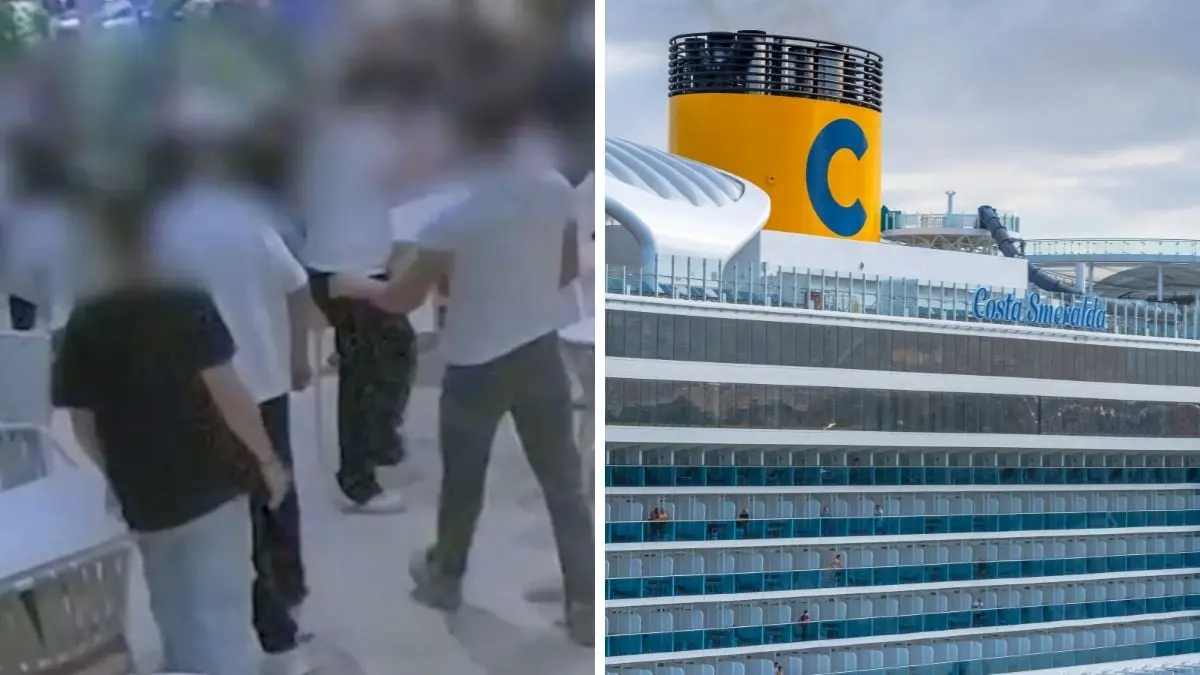
What began as a casual, albeit ill-advised, remark on the open Mediterranean Sea quickly metastasized into a violent, multi-participant melee aboard the modern cruise liner Costa Smeralda. Operating under the banner of Costa Cruises—a prominent subsidiary of the global travel conglomerate Carnival Corporation & plc—the 5,224-guest vessel became the unlikely setting for a chaotic confrontation that has since drawn the sharp focus of Italian law enforcement.
The incident, which occurred in international waters between the historic ports of Naples and Palermo, transformed a routine leisure voyage into a crime scene. According to local investigative authorities, including the Palermo Maritime Border Police, a verbal altercation near the ship’s onboard nightclub escalated rapidly into a vicious physical brawl involving more than a dozen young adults. Surveillance footage, later made public by investigators, paints a disturbing picture of flying furniture, chaotic corridors, and a level of aggression rarely witnessed within the meticulously managed hospitality environments of modern mega-ships.
In the wake of the disturbance, 13 cruise passengers—all young adults aged 18 to 20—have been formally reported to the Public Prosecutor’s Office at the Court of Palermo. They face preliminary charges of aggravated brawling (rissa aggravata under Italian penal code principles). While the physical injuries sustained during the outbreak were fortunately non-life-threatening, the cultural and economic fallout of the event highlights a broader, growing concern within the contemporary cruise industry: the increasing frequency of passenger misconduct and the swift, unforgiving intersection of maritime leisure with criminal justice.
This comprehensive report examines the chronology of the Costa Smeralda incident, analyzes the investigative findings of Italian authorities, places the event within the broader context of recent cruise ship disturbances, and evaluates the regulatory mechanisms governing passenger behavior on the high seas.
Detailed Chronology of the Incident
To piece together the timeline of events that turned the Costa Smeralda into a floating arena, maritime border police and shipboard security relied heavily on extensive closed-circuit television (CCTV) footage, electronic keycard access logs, and detailed witness testimonies gathered from both crew members and unaffected passengers.
The Rise of Two Factions
The seeds of the confrontation were sown prior to the vessel even reaching the open sea. Investigations spearheaded by Palermo Today and regional news agency Italpress revealed that the individuals involved belonged to two distinct demographic factions boarding at different ports along the Italian coast.
One group comprised young adults hailing from the Salento region in the heel of Italy’s boot, while the other group consisted of peers from the island of Sicily. The Salento group had embarked earlier during the ship’s stop in Civitavecchia, the primary maritime gateway to Rome, whereas the Sicilian group boarded during the subsequent call at Palermo. Investigators have found no definitive evidence indicating that members of the two groups knew one another prior to their coincidental convergence aboard the 5,224-passenger mega-ship. For the first leg of their overlapping journeys, the two groups existed in the same floating ecosystem, their paths ultimately crossing in the most volatile way possible.
The Spark: A Fatal Flirtation or Insult
The flashpoint occurred late at night in the vicinity of the ship’s central nightclub—a high-energy venue typically designed for socialization, music, and entertainment. According to reconstruction efforts by shipboard security and law enforcement, an individual belonging to the Salento contingent directed a provocative comment or joke toward a young woman traveling with the Sicilian group.
While the exact phrasing of the remark remains a matter of dispute among the participants, its intended recipient and her associates perceived it as a direct offense. What began as low-level verbal sparring and posturing swiftly crossed the threshold from verbal disagreement to open hostility.
Escalation into the Corridors
Recognizing the escalating tension, nightclub security personnel attempted to intervene and diffuse the situation near the venue’s entrance. However, the intervention proved insufficient to contain the rising tempers. The argument spilled out of the club and migrated aggressively into the adjacent passenger corridors and the nearby elevator bank—semi-confined public spaces lined with stateroom doors and shared by families, couples, and elderly travelers trying to sleep.
Footage released by the Palermo Maritime Border Police captures the chaotic escalation in stark detail. At least one freestanding chair from a nearby lounge area was weaponized and thrown during the melee, while other pieces of decorative furniture were knocked over, leaving hallways strewn with debris. Witnesses described scenes of absolute panic among bystanders as the group of more than a dozen young men and women exchanged blows, wrestled on carpeted floors, and shattered the illusion of secure isolation that cruise liners typically market to their clientele.
The Apex of Violence and Medical Intervention
The violence reached a critical juncture when one young man was knocked unconscious during the exchange of blows. Rather than halting the confrontation, the incapacitation of the individual triggered an even more aggressive response from opposing combatants. Multiple individuals were reportedly witnessed kicking the unconscious victim directly in the head—an action that significantly elevated the legal severity of the altercation and transformed a standard physical fight into a potentially life-endangering assault.
Shipboard medical staff, trained in trauma response and emergency care at sea, were swiftly dispatched to the scene once security regained control of the corridor. The unconscious young man was rushed to the ship’s medical facility for immediate evaluation and stabilization.
Miraculously, subsequent diagnostic checks and a temporary hospitalization ashore confirmed that the victim had escaped permanent trauma or catastrophic internal injuries. Nonetheless, the brutality of the assault ensured that the matter would not simply be handled via administrative onboard disciplinary measures.
Disembarkation and Legal Referral
Upon the Costa Smeralda’s arrival in port, the findings of the internal security investigation, along with digital evidence and passenger identifications, were handed directly to Italian law enforcement officials. The Palermo Maritime Border Police processed the identities of 13 primary participants.
These individuals were formally reported to the Public Prosecutor’s Office at the Court of Palermo on preliminary allegations of aggravated brawling. While formal custodial arrests aboard the ship were not immediately publicized, the legal apparatus has been fully set into motion, ensuring that the individuals involved will face formal judicial scrutiny upon their return to mainland Italy or Sicily.
Supporting Context & Metrics
The incident aboard the Costa Smeralda is not an isolated anomaly within the multi-billion-dollar cruise industry; rather, it reflects a troubling upward trend in public disturbances across major cruise lines as the industry experiences record-breaking passenger volumes.
The Scale of Modern Mega-Ships
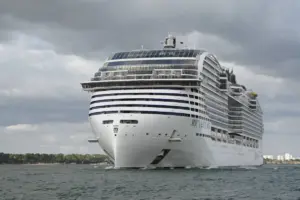
To understand the dynamics of such brawls, one must examine the sheer scale of vessels like the Costa Smeralda. Commissioned in 2019 and powered by Liquefied Natural Gas (LNG), the ship boasts a gross tonnage of approximately 185,000 GT and can accommodate up to 6,554 passengers at maximum capacity, alongside a dedicated crew of over 1,600.
Operating essentially as a floating, self-contained city complete with multiple restaurants, theaters, shopping promenades, bars, and nightclubs, these vessels concentrate thousands of strangers into dense social environments for days or weeks at a time. When alcohol is readily available, anonymity is perceived, and large peer groups travel together, the probability of friction increases exponentially.
A Pattern of Industry Incidents
Cruise Hive and other maritime reporting outlets have documented a significant rise in high-profile passenger brawls over recent operating seasons. These incidents span various geographical regions, cruise lines, and port facilities:
- The Nassau Police Station Melee (June 2026): In a striking display of lawlessness ashore, a brawl involving cruise passengers erupted in Nassau, Bahamas, and astonishingly spilled directly into a local police station. The ensuing legal and financial repercussions were severe; six guests were ultimately collectively fined more than $52,000 for multiple criminal charges, demonstrating that host nations are increasingly willing to impose heavy financial penalties on unruly tourists.
- The PortMiami Terminal Outbreak (June 2026): Following a standard three-night weekend sailing aboard Carnival Cruise Line’s Carnival Conquest, a massive physical altercation broke out within the PortMiami cruise terminal. The brawl resulted in immediate, decisive corporate action: 16 guests identified as participants were permanently placed on Carnival’s "Do Not Sail" blacklist, barring them from ever stepping foot on a company vessel again.
These systemic issues demonstrate that cruise operators and port authorities are grappling with post-pandemic behavioral shifts among travelers, where public altercations, entitlement issues, and alcohol-fueled aggression have become pervasive challenges.
Official Statements & Legal Frameworks
While Costa Cruises has maintained a measured public relations stance regarding the specific penalties applied to the 13 individuals involved in the Costa Smeralda brawl, the corporate mechanisms governing passenger conduct are explicit and uncompromising.
Corporate Terms and Conditions
Under Section 10.2 of Costa Cruises’ General Contractual Conditions, passenger behavioral standards are legally codified:
"Passengers’ behavior shall not affect the safety, comfort, wellbeing or enjoyment of other Passengers."
Furthermore, maritime law grants extraordinary authority to the captain—known legally as the Master—of a vessel operating at sea. Under international maritime conventions and corporate contracts, the Master possesses executive powers to maintain order, protect life and property, and ensure navigation safety. These powers include:
- Confining unruly passengers to their staterooms for the duration of the voyage.
- Restricting access to onboard amenities, bars, and entertainment venues.
- Debarking disruptive guests at the next available port of call, regardless of whether their vacation has concluded, leaving them to arrange and finance their own return travel.
- Handing offenders directly over to local law enforcement authorities upon arrival in port.
As part of the Carnival Corporation family—which includes premium and contemporary brands such as Carnival Cruise Line, Princess Cruises, Holland America Line, and Seabourn—Costa Cruises shares strict cross-brand intelligence databases. Individuals who commit acts of violence or severe disruption on one line are increasingly flagged across the entire corporate portfolio, ensuring long-term exclusion from the cruise vacation market.
Future Outlook & Industry Implications
The violent episode aboard the Costa Smeralda serves as a stark wake-up call for the European cruise market. As cruise lines push forward with aggressive fleet expansions and market recovery strategies following years of pandemic-related disruption, maintaining a secure, family-friendly onboard atmosphere remains paramount to their commercial survival.
Enhanced Security Measures at Sea
Industry analysts anticipate that major cruise operators will accelerate investments in onboard security infrastructure. This includes:
- Expanded CCTV Coverage: Utilizing advanced, high-definition optical surveillance systems with artificial intelligence capabilities to detect gathering crowds, erratic movements, or physical altercations before they escalate into full-scale brawls.
- Increased Security Personnel: Deploying more visibly positioned security officers in high-traffic nightlife zones, particularly during late-night operating hours.
- Stricter Alcohol Management: Reviewing beverage package policies, implementing automated tracking of excessive consumption, and empowering bartenders and servers to cut off intoxicated patrons without hesitation.
Zero-Tolerance Enforcement
The swift referral of the 13 young adults to the Public Prosecutor’s Office in Palermo signals a growing intolerance by European judicial authorities toward criminal acts committed aboard commercial vessels. Judges and prosecutors are utilizing maritime jurisdiction laws to send a clear message: the high seas are not a lawless zone where anti-social behavior escapes accountability.
For the cruise industry, the challenge moving forward will be balancing the festive, carefree environment that attracts millions of vacationers each year with the stringent security protocols required to protect passengers from the actions of a reckless few. Until harsher, standardized worldwide blacklists and immediate disembarkation protocols become universally feared by unruly travelers, incidents like the one on the Costa Smeralda will continue to serve as cautionary tales of how quickly a dream vacation can descend into legal ruin.