











Executive Overview
The paradigm of backcountry travel has undergone a radical transformation over the past decade. Historically, venturing beyond the reach of traditional cell towers meant a complete severing of digital tethers—a total, unmitigated disconnection from civilization that lasted days, weeks, or even months. Today, that narrative of absolute isolation is obsolete. Modern satellite communication technology has compressed high-reliability, global connectivity into palm-sized, ultra-rugged form factors capable of enduring extreme wilderness environments while maintaining constant, seamless contact with the grid.
Recent field testing across remote international journeys, multi-week bikepacking expeditions, and arduous multi-portage paddling trips reveals that today’s satellite communicators are tougher, smaller, and more deeply integrated with smart-device ecosystems than ever before. Whether stowed away in the pocket of a Personal Flotation Device (PFD), strapped to a bicycle frame, or deployed at an off-grid basecamp, these devices serve a dual purpose: they deliver profound peace of mind for the adventurer facing an unforeseen emergency, and they provide real-time breadcrumb tracking for anxious loved ones monitoring the journey from afar.
However, the contemporary marketplace for off-grid communication is no longer a monolith dominated by a single style of hardware. From dedicated, bombproof two-way messengers to native smartphone integrations and portable high-speed internet dishes, consumers face an unprecedented array of choices. This exhaustive field evaluation analyzes the leading satellite communication tools available, breaks down critical performance metrics, and examines the shifting landscape of off-grid connectivity.
Detailed Chronology and Technological Evolution
The journey from bulky, military-grade satellite phones to featherlight pocket messengers spans several distinct technological epochs, each defined by a leap in miniaturization, battery efficiency, and orbital satellite density.
The Era of Dedicated Emergency Beacons (Pre-2015)
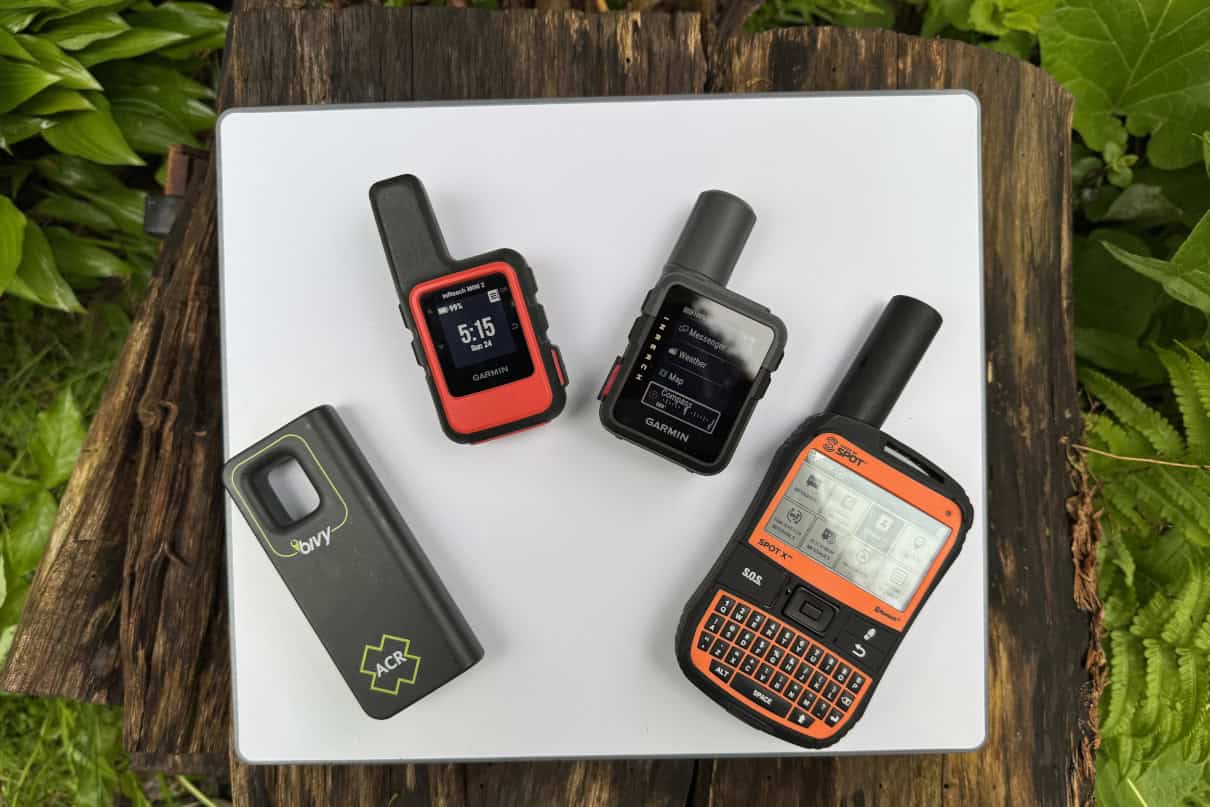
In the early days of consumer-accessible satellite safety, devices like early-generation Personal Locator Beacons (PLBs) and basic SPOT messengers offered one-way communication or rudimentary SOS triggers. These units were indispensable for search and rescue (SAR), but they lacked conversational utility. If you triggered a rescue, you had no way of communicating the nature of the emergency, your exact medical status, or whether the situation had resolved itself. Furthermore, these units were clunky, single-purpose tools that added noticeable dead weight to a pack.
The Smartphone Pairing Revolution (2015–2022)
The introduction of Bluetooth-enabled satellite messengers marked a massive turning point. Devices like the early Garmin inReach iterations and the SPOT X allowed adventurers to draft custom text messages using companion smartphone apps. This era normalized two-way communication from the deep backcountry. Users could negotiate non-emergency extractions, request specific weather forecasts, and check in with family using familiar text interfaces. Yet, these devices still required users to manage a secondary, ruggedized piece of hardware entirely separate from their primary pocket computer (the smartphone).
The Direct-to-Device and High-Speed Convergence (2024–Present)
We have now entered an era defined by extreme convergence and ultra-broadband access. The market features three distinct tiers of capability:

- Ultralight two-way messengers optimized for weight-conscious backpackers and paddlers.
- Native smartphone satellite messaging, allowing ordinary consumer phones (such as recent iPhone models running iOS 18) to communicate via satellite without external hardware.
- Miniaturized broadband hubs like the Starlink Mini, which bring high-speed internet and heavy data consumption straight to remote campsites.
A monumental milestone in this chronology occurred in April 2026, when Amazon acquired SPOT’s parent company, satellite operator Globalstar, for an eye-watering $11.6 billion. This acquisition aims to fold Globalstar’s low Earth orbit (LEO) satellites into Amazon Leo, setting the stage for future direct-to-device services that will radically expand cellular voice, text, and data coverage on a global scale. As hardware continues to shrink and subscription models evolve, the line between frontcountry and backcountry communication is blurring permanently.
Supporting Context & Metrics: Top Satellite Communicators Compared
To separate marketing hype from field-tested reality, editors put the leading communication options through rigorous physical testing across grueling terrain, tracking metrics such as battery longevity, weight, pricing, and environmental resilience.
1. Best Overall Satellite Communicator: Garmin inReach Mini 3
- Price: $449 USD
- Weight: 4.3 ounces (approx. 0.27 lbs)
- Battery Life: Up to 350 hours at 10-minute tracking intervals (manufacturer claim)
- Data Plans: Starting at $7.99/month (plus a one-time $39 activation fee)
Field Analysis:
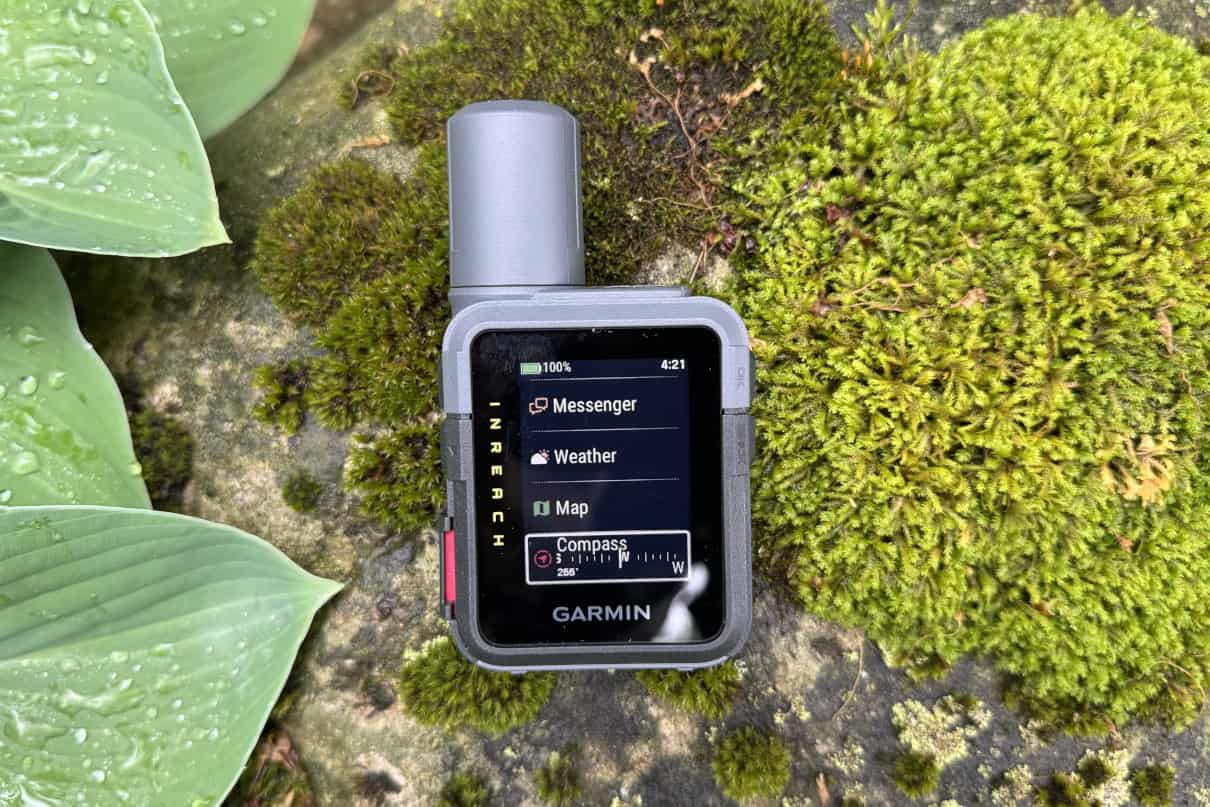
The Garmin inReach Mini series has long been a gold standard for backcountry guides and expedition leaders. Building upon the legacy of the widely praised Mini 2, the next-generation Mini 3 elevates the user experience by introducing a vibrant color touchscreen display while retaining a palm-sized chassis that weighs a mere fraction of a pound.
During multi-month touring tests, setting the device to hourly location updates allowed remote family members to monitor progress across thousands of miles while requiring only a weekly recharge. Core functionalities—including global two-way messaging, interactive SOS capabilities, and detailed weather forecasting—operate entirely independently of a smartphone. For users who want modern conveniences, an extra $50 upgrades the unit to the Mini 3 Plus, enabling the transmission of images and voice notes via a Bluetooth smartphone link. For budget-conscious buyers, older iterations like the Mini 2 often see steep discounts down to $249 during seasonal sales, offering roughly 90% of the core functionality at nearly half the price. Crucially, Garmin’s service plans allow users to suspend subscriptions for up to 12 months at a time without losing SOS functionality.
2. Most Lightweight Satellite Messenger: ACR Bivy Stick
- Price: $199.95 USD
- Weight: 3.3 ounces
- Battery Life: Varies by usage; optimized for pairing
- Data Plans: $14.99/month (annual plan) or $19.99/month (month-to-month); $29.99 activation fee
Field Analysis:
For ultralight backpackers, thru-hikers, and minimalist paddlers where every gram dictates comfort, the ACR Bivy Stick represents an exceptional value proposition. Weighing just 3.3 ounces, it is the lightest dedicated messenger in its class.
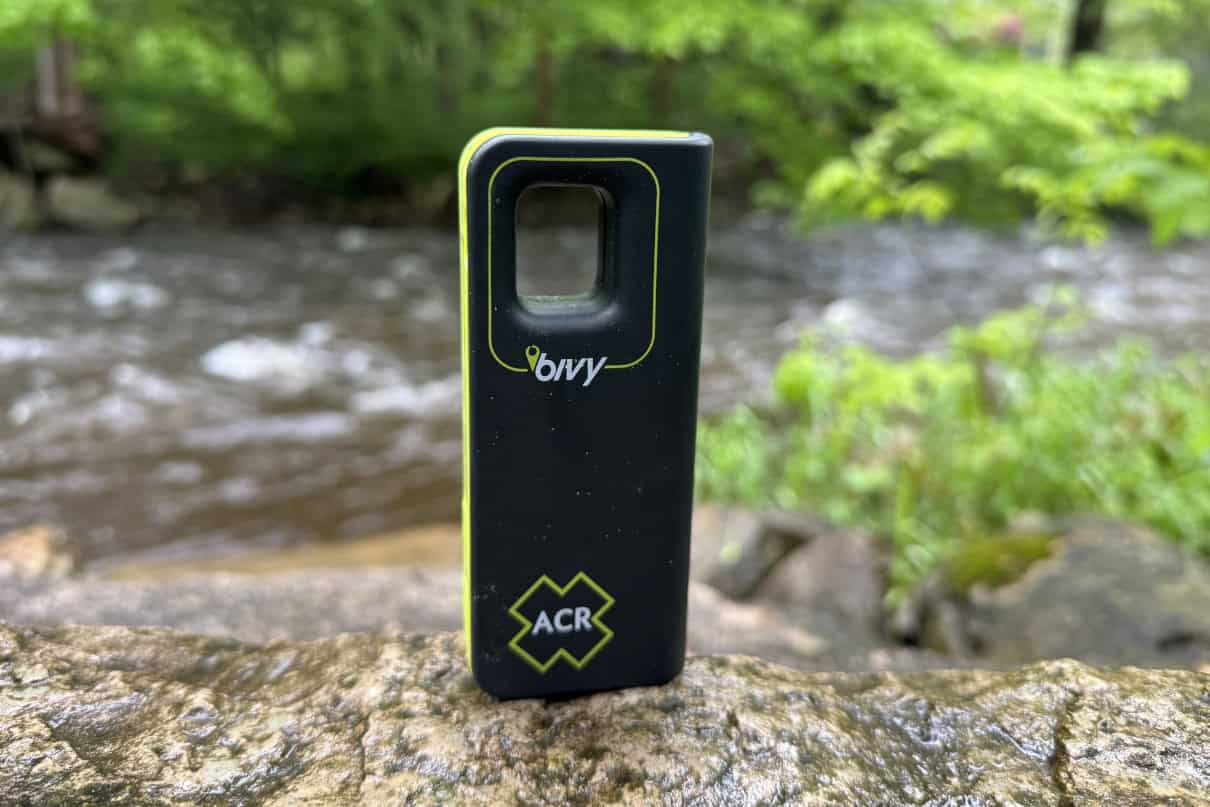
The Bivy Stick is engineered to pair seamlessly with a smartphone via a highly polished, user-friendly app. While it can function as a standalone device for triggering an SOS, sending preset check-in messages, and managing tracking, its deepest analytics shine when tethered to a phone. Multisport athletes will appreciate the companion app’s capability to categorize tracked adventures by activity type, logging rigorous metrics including elapsed time, distance traveled, vertical gain, calories burned, and average versus top speeds. Furthermore, the Bivy Stick wins points for financial flexibility: it imposes zero deactivation fees after an initial three-month commitment, making it ideal for seasonal adventurers who only require connectivity during summer and autumn months.
3. Best For Day Trips and Casual Explorers: iPhone Satellite Messaging
- Price: Free (included with compatible iOS hardware and software)
- Weight: N/A (integrated into your existing smartphone)
- Battery Life: Dependent on phone battery; accelerated drain during satellite transmission
- Data Plans: Free of charge
Field Analysis:
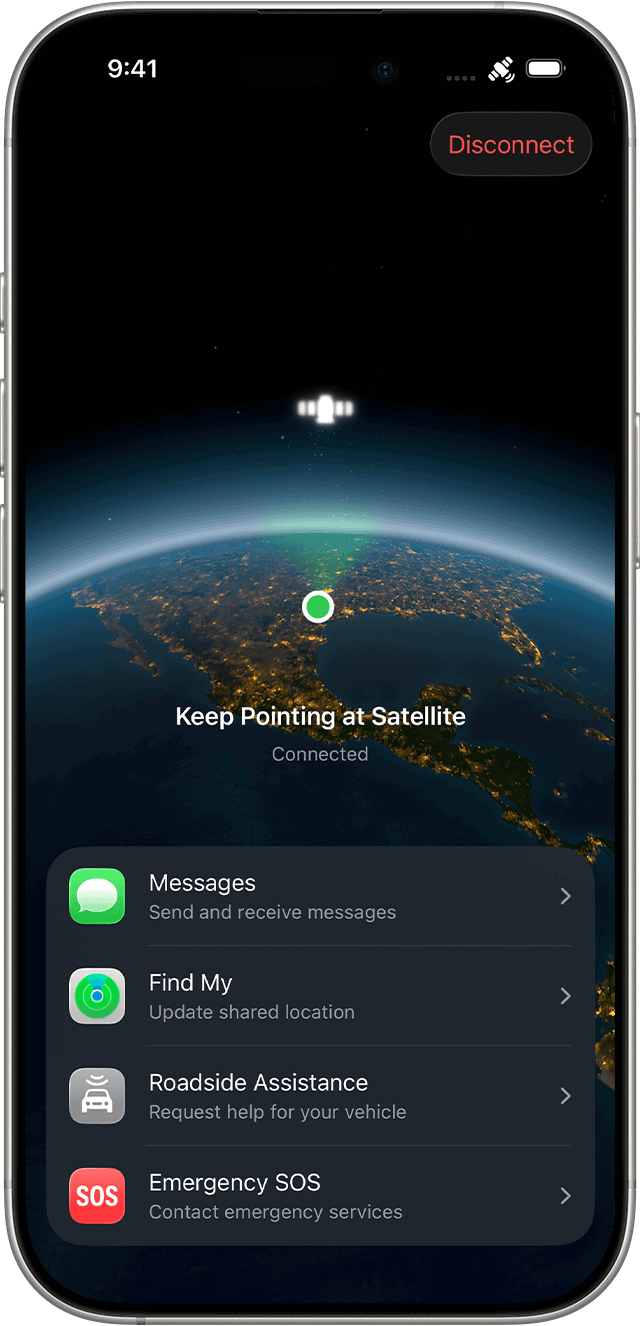
For users running iOS 18 on an iPhone 14 or newer, native satellite messaging represents a zero-cost paradigm shift. When cellular towers disappear beyond the horizon, a discrete satellite icon illuminates the top-right corner of the screen. Launching the iMessages app prompts the user to rotate their device physically to align with overhead satellites, establishing a connection within an open-sky corridor.
Messages typically transmit in 30 to 60 seconds. While you can text individuals, group messaging is currently unsupported. The most profound advantage is the absence of subscription fees or additional hardware requirements. However, seasoned wilderness travelers remain skeptical of treating consumer smartphones as dedicated safety devices. Unlike ruggedized communicators, iPhones are delicate instruments: sub-zero temperatures drain their lithium-ion batteries rapidly, direct exposure to intense summer sun can cause thermal shutdowns, and a shattered screen can instantly brick the device. For casual day hikes, it is a brilliant safety net; for deep wilderness expeditions, it should serve as a backup rather than a primary lifeline.
4. Best For Single-Device Functionality: SPOT X
- Price: $249 USD
- Weight: Approximately double most handheld palm devices (heavier form factor)
- Battery Life: Reliable multi-day performance
- Data Plans: Contract plans from $11.95/month; month-to-month plans from $14.95/month
Field Analysis:
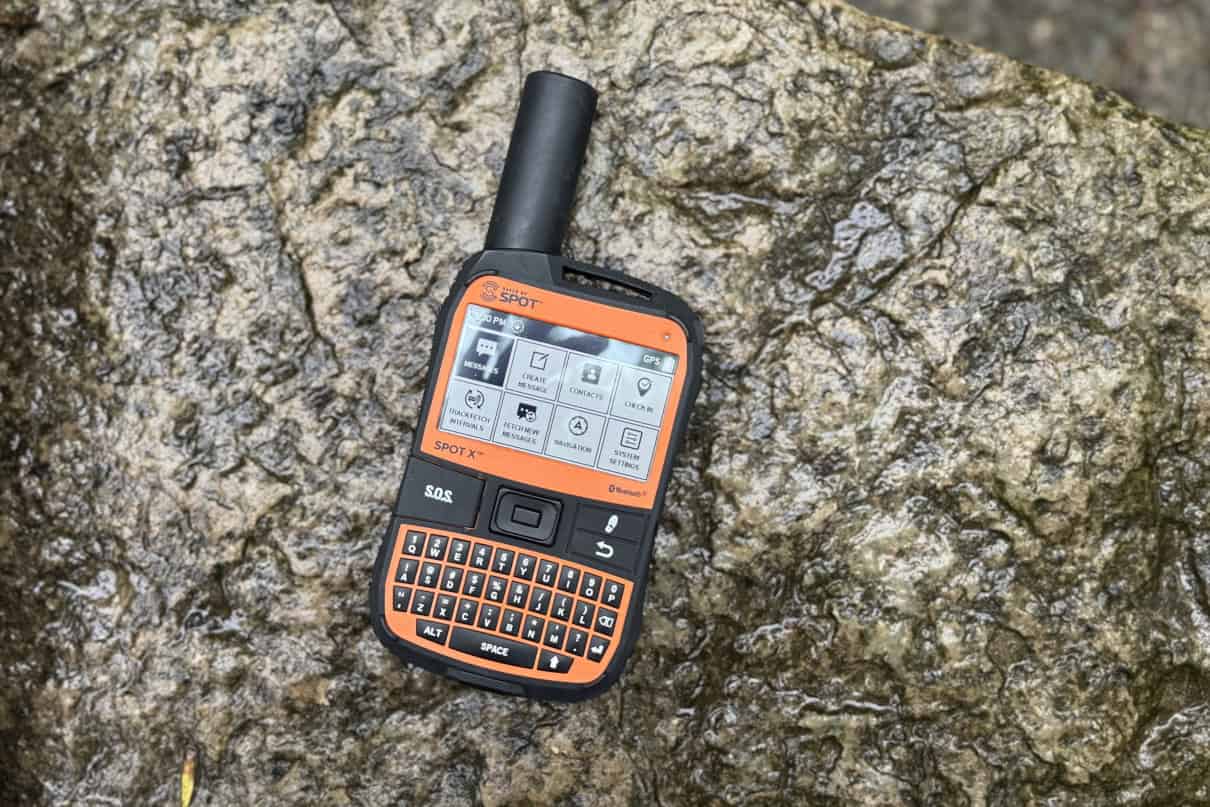
In an era where nearly every gadget demands a smartphone companion app, the SPOT X offers a refreshingly retro, standalone user experience. Equipped with a physical QWERTY keyboard reminiscent of classic mobile devices, the SPOT X allows users to draft, edit, and send custom long-form text messages directly on the hardware without ever pulling out a phone.
While its physical footprint and weight are noticeably heavier than palm-sized units like the Garmin Mini, its tactile keyboard is a favorite among traditionalists who despise pecking out messages on touchscreens with cold, wet fingers. Featuring Bluetooth connectivity for optional phone pairing, the SPOT X balances vintage utility with modern satellite routing, backed by Globalstar’s newly acquired infrastructure.
5. Best For High-Speed Internet Access: Starlink Mini
- Price: $250 USD (Hardware kit)
- Weight: 2 pounds (Dish only); system weight climbs significantly with necessary power banks
- Battery Life: External power source mandatory
- Data Plans: Roam data plan starting around $50 for 100 GB per month
Field Analysis:
Firing up the Starlink Mini at a remote wilderness campsite blurs the boundary between civilization and the wild in a startling fashion. Weighing two pounds and mirroring the dimensions of a MacBook Air, this fully weatherproof dish delivers high-speed broadband internet to the middle of nowhere.
However, deploying high-speed internet off-grid exacts a heavy logistical toll. The Starlink Mini requires an external power supply to function. Field testing utilized a portable power station (such as the Jackery 300 Plus Explorer), which adds an additional eight pounds and the physical volume of a four-slice toaster. When packed alongside waterproof storage cases for both the dish and the battery, the total auxiliary tech weight climbs to roughly 16 pounds—requiring a dedicated extra backpack. For digital nomads, remote cabin owners, and overland vehicle travelers, the Starlink Mini is revolutionary. For human-powered backpackers and paddlers, it is entirely impractical overkill.
Official Industry Insights & Evaluation Criteria
When selecting a satellite communicator, industry experts advise evaluating three core pillars: feature sets, subscription economics, and power management.
Feature Matrix & Smartphone Integration
Buyers must determine whether they require absolute standalone operation or prefer a companion app ecosystem. Devices like the Garmin inReach Mini 3 and SPOT X allow critical messaging and SOS execution directly on the hardware. Conversely, ultra-lightweight units like the Bivy Stick rely heavily on an active Bluetooth connection to a smartphone for maximum usability.
Subscription Transparency
Satellite connectivity is an ongoing service. Consumers must look beyond the initial retail price of the hardware and audit monthly access fees, annual commitments, startup activation costs, and seasonal suspension policies. The ability to freeze a subscription during the off-season without incurring hidden penalty fees provides substantial long-term savings.
Battery Longevity and Weight Penalties
Power consumption is directly tied to user habits. Leaving a device in passive listening mode consumes minimal power; however, initiating aggressive tracking intervals (pinging location coordinates every 10 or 30 minutes) drains batteries rapidly. Weight is rarely a deterrent for modern handheld units, which sit comfortably under five ounces, but auxiliary power solutions for broadband units demand careful calculation of pack weight.
Future Outlook
The trajectory of off-grid satellite communication points toward total ecosystem integration. With major tech conglomerates investing billions into low Earth orbit satellite networks, the coming years will likely eliminate dead zones entirely across populated landmasses.

We are moving steadily toward a future where direct-to-cell satellite connectivity is standard across all mobile devices, rendering emergency check-ins as casual as sending an ordinary cellular text message. Yet, for true wilderness explorers navigating extreme climates, deep river valleys, and multi-week expeditions, dedicated, bombproof hardware—units engineered to survive submersion, freezing temperatures, and severe impacts—will remain an essential component of the safety kit. As technology advances, the wilderness is no longer a place of absolute isolation, but rather a space where adventure is balanced by intelligent, reliable connectivity.