







Executive Overview
In a sweeping federal initiative aimed at modernizing the nation’s transportation corridors, the Federal Railroad Administration (FRA) has announced a monumental $5.3 billion funding package dedicated to rail infrastructure enhancement, passenger equipment acquisition, and critical grade-crossing safety improvements. Spanning 23 states, this massive capital injection addresses some of the most persistent vulnerabilities in America’s rail network, prioritizing high-risk intersections where vehicular traffic and pedestrian pathways intersect with active freight and passenger lines.
The announcement, distributed through the National Railroad Partnership Program (NRPP), represents a significant turning point in national transportation policy. Approximately $2 billion of this historic funding package was redirected following the strategic reallocation of federal dollars previously earmarked for California’s high-speed rail initiative, enabling a rapid pivot toward projects that deliver immediate safety dividends and operational efficiencies nationwide.
At the core of this multi-billion-dollar investment is a dual commitment: safeguarding motorists and pedestrians through aggressive grade-crossing mitigation, and overhauling Amtrak’s aging fleet to meet surging post-pandemic passenger demand. With more than 2,000 incidents and roughly 200 fatalities occurring annually at highway-rail grade crossings nationwide, the FRA’s targeted grants are designed to directly confront the second-leading cause of rail-related deaths in the United States. Concurrently, the infusion of more than $2 billion into state-of-the-art trainset acquisitions and locomotive overhauls signals a major generational upgrade for regional and intercity passenger rail corridors across the Midwest and Pacific regions.
Detailed Chronology and Grant Allocations
The path toward the distribution of these funds reflects a rigorous, multi-year evaluation process conducted by federal regulators in close collaboration with Amtrak and state departments of transportation. Following the FRA’s formal funding announcement, the agency was inundated with 103 eligible applications from 78 distinct applicants, collectively requesting a staggering $11.66 billion. The final selection of projects underscores a strategic filtering process, prioritizing high-risk environments with documented histories of collisions and fatalities.
Prioritizing High-Risk Infrastructure and State-Level Awards
The newly allocated $5.3 billion supports 41 distinct infrastructure projects alongside vital fleet modernizations. The agency explicitly prioritized crossings exhibiting a documented history of three or more safety incidents, or at least two fatal incidents, over the preceding five-year window. This analytical rigor is reflected in the scale and scope of the top state-level awards:
- Florida Department of Transportation ($356 Million): Representing one of the largest single awards in the package, these funds will be deployed to execute comprehensive safety upgrades and infrastructure treatments at up to 910 individual grade crossings statewide, dramatically mitigating collision risks along heavily traveled Florida corridors.
- North Carolina Department of Transportation ($299 Million): North Carolina’s comprehensive proposal targets the total elimination of nine hazardous grade crossings, the installation of crucial segments of double track to optimize capacity and fluidity, and robust investments in anti-trespassing prevention infrastructure.
- Texas Department of Transportation ($189 Million): Texas will channel $189 million into the permanent elimination of nine dangerous crossings distributed across the major urban and suburban hubs of Fort Worth, Dallas, and Terrell.
- Hays County, Texas ($39 Million): Supplementing the state-level Texas awards, Hays County secured direct funding to engineer and construct a modern grade-separated bridge, removing vehicle-train conflict points entirely.
- City of Fairfield, Ohio ($40 Million): Fairfield will utilize its federal award to permanently close two high-risk grade crossings while simultaneously constructing a new overpass bridge spanning a congested section of CSX’s Cincinnati Terminal Subdivision.
- City of New Orleans ($2.5 Million): Focusing on passenger-facing infrastructure, this funding will execute essential structural repairs to platforms and protective canopies at the historic New Orleans Union Passenger Terminal.
- City of Crete, Nebraska ($1.1 Million): Crete will embark on an engineering evaluation of eight existing crossings to design future infrastructure modifications and safety enhancements.
Supporting Context & Metrics: The Anatomy of Rail Safety
To fully grasp the gravity of the FRA’s recent allocations, one must examine the profound safety challenges that continue to plague America’s rail ecosystem. Grade crossings remain an intractable operational and humanitarian challenge for federal regulators, freight operators, and passenger railroads alike.
The Quantifiable Toll of Grade-Crossing Incidents
According to comprehensive safety data compiled by the Federal Railroad Administration, highway-rail grade crossings represent the second-leading cause of all rail-related fatalities in the United States. Nationally, the human toll remains unacceptably high, with more than 2,000 separate incidents and upwards of 200 fatalities recorded annually. These tragedies exact an immense emotional and economic toll on communities, while also inducing costly service disruptions for both freight logistics and passenger schedules.
+-------------------------------------------------------------------+
|               U.S. Rail Safety Metrics (Annual Averages)          |
+-------------------------------------------------------------------+
| Annual Grade-Crossing Incidents   | > 2,000 nationwide            |
| Annual Grade-Crossing Fatalities  | ~ 200 nationwide              |
| Primary Cause Ranking             | 2nd leading cause of rail     |
|                                   | fatalities                    |
| Program Funding Source            | National Railroad Partnership |
|                                   | Program (NRPP)                |
+-------------------------------------------------------------------+
The National Railroad Partnership Program (NRPP) was purposefully engineered to address these structural vulnerabilities. Open to a diverse array of entities—including state departments of transportation, interstate compacts, public transit authorities, political subdivisions, Amtrak, and federally recognized Indian tribes—the grant mechanism bridges local engineering needs with national transportation policy goals.
Amtrak’s Fleet Modernization and Operational Expansion
Beyond grade-crossing safety, the investment package directly addresses the operational readiness of Amtrak’s rolling stock. Decades of deferred capital maintenance and aging equipment have frequently constrained passenger rail reliability, resulting in cascading delays and constrained seating capacities during peak travel seasons.
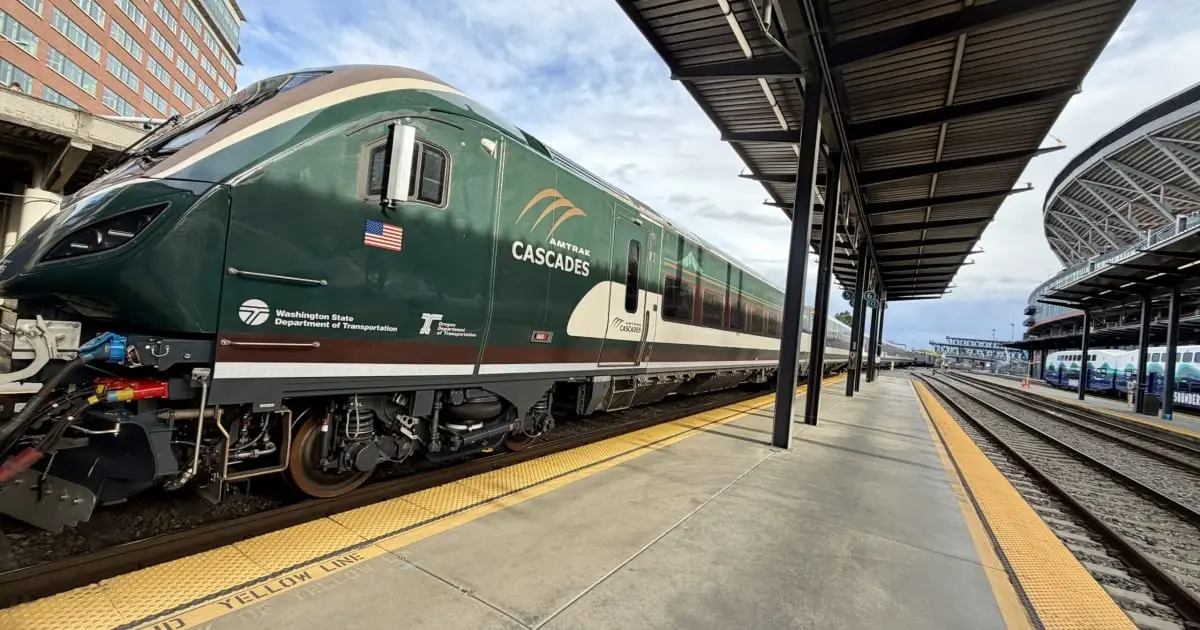
To reverse these trends, the funding allocation earmarks $2.05 billion for Amtrak to acquire 43 brand-new, domestically manufactured trainsets. Built entirely within the United States, these modern trainsets are designed to deliver superior energy efficiency, enhanced accessibility, and vastly improved passenger comfort.
Simultaneously, $140 million has been dedicated to comprehensively overhaul 41 existing locomotives currently deployed across vital Midwest and Pacific intercity routes.
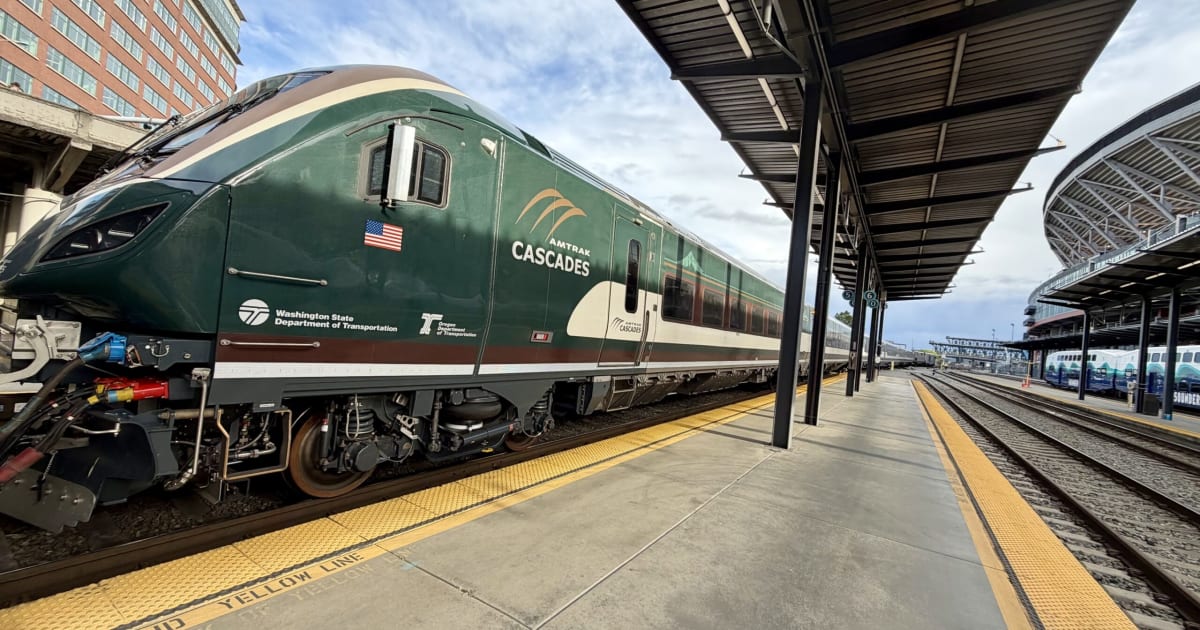
Affected Amtrak Routes Set for Fleet Upgrades
The deployment of these newly procured trainsets and rehabilitated locomotives will directly benefit a vast portfolio of intercity routes, significantly boosting seating capacity and service reliability on the following lines:
- Adirondack
- Blue Water
- Carolinian
- Cascades
- Downeaster
- Empire Service
- Ethan Allen Express
- Hiawatha
- Keystone Service
- Lincoln Service
- Pennsylvanian
- Piedmont
- River Runner
- Wolverine
This equipment overhaul coincides with Amtrak’s broader internal restructuring efforts, which emphasize rigorous fleet management methodologies, streamlined maintenance protocols, and an unyielding focus on asset modernization.
Official Statements and Leadership Perspectives
The announcement of the $5.3 billion funding package elicited strong endorsements from federal transportation leaders, who emphasized the collaborative nature of the initiative and its multi-faceted benefits for both passenger mobility and freight fluidity.
U.S. Transportation Secretary Sean P. Duffy highlighted the strategic imperative of the investments, noting that modernizing rail corridors is essential for long-term economic competitiveness and public safety. By channeling funds into critical infrastructure and addressing historical backlogs, the Department of Transportation is actively reinforcing the backbone of America’s intermodal transit network.
Echoing these sentiments, FRA Administrator David Fink emphasized the tangible safety dividends that state and local communities will soon realize:
"The projects we announced today will help make our nation’s rail network much safer because now state DOTs across America will have the funds they need to eliminate dangerous grade crossings across the nation," stated FRA Administrator David Fink.
Furthermore, Fink underscored the operational synergy achieved through federal-intercity cooperation: "FRA also collaborated with Amtrak over two years to determine how best to distribute these funds so passenger trains can run on time and freight isn’t delayed."
This two-year collaborative planning window reflects a deliberate shift away from reactive patch-work repairs toward proactive, systemic corridor management. By ensuring that passenger service enhancements do not compromise freight velocity, the FRA has brokered a balanced approach to rail modernization that satisfies diverse stakeholders across the industrial landscape.
Future Outlook: A New Era for American Rail
As the 41 selected infrastructure projects transition from the planning phase to active engineering and construction, the long-term outlook for U.S. passenger and freight rail is poised for a transformative evolution. The integration of advanced grade-crossing safety measures—ranging from complete crossing closures and multi-track installations to grade-separated overpass bridges—will systematically drive down the incidence of preventable collisions and fatalities over the coming decade.
Concurrently, the introduction of 43 new U.S.-built trainsets and the meticulous overhaul of 41 regional locomotives will redefine the passenger experience across key Midwest and Pacific corridors. As Amtrak implements its modernized organizational structure and asset management framework, these capital improvements will establish a robust foundation for increased ridership, reduced carbon emissions, and enhanced on-time performance.
Ultimately, this $5.3 billion federal investment serves as a clear testament to the vital role that passenger rail plays in the modern American transportation network. By addressing both the microscopic safety details of local highway-rail intersections and the macroeconomic realities of national rolling stock modernization, the Federal Railroad Administration has set a new benchmark for infrastructure stewardship, safety, and operational excellence.