WASHINGTON — As the calendar ticks down toward a critical legislative deadline, America’s federal transportation policy sits at a precarious crossroads. The Infrastructure Investment and Jobs Act (IIJA)—the massive multi-billion-dollar law that has steered national surface transportation policy and funding streams for years—is rapidly approaching expiration. Yet, despite months of confident projections from Capitol Hill lawmakers who swore this would finally be the year Congress delivered a seamless reauthorization, the legislative apparatus has stalled out.
To unpack how Washington arrived at this familiar precipice, what the delay means for communities nationwide, and how transit advocates are regrouping for the next phase of the legislative battle, we sat down with Beth Osborne, Director of Transportation for America (T4America). Her sobering assessment reveals an entrenched status quo defined by soaring fiscal deficits, auto-centric policy myopia, executive-branch overreach, and a profound bipartisan blind spot when it comes to the true cost of car-dependent infrastructure.
Executive Overview
The expiration of the IIJA highlights a chronic failure in American governance: Congress has never successfully reauthorized core national transportation programs on schedule. While members of the House Transportation and Infrastructure Committee touted ambitious plans in the spring of 2026 to deliver a fresh infrastructure package by the time the old law lapsed, reality quickly intervened.
Instead of a comprehensive, forward-thinking reauthorization, lawmakers were forced to pass a temporary stopgap measure to avert a funding cliff ahead of the midterm elections. This short-term extension kept highway money flowing while utilizing aggressive budgetary maneuvers that slashed public transit funding by 20 percent and passenger rail funding by a staggering 83 percent compared to fiscal year 2026 levels.
Behind this legislative gridlock lies a fierce ideological battle over the future of American mobility. The Trump administration and its congressional allies are aggressively pushing to enrench motor-vehicle supremacy, penalize alternative transit forms, and systematically undermine investments in pedestrian and bicycle safety. Meanwhile, transit advocates like Osborne argue that the debate must go deeper than mere funding levels. The core problem, they contend, is not simply a lack of money, but a fundamentally broken policy framework that pours trillions of dollars into car-centric projects that fail to improve safety, reduce emissions, or enhance economic mobility.
Detailed Chronology: From Spring Optimism to Autumn Gridlock
The path to the current legislative impasse can be traced through a series of miscalculated political maneuvers, committee battles, and executive interventions over the course of 2026.
The Spring Push and "Build America 250"
Back in the spring of 2026, optimism—or perhaps political posturing—was high on Capitol Hill. Numerous lawmakers swore that Congress would buck historical precedent and pass a brand-new national infrastructure package right as the IIJA expired.
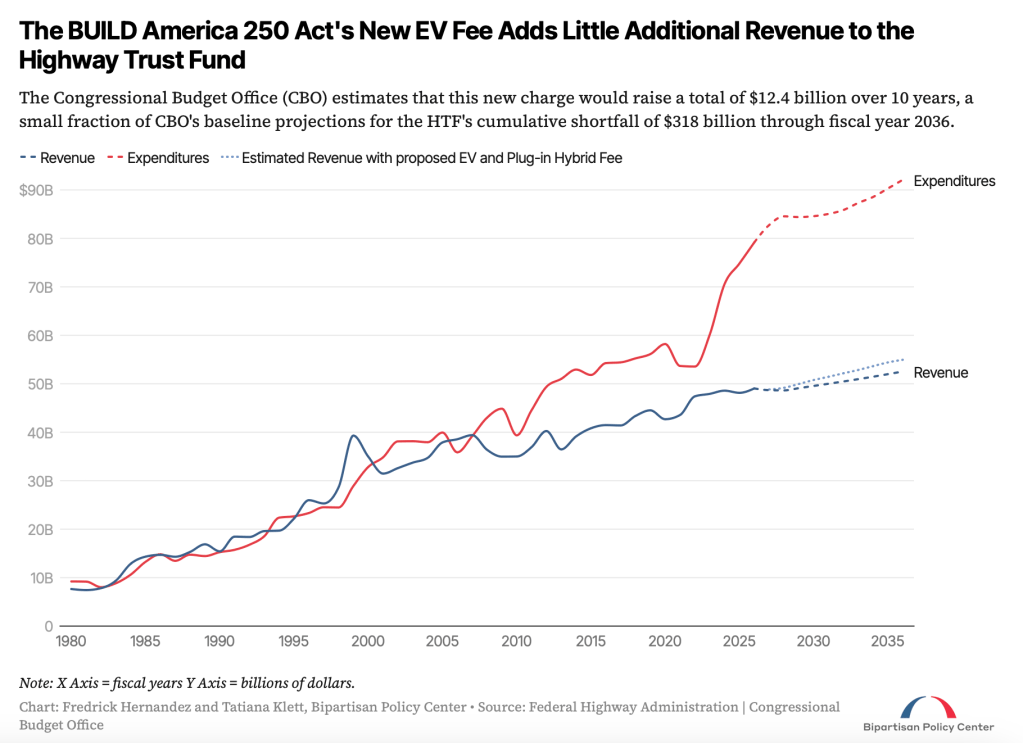
That ambition materialized in late May when the House Transportation and Infrastructure Committee introduced the Build America 250 Act. Rather than charting a new course for sustainable, multi-modal transit, the bill was swiftly condemned by urban planners and transportation advocates. Critics panned Build America 250 as even more expensive, heavily skewed toward highway expansion, and fiscally precarious than the existing IIJA framework.
While the legislation proposed a new fee on electric vehicles (EVs) in an effort to shore up declining federal revenues, organizations like the Bipartisan Policy Center warned it was woefully inadequate. This shortfall is further compounded by the Trump administration’s concerted regulatory push to roll back EV mandates and incentivize a return to gas-powered vehicles.
The Highway Trust Fund Shortfall
During our conversation, Osborne laid bare the unsustainable mathematical reality underpinning federal transportation funding.
"There’s not enough money coming in through [funding streams like] the gas tax and diesel tax and tire taxes to cover the cost of maintaining the program where it is," Osborne noted. "In fact, there’s not enough to cover just the highway formula funds. We haven’t even gotten to that part of the conversation yet — and that’s always the most painful part."
Faced with the prospect of explaining to election-year voters why they were writing another deficit-fueled transportation bill or attempting to raise fuel taxes, Congress blinked. Lawmakers abandoned hopes of a timely reauthorization and instead opted to kick the can down the road, passing a temporary continuing resolution to extend the IIJA through December 11.
The Cost of the Extension
While the short-term extension averted a government shutdown and maintained highway funding, it balanced the ledger on the backs of transit and rail riders. The stopgap legislation engineered severe cuts:
A 20 percent reduction in public transit funding compared to fiscal year 2026.
An 83 percent reduction in passenger rail funding, with the remaining funds stripped of their statutory guarantees.
Zero reductions or structural changes to car-centric highway programs.
Supporting Context & Metrics: The War on Alternative Transit
The legislative battle over funding formulas is only one front in a broader ideological war being waged over the physical design of American streets. The Trump administration has made no secret of its desire to pivot federal dollars exclusively toward asphalt and automobiles, actively working to starve sustainable urban planning initiatives of resources.
The War on Bike Lanes and Complete Streets
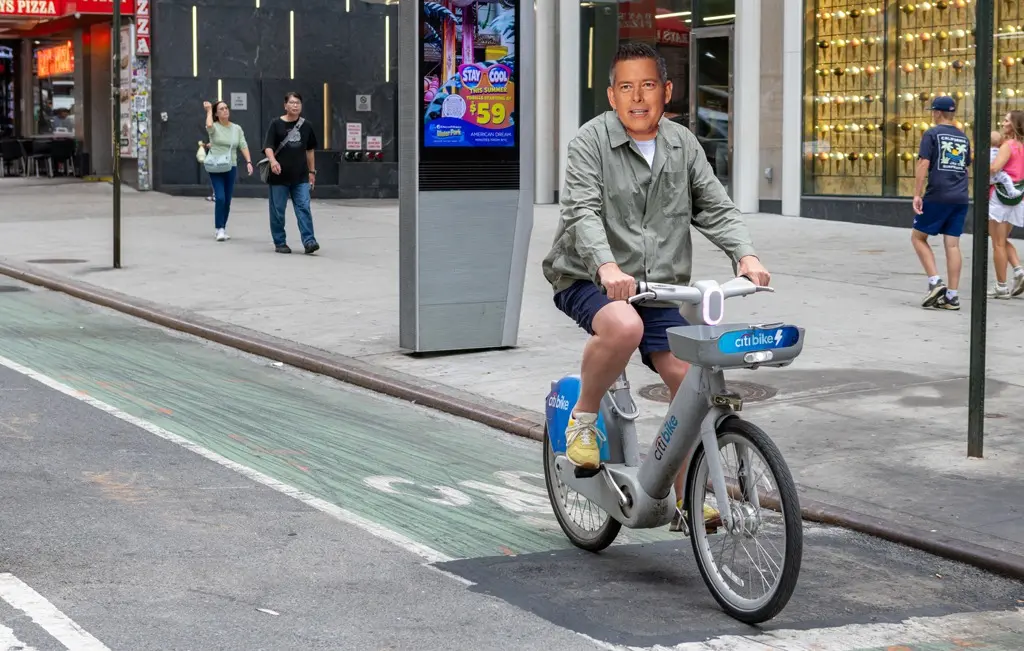
In July, Transportation Secretary Sean Duffy penned an official letter to congressional leadership explicitly demanding that any upcoming infrastructure package prioritize motor vehicle travel and restrict federal funding for bicycle lanes.
This hostility toward multi-modal infrastructure baffled longtime planning advocates. As Osborne pointed out during our discussion:
"Apparently making it safe for a kid to bike to school is somehow weird left-wing propaganda now. I thought it was traditional, and something that we all aspired to go back to — but [according to the Trump administration,] apparently not. [They think] bike lanes are horrible. Slowing down traffic to the actual posted speed by using design? That’s horrible [to them], too."
Despite fierce pushback from urban communities, Build America 250 remains alive as a legislative template, backed by continuous pressure from executive leadership to defund projects that do not exclusively serve private motor vehicles.
Executive Overreach and Funding Freezes
Beyond legislative fights, the executive branch has aggressively stretched the limits of existing law. Over the past year, the U.S. Department of Transportation (USDOT) has systematically frozen, rescinded, and run out the clock on grants dedicated to public transit, pedestrian safety, and active transportation.
These actions are frequently justified under broad executive orders targeting vaguely defined concepts such as "sustainability" and "equity." For cash-strapped local municipalities, mounting legal challenges against federal funding freezes is often financially impossible, leaving communities defenseless as federal grants vanish.
Worse still, the short-term funding bill passed by Congress earlier this month included no new guardrails to check this executive overreach, effectively giving the administration carte blanche to continue bypassing the spirit of the law.
"I think the real issue is the fact that this administration has not only felt comfortable, but has actually been left to implement the last surface transportation program any way it wanted to — whether it was connected to the law or not," Osborne emphasized. "And in response to that, the House passed a bill giving them more money… Why wouldn’t [Trump] just continue violating the law?"
Official Statements and Strategic Analysis
Why Extending the IIJA is a Necessary Evil
Given the hostile political environment and the regressive nature of newly proposed bills like Build America 250, Osborne argues that transit advocates face a grim tactical choice: pushing for a clean, one-year extension of the deeply flawed IIJA may be the safest defensive play.
It is an uncomfortable position for reformers to take, given how poorly the original IIJA performed against its stated benchmarks.
"I mean, if you ask me, the IIJA was not a good authorization at all," Osborne reflected. "It didn’t make our roads safer. It didn’t focus on bringing our infrastructure into state of repair. It didn’t make it easier for people to get to work or other destinations. It didn’t lower emissions. It accomplished zero of its goals… I wish we lived in a world where someone [in Congress] would engage in that conversation with us."
Dispelling the Partisan Myth
With midterm elections approaching, many grassroots activists harbor the hope that flipping control of the House to the Democrats will automatically yield a progressive, climate-friendly transportation bill.
Osborne warns that this belief is a dangerous illusion. Because the deeply flawed Build America 250 advanced out of the House Transportation and Infrastructure Committee with broad bipartisan support, a shifting congressional majority is unlikely to start from scratch.
"If anyone is under the impression that if Democrats take control of the House that they will get a better bill, let me disabuse you of that now," Osborne cautioned. "What will happen is the Democrats will take up the bill they negotiated this Congress, point out that it was passed through a committee almost unanimously, and so why wouldn’t we just copy and paste that sucker and move forward? That’s where we are."
Future Outlook: What Advocates Must Do Now
To break the cycle of escalating highway spending and deteriorating public infrastructure, advocates must alter their engagement strategy on Capitol Hill.
For decades, conventional wisdom in Washington dictated that transportation was a harmless, feel-good area of bipartisan consensus. Leadership on both sides of the aisle treated transportation funding as an unalloyed good, operating under the assumption that any problem in the system could be solved simply by "spending, spending, spending" without making tough policy corrections.
Osborne argues that advocates must actively disrupt this narrative.
"What often happens is [advocates] get to Capitol Hill, and they are told by their leadership… that [transportation funding] is bipartisan, and anything is good," Osborne noted. "And if there’s a problem with the program, it’s lack of funding — and there is absolutely nothing we need to do on policy, we just need to spend, spend, spend. I think it’s important… to say no: actually, the problem is we have been spending gobs and gobs of money, and not getting the results promised."
As December 11 approaches and lawmakers return to debate the future of federal surface transportation, the mandate for advocates is clear. They must make their voices heard, challenge the false economy of endless highway expansion, and force elected officials on both sides of the aisle to confront the systemic failures of the status quo. Without sustained, vocal grassroots pressure, Washington will continue pouring billions of dollars down the same asphalt rabbit hole—leaving American communities less safe, less mobile, and more congested than ever before.