





LONDON — Maintenance operations along the vital navigational corridors of the River Thames are set to enter a high-efficiency phase this autumn. According to recent formal notices issued by the Port of London Authority (PLA), critical dredging operations at Robins Wharf in Northfleet are officially scheduled to commence on or around September 9, 2026.
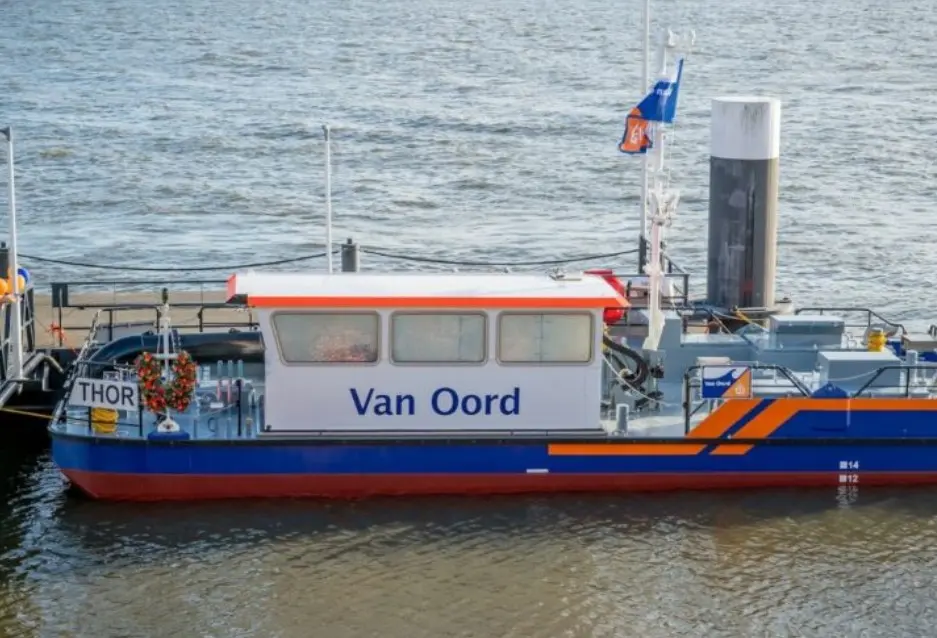
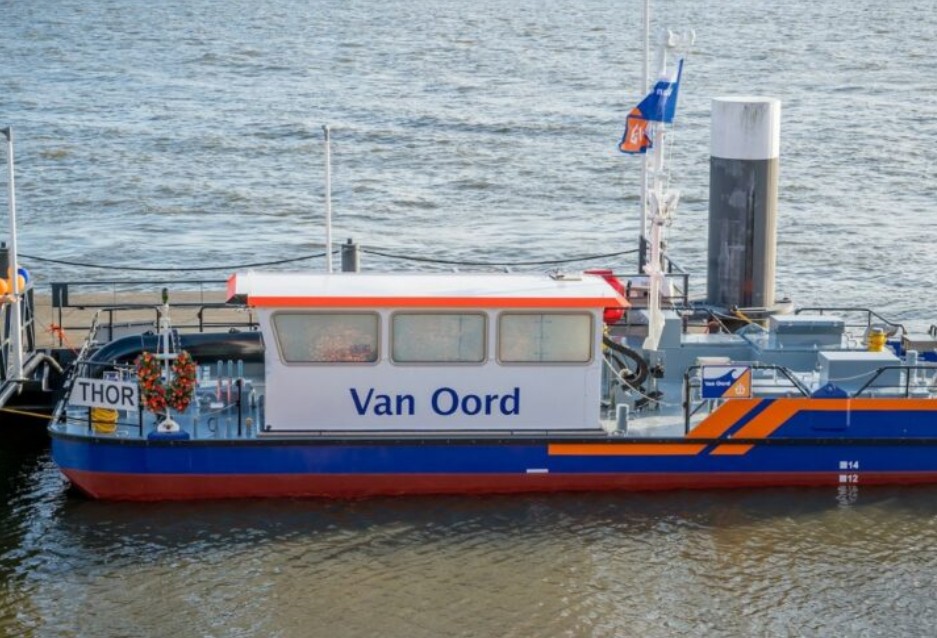
The upcoming project will harness the cutting-edge capabilities of the Thor, a specialized water injection dredging (WID) vessel owned and operated by the renowned Dutch marine contractor Van Oord. Designed to minimize environmental disruption while maximizing sediment mobility, the deployment of the Thor underscores a broader industry shift toward sustainable, low-impact waterway maintenance.
As global supply chains increasingly rely on the smooth operation of inland waterways and tidal ports, targeted interventions like the upcoming Robins Wharf campaign are essential for maintaining commercial viability, ensuring navigational safety, and preserving the delicate ecological balance of the Thames Estuary.
Executive Overview: The Northfleet Campaign
The upcoming maintenance dredging campaign at Robins Wharf is a focused, high-tempo operation designed to restore optimal water depths along a vital industrial stretch of the River Thames. Managed under the watchful regulatory oversight of the Port of London Authority, the project will target sediment accumulations that naturally build up within the berth pockets and approach channels of the facility.
Scheduled to kick off on September 9, 2026, the entire operational footprint of the project is remarkably compact, projected to span a duration of just three working days. Despite its short timeline, the operation carries significant logistical importance. Robins Wharf serves as a key commercial hub along the estuary, requiring reliable depths to accommodate the safe berthing and handling of commercial vessels.
To execute the works, Van Oord has deployed its state-of-the-art water injection dredging vessel, the Thor. Unlike traditional mechanical dredging methods—which scoop, lift, and dump sediment via clamshell buckets or trailing suction hopper dredgers (TSHDs)—the Thor relies on water injection technology. This method fluidizes the seabed sediment, allowing it to move naturally with the ebb and flow of the Thames tide.
Operating within a strict window either side of the high-water period, the project will require precise coordination between the vessel’s crew, local pilots, and PLA marine traffic controllers. Comprehensive navigational notices have been circulated to river users, outlining mandatory speed restrictions and cautionary protocols to ensure the safety of all commercial and recreational vessels transiting the Northfleet reach during the operations.
Detailed Chronology of the Project
The journey toward the September 9 commencement date involves a meticulously planned sequence of engineering assessments, navigational clearances, environmental approvals, and operational mobilizations.
Phase 1: Hydrographic Surveying and Need Assessment
Months prior to the mobilization of the Thor, hydrographic surveyors conducted detailed bathymetric surveys of Robins Wharf and its surrounding riverbed. These surveys involve multibeam echosounders that map the topography of the seafloor in high resolution, identifying silt and sediment shoals that have migrated into the berthing pockets. The data collected during these surveys determined the exact volume of material requiring remediation and confirmed that water injection dredging was the optimal technical approach for the site’s specific sediment composition.
Phase 2: Regulatory Clearances and PLA Coordination
Operating within the tidal Thames requires rigorous coordination with the Port of London Authority, the statutory harbor authority responsible for navigational safety across 95 tidal miles of the river. The PLA reviewed Van Oord’s method statements, environmental risk assessments, and traffic management plans. Formal Marine Notices were subsequently drafted and published, establishing clear rules of engagement for river traffic, defining safety exclusion zones, and detailing the operational schedule beginning September 9.
Phase 3: Mobilization of the Thor
In the days leading up to the operational window, Van Oord’s Thor will mobilize to the Northfleet site. The vessel’s crew will perform final equipment checks on its high-volume, low-pressure water pumps, positioning systems, and electronic monitoring arrays. Because WID operations require precise positioning to ensure even sediment fluidization without over-excavating the seabed, the Thor’s onboard dynamic positioning and differential GPS systems undergo rigorous calibration.
Phase 4: Execution (September 9 – September 11, 2026)
Actual dredging operations are slated to run for three intensive working days, operating primarily in windows aligned with the high-water slack tide. This timing utilizes the natural currents of the Thames to assist in the downstream transport of the fluidized sediment. During active dredging phases, surrounding river traffic must adhere to strict speed limits and instructions issued by London VTS (Vessel Traffic Services).
Phase 5: Post-Dredging Verification
Immediately following the completion of the three-day operational window, post-dredging bathymetric surveys will be conducted. These surveys verify that the required navigational depths have been successfully restored at Robins Wharf, ensuring full compliance with PLA standards before the facility resumes unrestricted commercial operations.
Supporting Context & Metrics: The Science of Water Injection Dredging
To understand the significance of Van Oord deploying the Thor to Northfleet, one must examine the operational mechanics and environmental advantages of Water Injection Dredging (WID).
How Water Injection Dredging Works
Traditional dredging often involves mechanical excavation or hydraulic suction, where material is dredged, pumped into hoppers, and transported to designated offshore disposal sites. WID, by contrast, is an in-situ relocation technique.
The Thor is equipped with a specialized jetting bar that is lowered into the sediment layer. Through this bar, large volumes of water are injected at low pressure directly into the consolidated silt and mud. This process does not blow the sediment away violently; instead, it mixes water into the sediment matrix, increasing its specific gravity and turning it into a high-density, fluid mud.
Once fluidized, this mixture behaves like a heavy liquid. Driven by gravity and assisted by natural tidal currents, the fluid mud flows downward along the natural slope of the riverbed into deeper, designated deposition areas within the estuary, where it can be naturally dispersed or managed without disrupting active shipping lanes.
[Traditional Dredging] -> Scoop/Pump -> Hopper Storage -> Long-Distance Transport -> Offshore Disposal
[Water Injection (WID)] -> Low-Pressure Jetting -> Fluidized Sediment -> Natural Tidal Gravity Flow -> In-Estuary Redeposition
Key Operational Metrics and Advantages
- Fuel Efficiency and Lower Emissions: Because WID vessels do not need to pump heavy slurry up into massive hoppers or transport payloads miles out to sea, fuel consumption is drastically reduced. This directly translates to lower carbon emissions per cubic meter of sediment moved, aligning with international decarbonization goals in the maritime sector.
- Speed and Cost-Effectiveness: The absence of mechanical digging components and transport cycles means WID operations are remarkably fast. The entire Robins Wharf campaign is projected to take just three days—a timeframe that would be virtually impossible to achieve using traditional trailing suction hopper dredgers.
- Minimal Disruption to Port Operations: The Thor has a relatively small footprint and operates with high maneuverability. This allows commercial berths at Robins Wharf to experience minimal downtime, as dredging can be executed rapidly between shipping schedules or tightly managed around high tides.
- Ecological Harmony: By working with natural hydrodynamic forces and avoiding disruptive mechanical digging, WID preserves the structural integrity of the underlying consolidated seabed strata while safely clearing accumulated top-layer silt.
Official Statements and Industry Perspectives
The announcement of the upcoming campaign has drawn commentary from maritime authorities and environmental stakeholders alike, highlighting the collaborative approach required to maintain the UK’s busiest waterway.
A spokesperson for the Port of London Authority emphasized the critical balance between commercial facilitation and river safety:
"Maintaining guaranteed depths at industrial hubs like Robins Wharf is fundamental to the economic vitality of the Thames corridor. Our collaborative planning with contractors like Van Oord ensures that essential maintenance is executed with precision, prioritizing navigational safety and environmental stewardship above all else. River users are strongly urged to review our published notices and cooperate fully with London VTS instructions during the September operational window."
Industry analysts tracking maritime logistics note that the choice of Van Oord for this project reflects confidence in specialized, low-emission technologies. A senior maritime infrastructure consultant remarked:
"The deployment of the Thor at Northfleet is a textbook example of modern maintenance dredging. Ports cannot afford extended operational shutdowns, nor can they ignore stringent environmental regulations. Water injection dredging hits the sweet spot—it’s fast, incredibly cost-effective, and gentle on the estuarine ecosystem. Van Oord has positioned itself at the forefront of this methodology."
Representatives for Van Oord have similarly underscored their commitment to delivering safe, efficient, and sustainable marine solutions. The Dutch contractor has long championed innovation in sediment management, viewing projects along major European trade arteries like the Thames as proof of concept for green engineering principles in maritime infrastructure.
Future Outlook: The Evolution of Thames Estuary Maintenance
As maritime trade evolves and vessel sizes continue to optimize for efficiency, the demands placed on estuarine infrastructure will only increase. The upcoming dredging campaign at Robins Wharf is more than a routine maintenance cycle; it represents a micro-model for the future of port and waterway upkeep across the United Kingdom and Northern Europe.
The Shift Toward Zero-Emission Marine Contracting
Looking ahead toward 2030 and beyond, major dredging contractors are under mounting pressure to eliminate carbon footprints entirely. While vessels like the Thor already offer significantly lower emissions than legacy mechanical dredgers, the industry is rapidly transitioning toward hybrid propulsion, biofuel integration, and fully electric or hydrogen-powered dredging equipment. Future maintenance campaigns on the Thames will likely see these next-generation technologies integrated into standard operations.
Proactive Sediment Management and Digital Twin Technology
The future of estuarine management is also increasingly digital. Hydrographic surveying is shifting from periodic, reactive measurement campaigns to continuous, real-time bathymetric monitoring using autonomous survey vessels (ASVs) and digital twin models of the riverbed. By combining real-time siltation modeling with agile WID vessels like the Thor, port authorities will soon be able to predict sediment buildup with pinpoint accuracy, executing micro-dredging interventions before shoals ever pose a threat to navigation.
Preserving Estuarine Health
Balancing commercial dredging with ecological preservation will remain a central pillar of Thames management. As regulatory frameworks tighten around biodiversity net gain and water quality, techniques like water injection dredging will serve as the baseline standard for maintenance. By respecting the natural hydrodynamics of the river rather than fighting against them, authorities and contractors can ensure that the Thames remains a thriving highway for commerce and a healthy ecosystem for marine life for generations to come.
Summary of Key Project Details
- Location: Robins Wharf, Northfleet, River Thames, United Kingdom
- Asset: Van Oord’s Water Injection Dredging (WID) vessel Thor
- Regulatory Body: Port of London Authority (PLA)
- Start Date: On or around September 9, 2026
- Duration: Approximately 3 working days
- Operational Window: Either side of the high water period
- Methodology: Low-pressure, high-volume water injection dredging (sediment fluidization)