








Executive Overview
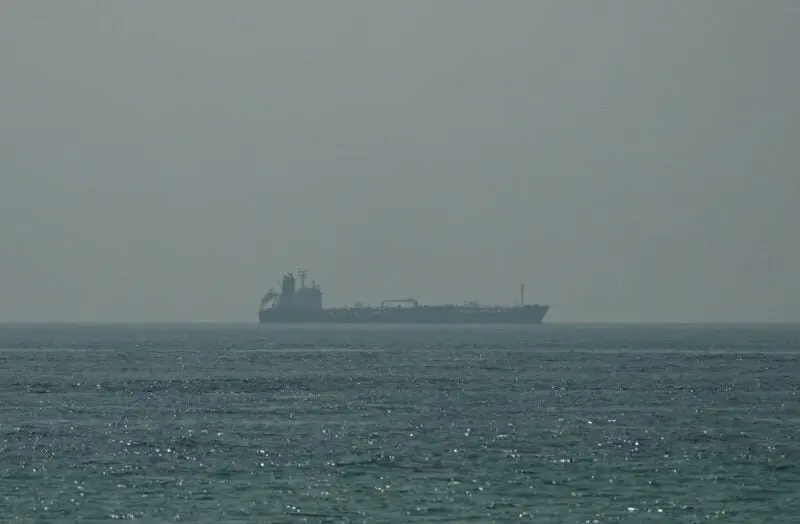
A high-stakes maritime incident has unfolded in the highly volatile waters of the Middle East, signaling a dangerous escalation in the ongoing regional conflict. A U.S.-contracted commercial vessel carrying American personnel was targeted and struck in a coordinated Iranian drone and missile attack near the strategic Strait of Hormuz. The strike, which took place earlier this week, has heightened anxieties across the global shipping industry and defense sectors, marking one of the few instances during the current crisis where U.S. personnel on a non-military vessel have sustained direct injuries from hostile fire.
According to initial intelligence reports, the assault was characterized by a multi-layered offensive profile, involving at least four one-way attack unmanned aerial vehicles (UAVs) and a minimum of one anti-ship missile. While the vessel managed to survive the onslaught, one of the weapons successfully penetrated the ship’s defenses or superstructure, causing structural damage and inflicting minor injuries—primarily smoke inhalation—on several crew members and U.S. personnel aboard. The injured individuals were subsequently evacuated to an undisclosed Gulf nation for medical treatment.
The incident occurs against a backdrop of severely depressed transit volumes through the Strait of Hormuz, a critical maritime chokepoint responsible for the passage of a significant portion of the world’s liquefied natural gas (LNG) and crude oil. Despite concerted efforts by the United States and its coalition partners to secure a "southern transit route" to reassure commercial shipping companies, the persistent threat of asymmetric warfare from Iranian state forces and their regional proxies has kept commercial traffic well below pre-conflict baselines.
This latest attack introduces a highly volatile variable: the direct targeting of U.S.-contracted assets carrying American citizens. This development threatens to dismantle the fragile framework of deterrence that Western naval forces have attempted to establish in the region, raising the distinct possibility of direct kinetic retaliation by the United States.
Detailed Chronology of the Incident
The sequence of events unfolded in the early hours of the week in the international waters adjacent to the Strait of Hormuz—a narrow waterway bounded by Iran to the north and Oman and the United Arab Emirates to the south.
[Iranian Coast / IRGC Bases]
       │
       ├── (4x Attack Drones) ───┐
       └── (1x Anti-Ship Missile) ──┼──> [Target: U.S.-Contracted Vessel]
                                 │    (Location: Near Strait of Hormuz)
                                 │    (Result: 1 Hit, Minor Injuries/Smoke Inhalation)
                                 │
                                 └──> [Medical Evacuation] ──> [Undisclosed Gulf Port]
The Attack Vector
According to military sources and reporting by Fox News Chief Foreign Correspondent Trey Yingst, the vessel was targeted in a synchronized, saturation-style strike. Saturation tactics are designed to overwhelm a ship’s organic defense systems by presenting multiple threats simultaneously from different vectors.
- The Drone Wave: The attack commenced with the deployment of four Iranian-manufactured one-way attack drones (often referred to as "kamikaze" drones). These low-flying, slow-moving systems are designed to evade traditional radar and complicate targeting for close-in weapon systems (CIWS).
- The Missile Strike: Coinciding with the drone wave, at least one anti-ship missile was launched. This combination of high-speed ballistic or cruise missile technology alongside low-and-slow loitering munitions represents a standard doctrine employed by the Islamic Revolutionary Guard Corps (IRGC) to saturate a target’s defense envelope.
- The Impact: While several of the incoming threats were either neutralized or failed to find their target, at least one of the assets successfully impacted the vessel. The strike initiated a localized fire, resulting in smoke inhalation and minor injuries among the personnel on board.
Immediate Aftermath and Evacuation
Following the impact, the ship’s crew initiated damage control protocols to contain the fire and stabilize the vessel. Due to the presence of U.S. personnel and the nature of the injuries, a medical evacuation (MEDEVAC) was swiftly coordinated.
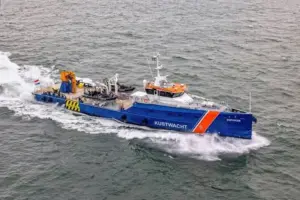
The injured personnel were transported to a nearby, undisclosed Gulf country—likely home to robust U.S. military medical facilities, such as Bahrain (home of the U.S. Fifth Fleet) or Qatar (home to Al Udeid Air Base). The identity of the targeted vessel, its flag state, its operator, and the specific nature of its contract with the United States government remain classified or withheld by defense officials, likely to protect operational security and prevent the compromise of sensitive logistics networks.
Supporting Context & Metrics
To understand the gravity of this attack, it must be analyzed within the broader context of the geopolitical struggle over global shipping lanes and the technical capabilities of the belligerents.
The Strategic Importance of the Strait of Hormuz
The Strait of Hormuz is widely considered the most vital transit chokepoint in the global energy economy. Measuring just 21 miles wide at its narrowest point, the shipping lanes inside the strait are only two miles wide in either direction, forcing massive tankers to pass in close proximity to Iranian territorial waters.
| Metric | Details |
|---|---|
| Daily Oil Flow | Approximately 20–21 million barrels per day (bpd) |
| Global Share | Consistently accounts for roughly 20% of global petroleum consumption |
| LNG Transits | Over 80 million metric tons of Liquefied Natural Gas annually (primarily from Qatar) |
| Alternative Routes | Extremely limited; bypassing the Strait requires pipeline infrastructure with insufficient capacity |
                [ Persian Gulf ]
                       │
                       ▼
              [ Strait of Hormuz ]  <--- Narrow 21-mile chokepoint
                       │
                       ▼
               [ Gulf of Oman ]
                       │
                       ▼
               [ Arabian Sea ]
The Chilling Effect on Commercial Maritime Traffic
The persistent threat of drone attacks, missile strikes, and vessel seizures by Iranian forces has had a devastating impact on commercial shipping metrics in the region.
- Transit Reductions: Commercial transits through the Strait of Hormuz remain significantly below historical averages. Major maritime shipping conglomerates, including Maersk, MSC, and Hapag-Lloyd, have routinely rerouted vessels or demanded military escorts, driving up operational costs.
- War Risk Insurance Premiums: Insurance rates for transiting the Persian Gulf and Gulf of Oman have surged. What was once a standard transit now requires specialized war risk premiums, which can add hundreds of thousands of dollars to the cost of a single voyage.
- The "Southern Route" Failure: The United States military has attempted to facilitate safer transits by establishing a designated route through the southern, non-territorial portion of the Strait, supported by coalition naval patrols. However, as this latest incident demonstrates, these designated corridors remain highly vulnerable to stand-off precision strikes launched from the Iranian mainland.
Contrast with the Tanker El Gaia Incident
The strike on the U.S.-contracted vessel is not an isolated event but part of a broader, systemic campaign of maritime interdiction. It occurred shortly after another severe incident involving the commercial tanker El Gaia.
The El Gaia was struck by hostile fire near the Strait of Hormuz, suffering catastrophic damage that disabled its propulsion systems. The crippled vessel had to be taken under tow toward the coast of Oman. Compounding the tragedy, two crew members from the El Gaia remain missing and are presumed dead.
While the attack on the El Gaia targeted a standard commercial merchant ship, the strike on the U.S.-contracted vessel represents a distinct shift in targeting philosophy, directly placing American government-affiliated personnel in the line of fire.
Official Statements and Geopolitical Responses
As of mid-week, a conspicuous silence has characterized the official response from Washington, highlighting the delicate diplomatic and military tightrope the Biden administration must walk.
U.S. Defense Posture and Silence
Neither U.S. Central Command (CENTCOM) nor the Department of Defense has publicly identified the vessel or released detailed incident reports. When questioned, defense officials have maintained a posture of non-disclosure, citing ongoing assessments and the need to protect the identity of contracted assets.
This silence is interpreted by maritime intelligence analysts as an attempt to de-escalate the situation and avoid a public commitment to kinetic retaliation. Under standard U.S. military rules of engagement, an attack on a U.S.-flagged or U.S.-contracted vessel carrying American personnel can be construed as an act of war, demanding a proportional military response. By keeping the details of the attack classified, the Pentagon retains strategic flexibility and avoids being forced into an immediate, public escalatory cycle with Tehran.
The Iranian Strategy of Plausible Deniability
Tehran has similarly remained quiet regarding the specific strike, a tactic consistent with its doctrine of asymmetric warfare. By utilizing unmanned systems and launching attacks from regions that allow for plausible deniability—or by utilizing proxy networks—Iran aims to project power and deter Western interference without triggering a direct, conventional military confrontation with the United States Navy.
Industry Reactions
Private maritime security firms have expressed deep concern over the development. A senior analyst at a prominent maritime intelligence firm noted:
"The targeting of a vessel known to be under contract with the United States government, carrying American personnel, represents a breach of the informal red lines that have governed the shadow war in the Gulf. If commercial vessels chartered by the military are no longer safe under the umbrella of coalition naval presence, the entire logistics chain supporting Western forces in the Middle East is at risk."
Future Outlook and Strategic Implications
The attack on the U.S.-contracted vessel near the Strait of Hormuz is poised to reshape the security architecture of the region’s waterways. Several key trends are expected to emerge in the coming weeks and months.
[Attack on U.S.-Contracted Vessel]
       │
       ├──> [Escalation of Escort Protocols] ──> Increased demand for direct naval escorts
       │
       ├──> [Spike in Maritime Insurance] ─────> War risk premiums rise; some routes declared "no-go"
       │
       └──> [Strategic Re-evaluation] ────────> US Navy shifts from passive deterrence to active kinetic defense
1. Re-evaluation of U.S. Naval Escort Protocols
The failure of the "southern transit route" to protect a U.S.-contracted vessel will likely force CENTCOM to re-evaluate its convoy and escort protocols. The U.S. Navy, alongside coalition partners under the umbrella of the International Maritime Security Construct (IMSC) and Coalition Task Force (CTF) Sentinel, may be forced to shift from general area patrol to direct, close-in escorts for high-value or government-contracted merchant vessels. This shift will stretch naval assets thin, potentially requiring the deployment of additional destroyers and littoral combat ships to the Fifth Fleet’s area of responsibility.
2. Upward Pressure on Global Energy Markets and Insurance
If attacks of this nature continue, the shipping industry may reach a tipping point where the Strait of Hormuz is deemed too hazardous for standard commercial transits without government-backed insurance guarantees. A formal declaration of the Strait as a "no-go zone" by major maritime registries would immediately trigger a spike in global crude oil and LNG prices, disrupting supply chains that are already strained by the avoidance of the Red Sea and the Suez Canal.
3. The Risk of Direct Kinetic Retaliation
The presence of injured American personnel is a highly sensitive political issue in Washington. Should intelligence definitively link the launch sites of the drones and missiles to specific IRGC bases on the Iranian mainland, the United States will face intense domestic and international pressure to conduct retaliatory strikes. Such a response would risk transforming a localized maritime interdiction campaign into a broader, regional kinetic conflict.
Conclusion
The Strait of Hormuz remains the most critical and fragile artery of global commerce. As the shadow war between the United States, its allies, and Iran increasingly spills over into direct, kinetic confrontations on the high seas, the margin for error is rapidly shrinking. The attack on this U.S.-contracted vessel serves as a stark reminder that in the modern landscape of asymmetric warfare, the line between commercial shipping and military conflict has been thoroughly erased.