









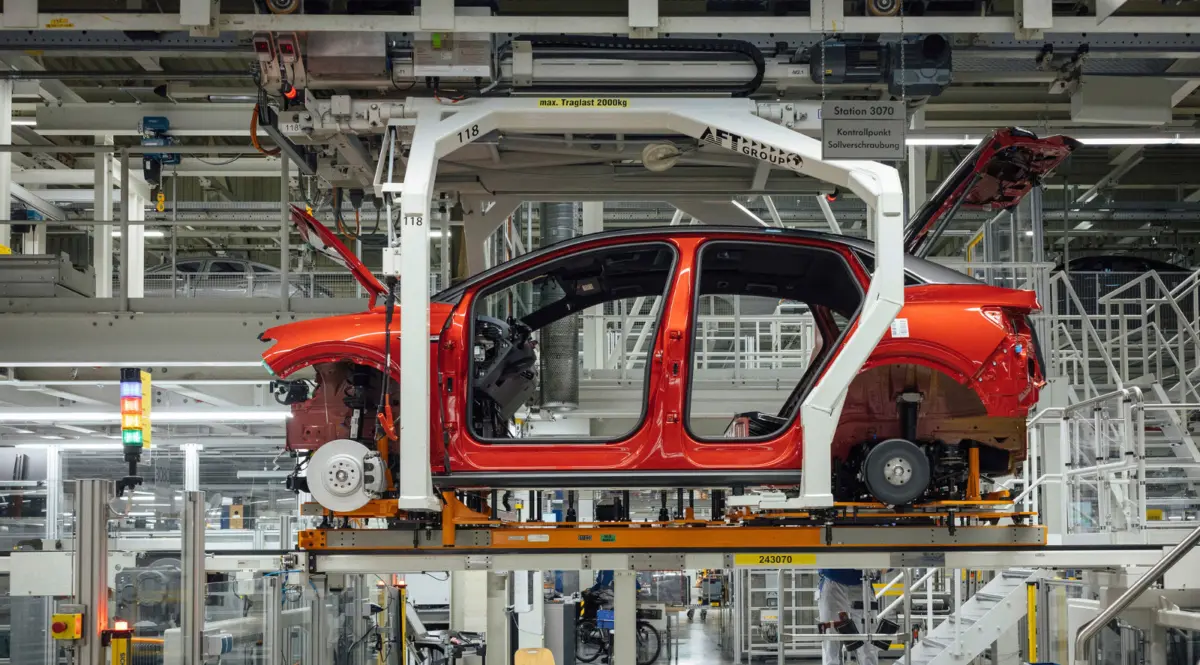
The global automotive landscape is undergoing its most radical and unforgiving transformation since the dawn of mass production. At the epicenter of this seismic shift is the Volkswagen Group, a titan that has long shared the crown of the world’s largest automaker. Today, however, that crown sits precariously. Facing an aggressive onslaught of agile Chinese competitors, collapsing demand in traditional overseas markets, compressed profit margins, and a rapidly evolving consumer base transitioning away from internal combustion engines (ICE), Volkswagen has been forced to make hard, painful choices.
Following months of intense internal friction, high-stakes boardroom showdowns, and fierce resistance from labor unions, the Volkswagen Group’s supervisory board unanimously approved the automaker’s sweeping Future Plan 2030. This landmark restructuring strategy is designed to drag the legacy icon into a sustainable, electrified future, but the human and operational toll will be staggering.
The approved roadmap mandates the elimination of an additional 50,000 jobs—bringing Volkswagen’s total planned workforce reduction to 100,000 positions globally by the end of the decade. Furthermore, the company will slash up to 50% of its current vehicle model lineup, pruning redundant offerings to streamline production. Meanwhile, the long-term operational viability of four major German manufacturing plants—located in Hanover, Zwickau, Emden, and the Audi site in Neckarsulm—hangs in the balance.
As Volkswagen charts this perilous course, industry analysts are watching closely. The turmoil in Wolfsburg is not merely an isolated corporate restructuring; it serves as a glaring warning shot for legacy automakers worldwide, including American giants like Ford, GM, and Stellantis. If a titan as deeply entrenched as Volkswagen can face a near-existential crisis, no traditional legacy automaker is immune to the winds of change.
Detailed Chronology: From Boardroom Rejection to Unanimous Approval
The path to the Future Plan 2030 has been defined by political maneuvering, industrial brinkmanship, and high-stakes corporate drama.
June 2026: The Leak and the Initial Vision
The storm clouds gathered publicly in June 2026 when Germany’s Manager Magazin leaked details of a radical restructuring blueprint drafted by Volkswagen Group CEO Oliver Blume. According to the report, Blume intended to present a plan at the July 9 board meeting aimed at shuttering four core domestic factories and slashing 100,000 jobs worldwide by 2030. The targeted facilities included the vital commercial vehicle and passenger car plants in Hanover, Zwickau, Emden, and Neckarsulm.
July 9, 2026: The Boardroom Rebuke
When July 9 arrived, Blume’s aggressive vision met a brick wall. The board of directors dealt the CEO a stinging defeat, voting 12 to 7 against his proposals. At the time, Volkswagen was caught in a severe financial squeeze: global sales had plummeted from a peak of roughly 12 million vehicles annually down to 9 million. Though 9 million vehicles is still a massive volume, shrinking profit margins and bloated overcapacity meant the company was producing significantly more cars than it could profitably sell.
Despite the setback, insiders characterized Blume as intensely "determined." Rather than backing down, reports surfaced in Handelsblatt that Blume was prepared to implement his strategy incrementally—even if it meant forcing the issue against fierce opposition from labor unions and the state of Lower Saxony, which holds a powerful stake in the company.
September 3, 2026: Unanimous Approval and a Shift in Tone
The deadlock finally broke on September 3, 2026, when the Volkswagen Group officially announced that the supervisory board had unanimously approved a refined iteration of the Future Plan 2030.
While the headline figures remained alarming—including the total 100,000 workforce reduction (building upon a prior 50,000 cut to reach that grim milestone) and the chopping of half the current vehicle catalog—the unanimous vote signaled that management and labor had managed to find a temporary bridge across an uncomfortably wide chasm. The strategy now moves from a conceptual battleground into an aggressive execution phase, with concrete plant evaluations slated to conclude by mid-2027.
Supporting Context & Metrics: Overcapacity, Falling Margins, and Global Headwinds
To understand why Volkswagen felt compelled to take a chainsaw to its operations, one must look closely at the underlying financial and structural metrics driving the European automotive sector.

The Overcapacity Crisis
According to the official supervisory board findings, Volkswagen Group’s European production capacity currently exceeds real market demand by more than 500,000 units. The company’s plants in Emden, Zwickau, Hanover, and Neckarsulm represent a combined annual capacity of approximately 750,000 vehicles, employing over 40,000 workers.
Maintaining underutilized factories is a massive financial drain. However, finding alternative uses for these sprawling industrial footprints is easier said than done. While some commentators have floated the idea of pivoting underutilized European automotive capacity toward the defense sector—capitalizing on changing geopolitical landscapes and rising military hardware demands—industry experts remain deeply skeptical.
Harald Hendrikse, a managing director at Citi Research, bluntly told The New York Times, "People forget how big the car industry is. The chance of saving all of these jobs and all of this capacity with the defense industry is zero." Other alternative proposals, such as renting out excess assembly lines to Chinese automakers looking to manufacture locally within Europe to dodge tariffs, remain speculative.
The Perfect Storm: US Tariffs, China, and EV Transitions
Volkswagen’s struggles are compounded by external geopolitical and market forces:
- The United States: Recent trade policies and tariff adjustments implemented by the US administration have severely eroded the cost-competitiveness of several Volkswagen models exported across the Atlantic.
- China: Once Volkswagen’s most lucrative cash cow, its sales in the Chinese market have suffered a steep decline as domestic Chinese EV manufacturers dominate the local landscape with superior software, rapid product iteration, and aggressive pricing.
- Europe: While sales of traditional internal combustion engine vehicles have trended downward across the continent for years, Volkswagen’s bright spot remains its expanding electric vehicle (EV) footprint in Europe. Yet, transitioning legacy factories to profitable EV lines requires capital injections numbering in the tens of billions.
Official Statements and Stakeholder Reactions
The uneasy truce between corporate leadership and labor representatives highlights the tightrope Volkswagen must walk to avoid catastrophic industrial strikes.
Leadership Perspective
In a corporate statement, the automaker emphasized the necessity of acting swiftly:
"As the automotive industry and its markets undergo their fastest and most fundamental shift to date, it enables the Volkswagen Group to pave the way for sustainable long term success. The Future Plan 2030 sets the stage to make the Volkswagen Group and its brands stronger, more competitive and better positioned for the future."
CEO Oliver Blume framed the unanimous board approval as a vital turning point for the enterprise:
"The Supervisory Board has unanimously approved the Executive Board’s Future Plan presented today. This is a strong signal for the future of the Volkswagen Group. We are taking responsibility for our entire workforce, for our partners and for industrial jobs worldwide. Over the coming years, we will invest a three figure billion sum to make our iconic brands even more attractive, stronger, and more competitive."
The company noted that a comprehensive, sustainable production concept for European plants will be finalized by the end of June 2027. This framework will assess whether plants like Emden, Zwickau, Hanover, and Neckarsulm can secure a competitive production allocation through the 2031–2034 window, or if alternative uses must be found.
Labor Perspective
Powerful labor organizations, including the IG Metall union and the Volkswagen Group works council, have temporarily held their fire, choosing to avoid a full-scale industrial war. However, they pulled no punches in criticizing management’s abrasive tactics.

In a joint statement, IG Metall chief Christiane Benner and works council chair Daniela Cavallo stated:
"The confrontational approach and communication by the management board in recent weeks were not constructive."
Nevertheless, labor leaders claimed major defensive victories. They pointed out that the controversial spinoff of the core brand has been taken off the table, effectively fending off an assault on Germany’s sacred co-determination governance structures. Furthermore, Benner and Cavallo emphasized that "no plant has been abandoned, and contrary to several media reports, no plant closure has been finalized. Instead, concrete solutions must now be developed for all sites, and we continue to see the management board as having a clear responsibility."
Future Outlook: Adapt or Face the Nokia Moment
The automotive world is experiencing a paradigm shift. For decades, legacy manufacturers enjoyed structural moats—complex supply chains, entrenched dealership networks, and decades of internal combustion engine engineering expertise—that protected them from upstarts. Today, those very moats have transformed into heavy anchors.
The Pricing and Product Dilemma
Consider the broader consumer landscape. In the United States, the average price of a new car hovers around $48,500—putting brand-new vehicles out of reach for millions of working-class families. While Western legacy brands continue to pump out massive, high-margin, three-row SUVs powered by traditional ICE powertrains or expensive large battery packs, emerging global markets in India, Africa, and parts of Asia are crying out for something entirely different: simple, practical, highly affordable entry-level vehicles.
Chinese automakers have stepped into this vacuum with devastating efficiency, offering export models that significantly undercut Western pricing. Meanwhile, Volkswagen’s plan to prune its own model catalog by 50% is a desperate bid to simplify supply chains, though management has yet to clarify which specific gas-powered or electric models will face the chopping block.
A Harbinger for the Industry
Electric vehicles now account for roughly a quarter of all new car sales in major markets, with that market share ticking upward quarter after quarter. Yet, many American and European legacy executives continue to drag their feet, clinging to legacy margins while market share slips away.
Volkswagen’s high-stakes gamble is a stark reminder of what happens when a market shifts beneath a corporate monolith’s feet. If management executes poorly, or if the multi-billion-euro pivot fails to win back consumers in China and North America, mighty Volkswagen—once neck-and-neck with Toyota for the global crown—runs the genuine risk of experiencing a "Nokia moment."
The next few years in Wolfsburg will serve as a definitive case study. Whether the Future Plan 2030 becomes a masterclass in corporate turnaround or a cautionary tale of too little, too late, it stands as an unmistakable harbinger of the turbulent road ahead for Ford, General Motors, Stellantis, and every other legacy automaker racing to survive the electric century.