









LONDON — The Marine Accident Investigation Branch (MAIB) has officially concluded its preliminary assessment into the tragic death of a crew member aboard the luxury coastal cruise ship Hebridean Princess, which occurred in June 2026. Following a comprehensive review of the initial findings, the Chief Inspector of Marine Accidents has determined that the fatality was not directly connected to the operation, navigation, or machinery of the vessel. Consequently, under the provisions of the Merchant Shipping (Accident Reporting and Investigation) Regulations 2026, the branch will not launch a full-scale safety investigation.
The announcement, released by the Department for Transport agency on August 12, 2026, brings a preliminary close to the operational inquiry into an incident that has deeply affected the tight-knit British maritime and coastal tourism community. While the decision halts formal statutory safety probes by the state’s primary marine watchdog, it opens broader conversations regarding crew welfare, medical oversight at sea, and the stringent legal thresholds governing statutory marine accident investigations in United Kingdom waters.
Executive Overview
The incident involving the Hebridean Princess highlights the complex protocols that govern worker safety, accident reporting, and jurisdictional boundaries within the commercial maritime sector. In June 2026, an individual serving among the crew of the renowned luxury vessel tragically lost their life. Standard regulatory procedures require the MAIB to immediately gather preliminary data, interview witnesses, review shipboard logs, and assess whether vessel operations, safety management systems, or equipment failures contributed to the tragedy.

Following weeks of evidence collation and expert medical analysis, the MAIB’s preliminary assessment established that the underlying cause of death fell outside the scope of shipboard operational hazards. Under the Merchant Shipping (Accident Reporting and Investigation) Regulations 2026, the statutory mandate of the Chief Inspector is explicitly tied to accidents and incidents arising from the operation of a ship. Because the threshold of operational causality was not met, the agency exercised its statutory discretion to forgo a full investigation.
This decision, while legally compliant with national and international maritime law, underscores the distinction between a workplace fatality subject to maritime safety probes and a death occurring aboard a vessel that is medical, natural, or otherwise decoupled from shipboard mechanics. The case now transitions entirely to local coronial processes and standard workplace regulatory frameworks, bypassing what would have been a protracted maritime safety inquiry.
Detailed Chronology of Events
While the MAIB’s public statement remains concise due to privacy and data protection considerations regarding the deceased, the timeline of the preliminary assessment spans from the initial emergency response in June 2026 to the formal administrative closure in August 2026.
The Initial Incident (June 2026)
The event unfolded during a scheduled voyage of the Hebridean Princess, a vessel celebrated for carrying discerning travelers to remote Scottish islands and coastal landmarks. Emergency protocols were swiftly enacted by the ship’s command team after a crew member experienced a critical medical or traumatic crisis onboard. Medical assistance was rendered in accordance with the ship’s established medical guide standards, and emergency services were coordinated as the vessel made port arrangements. Despite the intervention of shipboard personnel and emergency medical responders, the crew member could not be revived.

Immediate Regulatory Notification
In strict adherence to the Merchant Shipping (Accident Reporting and Investigation) Regulations, the vessel’s operators immediately notified the MAIB of the fatality. Under UK law, any death or serious injury occurring on a commercial vessel must be reported to the branch without delay. This notification triggers the dispatch of inspectors or the remote collection of perishable evidence, including voyage data recorder (VDR) downloads, CCTV footage where applicable, crew statements, medical logs, and maintenance records.
The Preliminary Assessment Phase (June – August 2026)
Throughout the summer of 2026, MAIB analysts and metallurgical, medical, and navigational specialists conducted a rigorous review of the evidence. The preliminary assessment is designed to answer a fundamental legal and investigative question: Did the design, operation, equipment, or management of the ship cause or contribute to the accident?
Investigators cross-referenced the medical history, autopsy findings, and eyewitness accounts against the ship’s operational parameters. By mid-August, the evidence converged on a definitive conclusion: the operational integrity of the Hebridean Princess, its safety management systems, and its navigation equipment played no causal role in the crew member’s passing. Consequently, the Chief Inspector finalized the assessment report, leading to the public disclosure on August 12, 2026.
Supporting Context & Metrics
To fully understand the weight of the MAIB’s decision, it is necessary to examine the broader context of maritime safety regulations, the operational profile of the Hebridean Princess, and the statistical framework governing UK marine investigations.
The Hebridean Princess: A Profile in Coastal Luxury
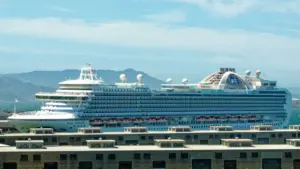
The Hebridean Princess occupies a unique and prestigious niche in British maritime tourism. Originally commissioned as a ferry (Caledonian Isles), the vessel was extensively converted into a luxury cruise yacht capable of accommodating approximately 50 guests. Renowned for providing exclusive, high-end voyages around the Hebrides and remote Scottish lochs, the ship maintains a high ratio of crew to passengers, fostering a familiar, community-like environment among its onboard personnel.
Because vessels of this type operate in often challenging, remote coastal waters—frequently miles away from immediate shore-based hospital infrastructure—the health, safety, and medical preparedness of the crew are paramount. Operators in this sector are subject to rigorous audits by the Maritime and Coastguard Agency (MCA) to ensure compliance with the Maritime Labour Convention (MLC), which mandates stringent standards for crew accommodation, working hours, health protection, and medical care at sea.
The Legal Framework: Merchant Shipping Regulations 2026
The MAIB operates independently under the Department for Transport, charged with investigating marine accidents to determine their circumstances and causes with the sole objective of preventing future marine accidents. It does not seek to apportion blame or liability.
The statutory foundation for the MAIB’s work is updated periodically, with the Merchant Shipping (Accident Reporting and Investigation) Regulations 2026 providing the contemporary legal boundaries. Under these regulations, a "marine accident" is defined in relation to the operation of a ship. If an incident involves a fatality that is entirely disconnected from ship operations—such as certain pre-existing medical conditions manifesting at sea—the Chief Inspector holds the administrative authority to classify the event as outside the remit of a safety investigation. This ensures that state investigative resources are concentrated on structural failures, navigational errors, stability issues, machinery breakdowns, and occupational safety hazards inherent to life at sea.
Statistical Overview of MAIB Preliminary Assessments
The MAIB evaluates dozens of reports annually. A significant percentage of reported fatalities and injuries undergo preliminary assessment without resulting in published, full-length safety reports.
- Resource Optimization: By filtering incidents where ship operations played no causal role, the MAIB maintains the agility required to deploy rapid-response teams to major collisions, groundings, and structural failures.
- Transparency: Issuing formal statements on preliminary assessments—even when declining to investigate—ensures public accountability and informs the maritime industry of the agency’s jurisdictional rationale.
Official Statements and Industry Response
The release of the MAIB statement has prompted reflections from maritime legal experts, trade associations, and representatives of the cruise sector regarding the handling of crew welfare and the transparency of maritime investigations.
In its official August 12 release, the MAIB stated:
"We have undertaken a preliminary assessment into the circumstances of the death of a crew member from Hebridean Princess in June 2026. Following the assessment the MAIB was unable to determine that the crew member’s death was connected to the operation of the vessel. Consequently, in accordance with the Merchant Shipping (Accident Reporting and Investigation) Regulations 2026, the Chief Inspector of Marine Accidents has decided not to conduct a safety investigation."
While the statement is deliberately focused on administrative and legal thresholds, maritime safety advocates emphasize that the absence of an MAIB investigation does not mean the matter is ignored entirely.
Speaking on condition of anonymity, a maritime labor welfare consultant noted:
"While the MAIB’s mandate is strictly limited to operational safety—ensuring ships don’t fail their crews mechanically or procedurally—the human element remains central. When a crew member passes away aboard a vessel, regardless of whether the ship itself caused the incident, the psychological impact on the remaining crew is profound. Operators must step up with comprehensive pastoral care, grief counseling, and rigorous internal debriefs to support shipboard communities."
The operators of the Hebridean Princess have expressed profound sorrow over the loss of their colleague, offering condolences to the grieving family while cooperating fully with all regulatory authorities, coroners, and maritime agencies throughout the preliminary inquiry.
Future Outlook: Implications for Maritime Safety and Welfare
The closure of the MAIB preliminary assessment without a full investigation leaves several broader issues in sharp relief for the UK coastal shipping and cruise industries.
1. Medical Preparedness and Telemedical Support at Sea
Even when an incident is determined not to be caused by vessel operations, the reality of operating in remote waters places a heavy burden on shipboard medical capabilities. Industry stakeholders anticipate renewed discussions regarding the enhancement of telemedical maritime assistance services (TMAS), ensuring that crew members experiencing acute medical events while at sea have immediate, uninterrupted access to specialist shore-side physicians who can guide shipboard first responders.
2. Mental Health and Occupational Well-being
The maritime sector has increasingly focused on the psychological well-being of seafarers. Long contracts, isolation, and the physical demands of working in high-end hospitality and marine operations create unique stressors. Industry groups are utilizing events like this to advocate for expanded mental health resources, improved shore leave provisions, and more robust health screening protocols during pre-employment medical examinations.
3. Regulatory Clarity
The smooth execution of the 2026 regulations in this case demonstrates the established protocols between ship operators, the MCA, and the MAIB. As the Merchant Shipping (Accident Reporting and Investigation) Regulations 2026 bed down across the UK fleet, maritime lawyers and safety managers will continue to monitor how the line between "operational causality" and "independent medical events" is drawn in future preliminary assessments.
Conclusion
While the formal inquiry by the UK’s marine accident watchdog has reached its terminus, the human dimension of the event remains at the forefront. For the crew of the Hebridean Princess and the broader British maritime community, the loss serves as a sobering reminder of the vulnerabilities inherent in life and labor at sea. As the vessel resumes its coastal voyages, the industry continues to balance the rigorous demands of regulatory compliance with an enduring commitment to the health, safety, and pastoral support of every worker who steps aboard.