The annual IAA Transportation trade show in Hannover, Germany, serves as the ultimate litmus test for the commercial vehicle industry. As Europe grapples with crippling summer heatwaves, soaring diesel prices, and intensifying pressure to meet stringent climate mandates, the 2026 iteration of the exhibition has emerged as a high-stakes battleground. On one side of the floor stand technology pioneers showcasing next-generation battery chemistry and ultra-fast megawatt charging infrastructure capable of transforming long-haul logistics. On the other side stand legacy truck manufacturers attempting to stall regulatory progress, citing infrastructure deficits and high implementation costs.
This year, the technological spotlight was stolen not just by vehicle manufacturers, but by component and infrastructure giants redefining what is possible for heavy-duty electric commercial vehicles (e-HGVs). CATL debuted its Tectrans II battery system, offering an unprecedented 1,000-kilometer range and megawatt-class fast charging. Simultaneously, Zerova introduced a jaw-dropping 1,440 kW charging dispenser, nearly doubling the output of systems previously championed by industry entrants like Tesla.
Yet, even as these hardware breakthroughs render technological excuses obsolete, a severe political and economic tug-of-war is underway. Europe’s top seven legacy truck and bus manufacturers—including corporate titans such as Daimler Truck, DAF Trucks, Iveco, and Scania—are petitioning the European Union to delay vital 2030 CO2 emissions reduction targets by three years.
Clean transportation advocates, environmental economists, and industry analysts have fired back fiercely against this pushback. They warn that diluting environmental targets will forfeit European competitiveness to surging Chinese and US competitors, sabotage regional green jobs, and undermine climate commitments at a moment when swift decarbonization is a matter of civilizational survival.
Detailed Chronology: Innovations and Announcements at IAA Transportation 2026
The rollout of advanced commercial fleet technologies at the Hannover exhibition hall charted a clear trajectory: the era of speculative, short-range electric vans and light trucks has given way to heavy-duty, long-haul solutions designed to replace diesel outright.
The CATL Tectrans II Revolution
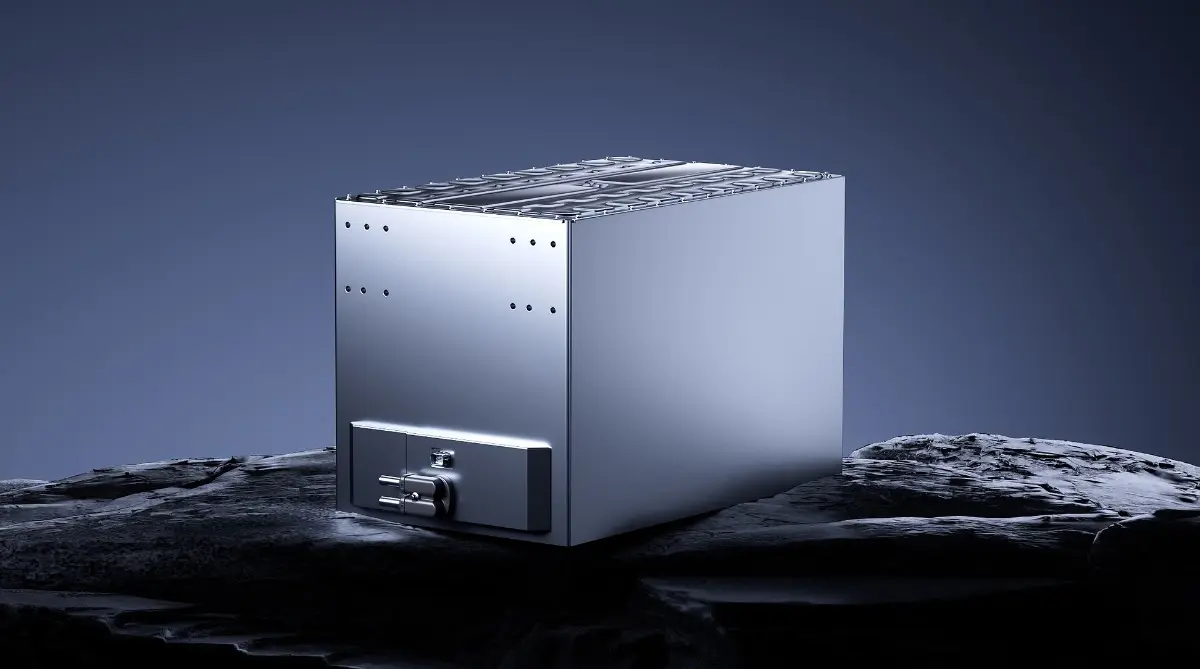
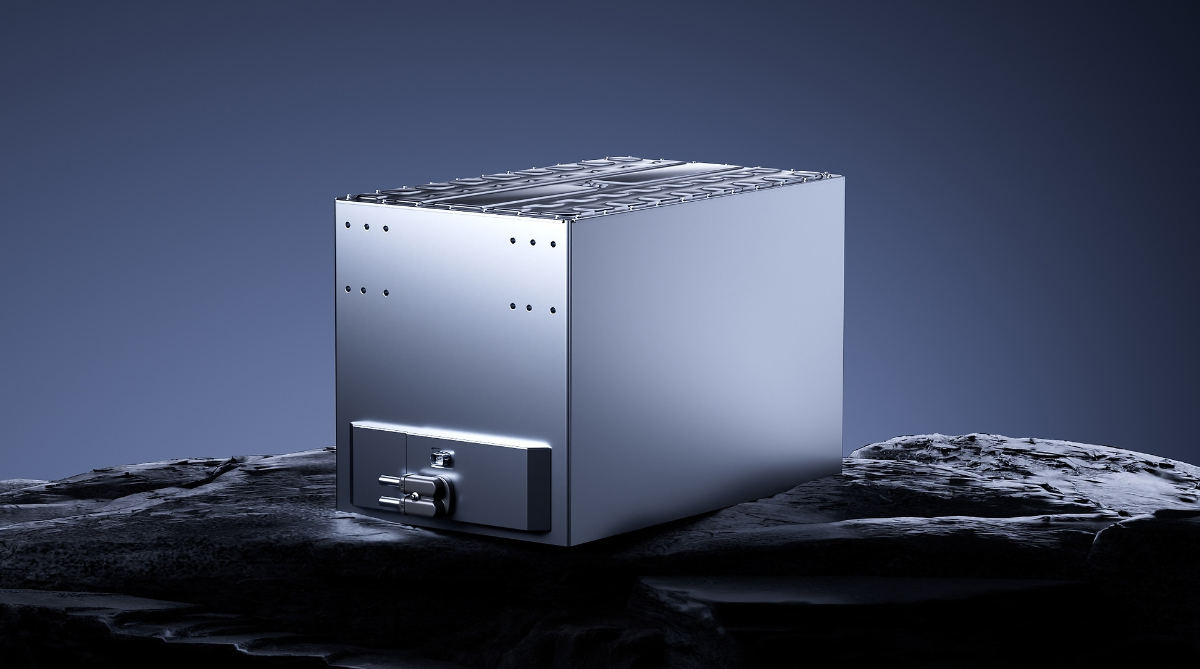
CATL made waves by pulling the covers off its Tectrans II commercial vehicle battery system. Engineered specifically for medium- and heavy-duty trucks, as well as transit buses, the Tectrans II platform addresses the historical Achilles’ heel of commercial vehicle electrification: range anxiety and slow refueling.
According to CATL specifications, the Tectrans II system unlocks a staggering driving range of up to 1,000 kilometers on a single charge. When it finally does time to plug in, the battery supports megawatt-level fast charging, capable of replenishing the state-of-charge from 10% to 80% in a mere 25 minutes. To maximize flexibility for vehicle architects, the modular packs are designed for chassis-agnostic mounting, fitting seamlessly anywhere along the frame rails or even on the roofs of commercial buses.
Furthermore, CATL is tackling infrastructure bottlenecks directly. Alongside its core battery announcements, the company revealed a strategic partnership with Octopus Energy to promote scalable battery-swapping ecosystems for commercial fleets. In a landmark move at the Hannover show, CATL also signed a formal letter of intent with the DHL Group. The agreement lays the groundwork for developing interconnected "green freight corridors" across Europe, complete with localized energy storage systems, advanced energy management platforms for logistics parks, and pilot projects for next-generation electric delivery fleets.
Zerova’s 1,440 kW Megawatt Charging Breakthrough
While Tesla brought its European-spec Semi to the show floor—boasting a 550 km range and 800 kW charging capabilities—industry observers were quick to point out that Tesla’s metrics are rapidly becoming baseline standards rather than cutting-edge achievements.
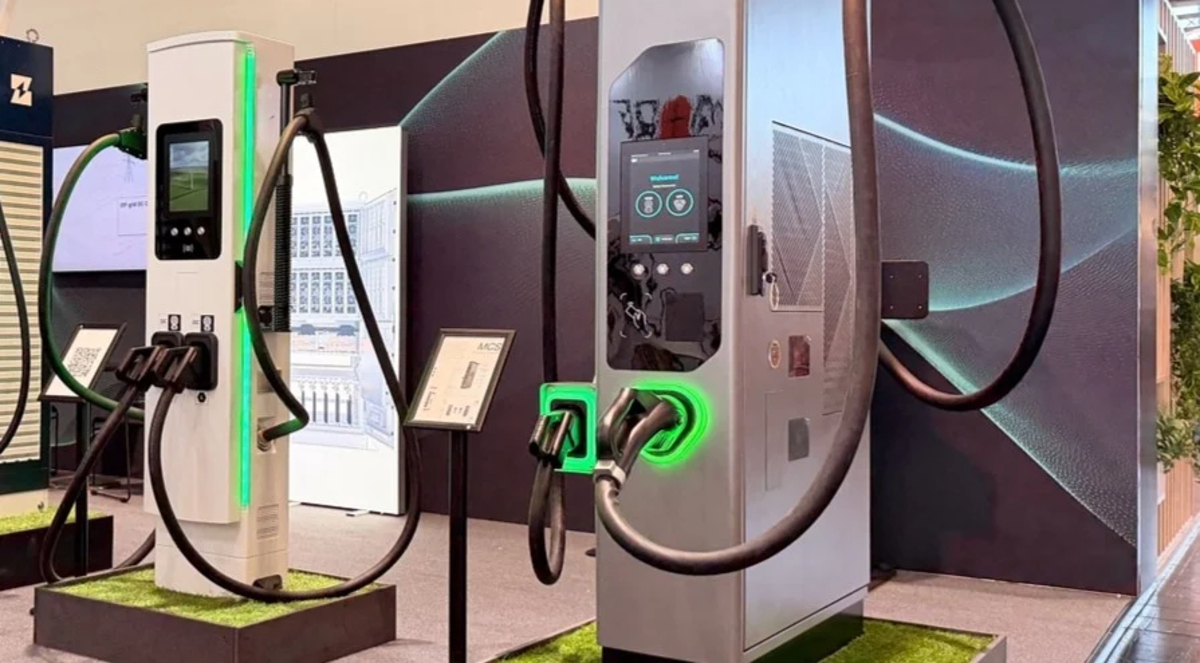
Entering the fray to shatter those boundaries, charging infrastructure specialist Zerova debuted its commercial-grade Megawatt Charging System (MCS) dispenser, capable of delivering a staggering 1,440 kW (1.44 megawatts) of DC power. This output is nearly double the charging velocity of earlier generation systems, effectively cutting heavy-duty replenishment times down to coffee-break intervals.
Brian Huang, Managing Director of Zerova UK, emphasized that the product directly addresses market demand. Fleet operators across Europe are no longer looking for theoretical concepts; they are demanding ultra-high-power charging infrastructure that can be deployed today and scaled seamlessly tomorrow. Designed for deployment in centralized fleet depots and high-throughput transit corridors along European transport arteries, Zerova’s MCS platform is engineered to grow alongside the formal maturation of the European megawatt charging standard.
Supporting Context & Metrics: The Hard Data of the Transition
The friction at IAA Transportation 2026 cannot be understood without examining the underlying metrics governing the European commercial transport sector.
Current Market Reality vs. Mandates
Under the European Union’s current regulatory framework, commercial vehicle manufacturers are legally bound to reduce carbon dioxide emissions from new heavy-duty vehicles (HDVs) relative to a 2025 baseline:
43% reduction by 2030
64% reduction by 2035
90% reduction by 2040
Failure to meet these milestones exposes manufacturers to severe, multi-million-euro penalties. Yet, according to data from the European Automobile Manufacturers’ Association (ACEA), zero-emission vehicles currently account for only 2.4% of new heavy-duty vehicle registrations. This chasm between current adoption rates and upcoming statutory cliffs has provided ammunition for legacy truckmakers arguing for a three-year delay.
The Economic and Environmental Stakes
Environmental coalitions and economic think tanks argue that relaxing these targets would be an unforced error with devastating economic fallout. Transport & Environment (T&E) and related clean vehicle advocacy groups point out the following hard data:
Fuel Cost Savings: Transitioning Europe’s heavy-duty fleet to electric propulsion could slash European oil imports by 22% by 2035. For individual transport businesses, operating an electric truck rather than a diesel equivalent can save roughly €1,800 per month in fuel expenses—a vital margin buffer during times of volatile fossil fuel prices.
Macroeconomic Impact: Fully executing the current 2030 targets would yield cumulative economic savings of approximately €28 billion for the EU economy.
Pollution Abatement: Maintaining the current trajectory would eliminate the sale of approximately 60,000 new diesel trucks, preventing toxic exhaust emissions equivalent to taking two million internal combustion passenger cars off the road.
Official Statements and Industry Friction
The ideological divide at IAA Transportation 2026 crystallized around a formal request by Europe’s seven leading truck and bus manufacturers—including Daimler Truck, DAF Trucks, Iveco, and Scania—seeking a three-year postponement of the 2030 CO2 reduction targets. The executives argued that inadequate public charging infrastructure, sluggish grid connection timelines, and unfavorable electricity-to-diesel price ratios make zero-emission commercial operations commercially unviable for many customers today.
The Pushback from Technology and Policy Advocates
This lobbying effort was met with immediate condemnation from clean transport advocates and former industry insiders who view the delay as an attempt by legacy players to protect short-term profit margins at the expense of long-term competitiveness.
Zhu Lingbo, Chief Technology Officer for CATL’s Global Business Unit, struck a measured yet confident tone during his press briefing at the trade show:
"Commercial vehicle electrification will unfold over more than a decade. With our deep technological expertise and long-term commitment, CATL is ready to be the most reliable partner for customers worldwide and for the global electrification of freight transport."
Steering hard into the political debate, Stef Cornelis of Transport & Environment issued a stark warning regarding the global race for market dominance:
"Europe’s truck makers are market leaders today, but they are failing to invest fast enough to defend that position. Chinese and US manufacturers could take more than a quarter of Europe’s electric truck market by 2030. The CO2 standards are the main force pushing manufacturers to invest and compete; weakening them would reward inaction."
Echoing these sentiments, Eoin Dubsky, a campaigner for Ekō, emphasized that policy certainty has already been granted to automakers, and the time for renegotiation has expired:
"Weakening the standards again would come at a cost Europe cannot afford. Europe has already delivered the policy certainty manufacturers asked for. Now it’s time for them to deliver the trucks. We cannot keep stalling climate action every time that big polluters ask. Manufacturers asked for flexibility and got it. The time for renegotiation is over."
Future Outlook: A Critical Window for Action
The juxtaposition observed at IAA Transportation 2026 highlights a profound paradox within modern industrial policy: the technology required to decarbonize heavy transport is mature, commercially viable, and rapidly advancing, yet institutional will among traditional market incumbents remains hesitant.
On the hardware front, advancements like CATL’s 1,000 km Tectrans II batteries and Zerova’s 1.44 MW charging infrastructure prove definitively that battery-electric long-haul trucking is not a physicist’s dream, but an engineering reality. Depots can be electrified, megawatt chargers can be deployed, and green freight corridors can be built.
However, the broader geopolitical canvas reveals an existential threat to Europe’s industrial base. If European legacy manufacturers succeed in lobbying policymakers to dilute emissions standards, they will inadvertently surrender the future of heavy transport to aggressive international competitors—particularly Chinese battery and vehicle manufacturers who are scaling production at an unprecedented pace.
As climate impacts intensify across the continent—manifested in severe droughts, record-breaking summer heatwaves, and volatile energy markets—the luxury of delay has evaporated. The tools to secure sustainable freight transport are fully assembled on exhibition floors in Hannover and in R&D labs worldwide. The remaining barrier is not technological or economic, but a matter of corporate courage and regulatory resolve. For Europe’s heavy transport sector, the road ahead demands immediate action, not continued hesitation.