






Executive Overview
As the global community faces an era of profound geopolitical friction, institutional fatigue, and multilateral strain, a silent crisis continues to unfold across the world’s largest habitat. The global ocean—the planet’s life support system, climate regulator, and economic foundation—is sending distress signals that can no longer be ignored. Warming waters, escalating ocean acidification, accelerating biodiversity loss, and persistent plastic pollution are pushing marine ecosystems past critical tipping points.
Against this backdrop of systemic global anxiety, the 11th Our Ocean Conference, scheduled for June 16–18, 2026, in Mombasa, Kenya, arrives as a crucial test of international resolve. Writing from the frontline of international marine advocacy, Luis Estévez-Salmerón, Associate Director of International Government Relations at Ocean Conservancy, argues that retreat is not an option. While traditional diplomatic frameworks stumble under the weight of competing national priorities, the ocean offers a unifying focal point.
This article explores the core themes of the upcoming summit in Mombasa, dissects the mounting threats facing marine environments, and highlights groundbreaking initiatives—such as the newly unveiled Mesopelagic Zone Conservation Challenge—designed to safeguard the Earth’s hidden aquatic frontiers before it is too late.
Detailed Chronology: From Regional Roots to Global Commitments
To understand the urgency driving marine conservation today, one must look at how local realities inform global policy. For advocates like Estévez-Salmerón, who grew up along Chile’s rugged 4,000-kilometer coastline, the ocean was never a distant abstraction. It was a daily reality populated by artisanal fishers, coastal families, and interdependent ecosystems where livelihoods depended entirely on the sea’s health and generosity.
Over the past decade, the international community has attempted to scale this local stewardship into a global commitment mechanism through the Our Ocean Conference (OOC) series.
- The Genesis of OOC: Launched to bypass bureaucratic inertia, the conference was designed as a solutions-oriented platform where governments, non-governmental organizations (NGOs), philanthropic foundations, and private sector leaders could make concrete, measurable pledges rather than endless diplomatic declarations.
- A Decade of Mobilization: Since its inception, the conference has catalyzed more than 2,900 distinct commitments valued at approximately $169 billion. These funds and policy frameworks have directly supported the expansion of marine protected areas (MPAs), enhanced maritime security, bolstered sustainable fisheries, and financed climate resilience programs in vulnerable coastal states.
- The Road to Mombasa (2026): As preparations finalize for the 11th OOC in Mombasa, Kenya, the focus shifts to the African continent—a region uniquely vulnerable to climate shocks yet rich in marine biodiversity and leadership potential. Ocean Conservancy, a veteran participant across every iteration of the conference, enters this summit with an expanded agenda focusing on ocean-climate diplomacy, the transition to a fossil fuel-free ocean, sustainable offshore renewable energy, and aggressive coalition-building to eradicate plastic pollution.
Supporting Context & Metrics: The Triple Planetary Crisis and the Twilight Zone
The challenges facing the marine environment cannot be viewed in isolation; they are symptoms of an interconnected "triple planetary crisis" encompassing climate change, biodiversity loss, and pervasive pollution.
The Anatomy of Marine Degradation
The ocean absorbs more than 90% of the excess heat generated by anthropogenic greenhouse gas emissions and roughly 25% of all carbon dioxide emissions. This unprecedented buffering capacity has come at a staggering cost:
- Thermal Stress and Acidification: Marine heatwaves are devastating coral reefs and altering migratory routes, while chemical shifts in seawater are dissolving the calcium carbonate shells of foundational organisms like pteropods, threatening the base of the marine food web.
- Plastic Choking the Depths: From the shores of Valparaíso to the beaches of Mombasa, coastlines are inundated with synthetic waste. Beyond visible debris, the proliferation of abandoned, lost, and discarded fishing gear (ALDFG)—often referred to as "ghost gear"—continues to entrap and kill marine life indiscriminately.
Protecting the Mesopelagic "Twilight Zone"
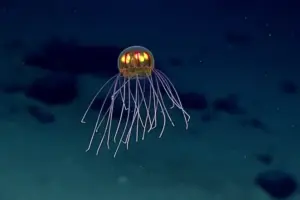
Perhaps the most alarming frontier in modern conservation is the deep ocean’s mesopelagic zone, or "twilight zone," spanning depths of 200 to 1,000 meters.
+-----------------------------------------------------------------+
                 THE OCEAN'S TWILIGHT ZONE (200m - 1,000m)
+-----------------------------------------------------------------+
 |  • Biomass: Harbors upwards of 90% of the ocean's fish biomass.
 |  • Carbon Sequestration: The biological pump sequesters 2-6
 |    gigatons of carbon annually (double global car emissions).
 |  • Emerging Threat: Unchecked commercial exploitation for
 |    fishmeal and health supplements.
+-----------------------------------------------------------------+
Despite its remote location, the twilight zone is a powerhouse for planetary health:
- Biological Abundance: It harbors an estimated 90% of the global fish biomass, sustaining commercially vital fisheries and apex marine predators.
- Climate Regulation: Through the biological carbon pump, it sequesters between 2 and 6 gigatons of carbon annually—roughly double the emissions produced by every passenger vehicle on Earth.
- The Looming Threat: Driven by rising global demand for fishmeal, aquaculture feed, and nutraceutical supplements, commercial fleets are increasingly eyeing this layer for exploitation. Because scientific understanding of these deep-water ecosystems remains in its infancy, industrial disruption could cause irreversible ecological collapse before we fully understand the systems we are dismantling.
Recognizing this threat, the International Union for Conservation of Nature (IUCN) World Conservation Congress previously adopted Resolution 035, urging global members to safeguard the integrity of the mesopelagic zone. Building on this foundation, the upcoming conference in Mombasa will witness the launch of the Mesopelagic Zone Conservation Challenge—a collaborative initiative spearheaded by Ocean Conservancy, the Environmental Defense Fund, and the Marine Conservation Institute. This initiative establishes a precautionary management framework, bridging the gap between cutting-edge marine science and international policy.
Official Statements and Perspectives
The philosophical underpinning of modern ocean advocacy bridges scientific necessity with cultural appreciation. As international negotiators grapple with institutional fatigue, leaders argue that the ocean itself provides the clearest mandate for unity.
"The ocean does not care about geopolitics. It does not pause for elections or negotiations. It continues to warm, to acidify, to absorb our plastics and our carbon. And it continues to sustain billions of people who… depend on its health for their survival."
— Luis Estévez-Salmerón, Associate Director of International Government Relations, Ocean Conservancy
This sentiment echoes the timeless cultural connection articulated by literature and poetry. Invoking the words of Nobel Prize-winning Chilean poet Pablo Neruda—“Necesito del mar porque me enseña” ("I need the sea because it teaches me")—advocates remind policymakers that the ocean is not merely a resource to be managed or a ledger of economic assets, but an active mentor in human survival and ecological interdependence.
When multilateral systems falter under the weight of partisan friction, the pragmatic framework of the Our Ocean Conference demonstrates that sub-national actors, civil society, and progressive states can still forge coalitions that transcend geopolitical gridlock.
Future Outlook: A United Response in Mombasa and Beyond
As the delegates convene in Mombasa for the 11th Our Ocean Conference, the stakes could not be higher. The outcomes of this summit will ripple across international forums, influencing upcoming biodiversity negotiations, climate summits, and high-seas governance treaties.
To secure a sustainable maritime future, the international community must pivot from voluntary commitments to binding, enforceable actions across several key vectors:
- Institutional Resilience: Reinforcing multilateral frameworks by proving that tangible, multi-stakeholder initiatives can deliver measurable results where traditional diplomacy stalls.
- Precautionary Deep-Sea Governance: Operationalizing the Mesopelagic Zone Conservation Challenge to ensure that the ocean’s twilight zone is protected from premature industrialization and overexploitation.
- Circular Economies and Plastic Reduction: Expanding global coalitions to target single-use plastics at the source while aggressively recovering ghost gear from marine environments.
- Equitable Blue Economies: Ensuring that the transition to sustainable marine management prioritizes the rights, traditional knowledge, and economic security of coastal and artisanal fishing communities worldwide.
The ocean demands our attention, not as a passive recipient of our waste and ambition, but as an active teacher of resilience and interconnectedness. In the face of planetary crisis, the path forward is clear: nations must look past their divisions and heed the call of the sea.