In the fast-paced world of high-end maritime tourism, the relentless pursuit of the newest shipyard delivery has long dominated the headlines. However, the prevailing sentiment across the global boat show circuit points to a fascinating and profound paradigm shift. Today’s seasoned charter brokers, astute industry veterans, and discerning travelers are increasingly turning their backs on fresh-off-the-line builds in favor of established, meticulously maintained, and expertly refitted classic yachts.
Far from being relics of a bygone era, these seasoned vessels are taking center stage. This renaissance is increasingly validated by the maritime industry itself, highlighted by the introduction of dedicated refit categories at prestigious events such as the World Superyacht Awards. These accolades celebrate not merely cosmetic updates, but the enduring craftsmanship, structural longevity, and irreplaceable soul that only time at sea can forge.
Choosing an established charter yacht is no longer viewed as a compromise; rather, it is recognized as one of the most sophisticated, rewarding, and value-driven decisions a guest can make. Combining high-volume interior layouts, experienced crews, and modern tech integrations like Starlink with the robust engineering of a bygone era, these vessels offer an unmatched authenticity that cannot be manufactured overnight.
Detailed Chronology: The Evolution of Yacht Refits and Classic Preservation
The appreciation for mature yachts is deeply rooted in the historical evolution of shipbuilding eras. To understand why today’s refitted classics command such high regard, it is essential to trace how these vessels have transformed over decades of active service.
The Golden Age of Robust Construction (1940s–1980s)
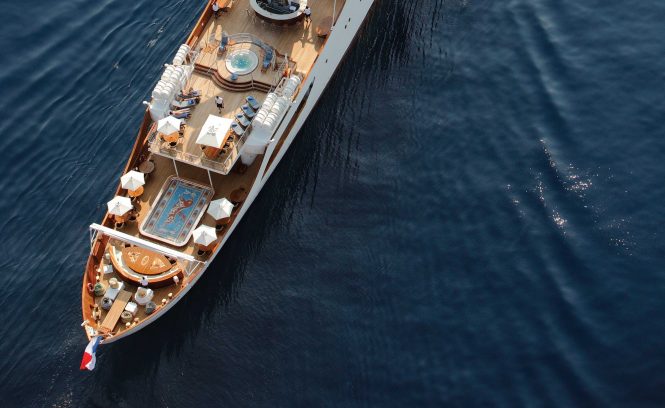
Decades ago, vessels were constructed during a period when material availability and structural durability often superseded rapid production schedules. Shipyards prioritized heavy-gauge steel hulls, thick timber bulkheads, and expansive interior volumes. A prime historical artifact of this era is the iconic 99-meter CHRISTINA O. Originally built in 1943 by Canadian Vickers as a frigate, she was later acquired by Greek shipping magnate Aristotle Onassis. Transformed into a legendary floating palace that hosted global leaders, artists, and royalty throughout the 1950s and 60s, CHRISTINA O underwent a dramatic structural rebuild in the early 2000s and a comprehensive technical refit in 2022. Today, she continues to dazzle guests with her mosaic-floored swimming pool that rises to become a dance floor, proving that foundational history combined with modern stewardship creates an inimitable product.
The Transitional Shift and Early Conversion Era (1990s–2000s)
As the luxury charter market matured in the late 20th century, many commercial or utilitarian vessels found a second life as elite pleasure craft. For instance, the 32-meter TEMPEST WS was originally constructed in 1963 by France’s Chantiers Navals De Lesterel as a rugged patrol boat. In 2003, she underwent a radical, multi-million-dollar conversion into a deluxe charter yacht. Subsequent meticulous upgrades have preserved her mid-century aesthetic—retaining the crisp lines and rich textures of 1960s design—while completely modernizing her mechanical engineering, plumbing, and entertainment systems.
The Modern Refit Renaissance (2010s–Present)
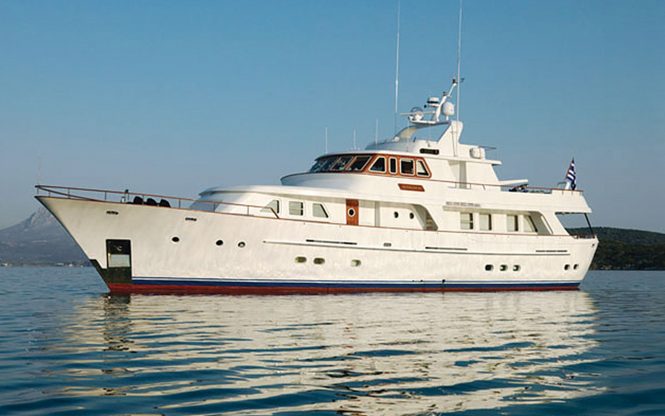
In recent years, yacht owners have shifted from simple cosmetic facelifts to holistic, engineering-led transformations. Shipyards across Northern Europe and the Mediterranean now specialize in gutting classic hulls down to their frames to install hybrid propulsion, advanced stabilization, ultra-quiet acoustic insulation, and state-of-the-art connectivity. Vessels like the 38-meter Heesen MAGIX (launched in 1992) and the 43-meter Palmer Johnson LADY J (launched in 1997) demonstrate how Dutch and American pedigree constructions can seamlessly merge historical sea-keeping qualities with contemporary interior styling.
Supporting Context & Metrics: The Anatomy of a Modern Classic Charter
When evaluating the market dynamics of yacht chartering, several quantifiable and experiential advantages elevate established vessels above their newly minted counterparts.
1. Spatial Volume and Interior Architecture
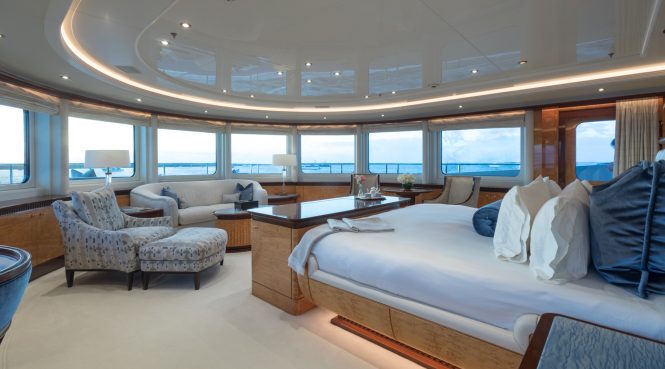
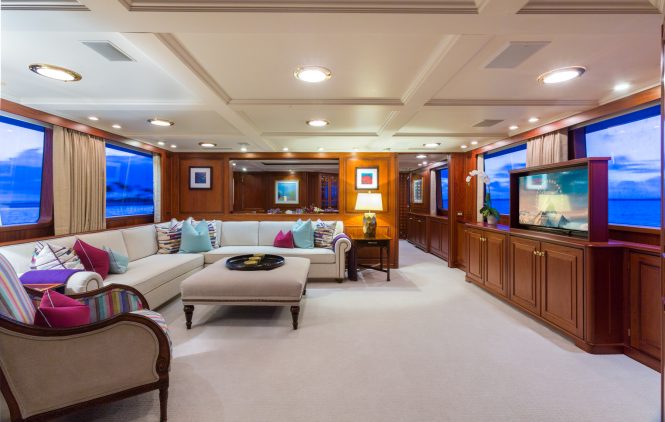
One of the most immediate shocks for modern yacht buyers and charterers is the shift in naval architecture trends. Modern superyachts often maximize exterior deck spaces and utilize minimalist, vertical styling. In contrast, vessels built in the 1980s, 90s, and early 2000s were designed with a different philosophy: sprawling interior volumes, wide-body main salons, and deeply comfortable staterooms.
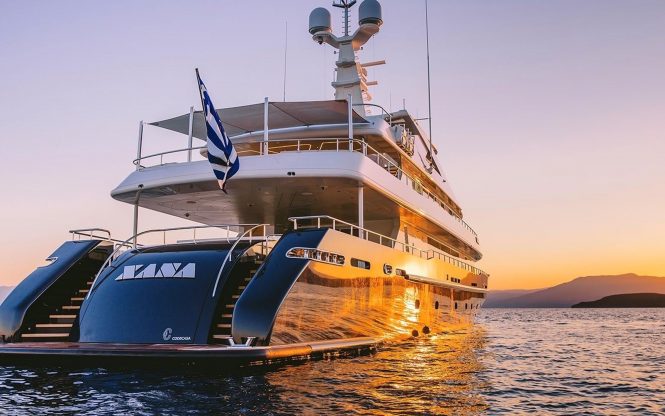
Consider the 62-meter LUCKY LADY or the 43-meter HANA. Their layouts offer oversized guest cabins with corridor widths and ceiling heights that are increasingly rare in contemporary builds of similar lengths. This generous internal footprint translates directly to elevated guest comfort during extended voyages.
2. The Economic Value Proposition
Economics play a decisive role in the surging popularity of seasoned yachts. Constructing a brand-new, custom 50-meter superyacht requires an astronomical capital investment, long-lead waiting times, and steep operational overheads that inevitably trickle down to weekly charter rates.
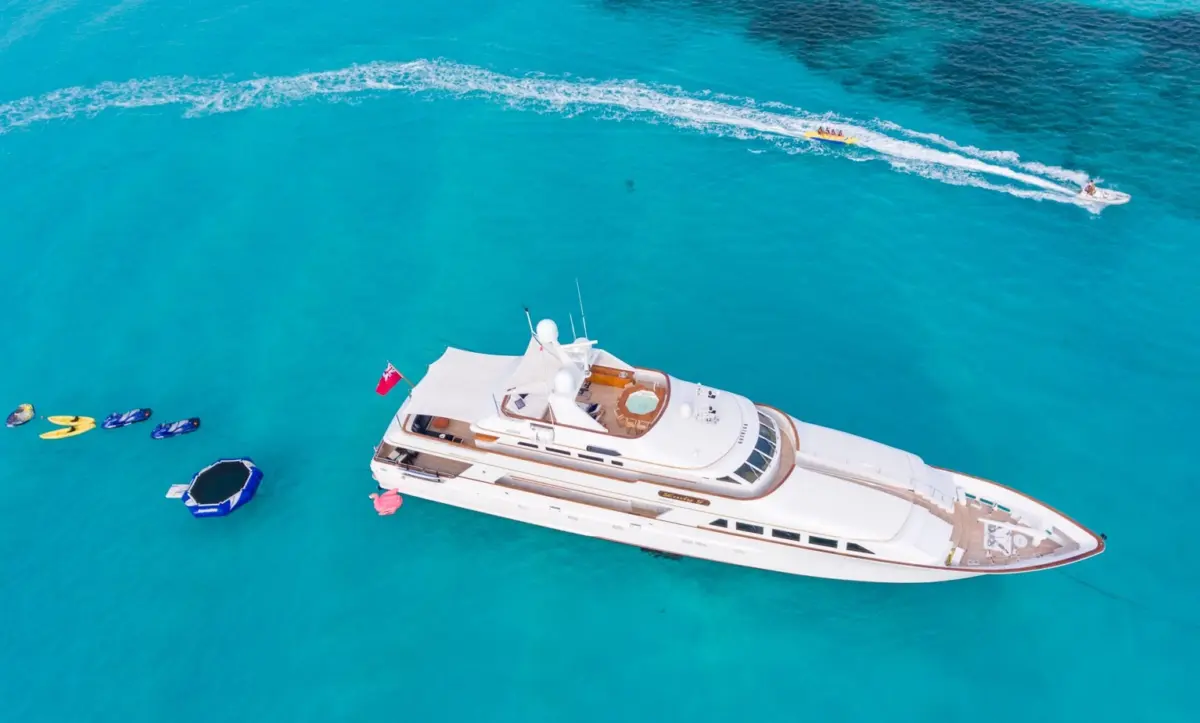
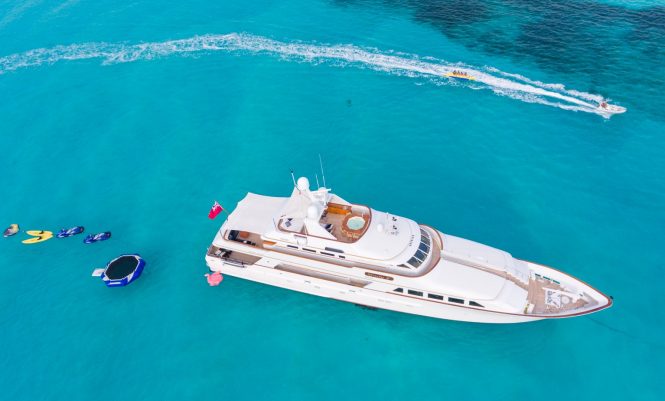
Conversely, established yachts offer significantly more gross tonnage (volume), expansive deck footprints, and robust water toy inventories at a comparatively lower charter fee. For families and corporate groups prioritizing destination immersion, water sports infrastructure, and absolute comfort over bragging rights associated with a 2026 delivery date, the mature yacht market represents unmatched fiscal intelligence.
3. Technological Parity via Refits
A common misconception is that chartering an older yacht means sacrificing modern conveniences. Thanks to aggressive capital reinvestment by passionate owners, seasoned yachts are routinely outfitted with the latest amenities. High-speed Starlink maritime internet, Kaleidescape AV streaming networks, zero-speed stabilization fins, and updated eco-friendly wastewater treatment systems are now standard across top-tier classic fleets. Guests enjoy the soulful charm of classic woodwork paired with the seamless digital connectivity required in the modern era.
Official Industry Insights and Expert Statements
Industry insiders who manage elite fleets witness this shift firsthand on a daily basis. LJ Houghting, an esteemed Charter Manager overseeing an exceptional portfolio of luxury superyachts, offers a compelling perspective on the psychology behind chartering classic vessels:
"Often, a yacht’s launch year bears little resemblance to the sophistication of her interiors or the modern comforts she offers today," Houghting explains. "Many of these beautifully seasoned vessels have been continuously refined over the years, blending timeless craftsmanship with contemporary amenities such as Starlink connectivity and state-of-the-art upgrades."
Houghting emphasizes that the driving force behind these floating masterpieces is emotional as much as it is commercial:
"What people sometimes overlook is the extraordinary passion their owners have for preserving these classics—investing in them not simply out of necessity, but out of genuine love and admiration for the vessel herself. You can truly feel that devotion the moment you step aboard yachts like the 42m LADY J and the 62m LUCKY LADY."
Echoing these sentiments, a veteran charter guest who recently experienced a multi-week Mediterranean itinerary aboard an established vessel noted:
"Many charterers who exclude yachts that are over 20 years old miss the opportunity to stay on the most delightful, comfortable, well-appointed, luxurious pleasure craft."
Operational Harmony: The Power of Experienced Crews
While physical refits and structural heritage are vital, the secret weapon of the established charter yacht lies in its human capital: crew longevity.
In a burgeoning global fleet where new builds often launch with hastily assembled crews who are still learning the idiosyncratic behaviors of their vessel, seasoned yachts operate with the precision of a Swiss watch.
Intimate Vessel Knowledge: Captains and crew members who have served aboard a classic yacht for five, ten, or even fifteen years know every acoustic quirk of the hull, every nuance of the engineering spaces, and how the vessel reacts in heavy following seas. This translates to absolute safety and a smoother ride.
Service Flow and Hospitality: Service is instinctive rather than rehearsed. Long-standing chief stews and culinary teams understand the rhythm of high-end chartering, anticipating guest needs before they are articulated. On board LADY J, for instance, the captain has directed operations for over a decade, supported by a crew that delivers an exceptionally cohesive charter program complete with a professionally trained onboard culinary artist.
Deep Regional Intelligence: Experienced captains bring years of localized cruising archives. Rather than relying on standard GPS routes, they possess insider knowledge of secluded anchorages, hidden cove access points, local fishermen who supply daily catches, and regulatory nuances across international waters. This transforms a standard holiday into an exclusive, deeply personalized voyage.
Future Outlook: The Intersection of Heritage and Innovation
Looking ahead, the trajectory of the superyacht charter market points toward sustainable luxury, conscious consumption, and a deep appreciation for enduring design.
As environmental awareness grows, the philosophy of "reduce, reuse, refit" is gaining serious traction. Rather than commissioning carbon-heavy new builds from scratch, reinvesting in existing high-integrity hulls is recognized as a more sustainable path forward in maritime engineering. Shipyards in Italy, the Netherlands, and France are reporting record demand for major refit slots, cementing the concept that a well-maintained classic can outlast and outperform newer competitors.
Furthermore, the recent international acclaim garnered by refitted nominees—such as the 43-meter TALIA (steered by Greece’s notable female charter captain and recognized at the World Superyacht Awards) and the 54-meter SOJO—signals that the industry’s highest authorities are fully embracing the refit revolution.
Conclusion
Ultimately, choosing an established charter yacht is an intentional rejection of superficial trends in favor of substance, character, and pedigree. These vessels have crossed treacherous oceans, sheltered generations of discerning travelers, and accumulated a rich tapestry of maritime history that fresh-from-the-shipyard builds simply cannot replicate.
For the modern traveler seeking a harmonious blend of historical soul, cutting-edge modern amenities, unrivaled crew operational excellence, and exceptional value, the answer is clear: the most remarkable charter experience on the water is often found not in the future of yachting, but in its beautifully preserved and expertly modernized past.