





Executive Overview
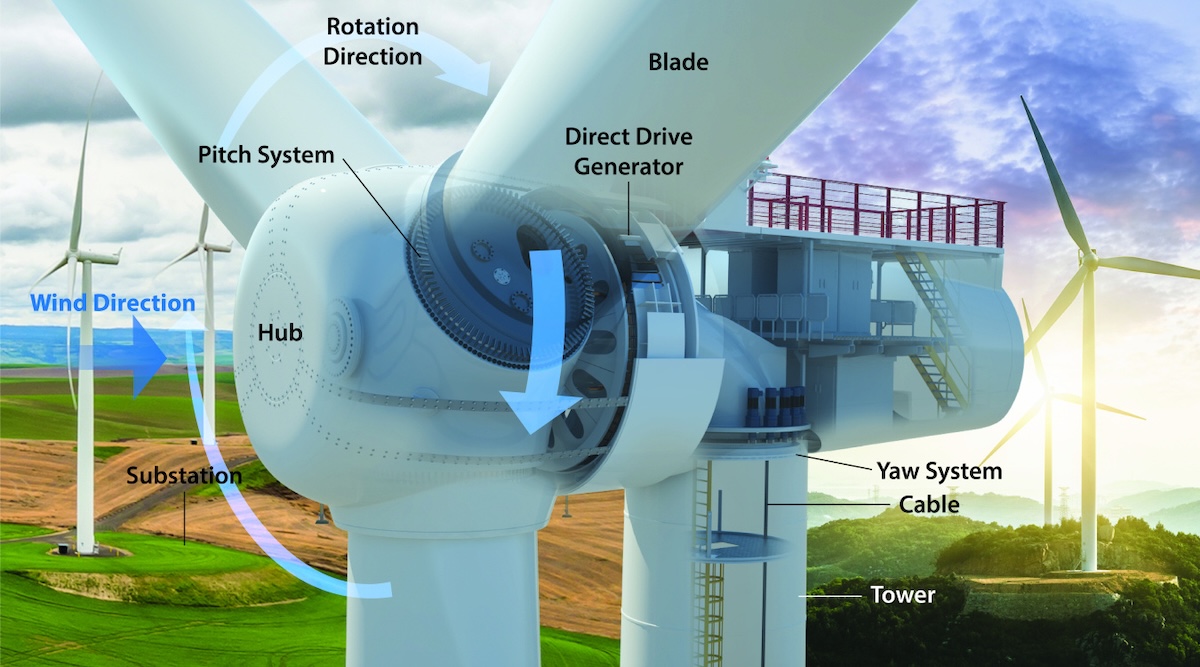
In a political climate where terminology can carry as much weight as policy, the United States Department of Energy (DOE) has executed a peculiar linguistic maneuver. Amid an ongoing, high-stakes political and regulatory conflict over renewable energy, the agency has officially re-christened traditional wind turbines under a new, hyper-technical umbrella: “aeromechanical energy systems.”
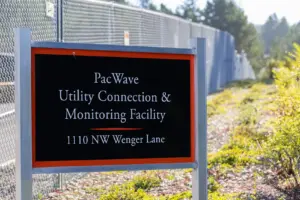
This bureaucratic renaming emerges from the newly established Integrated Energy Systems Office (IESO), a structural consolidation that merges the former Solar Energy Technologies Office and Wind Energy Technologies Office under the broader umbrella of the Office of Critical Minerals and Energy Innovation (OCMEI). While the federal government continues to recirculate Biden-era clean energy information and highlight new milestones—such as the recent launch of the PacWave South wave energy facility—the wind industry finds itself trapped in the crosshairs of the Trump administration’s deep-seated skepticism toward wind power.
By stripping the familiar, plain-English term “wind turbine” from select federal nomenclature in favor of "aeromechanical energy systems," critics argue the agency is engaging in semantic gymnastics to downplay wind generation. This rebranding effort runs parallel to a series of aggressive administrative hurdles, federal permit freezes, and controversial offshore lease buyouts designed to curtail the expansion of wind energy across the United States.
Despite these headwinds, the legal and political battle lines are firmly drawn. A coalition of state attorneys general and energy developers are pushing back through the federal courts, challenging what they term unlawful roadblocks to both onshore and offshore wind deployment. This report provides an investigative breakdown of the recent structural changes at the DOE, the semantics of federal energy rebranding, and the ongoing legal battles defining the future of American wind power.
Detailed Chronology: The Evolution of the IESO and Federal Wind Policy
To understand how “wind turbines” transformed into “aeromechanical energy systems,” one must trace the timeline of administrative restructuring and regulatory shifts within the Department of Energy and partner agencies throughout 2025 and 2026.
The Restructuring of Federal Offices
- Late Summer 2025: The Department of Defense (DoD)—working in tandem with the Federal Aviation Administration (FAA)—abruptly halts its routine review process for onshore wind farm permits involving structures over 200 feet tall. Officials stop countersigning mitigation agreements, halting vital communications with clean energy developers.
- Late 2025: A federal judge affirms that the executive branch holds the authority to halt the issuance of new offshore wind leases on federal lands, effectively stalling future offshore growth under federal jurisdiction. However, the ruling explicitly notes that the administration lacks the authority to retroactively stop work on projects that have already secured valid leases.
- August 2026: Recognizing the economic and administrative bottleneck, a coalition of 19 state attorneys general—led by figures such as Washington State Attorney General Nick Brown—successfully challenge the DoD’s permit freeze. A federal judge rules that the DoD’s blockage of onshore wind projects was unlawful.
- August 27, 2026: Amid bureaucratic friction, major clean energy milestones still press forward, marked by the official business opening of PacWave South, a critical marine energy research and testing facility off the coast, following years of development.
- September 10, 2026: The Energy Department updates an online explainer titled “Wind Manufacturing and Supply Chain,” outlining how the agency aims to support advanced manufacturing capabilities, improve reliability, and lower production costs domestically.
- September 17, 2026: The DOE issues an official agency-wide announcement detailing the creation of the Integrated Energy Systems Office (IESO). The new division consolidates the Solar Energy Technologies Office and the Wind Energy Technologies Office. Embedded within this organizational memo is the debut of the term “aeromechanical energy systems” alongside traditional references, tasking a specialized branch with mitigating the long-term reliability and recycling challenges of wind infrastructure.
Supporting Context & Metrics: Navigating the "Aeromechanical" Maze
The creation of the IESO within the Office of Critical Minerals and Energy Innovation (OCMEI) has raised eyebrows among energy analysts due to the stark disconnect between administrative branding and active funding allocations.
The Funding Paradox
A close examination of the newly minted IESO digital portal reveals a conspicuous lack of active financial backing for wind-specific initiatives:
- Open Funding Opportunities: At its launch, the IESO portal listed exactly one open funding opportunity, which was directed exclusively toward the burgeoning field of space-based solar power.
- Programs Under Review: All other legacy wind and solar programs integrated into the office were categorized simply as "under review," leaving domestic wind manufacturers and academic R&D partners in a state of financial limbo.
- Broader CMEI Activity: While broader Office of Critical Minerals and Energy Innovation programs show general activity in raw material security and grid integration, industry stakeholders note a complete absence of fresh capital directed toward the newly minted "aeromechanical" sector.
Semantic Analysis: Why "Aeromechanical Energy Systems"?
Linguistically, the shift from "wind turbine" to "aeromechanical energy systems" introduces a level of abstraction that distances the public—and policymakers—from the physical reality of the technology.
| Term | Traditional Usage | Political / Regulatory Connotation |
|---|---|---|
| Wind Turbine | Ubiquitous, intuitive, and evocative of massive clean energy generation. | Frequently targeted by political rhetoric; associated with environmental activism and green subsidies. |
| Aeromechanical Energy Systems | Academic, clinical, and engineering-heavy descriptor focusing on aerodynamic forces and mechanical conversion. | Neutralizes emotional or political triggers; obscures the clean energy association behind complex mechanical jargon. |
By dressing up kinetic wind capture in the language of fluid dynamics and mechanical engineering, the nomenclature effectively sanitizes the technology, stripping away its identity as a frontline climate solution.
Official Statements and Administrative Rhetoric
The official rationale provided by the Department of Energy for the creation of the IESO frames the consolidation as a strategic move toward grid resilience and technological dominance.
In its September 17 announcement, the DOE stated:
"Our core mission at IESO is to enhance grid reliability and resilience, secure U.S. technological leadership across diverse energy generation sources, and lower energy costs for hardworking Americans. By combining our efforts, we can more effectively seize the incredible opportunities presented by the evolving energy landscape to unleash American energy dominance."
This language mirrors traditional talking points frequently deployed by the administration to champion fossil fuel production, leading energy analysts to view the statement skeptically. Observers note that without court-ordered mandates or a drastic shift in executive priorities, federal support for wind energy remains largely rhetorical rather than financial.
State-level legal opposition has provided a stark counter-narrative to federal foot-dragging. Commenting on the illegal administrative freezing of wind project permits, Washington State Attorney General Nick Brown remarked:
"In August 2025, DoD abruptly stopped following this process. Officials ceased countersigning mitigation agreements, stopped sending completed agreements to developers for signature, and delayed or halted communications with developers about mitigation."
When a federal court ultimately struck down the DoD’s blockade in August 2026, it reinforced the legal reality that executive agencies cannot bypass established administrative procedures simply to stymie renewable infrastructure development.

Future Outlook: The Ongoing War on Wind and the Path Forward
The long-term outlook for American wind power—whether categorized under its classic name or as an "aeromechanical energy system"—remains a complex tug-of-war between federal obstructionism and state-level resilience.
Offshore Wind: Lease Buyouts and Legal Challenges
Because offshore wind development occurs almost exclusively in federal waters, the administration has wielded considerable leverage. Having blocked new offshore lease auctions, the federal government has pivoted toward unconventional tactics. Critics and legal scholars have characterized recent administrative maneuvers—incentivizing or outright financially encouraging offshore leaseholders to surrender their development rights—as a de facto buyout program designed to empty the ocean of future turbines before political tides can change.
This strategy has triggered immediate legal retaliation. A coalition of coastal states has filed lawsuits seeking to invalidate these transactions, with members of Congress launching congressional inquiries into whether these financial maneuvers were improperly routed through the Department of Justice.
Onshore Wind: Bypassing Federal Roadblocks
For onshore wind, the battlefield shifts away from federal property toward private, state, and municipal lands. While federal agencies can attempt to starve projects of permits or slow-roll Department of Defense and FAA clearances, developers retain significant autonomy when working with private landowners and supportive state governments.
Furthermore, the legal precedent established by federal courts in 2026—ruling that arbitrary administrative freezes on wind energy permits are illegal—provides a vital legal shield for developers seeking to bring projects online despite institutional hostility.
Conclusion
The rebranding of wind turbines as "aeromechanical energy systems" may ultimately be remembered as a quirky footnote in the broader political conflict over the American energy transition. It highlights the lengths to which bureaucratic messaging can stretch to accommodate political dogma. Yet, regardless of what federal agencies choose to call the spinning blades atop modern towers, the fundamental economics of renewable energy, combined with resilient state-level legal challenges and relentless market demand, ensure that the wind will continue to turn—bureaucratic rebranding notwithstanding.