









Executive Overview
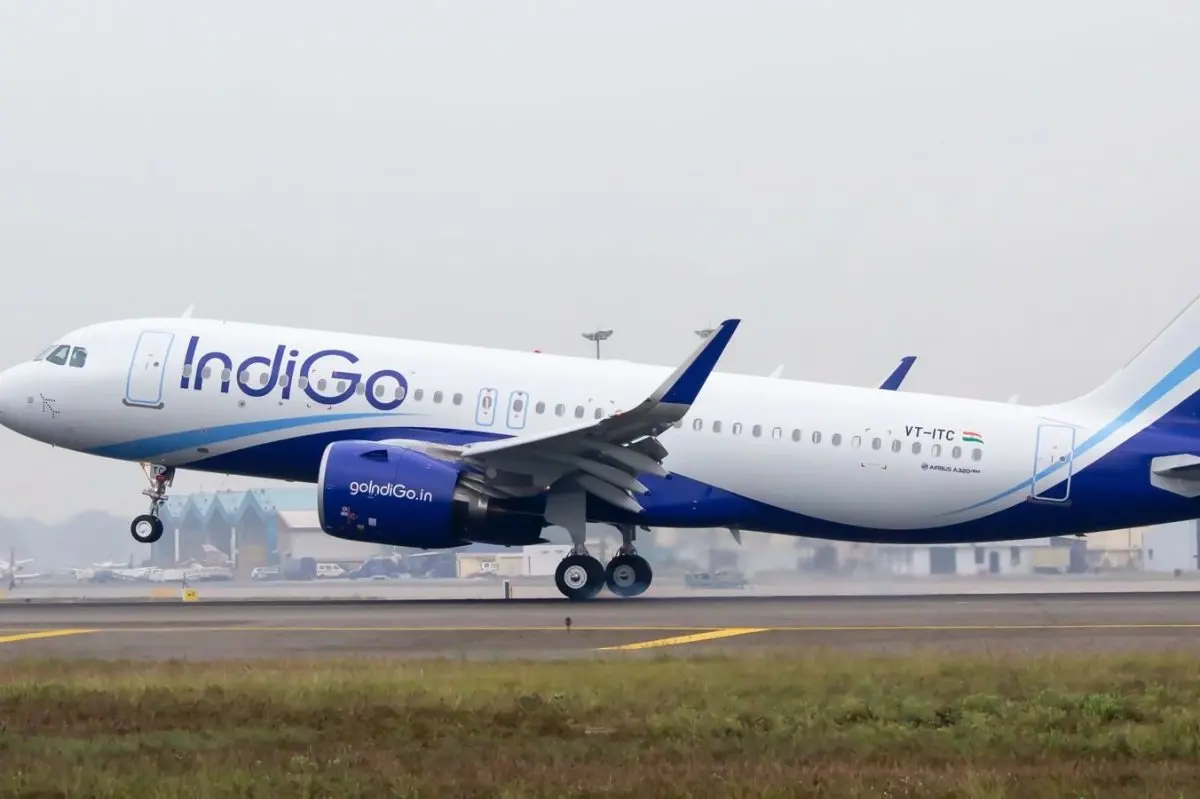
IndiGo, India’s dominant low-cost carrier, has quietly implemented a series of upward revisions across a suite of optional passenger services. The adjustments—affecting infant travel, excess baggage, unaccompanied minors, priority check-in, boarding services, and official travel certificates—may appear modest in isolation, but they signal a calculated and increasingly aggressive shift in commercial strategy.
As the airline navigates a transformative period under new strategic leadership, these targeted adjustments illuminate the core financial engine powering the contemporary ultra-low-cost carrier (ULCC) model: protecting baseline ticket prices while optimizing yield through non-fare, optional enhancements.
By leaving headline-grabbing base fares untouched, IndiGo continues to fiercely defend its crown as India’s market leader by volume, ensuring passenger traffic remains insulated from price shock. Simultaneously, the carrier is leaning into ancillary revenues—a segment that global aviation experts frequently cite as the ultimate frontier for margin expansion.
This report provides a comprehensive examination of IndiGo’s latest fee restructuring, contextualizing these changes within the broader strategic trajectory of the airline as it enters a new chapter defined by heightened global competition, fluctuating operational costs, and evolving consumer demands.
Detailed Chronology of the Fee Restructuring
The rollout of IndiGo’s updated ancillary pricing structure was executed with minimal public fanfare, a common tactic among low-cost carriers seeking to avoid consumer friction while optimizing ancillary yields. A granular review of the adjusted fees reveals clear increases across high-utility, high-emotion passenger services:
Infant Travel
- Previous Fee: INR 2,000 (~$21 USD)
- Revised Fee: INR 3,000 (~$36 USD)
- Applicability: Children between three days and two years of age traveling without a dedicated seat (infant-in-lap).
- Impact: Representing a 50% increase, this adjustment targets a demographic with rigid travel needs. Parents traveling with infants possess virtually zero price elasticity regarding their presence on a flight, making the service a reliable, albeit sensitive, target for margin enhancement.
Domestic Excess Baggage
- Previous Fee: INR 700 (~$8.40 USD) per kilogram
- Revised Fee: INR 800 (~$9.60 USD) per kilogram
- Applicability: Checked luggage exceeding the standard complimentary baggage allowance on domestic routes.
- Impact: A roughly 14.3% increase that directly captures revenue from passengers who fail to pack within strict ULCC weight limits, a notoriously common friction point at airport check-in counters across the Indian subcontinent.
Fast Forward (Priority Check-in and Boarding)
- Previous Fee: INR 450 (~$5.40 USD) domestically
- Revised Fee: INR 650 (~$7.80 USD) domestically
- Applicability: Expedited airport processing, including dedicated check-in lines and priority boarding.
- Impact: A substantial 44.4% markup on a product designed for time-sensitive business travelers and comfort-seeking leisure flyers. The steep hike reflects surging demand for airport convenience amid chronically congested terminal infrastructure in major Indian metros like Delhi, Mumbai, and Bengaluru.
Additional Ancillary Adjustments
While initial filings and disclosures highlight the aforementioned categories, parallel upward revisions have been applied to unaccompanied minor handling fees and official travel certificates. These services, while utilized by a smaller percentage of the traveling public, carry high operational overhead and safety responsibilities, justifying premium pricing structures in the eyes of airline revenue management teams.
Supporting Context & Metrics: The Ancillary Economy
To fully understand the gravity of IndiGo’s fee adjustments, one must examine the macro-level economics of ancillary revenue within the global and domestic aviation landscapes.

The Low-Cost Carrier Playbook
For decades, the ULCC business model has relied on the "unbundling" of services. By stripping the ticket price down to the bare metal—a seat, a safety card, and a minimal personal item allowance—airlines can stimulate immense demand through artificially low base fares. Once the consumer is inside the booking funnel, psychological and operational friction points—such as seat selection, luggage, and priority boarding—convert baseline browsers into high-yield purchasers.
According to global aviation analytics firm IdeaWorksCompany, global airline ancillary revenues reached historic highs post-pandemic, frequently accounting for 15% to 25% of total top-line revenue for major carriers. For IndiGo, growing its ancillary revenue per passenger (ANREV) has become a primary directive.
| Fee Category | Old Price (INR) | New Price (INR) | Percentage Increase | USD Equivalent (Approx.) |
|---|---|---|---|---|
| Infant Travel | 2,000 | 3,000 | +50.0% | $24.00 $rightarrow$ $36.00 |
| Excess Baggage (per kg) | 700 | 800 | +14.3% | $8.40 $rightarrow$ $9.60 |
| Fast Forward (Domestic) | 450 | 650 | +44.4% | $5.40 $rightarrow$ $7.80 |
The Indian Aviation Landscape
India remains one of the world’s fastest-growing aviation markets, characterized by extreme price sensitivity among a vast middle class taking their first flights, coupled with a booming corporate segment demanding efficiency and time-saving perks.
IndiGo commands over 60% of the domestic market share. With this near-monopolistic scale on numerous domestic trunk routes, the airline possesses immense pricing power. However, regulatory scrutiny from the Directorate General of Civil Aviation (DGCA) and fierce competition from the Tata Group airline conglomerate (encompassing Air India, Air India Express, and AIX Connect) prevent IndiGo from engaging in aggressive baseline fare hikes.
Consequently, fine-tuning optional services represents the path of least resistance. It allows IndiGo to extract greater yield from the upper tier of its passenger base—those willing to pay for convenience—while keeping baseline fares low enough to squeeze out smaller, financially fragile rivals.
Official Statements and Industry Perspectives
While corporate communications from IndiGo (officially InterGlobe Aviation Ltd.) frequently frame these adjustments around "operational cost optimization" and "service enhancement," industry insiders offer a more candid perspective on the underlying commercial mechanics.
In recent earnings calls, IndiGo’s executive leadership has repeatedly emphasized the necessity of margin defense. Amid persistent macro-headwinds—including jet fuel (ATF) price volatility, foreign exchange fluctuations (specifically the depreciation of the Indian Rupee against the U.S. Dollar, in which aircraft leases and maintenance are denominated), and supply chain bottlenecks affecting engine deliveries—airlines are forced to seek out every available revenue lever.
An independent aviation consultant based in New Delhi noted:
"What we are seeing is a textbook execution of revenue management. IndiGo is not punishing the average traveler; they are capitalizing on behavioral elasticity. If you need priority boarding because your business meeting runs late, or if you are traveling with an infant and cannot forgo the journey, you will pay the extra two or three hundred rupees. Across millions of passengers, those incremental rupees compound into hundreds of millions of dollars in bottom-line protection."
Furthermore, consumer rights advocates have voiced predictable concerns regarding the cumulative cost of air travel in India. With airport development fees, user development fees (UDF), and GST stacking on top of base fares, the modern passenger often faces a checkout total vastly higher than the headline-grabbing promotional fare advertised on billboards and digital banners.
Despite these criticisms, consumer booking data indicates that ancillary fee hikes have a negligible impact on overall load factors. IndiGo continues to report robust passenger volumes, proving that convenience and schedule integrity frequently trump marginal increases in service fees.
Future Outlook: The Willie Walsh Era and Beyond
The timing of these fee adjustments coincides with a pivotal strategic evolution at IndiGo. As the airline looks toward international expansion—evidenced by its massive widebody aircraft orders (Airbus A350s), codeshare partnerships with global carriers, and an expanding network spanning Europe, the Middle East, and Southeast Asia—its business model is maturing.
The looming influence of seasoned global aviation figures, often discussed in the context of global benchmarking and advisory circles popularized by veterans like former IATA Director General Willie Walsh, points toward a more mature, aggressive commercial discipline. Indian carriers are rapidly adopting the sophisticated revenue management techniques long practiced by legacy Western and North American giants.
What to Expect Next:
- Dynamic Ancillary Pricing: Moving away from static fees toward algorithmic, demand-based dynamic pricing for baggage, seat selection, and priority services. Similar to airline seats, checking a bag during peak holiday seasons (such as Diwali or the summer exodus) may soon cost significantly more than during off-peak windows.
- Tiered Bundling: Introduction of branded fare families (e.g., "IndiGo Plus" or corporate-tailored bundles) that package these incremental services together, driving higher upfront yields while simplifying the booking experience for corporate accounts.
- Loyalty Program Monetization: As IndiGo revamps and scales its frequent flyer and loyalty ecosystem, expect ancillary services to become deeply integrated into point redemption and tier-status perks, encouraging higher frequency and brand lock-in.
Conclusion
IndiGo’s recent fee hikes for infants, excess baggage, and priority services are far more than routine administrative adjustments. They represent a calculated masterclass in modern airline revenue management. By safeguarding its low-fare foundation—the sacred cow of the ULCC model—while quietly extracting higher yields from auxiliary touchpoints, IndiGo is fortifying its financial fortress.
As the airline sails into its next chapter of international scale and operational complexity, these subtle commercial levers will undoubtedly serve as a primary engine driving profitability, shareholder value, and market dominance for years to come.