








Executive Overview
For over a century, the global maritime shipping industry steadily distanced itself from wind power. The transition from canvas to coal, and subsequently to heavy fuel oil (HFO), allowed shipping lines to establish unprecedented scheduling precision, scale, and speed. However, as the maritime sector faces mounting regulatory pressure to decarbonize, a quiet revolution is taking place on the high seas. Wind-assisted propulsion systems (WAPS) are returning to the global fleet, not as a nostalgic nod to the age of discovery, but as highly automated, high-tech auxiliary systems designed to operate alongside modern internal combustion engines.
Today, shipowners are retrofitting and newly constructing vessels with towering rotor sails, rigid wing sails, and suction-based boundary-layer control systems. These technologies are being deployed across almost every major vessel class, including bulk carriers, crude tankers, containerships, and roll-on/roll-off (ro-ro) vessels, with liquefied natural gas (LNG) carriers poised to follow.
The International Windship Association (IWSA) reports that more than 100 large merchant vessels are now equipped with modern wind propulsion systems, representing over 5 million deadweight tons (dwt) of carrying capacity. While this represents a fraction of the global merchant fleet, the rapidly increasing size of participating vessels, the involvement of tier-one maritime operators, and the integration of automated control systems signal that wind-assisted propulsion has transitioned from an experimental niche into a commercially viable, mainstream technology.
Detailed Chronology of the Wind Propulsion Resurgence
The trajectory of modern wind-assisted shipping spans decades of low-key research, but the mid-2020s have seen a dramatic acceleration in commercial deployment.
+-----------------------------------------------------------------------------+
|                                  CHRONOLOGY                                 |
+-----------------------------------------------------------------------------+
|                                                                             |
|  [Early 1920s]  ................... Anton Flettner invents the rotor sail;   |
|                                     early trials prove concept but fail     |
|                                     to compete with cheap fossil fuels.     |
|                                                                             |
|  [2024]         ................... Vale installs five 35m Anemoi rotor     |
|                                     sails on the 400,000-dwt Sohar Max,     |
|                                     the world's largest wind-assisted ship. |
|                                                                             |
|  [2025]         ................... Delivery of Neoliner Origin, a 136m     |
|                                     ro-ro utilizing wind as primary         |
|                                     propulsion across the Atlantic.         |
|                                                                             |
|  [2026]         ................... Wind-assisted propulsion moves beyond    |
|                                     demonstration stage with major orders   |
|                                     and industrial consortium launches.     |
|                                                                             |
|  [2027]         ................... Maersk to begin Atlantic testing of     |
|                                     a 35m rotor sail on an 8,700-TEU        |
|                                     containership (industry first).        |
|                                                                             |
|  [2028]         ................... Two Norsepower-equipped VLCCs for       |
|                                     Idemitsu Tanker scheduled to enter      |
|                                     commercial service.                     |
|                                                                             |
+-----------------------------------------------------------------------------+
The Historical Foundation
The physical concepts underpinning modern wind systems are not new. In the early 1920s, German engineer Anton Flettner successfully applied the Magnus effect to ship propulsion, building the Buckau and later the Barbara. Though technically successful, these early rotor ships could not compete with the low cost and reliability of diesel engines. For nearly a century, the technology remained dormant, preserved only in academic textbooks and minor experimental projects.
The Era of Scale (2024–2025)
The modern scaling of WAPS reached a critical milestone in late 2024 when the Brazilian mining giant Vale fitted its 400,000-dwt Very Large Ore Carrier (VLOC) Sohar Max with five 35-meter-tall rotor sails designed by Anemoi Marine Technologies. The installation established the Sohar Max as the largest wind-assisted vessel in operation.
In 2025, the delivery of France’s Neoliner Origin proved that wind could also serve as a primary propulsion source for specialized routes. The 136-meter ro-ro vessel, equipped with two 76-meter carbon-fiber masts and 3,000 square meters of sail area, completed its first commercial loading, carrying cars and specialized cargo across the Atlantic.
The Commercial Inflection Point (2026–2028)
The year 2026 has emerged as the definitive tipping point for wind-assisted propulsion. Major ocean carriers have shifted from cautious observation to active fleet integration:
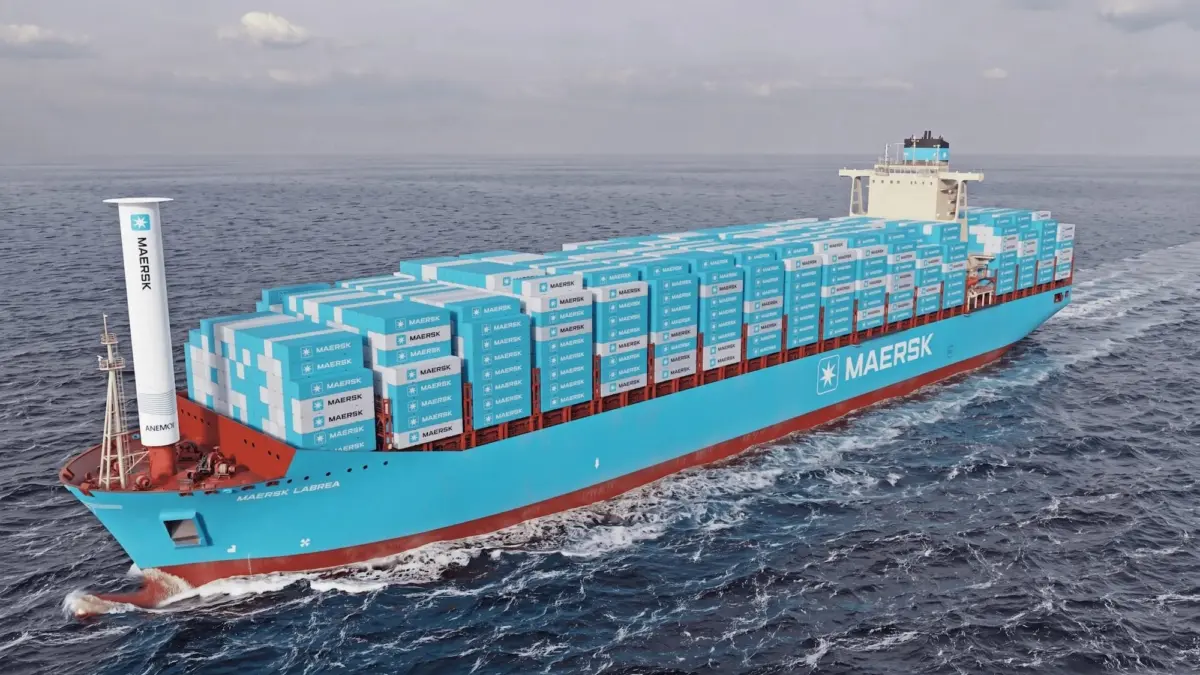
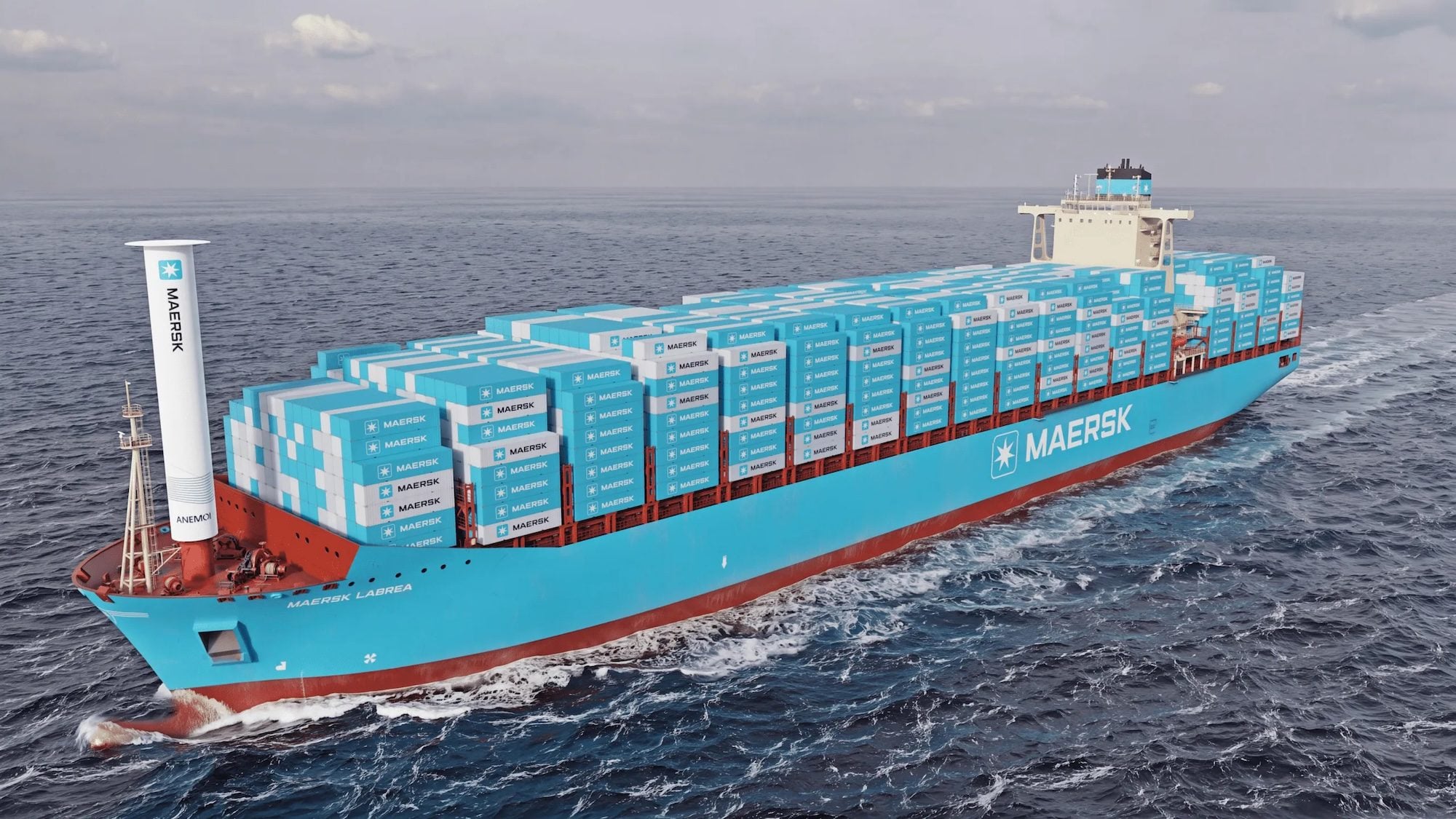
- Containerships (2027): A.P. Moller-Maersk announced plans to install a 35-meter rotor sail on an 8,700-TEU containership, with sea trials scheduled to begin in 2027 on regular Atlantic services. This project represents the first-ever application of a rotor sail on a vessel of this configuration.
- Very Large Crude Carriers (2028): Japan’s Idemitsu Tanker has committed to installing Norsepower rotor sails on two newbuild VLCCs scheduled for delivery in 2028, proving that wind energy is compatible with the world’s largest liquid energy carriers.
Supporting Context & Technical Metrics
To understand why shipowners are turning back to the wind, it is necessary to examine the physical mechanisms, performance metrics, and operational challenges of these modern systems.
+-----------------------------------------------------------------------------+
|                           WAPS TECHNOLOGY SPECTRUM                          |
+-----------------------------------------------------------------------------+
|                                                                             |
|  [Rotor Sails (Flettner)]                                                   |
|  - Mechanism: Spinning cylinders generating lift via the Magnus effect.     |
|  - Best suited for: Bulkers, tankers, and large open-deck vessels.          |
|                                                                             |
|  [Rigid Wing Sails (e.g., WindWings)]                                       |
|  - Mechanism: Solid, multi-element aerodynamic foils mimicking wings.       |
|  - Best suited for: Bulk carriers and customized LNG carrier designs.       |
|                                                                             |
|  [Suction Sails (e.g., eSAIL)]                                              |
|  - Mechanism: Boundary-layer suction pulling air to prevent stall.          |
|  - Best suited for: Medium-range (MR) tankers and general cargo vessels.    |
|                                                                             |
+-----------------------------------------------------------------------------+
The Physics of Modern Wind Systems
Modern wind propulsion systems rely on three primary technological designs, each utilizing distinct aerodynamic principles:
1. Rotor Sails (Flettner Rotors)
Rotor sails are tall, motorized cylinders that spin in the wind. When wind blows across the spinning cylinder, it accelerates the airflow on one side and decelerates it on the other. This velocity difference creates a pressure differential—known as the Magnus effect—which generates a powerful aerodynamic lift force perpendicular to the wind flow. This force is directed forward to assist the ship’s primary propulsion, reducing the mechanical load on the main engine.
2. Rigid Wing Sails
Resembling aircraft wings mounted vertically on a ship’s deck, rigid wing sails (such as BAR Technologies’ WindWings) use traditional aerodynamic lift. These multi-element foils can adjust their angle of attack and camber to maximize lift-to-drag ratios across various wind conditions. Because of their size and rigid structure, they are often designed to fold down flat on the deck to clear low bridges and avoid interfering with portside cargo cranes.
3. Suction Sails
Suction sails, such as bound4blue’s eSAIL, are thick aerodynamic profiles that use internal fans to draw boundary-layer air into the sail through narrow slots. This suction prevents the airflow from detaching from the sail’s surface (stalling) at high angles of attack. By maintaining attached flow, suction sails generate up to six times the lift of a conventional wing of the same size, offering a highly compact footprint.
Fleet Integration and Performance Metrics
The primary driver for installing WAPS is fuel savings, which translate directly into reduced carbon dioxide emissions.
| Vessel Name / Type | Technology Provider | System Specifications | Expected / Realized Fuel Savings |
|---|---|---|---|
| Sohar Max (400,000-dwt VLOC) | Anemoi Marine Technologies | 5x 35-meter Rotor Sails | Up to 6% |
| Atlantic Orchard (Juice Carrier) | bound4blue | 4x 26-meter eSAILs (Suction) | 8% – 15% (route dependent) |
| Neoliner Origin (136m Ro-Ro) | Neoline | 2x 76-meter Solid Sail Masts | Up to 80% (primary propulsion) |
| Future LNG Carrier (174,000-cbm) | BAR Technologies | Rigid WindWings (Concept Study) | Projected 10% – 12% |
Operational Challenges and Constraints
While the fuel savings are clear, integrating wind systems onto modern commercial vessels presents several engineering and operational challenges:
- Air Draft Restrictions: Towering sails can prevent ships from passing under bridges (e.g., the Bosporus, Panama Canal, or Suez Canal bridges). Manufacturers address this by designing tilting or telescoping foundations.
- Cargo Operations Interference: On bulk carriers and containerships, sails can block the path of shore-based gantry cranes and grab unloaders. Rotor sails on bulkers are often mounted on longitudinal rails, allowing them to be rolled out of the way during loading and unloading.
- Stability and Heel: The lateral force generated by sails creates a heeling moment. Vessel stability must be carefully analyzed, particularly on containerships with high centers of gravity.
- Corrosion and Marine Wear: Operating in harsh, salt-laden marine environments requires advanced composite materials (like carbon fiber and fiberglass) and robust mechanical seals to protect internal motors and control electronics.
Official Statements and Regulatory Drivers
The shift toward wind technology is driven by international environmental regulations rather than voluntary sustainability initiatives.
Regulatory Mandates
The International Maritime Organization (IMO) has set ambitious targets to reduce greenhouse gas (GHG) emissions from international shipping by at least 20%, striving for 30% by 2030, and reaching net-zero by or around 2050. To enforce these targets, the IMO introduced the Energy Efficiency Existing Ship Index (EEXI) and the annual Carbon Intensity Indicator (CII) rating system.
Concurrently, the European Union has integrated shipping into its Emissions Trading System (EU ETS) and implemented the FuelEU Maritime initiative, which penalizes vessels utilizing high-carbon fuels. Because low-carbon alternative fuels (such as green methanol, ammonia, and hydrogen) remain scarce and expensive, wind energy represents an immediate, zero-carbon fuel-saving measure that can be retrofitted onto existing vessels.
Industry Perspectives
Maritime executives emphasize that wind propulsion must be treated as a practical economic tool rather than a novelty.
An executive from A.P. Moller-Maersk, commenting on the 2027 Atlantic containership trial, noted:
"For our industry to meet its decarbonization targets, we must explore every viable technology. Rotor sails represent an opportunity to capture free, abundant energy directly from the environment. Our goal with this pilot is to understand how wind-assisted propulsion behaves on a large containership operating on demanding, high-schedule-integrity Atlantic routes."
A spokesperson for Vale highlighted the long-term strategic role of wind in bulk shipping:
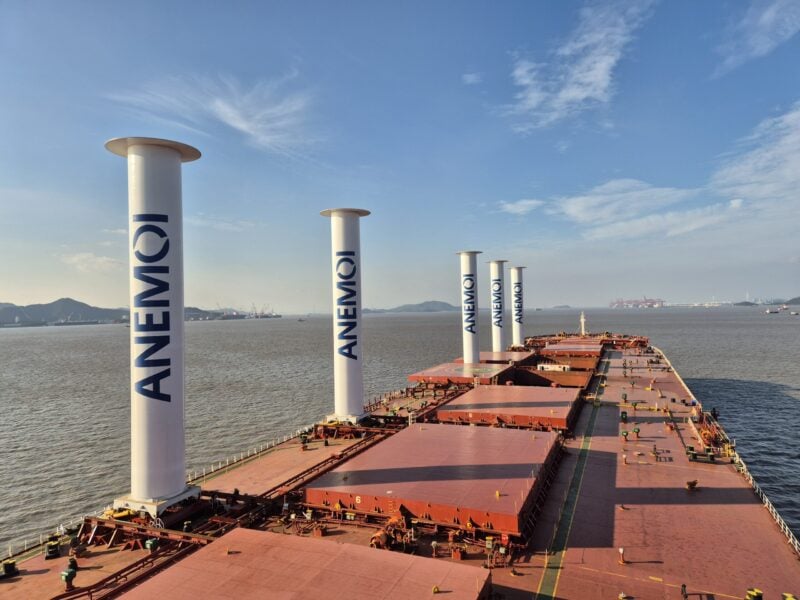
"The successful installation on the Sohar Max demonstrates that wind-assisted propulsion is viable even on the largest bulk carriers in the world. As we look to the future, we plan to integrate wind systems with alternative fuels, including ethanol-powered very large ore carriers, to maximize our carbon reduction efforts."
Addressing the technical challenges of delicate cargoes, a representative from the Liberian Registry discussed the joint LNG carrier study with HD Hyundai and BAR Technologies:
"LNG carriers operate under some of the most stringent safety and scheduling requirements in the world. Moving the accommodation block forward to accommodate WindWings is a bold design choice, but one that addresses the critical line-of-sight and aerodynamic requirements. This study will establish the necessary safety frameworks to make wind-assisted LNG transport a commercial reality."
Future Outlook
As the maritime sector moves toward the end of the decade, the integration of wind-assisted propulsion is evolving from a retrofitted add-on into a core element of holistic ship design.
+-----------------------------------------------------------------------------+
|                          THE WINTEGRATE SYSTEM ARC                          |
+-----------------------------------------------------------------------------+
|                                                                             |
|    [Weather Routing Engine] ----> [Automated Sail Trim]                     |
|               |                             |                               |
|               v                             v                               |
|    [Main Engine Load Control] <--> [Battery Storage / Hybrid Power]         |
|                                                                             |
+-----------------------------------------------------------------------------+
The Integrated Vessel Concept
Historically, wind systems were treated as standalone equipment bolted onto a ship’s deck, operated independently of the main propulsion train. This siloed approach is being replaced by integrated energy management systems.
A prime example is Norway’s WINTEGRATE program. This collaborative initiative brings together industry leaders—including Kongsberg Maritime, DNV, Odfjell, Norsepower, and bound4blue—to develop unified systems where wind propulsion, main engines, battery storage, and voyage planning software operate in tandem.
In an integrated vessel, if a sudden gust of wind generates extra thrust, the automated power management system instantly reduces the fuel flow to the main engine or diverts excess shaft generator energy to charge onboard battery banks.
Weather Routing and AI
The efficiency of wind propulsion is tied directly to the weather. To maximize fuel savings, modern wind-assisted vessels rely on sophisticated weather routing software. By utilizing real-time meteorological data and predictive AI models, these systems calculate the most energy-efficient route rather than the shortest geographical path. A slight deviation in course to catch a favorable wind system can yield fuel savings that far outweigh the minor distance penalty, all while keeping the vessel on schedule.
Conclusion
Commercial shipping is not returning to the pre-steam era of wooden hulls and manual sail trimming. Instead, it is entering a hybrid era. In this new landscape, advanced composite sails, automated control systems, and machine-learning algorithms work alongside modern engines.
As alternative fuels remain expensive and difficult to source, the maritime industry is realizing that ignoring the free, clean, and inexhaustible energy of the wind is no longer an option. Wind has officially reclaimed its place in the propulsion mix of the global merchant fleet.