






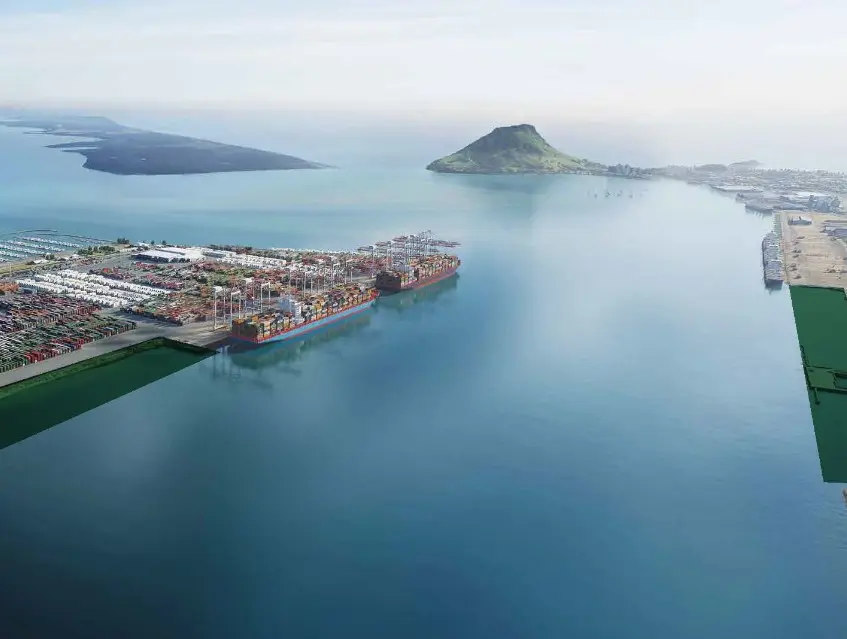
AUCKLAND / TAURANGA — In a monumental step forward for New Zealand’s maritime infrastructure and supply chain resilience, Port of Tauranga Limited has received conditional, draft fast-track approval for its ambitious Stella Passage development. Announced on August 17, 2026, by Eldin Ganic, the decision marks a critical turning point for the nation’s largest export gateway, clearing the path for substantial capacity expansions designed to future-proof New Zealand trade against rising global logistics demands.
The independent fast-track expert panel issued a draft decision proposing to grant all necessary resource consents and approvals requested by the Port of Tauranga, albeit subject to a specific suite of environmental and operational conditions. With the regulatory framework now leaning favorably toward the multi-million-dollar upgrade, the port authority enters a brief, high-stakes window of review before the final binding decision is handed down in early September 2026.
Executive Overview
The Stella Passage development is not merely a localized construction project; it is a vital infrastructural upgrade engineered to handle the next generation of containerized cargo and bulk shipping coming through the Asia-Pacific region. As international vessel sizes scale upward, ports globally are under immense pressure to deepen berths, widen navigational channels, and expand on-dock capabilities to prevent catastrophic supply chain bottlenecks.
Port of Tauranga’s comprehensive master plan for Stella Passage addresses these exact vulnerabilities. By extending both its Sulphur Point container terminal and Mount Maunganui wharves, reclaiming targeted coastal land, and carrying out extensive capital dredging, the port aims to dramatically increase its throughput capacity, improve berth utilization efficiency, and reduce vessel turnaround times.
While the draft approval is conditional, the favorable ruling by the expert panel underscores the national significance of the project under New Zealand’s fast-track consenting framework—a legislative mechanism designed to accelerate infrastructure projects critical to economic growth without bypassing environmental safeguards.
Detailed Chronology: The Road to the Stella Passage Draft Approval
The journey toward modernizing Stella Passage has been characterized by meticulous planning, environmental impact assessments, and strategic navigation of New Zealand’s complex planning regulations.
Genesis of the Master Plan
Years prior to the 2026 fast-track application, Port of Tauranga leadership recognized that existing berth space would eventually reach saturation point. With New Zealand’s primary export sectors—including forestry, dairy, horticulture, and meat—relying heavily on efficient shipping routes to international markets, any constraint at the port level translates directly into economic friction for producers nationwide. The planning phase required extensive hydrographic surveys, engineering simulations, and ecological studies to determine how the harbor could accommodate larger ships safely and sustainably.
Navigating the Fast-Track Process
To avoid protracted delays that traditionally plague major infrastructure projects under the Resource Management Act (RMA), Port of Tauranga pursued the designated fast-track consenting route. This mechanism routes applications directly through an independent expert panel comprising specialists in environmental law, engineering, cultural heritage, and ecology.
On August 17, 2026, this panel delivered its draft decision. The ruling proposed granting all approvals sought by the port, triggering a tightly regulated statutory consultation window.
The Final Review Window
Following the August 17 announcement, Port of Tauranga was granted a strict two-day window to review and comment on the technical feasibility and wording of the proposed conditions. Concurrently, statutory parties, local stakeholders, and affected groups were provided a brief opportunity to submit feedback on the draft terms. This procedural safeguard ensures that while the project moves at an accelerated pace, local environmental and community interests remain protected. A final, definitive decision from the expert panel is officially scheduled for early September 2026.
Project Scope and Technical Specifications
The engineering scope of the Stella Passage development is vast, encompassing structural civil engineering, marine dredging, and land reclamation executed within the port’s existing operational footprint.
+--------------------------------------------------------------------------+
|                       STELLA PASSAGE KEY COMPONENTS                      |
+--------------------------+-----------------------------------------------+
| Sulphur Point Extension  | 385 meters added to container berth (2 stages)|
+--------------------------+-----------------------------------------------+
| Mount Maunganui Wharves  | 315 meters added to existing wharves          |
+--------------------------+-----------------------------------------------+
| Land Reclamation         | Cargo storage land created behind new wharves |
+--------------------------+-----------------------------------------------+
| Capital Dredging         | Widening and deepening of Stella Passage      |
+--------------------------+-----------------------------------------------+
1. Sulphur Point Container Berth Extension (385 Meters)
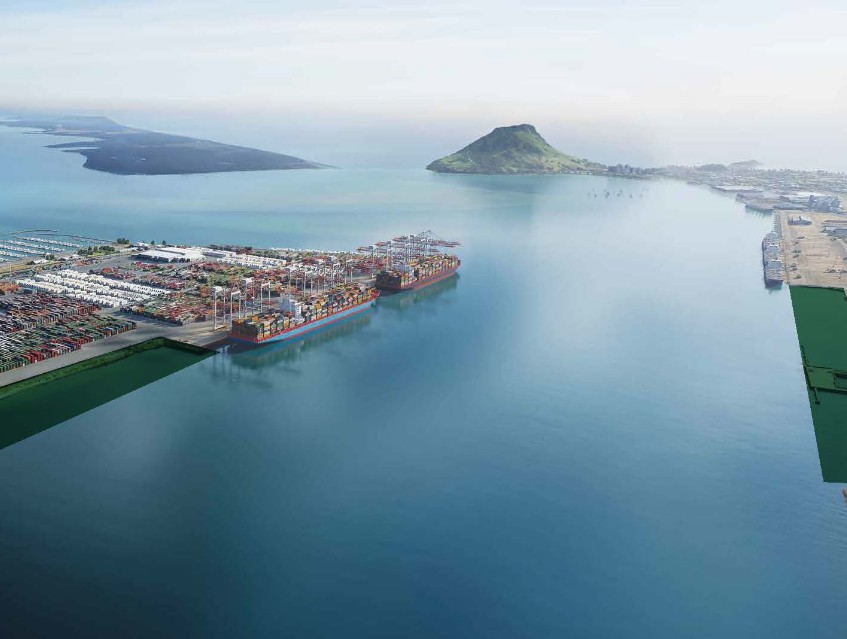
The crown jewel of the maritime expansion is the phased extension of the Sulphur Point container terminal by a total of 385 meters. Executed across two distinct stages to maintain ongoing terminal operations, this extension will allow multiple ultra-large container vessels (ULCVs) to berth simultaneously. By augmenting linear berth capacity, the port eliminates the costly waiting times that plague congested international trade hubs.
2. Mount Maunganui Wharf Expansion (315 Meters)
Complementing the container terminal upgrade, the project includes a 315-meter extension of the wharves at Mount Maunganui. This expansion targets bulk, break-bulk, and general cargo operations, ensuring that Tauranga’s vital export sectors—such as forestry products and agricultural machinery—benefit from enhanced handling speeds and dedicated staging areas.
3. Strategic Land Reclamation and Infrastructure Integration
Rather than expanding outward into untouched coastal ecosystems, the Stella Passage development relies heavily on the conversion and smart reclamation of existing cargo storage land within the port’s established operational footprint. Land reclamation directly behind the newly constructed wharves will create seamless transitions between vessel offloading zones and container storage yards, optimizing horizontal logistics and minimizing internal transport times for heavy-lift port machinery.
4. Capital Dredging of the Passage
To safely navigate the next generation of deeper-draft vessels into the expanded berths, the development incorporates comprehensive capital dredging of Stella Passage. The dredging campaign will remove sediment to achieve required navigational depths, requiring strict management plans to mitigate turbidity, protect marine ecology, and manage dredged material responsibly in accordance with environmental standards.
Supporting Context & Metrics: Tauranga’s Economic Anchor
To understand the gravity of the Stella Passage development, one must examine Port of Tauranga’s overarching position within the Australasian supply chain network.
National Economic Significance
Port of Tauranga is New Zealand’s largest port by cargo volume and container throughput. It acts as a natural hub port for the country, frequently receiving direct calls from major international shipping lines that bypass smaller domestic ports. This "hub-and-spoke" model means that any efficiency gains realized at Tauranga ripple across the entire national transport network, lowering freight costs for importers and exporters alike.
Handling Scale and Growth Trajectory
Over the past decade, the port has steadily invested in container cranes, rail siding capacities, and yard automation. However, physical berth frontage has remained a finite constraint. The addition of 385 meters at Sulphur Point and 315 meters at Mount Maunganui directly breaks this bottleneck, unlocking millions of TEUs (Twenty-Foot Equivalent Units) in cumulative future capacity.
Environmental and Community Stewardship
Marine infrastructure projects of this scale inevitably invite scrutiny regarding harbor health, Māori cultural values (Kaitiakitanga), and coastal erosion. The fast-track process has required Port of Tauranga to submit rigorous environmental management plans. The conditions attached to the draft approval typically mandate continuous water quality monitoring, restrictions on dredging schedules during sensitive marine breeding seasons, and the implementation of robust silt-control curtains to safeguard the Tauranga Harbour ecosystem.
Official Statements and Stakeholder Perspectives
While the formal response period remains active, initial reactions from market analysts, port executives, and industry groups highlight widespread optimism tempered by an awareness of the strict compliance conditions ahead.
Port of Tauranga management emphasized the cooperative nature of the fast-track process, noting in their official disclosure that the draft decision reflects a thorough evaluation of the project’s national economic merits balanced against environmental protections.
“The issuance of the draft decision proposing to grant all requested approvals is a critical validation of our engineering and environmental planning,” noted industry observers closely tracking the port’s development pipeline. “Port of Tauranga has consistently demonstrated that high-throughput capacity can coexist with rigorous environmental stewardship. The next two weeks will be dedicated to reviewing the fine print of the conditions to ensure seamless execution once the final stamp is applied in September.”
Supply chain economists have similarly lauded the decision, pointing out that New Zealand’s post-pandemic export economy relies entirely on frictionless maritime access. With regional competitors also expanding infrastructure, Tauranga’s ability to berth larger ships ensures the country remains an attractive, cost-effective destination for global shipping conglomerates.
Future Outlook: Looking Beyond September 2026
As the industry awaits the final, binding decision expected in early September 2026, Port of Tauranga is already laying the operational groundwork for the execution phase.
Immediate Next Steps (Q3 2026)
- Condition Review & Finalization: Port legal and engineering teams will finalize their feedback on the expert panel’s proposed operating conditions.
- Final Determination: Upon review of submissions from all statutory parties, the panel will issue its final, binding decision.
- Contractor Mobilization: Procurement and tender processes for marine dredging contractors, civil engineering firms, and heavy construction equipment will shift into high gear.
Long-Term Horizon (2026–2030+)
Once final approval is secured, physical construction is anticipated to roll out in staged increments to minimize disruption to current port operations.
- Phase 1: Focuses on the initial stages of the Sulphur Point berth extension and preparatory engineering works for land reclamation.
- Phase 2: Encompasses capital dredging campaigns and the subsequent realization of the Mount Maunganui wharf additions.
By the time the project reaches full operational maturity, Port of Tauranga will stand uniquely positioned to absorb future trade volume surges, service larger eco-efficient container vessels, and reinforce its status as the undisputed maritime gateway of New Zealand. The Stella Passage development is not just a triumph of engineering; it is a permanent investment in the economic prosperity of Aotearoa.