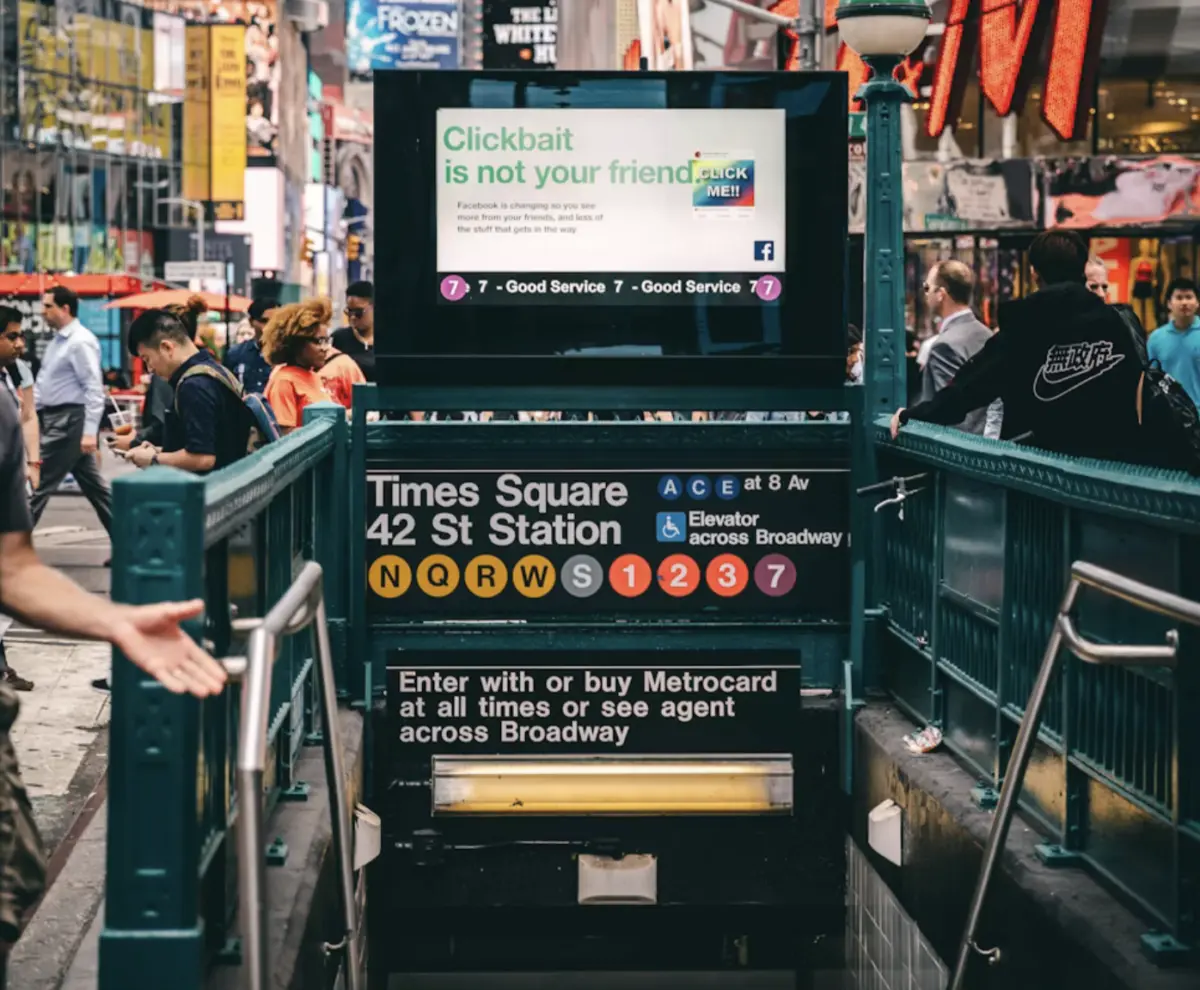
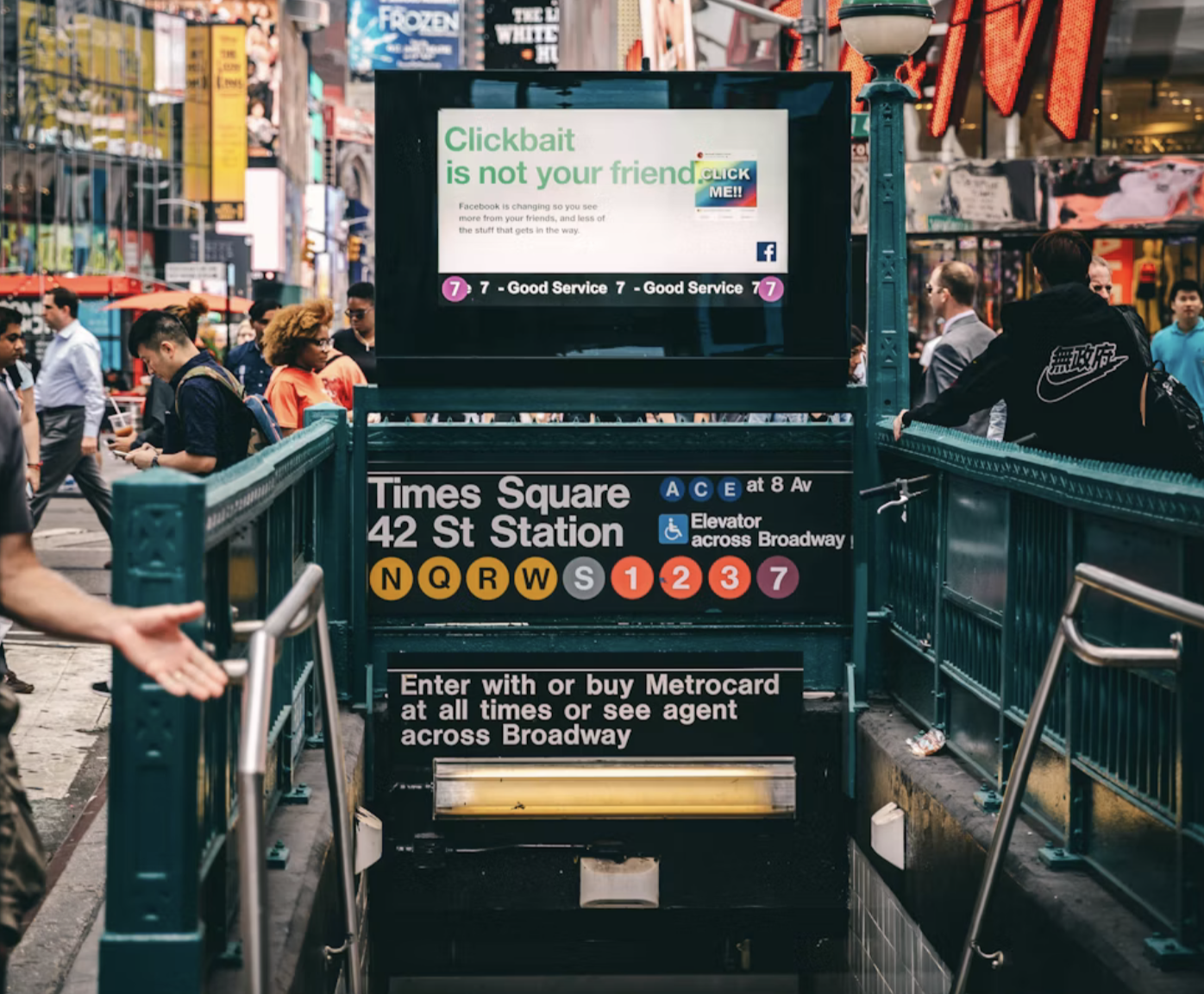
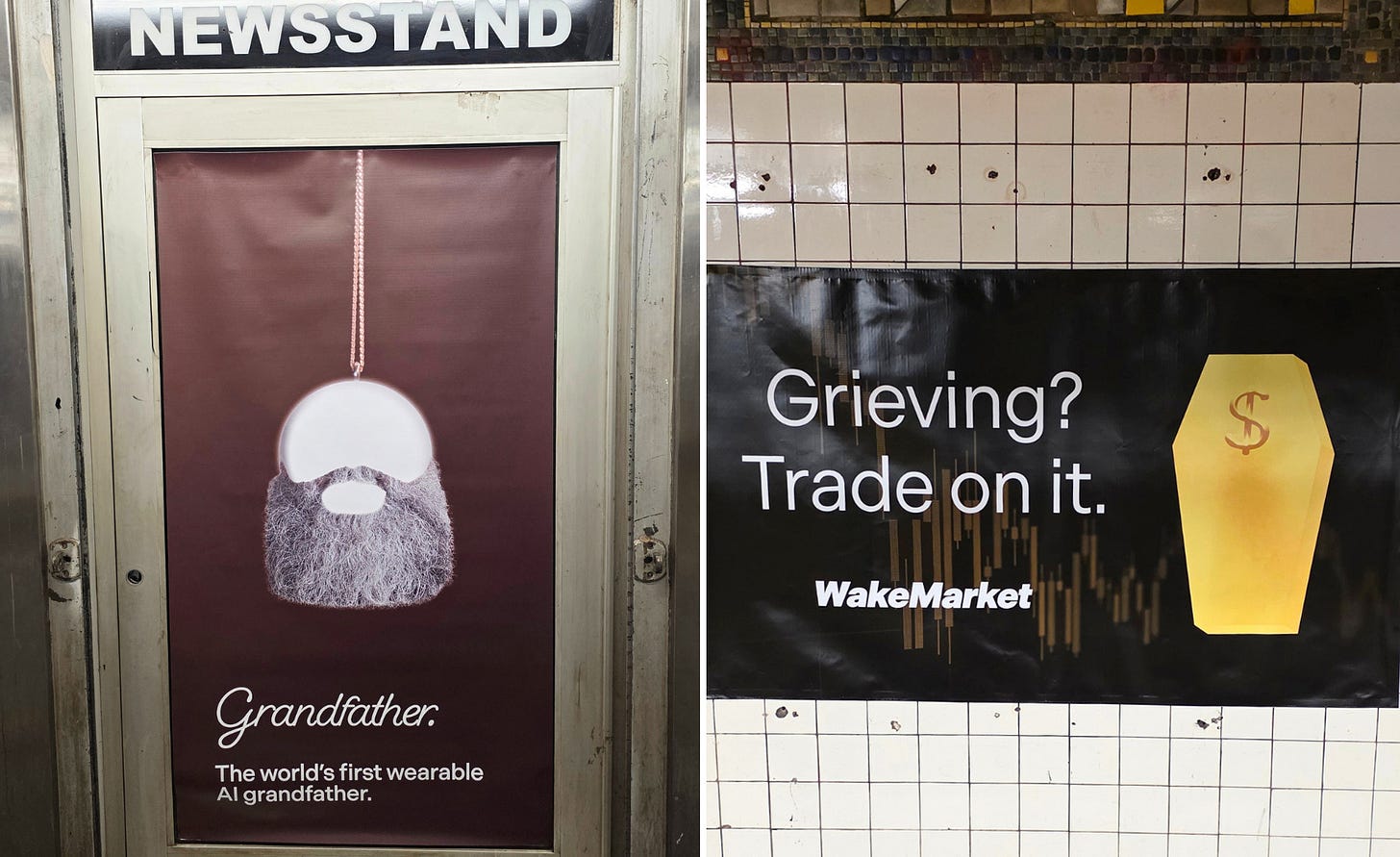
Public transportation is theoretically meant to be the great civic equalizer—a shared, democratic space where diverse urban populations converge, move, and briefly coexist. Yet, for millions of commuters worldwide, stepping onto a modern subway system no longer feels like engaging with public infrastructure; it feels like walking deep inside a smartphone.
Driven by escalating transit deficits and aggressive corporate media strategies, public transit authorities have transformed underground networks into flashing, algorithmically hyper-targeted sensory battlegrounds. No longer content with static posters hawking household appliances or mass-market consumer goods, transit advertising has evolved into a chaotic matrix of motion graphics, high-intensity digital displays, and hyper-niche tech promotions.
This deep dive investigates the modern monetization of the daily commute. By examining the structural shift from mid-century mass marketing to modern precision-targeted "slop," we explore how public spaces became corporate billboards, why the economic justification for transit advertising is increasingly flawed, and how commuters, artists, and urban planners are beginning to push back against the relentless commercialization of the public sphere.
Detailed Chronology: A Century of Billboard Resistance and Aesthetic Creep
The friction between commercial enterprises and public space is far from a modern invention. To understand today’s digital saturation, one must trace the evolution of outdoor advertising over the past 130 years.
The Standardization of the Public Eye (1890s–1920s)
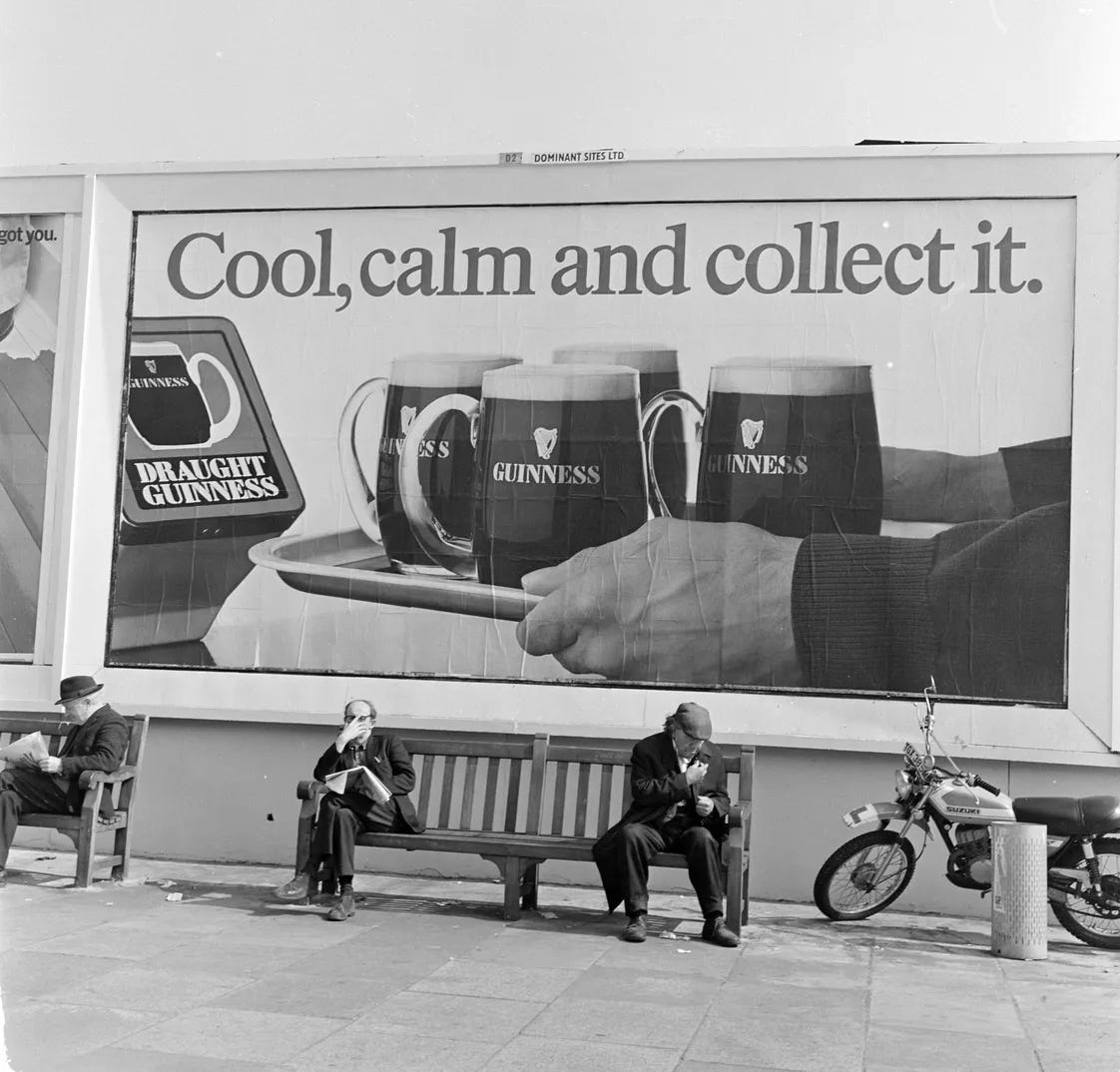
Roughly 130 years ago, the burgeoning outdoor advertising industry—spearheaded by early trade groups like the Associated Bill Posters Association—standardized the "billboard" as the gold standard of commercial display. By consolidating itinerant flyers, hand-painted signs, and wheatpaste posters into uniform, well-maintained structures placed along high-traffic corridors, advertisers effectively institutionalized visual intrusion.
Public backlash was swift and continuous. By the 1920s, critics and intellectuals were already lamenting the loss of visual peace. A striking 1924 essay in Architectural Review captured the sentiment of the era:
"There is no hour of waking life in which we are not besought, incited, or commanded to buy something of somebody. Our morning paper is full of it; our walk to the nearest car bristles with it… When the shades of night fall, a portentous heraldry of trade leaps in living fire from the darkness."
During this period, civic organizations mobilized against the sprawl of outdoor marketing. The Automobile Club of America launched organized billboard-removal drives to clear scenic rural roads, while groups like the City Club of Chicago successfully lobbied for municipal bans on residential street advertising. These efforts culminated in a landmark 1917 U.S. Supreme Court ruling that established a city’s constitutional right to regulate the location of advertising—though crucially leaving the regulation of ad content based on aesthetic grounds off the table.
The Mid-Century Mass Culture Consensus (1950s–1990s)
With the legal framework set, outdoor advertising exploded during the mid-20th century. This era coincided with the rise of the American mass monoculture. Advertisers promoted General Electric kitchen appliances, Nabisco snacks, and automobile brands to broad, homogenous middle-class households.
During this period, the marketing industry adopted the lexicon of fine art. Copywriters and art directors vied for prestigious creative awards, positioning outdoor posters not merely as sales pitches, but as popular public art. In an increasingly sterile industrial cityscape, a brightly colored transit poster was often the only splash of vibrancy and reading material available to the average working-class commuter. Critics railed against the promotion of cigarettes and gambling, but proponents argued that mass advertising served a quasi-public utility by informing citizens of lifestyle improvements.
The Fractured Digital Present (2010s–Present)
The unified mass monoculture has since splintered into an infinite archipelago of niche interests. Where advertisers once relied on broad, imprecise channels like network television and stationary billboards, contemporary marketing is obsessed with "targeting" and "precision"—terminology heavily borrowed from military strategy.
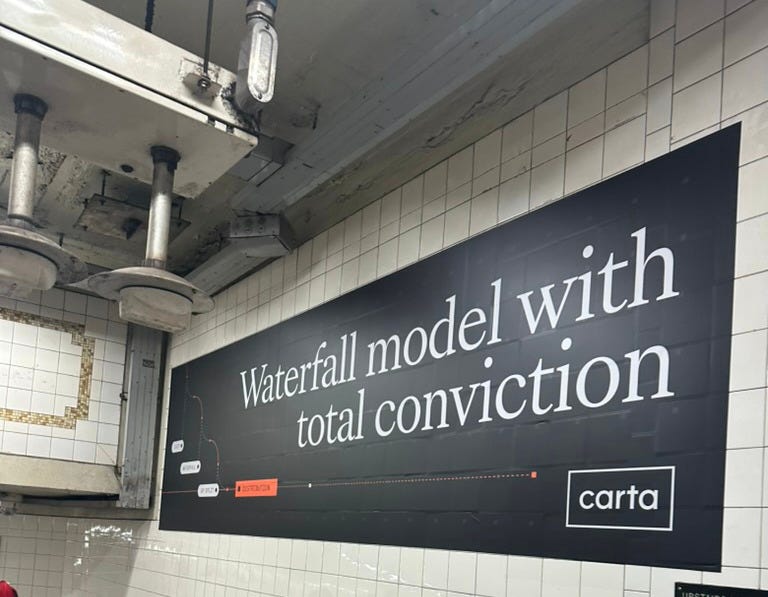
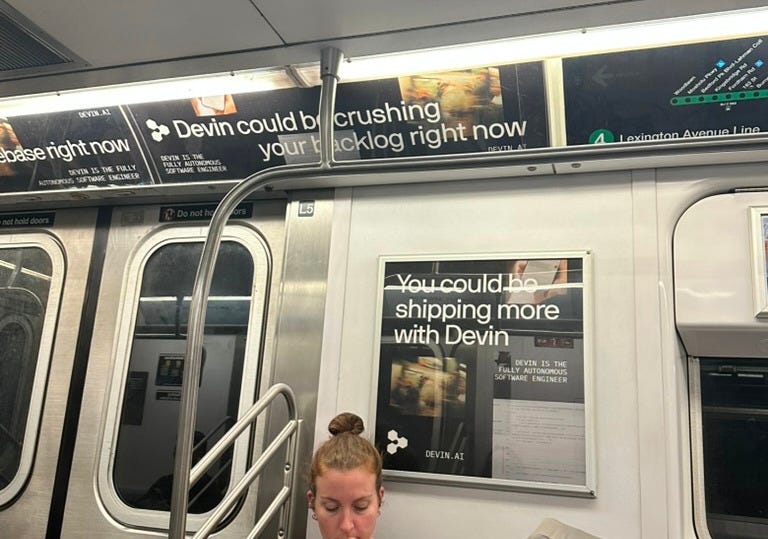
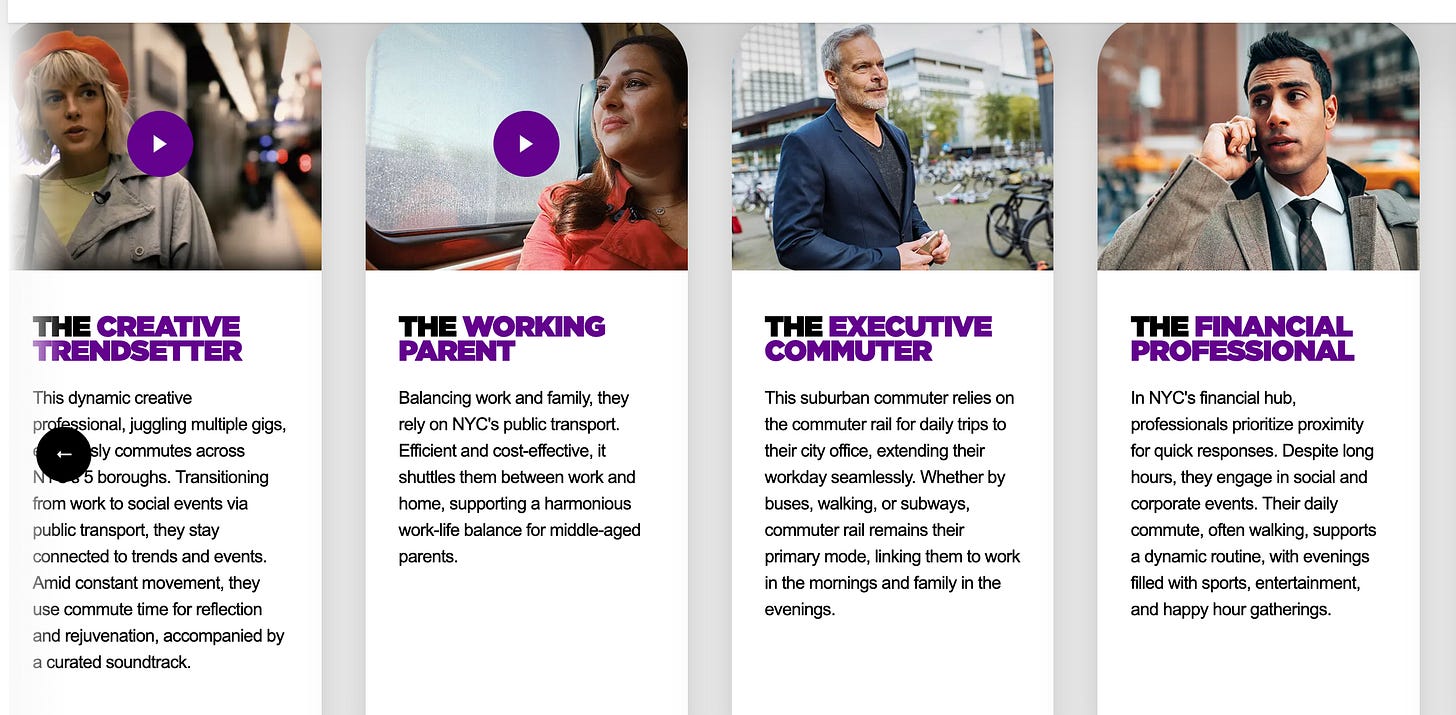
Today, commuters no longer share a common cultural reference point. Instead, they sit side-by-side in subway cars while algorithms feed them micro-targeted digital ads designed for an infinitesimal slice of the population—such as software engineers at specific tech firms, day-traders using high-frequency AI platforms, or wellness enthusiasts tracking esoteric peptide supplements. The outdoor ad has gone from a broad cultural brushstroke to a digital broadsword, striking thousands of irrelevant onlookers simply to reach a single prospective buyer.
Supporting Context & Metrics: The Economics of Transit Monetization
To grasp why public transit systems look increasingly like Silicon Valley landing pages, one must follow the money. Public transit agencies, facing chronic underfunding and soaring operational costs, have increasingly turned to commercial partnerships to bridge budget gaps.
The Financial Equation
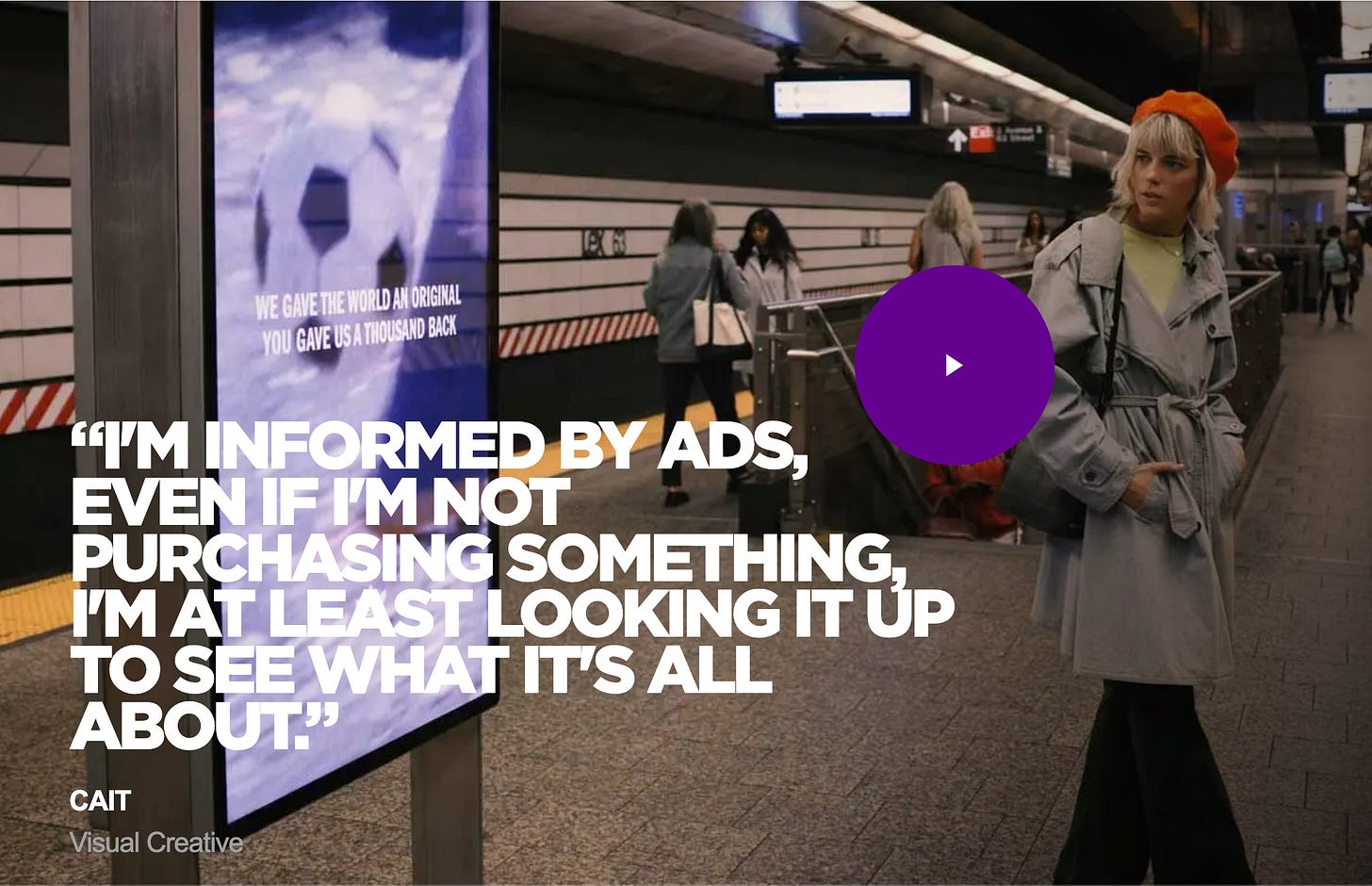
In major metropolitan hubs, advertising is heralded as a crucial financial lifeline. For example, the Metropolitan Transportation Authority (MTA) in New York City brought in approximately $180 million from commercial advertising across its properties, a significant jump from $136 million in 2019. Partnering with media giants like Outfront Media, transit authorities have systematically upgraded their infrastructure, replacing static paste-ups with high-resolution, illuminated displays and dynamic video screens that loop short-form content.
However, this financial contribution must be weighed against the broader budget of the transit ecosystem. While $180 million is undeniably a substantial sum, it represents a minor fraction of multi-billion-dollar transit capital and operating budgets. Critics, including urban planners and transit advocates, argue that selling out the sensory environment of millions of daily riders yields a negligible fiscal return compared to structural administrative overhauls, curbing consultant bloat, or adjusting progressive taxation mechanisms like payroll mobility taxes.
The Psychology of the "Bizarreness Effect"
Modern digital subway ads deliberately borrow the chaotic, high-stimulation aesthetic of social media feeds: rapid cuts, aggressive text overlays, blindingly bright colors, and nonsensical propositions.
In behavioral psychology, this strategy taps into the "bizarreness effect"—the cognitive phenomenon wherein strange, nonsensical, or anomalous stimuli become highly distinctive because they present an immediate puzzle for the human brain to solve. When a commuter is forced to stare at an incomprehensible corporate slogan or an AI-generated tech startup ad on an endless loop, the confusion itself becomes the hook.
Even negative attention—frustration, mockery, or digital outrage—is successfully monetized. Commuters who photograph absurd ads and share them on social media provide companies with "organic reach," turning public annoyance into free viral marketing.
Official Statements & Institutional Perspectives
The defense of transit advertising is rooted in fiscal pragmatism, while the opposition is fueled by growing public fatigue over sensory overload.
The Transit Authority Stance
Defenders of transit monetization maintain that commercial partnerships are essential to maintaining affordable fares for everyday riders. Mary John, the MTA’s director of commercial ventures, addressed this dynamic directly in public interviews, stating:
"Ad revenue is an incredibly important source of revenue for the MTA outside our farebox. Revenue sources like this are what help us keep fares low for customers, or those increases low year-over-year."
From the perspective of transit administrators, commercial revenue is the trade-off riders make for subsidized mobility—much like the historical model of commercial television, where viewers tolerated commercial breaks in exchange for free programming.
The Commuter Backlash
Critics, however, argue that this social contract is broken. Modern consumers already pay multiple times over for their media consumption through premium streaming subscriptions, high mobile data costs, and direct taxation. Adding aggressive, inescapable commercial displays to public transit feels less like a fair trade-off and more like a triple-tax on the human sensorium.
Urban planning experts and cognitive scientists are increasingly raising alarms about the psychological toll of this environment. Growing scientific literature links high-intensity, short-form digital content to degraded attention spans, heightened stress levels, and cognitive fatigue. For a commuter attempting to decompress or practice mindfulness during a morning transit ride, being trapped inside a physical simulation of an interactive smartphone feed actively degrades mental well-being.
Future Outlook: Reclaiming the Public Sphere
As digital advertising encroaches further into every available square inch of civic infrastructure, resistance is beginning to take creative and organizational forms.
Grassroots Subversion and Parody
Civic disobedience within the transit advertising ecosystem has moved beyond passive eye-rolls. Artists and comedians have launched high-profile guerilla counter-campaigns. Creators such as Harris Alterman and Dave Ross have designed and pasted satirical, anti-tech parody advertisements across subway stations, using humor to skewer the absurdities of modern corporate branding.
Similarly, independent designers and digital creators have begun conceptualizing physical hardware solutions—such as specialized peripheral-vision blockers and wearable shields designed to filter out digital ad displays in public transit cars. While these inventions remain largely conceptual or satirical, they highlight a burgeoning cultural desire for technological self-defense against corporate intrusion.
Policy Proposals for a Quieter Commute
If public transit agencies are genuinely committed to improving the commuter experience, systemic reforms must go beyond superficial adjustments. Urban planners and public advocates have proposed several actionable paths forward:
Aesthetic and Motion Regulations: Transit authorities should immediately establish strict caps on motion, frame-rates, and luminosity for digital displays. Aligning public ad standards with neurological research on cognitive load would prevent flashing, high-frequency videos from hijacking passenger nervous systems.
Prioritizing Public Art Over Commercial Slop: Advertising space within transit networks can be reclaimed and redirected toward expanded public arts and design programs. Replacing corporate tech promotions with community-driven art enriches the civic landscape rather than commodifying it.
Alternative Revenue Models: Transit systems must diversify funding streams through smarter fiscal management—such as reducing reliance on high-priced outside consultants, maximizing air-rights over transit hubs, and implementing equitable regional transit taxes—rather than treating rider attention as a cheap commodity.
Conclusion
History suggests that those who fight against advertising often face an uphill battle. More than a century ago, cultural critics lamented the death of contemplation in modern life as billboards choked urban skylines.
Yet, the public transit system remains fundamentally a civic enterprise—funded by taxpayers, sustained by fare-paying riders, and built to move human beings safely through the city. A peaceful, dignified commute is not an unreasonable demand. Until transit authorities recognize the mental health toll of our hyper-commercialized public spaces, commuters will be left with little choice: either continue waging grassroots resistance or reach back into their pockets, slip in their earbuds, and tune the modern world out entirely.