






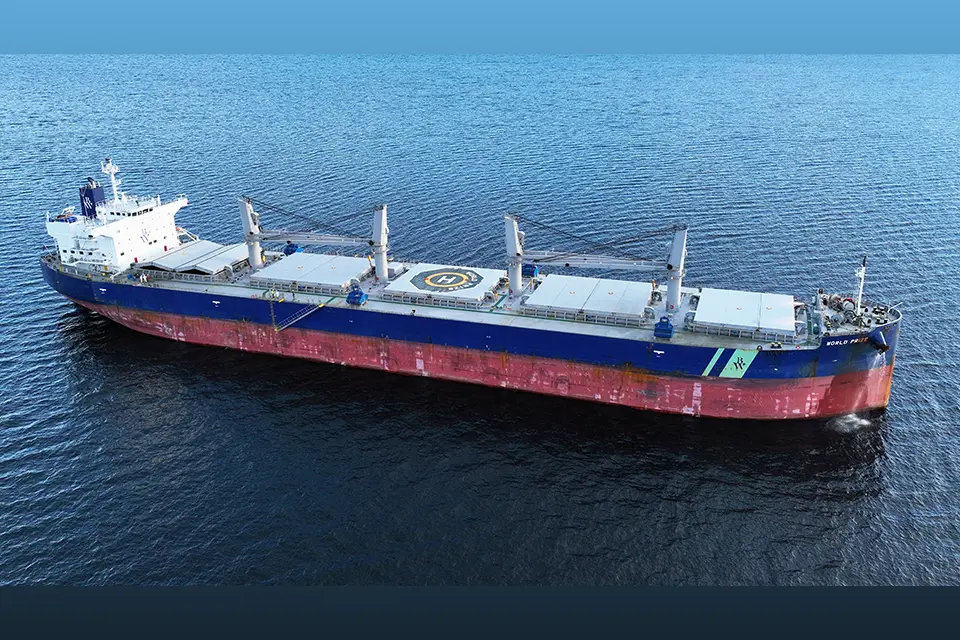
LONDON — The United Kingdom’s Marine Accident Investigation Branch (MAIB) has officially published its comprehensive accident investigation report regarding the tragic man overboard incident that claimed the life of a crew member aboard the Isle of Man-registered bulk carrier World Prize. The incident, which occurred on October 14, 2025, has reignited critical industry-wide conversations surrounding maritime safety protocols, crew resource management, search-and-rescue operations in open water, and the stringent safety frameworks governing merchant shipping under Red Ensign Group jurisdictions.
The publication of the report marks the culmination of a meticulous, multi-month investigation conducted by the MAIB on behalf of the Isle of Man Ship Registry. Operating under the established Memorandum of Understanding (MoU) between the MAIB and the Category 1 registries of the Red Ensign Group—which includes the Isle of Man, the Cayman Islands, Bermuda, and Gibraltar—the UK agency deployed specialist maritime investigators to analyze the mechanical, environmental, and human factors that contributed to the fatality.
The full investigative findings, detailing the sequence of events, causal factors, and safety recommendations, have been made publicly available via the official government report portal. As maritime authorities, ship managers, and labor organizations digest the report’s conclusions, the incident serves as a sobering reminder of the unforgiving nature of the marine environment and the continuous need for unwavering vigilance across global commercial fleets.
Executive Overview
The tragic loss of life aboard the World Prize on October 14, 2025, represents a devastating failure of barrier systems designed to protect seafarers working in some of the most demanding and hazardous conditions imaginable. Bulk carriers, by virtue of their massive structural scale, expansive deck layouts, and exposure to dynamic oceanic weather, present unique operational hazards. When a crew member goes overboard on the high seas, the margin for error is measured in seconds, and the operational complexity of recovering a human being from a vessel operating at service speed cannot be overstated.
According to the MAIB’s executive summary, the investigation was initiated immediately following the incident, with safety investigators examining every facet of the operation leading up to, during, and immediately following the crew member’s descent into the water. While bulk carriers are subject to rigorous international safety standards set by the International Maritime Organization (IMO) and enforced by flag states, the World Prize investigation delves deep into the often-overlooked nuances of human behavior, procedural adherence, safety culture, and shipboard communication.
The fallout from the report extends far beyond the immediate management company of the World Prize. It provides vital safety lessons for the entire international maritime community, prompting a critical review of man overboard (MOB) prevention strategies, personal protective equipment (PPE) enforcement, emergency response drills, and the efficacy of bridge team coordination during crisis situations. By examining the systemic vulnerabilities exposed during the incident, maritime regulators hope to catalyze meaningful changes that will prevent similar tragedies from occurring across the global fleet.
Detailed Chronology: The Events of October 14, 2025
To understand the systemic failures and operational challenges highlighted in the MAIB report, it is necessary to reconstruct the timeline of October 14, 2025. While the complete, minute-by-minute breakdown is detailed within the official documentation, the overarching narrative underscores how rapidly a routine maritime operation can cascade into a catastrophic emergency.

Morning Operations and Environmental Conditions
On the morning of October 14, 2025, the World Prize was underway, carrying a full cargo load through open waters. Environmental conditions at the time played a significant contributing factor; the state of the sea, wind velocity, and ambient visibility set a challenging backdrop for any deck-level operations. Weather data compiled during the investigation indicated that the vessel was navigating through moderate to rough seas, with wind and swell creating dynamic motion across the bulk carrier’s expansive weather decks.
Crew members had been assigned routine maintenance and deck duties. Operating on the main deck of a bulk carrier during adverse or marginal weather requires strict adherence to safety management systems (SMS), including the issuance of permit-to-work documentation, continuous risk assessments, and the mandatory use of fall-arrest systems and lifejackets.
The Incident: Man Overboard
The critical juncture occurred when the crew member entered the water. Whether the individual was engaged in active maintenance, moving between work stations, or navigating unprotected sections of the deck, the transition from safety to emergency was instantaneous. The mechanics of a man overboard event on a large bulk carrier are notoriously unforgiving: given the ship’s massive inertia, high freeboard, and forward momentum, a person falling overboard is rapidly left astern, obscured by wake, wave action, and distance.
Immediate realization of the event by bridge personnel or fellow crew members initiated the first critical phase of the emergency response. The speed with which an alarm is raised dictates the initial positioning of the vessel relative to the casualty. In the case of the World Prize, the immediate response triggered shipboard emergency protocols, including the sounding of the general alarm, the release of the bridge wing lifebuoy with self-igniting light and smoke signal, and the notification of the master and bridge team.
Search and Rescue (SAR) Phase
The initiation of the SAR phase aboard a commercial vessel demands absolute synchronization between the bridge team and the engine room, alongside the rapid assembly of emergency response parties. The World Prize executed standard man overboard maneuvers—traditionally utilizing variations of the Williamson turn or Scharnow turn designed to bring a vessel back onto its reciprocal track to locate a person in the water.
However, the chronological analysis compiled by the MAIB reveals the immense hurdles faced by the crew during the execution of these maneuvers. Factors such as the vessel’s turning circle, stopping distance, prevailing sea state, loss of visual contact with the casualty, and communication delays severely hampered the recovery effort. Despite the crew’s exhaustive efforts and the subsequent coordination with regional maritime rescue coordination centres (MRCC), the operation transitioned tragically from a rescue mission to a recovery operation, culminating in the confirmed loss of the crew member’s life.
Supporting Context & Metrics: The Human Element in Maritime Safety
The publication of the World Prize report arrives against a backdrop of ongoing international scrutiny regarding seafarer safety, fatigue, and occupational hazards in the bulk carrier sector. Quantifying the risks associated with life at sea requires analyzing both statistical trends and the physical realities of modern shipping.
The Scale of Bulk Carrier Operations
Bulk carriers make up a substantial portion of the global merchant fleet, transporting dry cargoes such as iron ore, coal, grain, and cement across international trade routes. Despite advances in vessel automation and ship design, the physical labor required to maintain these massive structures remains high. Crew sizes have steadily decreased over decades due to economic pressures, often leading to leaner manning levels where individual workloads intensify.
+------------------------------------------------------------+
|             KEY FACTORS IN MOB INCIDENTS AT SEA            |
+------------------------------------------------------------+
| 1. Environmental Conditions (Sea State, Wind, Visibility)  |
| 2. Procedural Compliance & Safety Culture                  |
| 3. Effectiveness of Personal Fall Protection Systems       |
| 4. Bridge Team Coordination & SAR Execution Speed          |
| 5. Fatigue and Human Performance Metrics                   |
+------------------------------------------------------------+
Statistical Analysis of Man Overboard Incidents
According to historical data from the MAIB and international maritime safety bodies, man overboard incidents, while representing a smaller percentage of total maritime casualties compared to machinery failures or grounding events, possess the highest fatality rate. Unlike enclosed space entry or cargo-related accidents, an MOB event offers a critically narrow window for intervention.
- Survival Time: In cold or rough waters, hypothermia, shock, and exhaustion drastically reduce a person’s survival time to mere minutes.
- Visibility Challenges: Spotting a human head in open ocean swells, especially during dusk, dawn, or inclement weather, is notoriously difficult, even with sophisticated radar and thermal imaging equipment.
- Recovery Engineering: Maneuvering a multi-thousand-tonne bulk carrier to safely approach a person in the water without running them down or subjecting rescue craft to catastrophic wave action is one of the most demanding tasks a ship master can face.
Regulatory Framework and the Red Ensign Group
The World Prize is registered under the Isle of Man Ship Registry, a premier Category 1 registry within the Red Ensign Group. Vessels flying the Red Ensign are subject to rigorous oversight, statutory surveys, and safety inspections designed to ensure full compliance with international conventions, such as the International Convention for the Safety of Life at Sea (SOLAS) and the Standards of Training, Certification and Watchkeeping for Seafarers (STCW).
When an accident occurs on a Red Ensign vessel, the Memorandum of Understanding (MoU) between the MAIB and Category 1 registries ensures that independent, highly objective investigations are carried out. This separation between the flag administration and the investigating body guarantees impartiality, ensuring that root causes—whether structural, operational, or managerial—are brought to light without institutional bias.
Official Statements and Institutional Response
In the wake of the report’s release, maritime authorities, industry associations, and safety advocates have emphasized the importance of transparency and continuous improvement. The findings published by the MAIB are not intended merely to assign fault, but to serve as a catalyst for systemic change across ship management companies and seafaring personnel alike.
MAIB’s Investigative Mandate
The Marine Accident Investigation Branch operates under the UK Department for Transport and is tasked with investigating marine accidents involving UK vessels worldwide, as well as foreign vessels within UK territorial waters. In fulfilling its duties for Red Ensign Group registries, the MAIB applies the highest standards of forensic maritime investigation.
Speaking on the release of safety reports, senior MAIB officials have consistently stressed that the primary objective of marine casualty investigation is the prevention of future accidents. By dissecting the chain of events that led to the fatality on the World Prize, the branch provides actionable safety recommendations directed at the vessel’s managers, flag administrations, and international bodies.
Industry Stakeholder Reactions
Ship management companies operating bulk carrier fleets have begun reviewing their internal safety management systems (SMS) in anticipation of the detailed findings within the World Prize report. Key areas under immediate review across the broader maritime sector include:
- Enhanced Deck Safety Protocols: Implementing stricter no-go policies during adverse weather and mandating continuous use of dual-lanyard harness systems for any exposed deck work.
- Drill Frequency and Realism: Upgrading onboard man overboard drills to include unannounced scenarios, testing the crew’s speed in bridge notification, alarm activation, and recovery boat deployment under simulated stress conditions.
- Technological Integration: Evaluating the deployment of personal MOB beacon transmitters (AIS-SART/PLB) integrated directly into seafarers’ work vests, ensuring that an individual’s exact GPS position is instantly transmitted to the bridge and surrounding vessels.
Future Outlook: Preventing Future Tragedies
The tragedy aboard the World Prize must serve as a turning point for operational safety standards within the bulk carrier sector. While international regulations such as SOLAS provide a robust baseline, the human element remains the most vulnerable variable in maritime operations. As the maritime industry navigates ongoing challenges—including crew fatigue, rapid turnaround times in port, and increasingly volatile weather patterns driven by global climate shifts—the lessons of October 14, 2025, must be deeply internalized.
Recommendations for Shipowners and Operators
- Rigorous Risk Assessment Culture: Moving beyond "tick-box" safety management to foster an active, questioning safety culture where crew members feel fully empowered to halt operations if environmental or operational risks become unacceptable.
- Investment in Advanced PPE: Mandating the widespread adoption of modern, comfortable, and unobtrusive personal flotation devices integrated with automatic identification system (AIS) technology for all personnel working on deck.
- Continuous Training and Simulation: Utilizing advanced bridge simulation training to better prepare officers for the chaotic reality of executing search and rescue patterns in heavy weather conditions.
Moving Forward
The release of the MAIB report on the World Prize closes an intensive investigative chapter, but it must open a new era of proactive safety execution. Every seafarer has the fundamental right to return home safely at the end of their contract. Honoring the memory of the crew member lost on October 14, 2025, requires shipowners, flag states, regulators, and seafarers alike to commit unreservedly to the eradication of preventable maritime fatalities.
Media Enquiries and Further Information
For accredited journalists, maritime industry analysts, and stakeholders seeking further information regarding the World Prize investigation or the broader work of the Marine Accident Investigation Branch, official communication channels remain open through the MAIB press office.
- Office Hours Media Enquiries: 01932 440015
- Out of Hours Media Enquiries: 0300 7777878
- Official Report Access: The complete accident investigation report, containing exhaustive technical analysis, visual diagrams, and formal safety recommendations, can be accessed directly via the GOV.UK MAIB Reports Portal.