






By Stephen Stapczynski
Published: September 18, 2026
Executive Overview
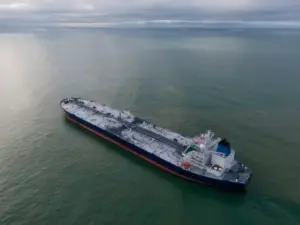
A high-stakes, covert game of maritime chess is unfolding in the Middle East as liquefied natural gas (LNG) producers begin testing the waters of the heavily contested Strait of Hormuz. For the past week, energy markets have watched in rapt attention as at least two LNG shipments successfully completed transits through the narrow chokepoint. This marked the first major movement of super-chilled fuel from the Persian Gulf since a crippling security crisis brought exports to a virtual standstill earlier this summer.
The stakes could not be higher. Following an Iranian attack on a Qatari-flagged LNG tanker in early July 2026, the flow of gas from the region—which historically accounts for roughly one-fifth of global LNG supply—abruptly halted. The sudden loss of Qatari volume sent shockwaves through global energy hubs, driving spot prices to their highest levels in more than three years. With the Northern Hemisphere winter rapidly approaching, importing nations in Europe and Asia are facing the grim prospect of severe fuel shortages and ruinous heating bills.
Strait of Hormuz LNG Chokepoint Dynamics:
[Persian Gulf / Ras Laffan (Qatar)] ---> [Strait of Hormuz (Contested Zone)] ---> [Gulf of Oman / Global Markets]
                                                 |
                                         (July 2026 Attack)
                                                 |
                                       [Virtual Export Halt]
                                                 |
                                   (Current: Covert "Dark" Transits)
In response to this supply vacuum, producers and shippers are turning to extraordinary and technically perilous workarounds. Recent ship-tracking data and high-resolution satellite imagery reveal that operators are not only sending vessels "dark" through the Strait of Hormuz by disabling or jamming their tracking beacons, but they are also conducting highly unusual ship-to-ship (STS) cryogenic transfers off the coast of Oman. These maneuvers represent a desperate attempt to bypass the maritime blockade, mitigate soaring insurance premiums, and deliver critical fuel to desperate buyers in both developed and emerging economies.
Detailed Chronology
The current crisis in the Persian Gulf is the culmination of months of escalating geopolitical friction, culminating in a series of events that have redefined global energy logistics over the summer of 2026.
Timeline of the 2026 Gulf LNG Crisis:
+-------------------+-------------------------------------------------------------+
| Date              | Event                                                       |
+-------------------+-------------------------------------------------------------+
| Early July 2026   | Iranian forces attack a Qatari LNG tanker; exports halt.     |
| Mid-August 2026   | First anomalous LNG Ship-to-Ship (STS) transfers off Oman.  |
| Late August 2026  | Tanker loads at Qatar's Ras Laffan, prepares for transit.   |
| Mid-September 2026| Loaded Qatari vessel emerges in Gulf of Oman after going dark.|
| Sept 14-18, 2026  | Satellite data confirms two additional STS transfers.       |
+-------------------+-------------------------------------------------------------+
The July Catalyst
The modern energy supply chain is built on the assumption of safe passage through key maritime chokepoints. That assumption shattered in early July 2026 when a state-of-the-art Qatari LNG carrier was targeted and damaged by Iranian forces near the island of Abu Musa. While the vessel survived without a catastrophic breach of its containment tanks, the attack triggered an immediate freeze on commercial shipping through the Strait. Insurance underwriters instantly revoked standard war-risk cover for the Gulf, and QatarEnergy—the state-owned behemoth—was forced to suspend scheduled loadings, leaving dozens of long-term utility customers in limbo.
The Quiet Preparation (Late August)
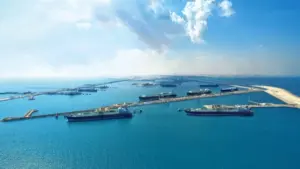
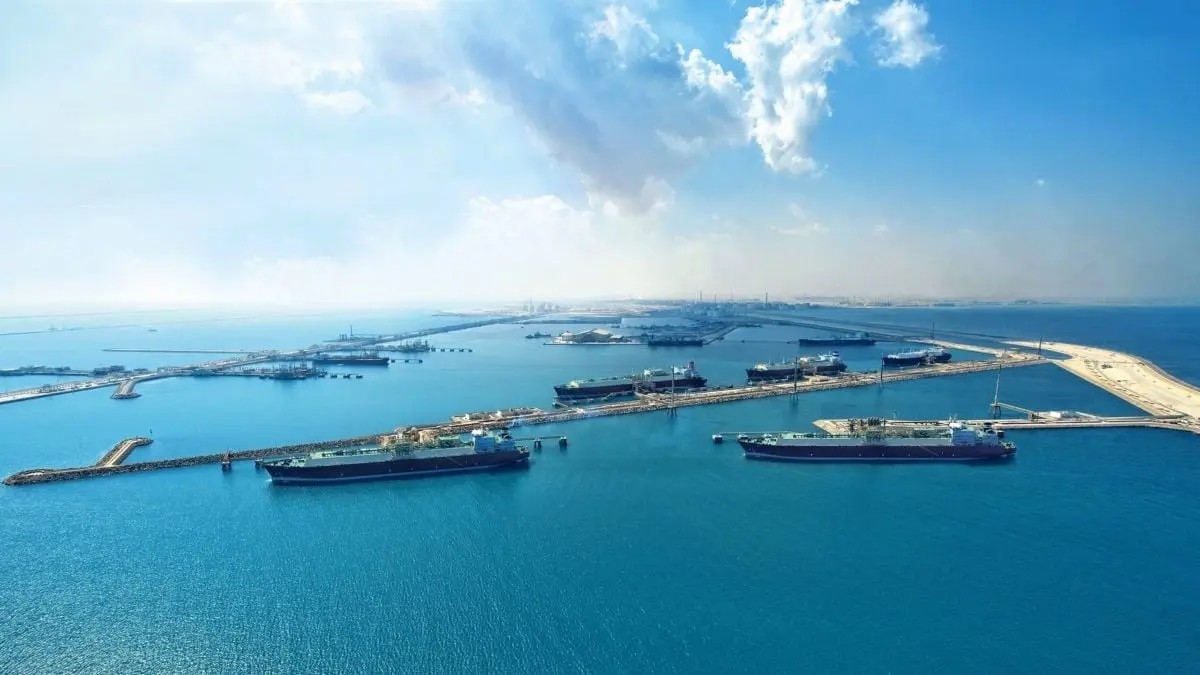
For nearly six weeks, the export berths at Ras Laffan in Qatar lay unusually quiet. However, behind closed doors, maritime security experts, state officials, and energy traders were plotting a resumption of flows. In late August, ship-tracking databases registered a lone LNG tanker loading a full cargo at Ras Laffan. Instead of immediately sailing, the vessel lingered, waiting for a window of relative calm and coordinate security measures.
The "Dark" Transit (September 14–18)
Earlier this week, that same Qatari-loaded vessel materialized in the Gulf of Oman, successfully clear of the Strait of Hormuz. According to satellite-tracking data compiled by Bloomberg, the vessel did not broadcast an Automatic Identification System (AIS) signal during its passage through the narrowest part of the strait.
While commercial vessels are legally mandated to broadcast their coordinates to prevent collisions, "going dark" has become a vital defensive tactic in the region. Furthermore, maritime intelligence sources note that heavy electromagnetic interference and GPS jamming, orchestrated by regional state actors, have made AIS signals highly unreliable in the waterway, complicating efforts by international observers to track the vessel’s exact path.
The Omani Offloads
Simultaneously, satellite imagery provided by the Copernicus Sentinel-2 network—and analyzed after a standard security delay—captured a highly unusual sight: two massive LNG carriers moored side-by-side off the coast of Oman, outside the immediate Persian Gulf chokepoint. The imagery confirmed that a ship-to-ship transfer of super-chilled gas was underway. This marks at least the third such transfer observed in Omani waters since mid-August, indicating a systematic effort to use Omani territorial waters as a safe zone for redistributing Gulf gas to international buyers.
Technical and Operational Analysis
The logistics of moving liquefied natural gas are fundamentally different from those of crude oil, making the recent operations off Oman and through the Strait of Hormuz both highly dangerous and technically remarkable.
The Mechanics of Cryogenic Ship-to-Ship (STS) Transfers
While ship-to-ship transfers of crude oil are a routine, albeit environmentally sensitive, occurrence in international waters, performing an STS transfer with LNG is an engineering feat of extreme complexity.
       [Source LNG Carrier]                         [Receiving LNG Carrier]
     +-----------------------+                    +-----------------------+
     |  Double-Walled Hull   |                    |  Double-Walled Hull   |
     |                       |                    |                       |
     |   [-162°C Liquid]     |=== Cryogenic =====>|   [-162°C Liquid]     |
     |                       |    Flexible Hoses  |                       |
     +-----------------------+                    +-----------------------+
                 ^                                            |
+---------- Vapor Return Line <--------------+- Cryogenic Demands: Natural gas must be cooled to approximately -162°C (-260°F) to condense into a liquid state, reducing its volume by 600 times for efficient transport. To transfer this liquid between two moving ships at sea, operators must use specialized, highly insulated flexible cryogenic hoses.
- Thermal Shock Risks: Any sudden temperature fluctuation can cause the steel piping and manifold structures of the ships to crack due to thermal shock. The hoses and manifolds must be meticulously pre-cooled with nitrogen gas before any LNG is allowed to flow.
- Boil-Off Gas (BOG) Management: During a transfer, heat inevitably enters the system, causing some of the liquid to vaporize back into gas. Managing this "boil-off gas" requires complex onboard reliquefaction plants or vapor-return lines running between the two vessels to prevent dangerous pressure buildups.
- Weather and Sea-State Constraints: Because LNG carriers have high windage profiles (sides that act like sails), even moderate swells can cause the ships to roll violently against one another. Specialized pneumatic fenders are deployed between the hulls, but the operation remains vulnerable to sudden weather changes.
Navigating the "Dark" Corridor
The decision to transit the Strait of Hormuz without AIS transponders is not taken lightly. The strait is one of the busiest shipping lanes in the world, measuring just 21 miles wide at its narrowest point, with shipping lanes in each direction spanning only two miles.
Disabling AIS increases the risk of collision with other commercial traffic or military vessels. To mitigate this, vessels navigating the "dark" corridor rely on advanced radar systems, night-vision optics, and close coordination with private maritime security escorts who monitor the surrounding waters for incoming fast-attack craft or aerial drones.
Supporting Context & Market Metrics
The sudden freeze and tentative resumption of Persian Gulf LNG exports have had profound macroeconomic consequences, disrupting energy transition plans and exposing the vulnerabilities of major economies.
The Pre-Crisis Baseline vs. Current Flows
Prior to the outbreak of hostilities in July 2026, the Strait of Hormuz was the artery for approximately three LNG cargoes per day, translating to roughly 90 to 100 shipments per month. Qatar, the dominant exporter in the basin, supplied approximately 20% of the world’s traded LNG, serving as a cornerstone of energy security for both Asian industrial hubs and European nations seeking to replace Russian pipeline gas.
Daily LNG Cargo Transits through Hormuz:
Pre-July 2026:  [██████████████████████████████] ~3.0 Cargoes/Day
Current (Sept): [█░░░░░░░░░░░░░░░░░░░░░░░░░░░░] ~0.3 Cargoes/Day (Estimated)
The virtual standstill of the last two months has removed tens of billions of cubic meters of gas from the global balance sheet. The trickle of shipments observed this week represents less than 10% of the pre-war baseline, offering a psychological boost to the market but doing little to alleviate the physical supply deficit.
Global Spot Market Impact
The impact on pricing has been immediate and severe. Spot LNG prices in North-West Europe and the Japan-Korea Marker (JKM) in Asia have surged to levels not seen since the peak of the 2022–2023 energy crisis.
Global LNG Spot Price Trajectory (USD per MMBtu):
50 |                                              * (Winter Risk Peak?)
45 |                                 *-----------*
40 |                                /
35 |                               /
30 |                              /
25 |                             /
20 |                            /
15 | *-------------------------*
10 |
 0 +-------------------------+-------------+-------------+
    Jan 2026                  July 2026     Sept 2026     Dec 2026 (Est)
                              (Attack)      (Current)
As the Northern Hemisphere prepares for winter, utilities are locked in a fierce bidding war. European buyers, lacking the storage cushion they enjoyed in previous years, are paying premium rates to divert cargoes away from Asia, while Asian buyers are forced to match those prices to keep their power grids online.
The Emerging Market Toll
While wealthy nations in Europe and East Asia can afford to pay exorbitant spot prices, emerging economies are facing severe economic damage. Countries like Pakistan and Bangladesh, which rely heavily on long-term supply contracts with Qatar that pass through the Strait of Hormuz, are particularly vulnerable.
With Qatari deliveries halted by force majeure, these nations have been forced to choose between purchasing replacement fuel on the spot market—using precious foreign exchange reserves—or enduring widespread industrial blackouts. For these governments, every single Qatari tanker that successfully navigates the strait represents a reprieve from potential economic collapse.
Official Statements and Geopolitical Responses
The highly sensitive nature of these maritime operations has met with a wall of silence from the primary state actors and corporations involved.
- QatarEnergy: The state-owned energy giant, which manages the massive Ras Laffan export facility, did not respond to multiple requests for comment regarding the recent transits or the use of ship-to-ship transfers off Oman. Analysts suggest that Qatar is maintaining a policy of strategic ambiguity to protect its vessels and crews from being targeted.
- Omani Maritime Authorities: Officials in Muscat have quietly facilitated the offshore STS transfers, viewing them as a humanitarian and economic necessity to stabilize global markets. However, the Omani government has issued no formal statements, wary of drawing ire from neighboring Iran.
- The Insurance Sector: A senior marine underwriter at a major Lloyd’s syndicate, speaking on the condition of anonymity, commented on the situation:
"We are tracking these ‘dark’ transits with extreme concern. While we understand the commercial pressure to move these cargoes ahead of winter, the risk profile of an LNG carrier transiting Hormuz without AIS, amid active electronic warfare, is almost uninsurable. Any successful attack on a vessel of this size would not only be a financial catastrophe but could permanently close the strait to commercial traffic."
- US Naval Forces Central Command (NAVCENT): A spokesperson for the Fifth Fleet, based in Bahrain, confirmed that international maritime coalition forces are monitoring the situation closely but reiterated that they cannot provide direct, close-in military escorts for every commercial vessel transiting the waterway.
Future Outlook
As the energy sector heads into the critical fourth quarter of 2026, the success of these tentative, covert shipments will dictate the trajectory of global energy security for the coming year.
Possible Winter Scenarios (Q4 2026 - Q1 2027):
+------------------------------------+------------------------------------+
| Scenario A: Successful Covert Flow  | Scenario B: Escalation / Attack    |
+------------------------------------+------------------------------------+
| - "Dark" transits become routine.  | - Another LNG tanker is targeted.  |
| - STS transfers off Oman scale up.  | - Total insurance shutdown.        |
| - Spot prices stabilize (~$25-30). | - Spot prices exceed $60/MMBtu.    |
| - Winter shortages are mitigated.  | - Severe blackouts in Asia/Europe. |
+------------------------------------+------------------------------------+
The Best-Case Scenario: A Controlled Trickle
If the covert transits and Omani ship-to-ship transfers can be scaled up without incident, the market may find a fragile equilibrium. While flows will likely remain below pre-war levels due to the technical bottlenecks of STS transfers and the reluctance of some shipowners to enter the Gulf, the steady arrival of Qatari gas would prevent a worst-case winter storage depletion in Europe and keep the lights on in South Asia.
The Worst-Case Scenario: A Second Strike
The entire system remains highly volatile. The successful passage of a few ships may embolden operators, but it also increases the likelihood of another hostile intervention. A single drone or missile strike on a transit vessel would immediately halt the covert trade, drive insurance premiums to prohibitive levels, and trigger an unprecedented spike in global gas prices, potentially exceeding $60 per MMBtu.
Structural Changes to LNG Logistics
Regardless of how the current winter crisis resolves, the events of 2026 have fundamentally changed the risk assessment for Middle Eastern energy exports. Industry experts believe that the use of Omani ports and waters as a primary logistics hub for Gulf energy will outlast the current conflict. Plans are already being drawn up by regional consortia to invest in permanent, onshore LNG storage and regasification facilities in Oman, connected by pipelines bypass routes directly to Qatar and Saudi Arabia. Until such multi-billion-dollar infrastructure projects are realized, however, the global economy will remain dependent on daring crews, silent transponders, and high-risk maneuvers in the dark waters of the Gulf of Oman.