










Executive Overview
The automotive landscape is undergoing a profound structural shift. For over a century, the debate over personal mobility has swung between two fiercely contested poles: the internal combustion engine (ICE) and the battery electric vehicle (BEV). Yet, as regulatory frameworks tighten, supply chains fluctuate, and consumer resistance to charging infrastructure persists, a transitional powertrain architecture has emerged from the shadows of niche engineering to claim center stage. That technology is the Extended-Range Electric Vehicle (EREV).
Once dismissed as an awkward compromise or a marketing gimmick, EREVs have become a dominant force in major automotive markets, most notably in China, where stringent regulatory updates have redefined what constitutes a "New Energy Vehicle" (NEV). Now, legacy automakers and global powerhouses are scrambling to adapt. Hyundai Motor Group has become the latest major global player to aggressively pivot toward the EREV model, announcing plans to introduce extended-range powertrains to the United States market, starting with the popular three-row Santa Fe SUV and expanding into its luxury Genesis portfolio.
Hyundai is far from alone. Stellantis, Ford, and Volkswagen’s rugged new Scout subsidiary are all racing to deploy EREV architectures, betting that the promise of all-electric driving dynamics paired with a gasoline-powered safety net will finally bridge the psychological and practical gap for hesitant consumers. This in-depth report explores the evolution of the EREV, the regulatory catalysts driving its resurgence, Hyundai’s strategic maneuvers, and the broader implications for the global transition to sustainable transportation.
Detailed Chronology: From the Chevy Volt to the Chinese Market Boom
To understand the modern EREV renaissance, one must look back at the origins of the technology. More than a decade ago, General Motors introduced the Chevrolet Volt, widely heralded as the pioneer of the extended-range electric vehicle concept. Unlike traditional plug-in hybrid electric vehicles (PHEVs)—which often utilized a parallel hybrid setup where an internal combustion engine directly drove the wheels alongside an electric motor—the Volt utilized a series hybrid layout. Its gasoline engine did not mechanically drive the wheels; instead, it functioned exclusively as an onboard generator to supply electricity to the battery pack once its initial charge was depleted.
Despite its engineering elegance, the original EREV movement stalled. Early iterations from various automakers suffered from microscopic all-electric ranges—sometimes as low as 8 miles in early Audi plug-in models. These early PHEVs were largely compliance vehicles designed to appease fuel-economy standards or compete with the market dominance of Toyota’s ubiquitous conventional hybrids, rather than serious attempts to phase out petroleum. They featured tiny batteries and weak electric motors, offering a sub-par driving experience that satisfied neither dedicated EV enthusiasts nor traditional ICE loyalists.
The script flipped dramatically in China. Faced with aggressive climate targets and a surging domestic EV sector, Chinese regulators enacted a pivotal policy change: plug-in hybrids unable to travel at least 100 kilometers (approximately 62 miles) on battery power alone under local testing cycles were stripped of lucrative "New Energy Vehicle" incentives.
Accounting for the more stringent U.S. EPA testing cycle—which typically reduces range figures by roughly 20 percent—this mandated threshold equates to roughly 50 miles of pure electric range, mirroring the original specification of the Chevy Volt.


Chinese automakers immediately responded with advanced engineering. Industry leader BYD introduced models capable of traversing up to 1,300 kilometers (over 800 miles) on a combined diet of electricity and gasoline. By refining inverter efficiencies, lightweight generators, and high-density battery packs, Chinese manufacturers transformed the EREV from an afterthought into a cornerstone of modern mobility. Today, EREVs represent one of the fastest-growing automotive segments in Asia, proving that consumers crave the zero-emission local commute without the cross-country charging anxiety.
Supporting Context & Metrics: Hyundai Enters the EREV Arena
Following China’s successful blueprint, global automakers are aggressively realigning their portfolios. Hyundai Motor Group’s recent announcement regarding its U.S. market strategy marks a watershed moment for North American adoption.
According to industry reports from Car and Driver, Hyundai’s upcoming EREV powertrain will feature a dual-motor configuration—placing one electric motor on the front axle and another on the rear—to deliver standard all-wheel drive (AWD) capability. More impressively, the company projects a combined driving range exceeding 600 miles on a full tank and charge.
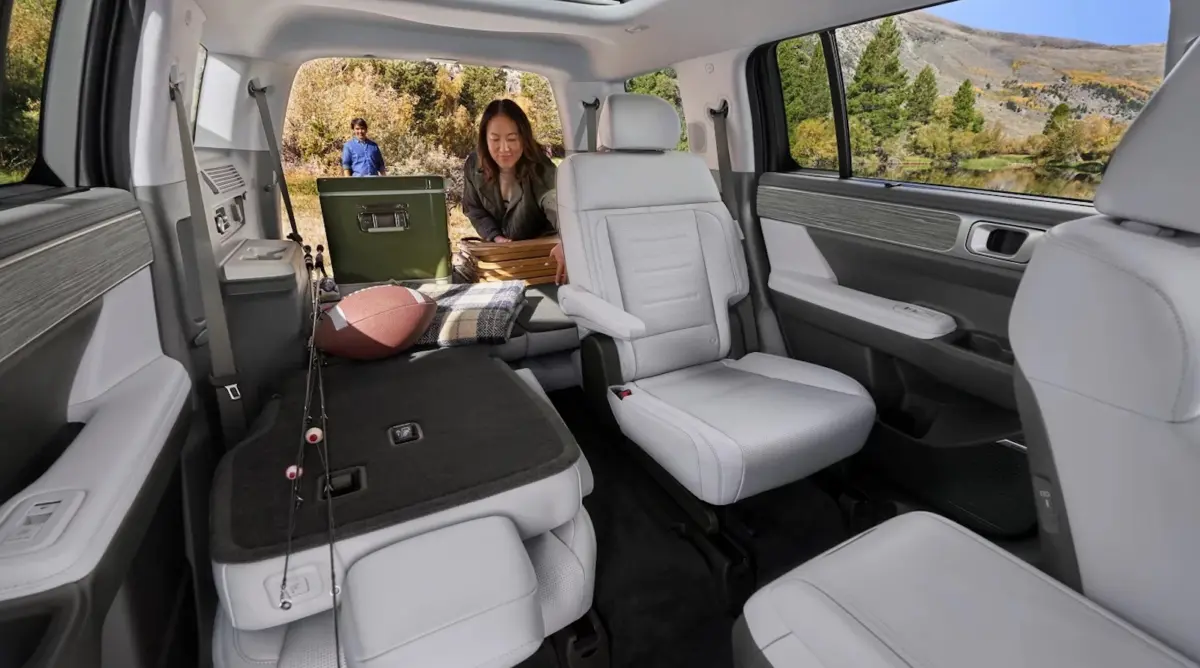
The initial rollout will target the mainstream family market via the three-row Hyundai Santa Fe, a vehicle tailored specifically to North American family dynamics. Furthermore, Hyundai’s luxury division, Genesis, will incorporate the technology. While Genesis recently teased a GV80 Hybrid, the compact GV70 is slated to receive the EREV treatment first, boasting an even more staggering projected combined range of 640 miles.
Production Footprint and Portfolio Expansion
- Santa Fe EREV: To be manufactured locally in the United States, utilizing the same Alabama assembly line currently dedicated to gasoline and traditional hybrid variants, mitigating supply chain vulnerabilities and potential tariff impacts.
- Genesis GV70 EREV: Currently slated for production at the company’s advanced manufacturing hub in Ulsan, South Korea.
- Conventional Hybrid Push: Hyundai has committed to launching 10 new conventional hybrid models in the U.S. by 2030, by which point hybrids are expected to account for roughly half of the brand’s total domestic sales.
- Manufacturing Scaling: North American production capacity across Hyundai’s factory network is targeted to expand by an additional 500,000 units annually by the end of the decade.
- Rugged and Body-on-Frame Ambitions: Hyundai is actively exploring pickup truck and body-on-frame SUV platforms, heavily influenced by the positive reception of the "Boulder" concept vehicle revealed at the New York Auto Show, positioning the brand to challenge established off-road giants like the Ford Bronco.
Official Statements and Competitive Landscape
Hyundai is far from isolated in its strategic pivot. Across the broader automotive industry, legacy giants and disruptive startups alike are realizing that the leap from fossil fuels to pure battery-electric vehicles is proving too steep for a significant portion of the car-buying public.
Stellantis is advancing its own proprietary EREV powertrain architecture, slated to debut in the luxurious Jeep Grand Wagoneer before cascading down to the heavy-duty Ram 1500 REV pickup truck. Meanwhile, Ford is reportedly exploring EREV solutions to supplement or redefine its electrification strategy in the wake of shifting market demand for models like the F-150 Lightning.
Perhaps most telling is the strategy of Scout Motors, Volkswagen’s newly revived off-road-focused subsidiary. Scout is actively designing its upcoming Traveler SUV and Terra pickup truck models with an optional EREV powertrain. According to early corporate disclosures, pre-order trends are heavily skewed in favor of the plug-in range-extended option, underscoring the market’s deep-seated appetite for operational security.

Automotive analysts point out that these decisions are driven by hard financial and infrastructural realities. Charging infrastructure in North America—while expanding—remains fragmented, plagued by maintenance issues, and intimidating to suburban and rural motorists. EREVs offer an ingenious psychological off-ramp: drivers can run daily errands entirely on zero-emission electricity, charging overnight in their garages, while retaining a conventional liquid fuel tank for long-haul interstate road trips without mapping out high-speed DC charging stations.
Future Outlook: Overcoming Range Anxiety vs. The Climate Imperative
As the automotive sector hurtles toward 2030, the rise of the EREV prompts a philosophical and practical debate among clean energy advocates: Are extended-range electric vehicles a vital bridge to a sustainable future, or a dangerous distraction that prolongs our addiction to fossil fuels?
From a quantitative standpoint, EREVs dramatically reduce daily gasoline consumption. If a commuter travels 40 miles a day entirely on battery power, their liquid fuel consumption drops to zero for the vast majority of the year. However, critics argue that EREVs retain all the mechanical complexity of internal combustion engines—requiring oil changes, exhaust systems, catalytic converters, and complex thermal management systems—while carrying the weight and resource footprint of a secondary propulsion system.
Furthermore, consumer psychology remains a stubborn barrier. Despite the soaring efficiency of traditional hybrids—some of which routinely achieve upwards of 40 miles per gallon—many motorists remain trapped in fuel-pumping paradigms. When presented with battery-electric equivalents that offer fuel-cost savings equivalent to 120 miles per gallon or more, public comprehension often stalls. The thought of never visiting a gas station again induces hesitation among buyers who cannot conceptualize a car that replenishes its energy silently while parked at home.
Ultimately, automotive executives are caught in a crossfire between conflicting regulatory mandates, volatile supply chains, and a consuming public that is slow to change. As industry insiders routinely observe, climate consciousness rarely drives the average consumer’s vehicle purchase decision. Amid escalating global climate anomalies—ranging from severe droughts and marine heat waves to destructive wildfires—the existential urgency of ecological collapse has yet to fully penetrate the consumer mainstream.
By the time the global buying public fully wakes up to the climate emergency, the window for mitigation may be firmly shut. Until then, technologies like the EREV will serve as the indispensable pragmatic bridge: buying time, calming consumer nerves, and cutting emissions incrementally in a world that refuses to change overnight.