










Executive Overview
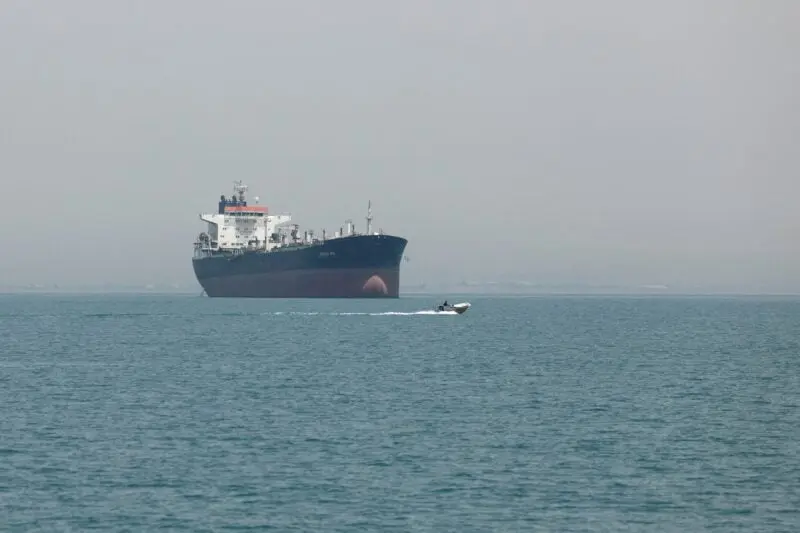
A sharp division has emerged between the United States government and the global maritime intelligence sector over the volume of crude oil transiting the Strait of Hormuz. U.S. Energy Secretary Chris Wright recently announced that a U.S. military-coordinated effort successfully facilitated the transit of more than 15 million barrels of oil and petroleum products through the strategic chokepoint on a single Tuesday. When combined with regional pipelines, Wright claimed the total export volume leaving the Persian Gulf neared 20 million barrels.
However, this triumphant narrative from Washington stands in stark contrast to the reality captured by commercial vessel-tracking firms. Data compiled by independent maritime intelligence agencies—including Kpler, TankerTrackers.com, and the U.S.-led Joint Maritime Information Center (JMIC)—paint a vastly different picture. Their records indicate that commercial tanker traffic through the Strait of Hormuz remains at historically depressed levels.
This discrepancy raises critical questions: Is the U.S. Navy successfully executing a highly classified, dark-transit convoy system that evades commercial tracking, or is the Biden-Harris administration inflating operational metrics to calm global energy markets and project maritime dominance? Investigating these conflicting accounts reveals a complex interplay of military operational security, geopolitical posturing, and the technical limitations of modern maritime surveillance.
Detailed Chronology of the Disputed Claims
The controversy began to unfold in mid-August, following a series of reports detailing a highly coordinated maritime security operation in the Gulf region.
[Mid-August: High Tensions] ──> [Aug 19: Axios Reports Corridor] ──> [Late August: Wright's 15M bbl Claim] ──> [Present: Analysts Dispute Data]The Genesis of the Military Corridor
On Wednesday, August 19, an investigative report by Axios revealed that the U.S. military had established a coordinated shipping corridor running through the southern, Omani-controlled side of the Strait of Hormuz. According to U.S. officials, this corridor was designed to protect commercial shipping from regional threats, moving between 15 and 20 tankers in and out of the Persian Gulf each night under the protective umbrella of U.S. and allied naval forces. Officials claimed the operation was successfully moving approximately 10 million barrels of oil per day, with peak nights pushing that figure to between 15 million and 20 million barrels.
Reports of Rapid Acceleration
By the following weekend, Axios reporter Barak Ravid reported that the military operation was accelerating. Citing three U.S. officials, Ravid stated that on a single Friday night, approximately 40 tankers transited the southern deep-water channel of the Strait under military protection, facilitating the movement of roughly 16 million barrels of oil. This represented a near-doubling of the nightly tanker movements previously disclosed by the Pentagon.
The Energy Secretary’s Endorsement
The official government validation of these high figures came directly from U.S. Energy Secretary Chris Wright. Confirming the scale of the operation, Wright declared:
"On Tuesday, the U.S. military helped ship over 15 million barrels of oil and products out of the Strait of Hormuz—combined with pipelines, the total leaving the region is closer to 20 million barrels. Make no mistake, thanks to the U.S. Navy, oil is flowing through the Strait of Hormuz."
Wright added that the seven-day moving average for oil transiting the Strait had risen above 8 million barrels per day. However, the Department of Energy and the Pentagon declined to release vessel-by-vessel data or specific shipping manifests to verify these numbers, citing operational security (OPSEC).
Supporting Context & Metrics: Squaring the Numbers
To understand why commercial analysts are skeptical of Washington’s figures, one must examine the physical and logistical realities of oil transportation alongside the data provided by independent tracking firms.
| Metric / Source | U.S. Government Claim | Commercial Tracking Data (Kpler / TankerTrackers) | Historical Baseline (Pre-Conflict) |
|---|---|---|---|
| Daily Volume (Hormuz) | 10M – 15M barrels/day | Highly depressed (unconfirmed dark transits) | ~20M – 21M barrels/day |
| Peak Nightly Transits | Up to 40 tankers | Single-digit or zero visible transits | ~138 vessel transits/day (all types) |
| Weekly Tanker Crossings | Unspecified high volume | 95 crossings/week (down 19.5%) | Significantly higher |
| Threat Assessment | Under active military mitigation | SEVERE (reduced commercial traffic) | Normal / Low |
The Physical Reality of Oil Logistics
To move 15 million to 16 million barrels of crude oil in a single night, a massive fleet of ultra-large maritime assets is required.
- A standard Very Large Crude Carrier (VLCC) has a maximum capacity of approximately 2 million barrels.
- A smaller Suezmax tanker carries roughly 1 million barrels.
For the government’s claims to be accurate, the U.S. Navy would have to escort either 8 fully laden VLCCs or 16 fully laden Suezmax tankers through the narrow chokepoint in a single night—accompanied by an equal number of empty (ballast) tankers entering the Gulf to reload.
The Commercial Tracking Rebuttal
Independent maritime intelligence firms monitor these waters using a combination of Automatic Identification System (AIS) transponders, satellite imagery, and synthetic aperture radar (SAR). Their findings contradict the official U.S. narrative:
- The Joint Maritime Information Center (JMIC): In a report issued shortly after Wright’s statement, the JMIC stated that commercial traffic through the Strait of Hormuz remains at "reduced levels." Independent tracking showed only single-digit numbers of tankers, and on some days zero tankers, transiting the strait in either direction. While JMIC recorded 42 U.S.-facilitated vessel transits over a two-day period (August 18–19), these figures covered all vessel types—including container ships and bulk carriers—with no indication of how many were tankers or how much oil they carried. For non-facilitated tanker traffic, JMIC recorded a mere three crossings per day.
- Kpler: The data intelligence firm reported that confirmed tanker crossings through the Strait of Hormuz fell by 19.5% in a single week, dropping to just 95 transits. Crucially, Kpler’s proprietary tracking systems detected zero crossings through the Omani route or the established Traffic Separation Scheme (TSS) during the periods of claimed peak military activity.
- TankerTrackers.com: The specialized service openly questioned the Axios and Department of Energy figures. They suggested that U.S. officials might be misinterpreting or misrepresenting the data—confusing the total volume of oil carried in an entire multi-day convoy cycle with a single day’s throughput.
                  [SKEPTICISM DEEPENS]
                           │
         ┌─────────────────┴─────────────────┐
         ▼                                   ▼
[AIS Transponders "Dark"]            [Logistical Limits]
Escorted tankers may turn off        Convoys restricted by naval
AIS for security, escaping           assets; single-day peaks don't
commercial tracking databases.       reflect sustained daily averages.
The "Dark Transit" Hypothesis
One explanation for this massive data gap is that tankers participating in the U.S.-led military corridor are systematically turning off their AIS transponders to avoid targeting by hostile regional actors. If dozens of tankers are transiting "dark" under naval escort, commercial tracking systems like Kpler would fail to register them.
However, maritime analysts note that even if AIS transponders are deactivated, hiding 40 massive tankers—each stretching up to a quarter-mile in length—from commercial satellite radar and optical imagery is nearly impossible in one of the world’s most heavily monitored waterways.
Official Statements and Analytical Skepticism
The debate highlights a fundamental clash of perspectives between government officials focused on strategic communication and maritime analysts focused on data integrity.
The Government’s Perspective
From Washington’s viewpoint, publicizing the success of the Omani corridor is essential to maintaining global economic stability. By declaring that the U.S. Navy is keeping the oil flowing, the administration aims to:
- Prevent panic-buying and speculation in the Brent and WTI crude markets.
- Reassure East Asian and European allies who rely heavily on Persian Gulf crude.
- Project power and deter hostile regional actors by demonstrating the effectiveness of Western naval coalitions.
The Maritime Analysts’ Critique
Industry specialists argue that the government’s communication strategy relies on selective data presentation, or "cherry-picking."
A representative from TankerTrackers.com explained the logistical constraints that make the government’s daily average claims highly improbable:
"Officials like to pick cherries when it suits them. It’s the daily averages over a longer duration that matter. Flotilla convoys move only a number of tankers at a time due to limited air support, and most likely a laden egress one night is followed by a ballast ingress the next."
Because convoy operations must cycle empty ships back into the Gulf before they can bring loaded ships out, a single night of high-volume outward transit does not represent a sustainable daily average. Analysts argue that presenting a peak transit night as the new normal distorts the true, highly constrained state of maritime commerce in the region.
Future Outlook and Geopolitical Implications
The ongoing dispute over the Strait of Hormuz shipping data carries significant long-term implications for global energy security, naval strategy, and the shipping industry.
                              ┌──> 1. Persistent Naval Strain (Escort logistics fatigue)
                              │
[Ongoing Hormuz Security] ────┼──> 2. Insurance & Risk Premiums (High shipping costs)
                              │
                              └──> 3. Market Volatility (Discrepancies invite speculation)
1. The Sustainability of Naval Escorts
Running a continuous, high-volume convoy system through a high-threat chokepoint puts a heavy strain on naval resources. Providing air cover, anti-submarine warfare protection, and surface escorts for dozens of tankers every night requires a massive commitment of warships, fuel, and personnel. If the threat level in the Strait of Hormuz remains rated as SEVERE by international maritime agencies, the U.S. and its allies must decide whether this level of military intervention is sustainable over months or years.
2. Shipping Costs and Insurance Premiums
As long as commercial tracking firms continue to report historically low levels of normal, unescorted commercial traffic, marine insurance underwriters are unlikely to lower war-risk premiums. Even if the U.S. military successfully escorts select convoys, the broader commercial shipping market will view the region as highly dangerous. This will keep shipping costs high, ultimately impacting consumer energy prices worldwide.
3. Trust in Maritime Data
The discrepancy between official government announcements and independent commercial data threatens to undermine trust in maritime reporting. If Washington continues to claim high export volumes without releasing verifiable vessel data, the shipping industry may increasingly discount government statements in favor of independent, satellite-verified analytics.
Ultimately, while the U.S. military is undoubtedly playing an active role in keeping the Strait of Hormuz open, the true volume of oil transiting this vital waterway remains shrouded in secrecy. Until the Pentagon or the Department of Energy releases transparent, verifiable shipping data, the true health of the global energy supply chain will remain a subject of intense debate.