Beneath the sunlit waves lies Earth’s final frontier: the deep sea. Far below the reach of the photic zone—where sunlight vanishes, hydrostatic pressure skyrockets to crushing extremes, and temperatures plunge toward freezing—some of the most bizarre and resilient organisms on the planet have evolved. These benthic and pelagic zones harbor biological architecture so radical that it routinely eclipses the imagination of science fiction writers. With transparent skulls, bioluminescent cloaks, and extendable jaws, deep-sea fauna challenge our fundamental understanding of life’s adaptability.
Despite decades of technological advancements in oceanography, an estimated one million deep-sea species remain entirely undiscovered. Many known organisms have been documented only a handful of times due to the sheer vastness and hostility of their habitats. Organizations like the Ocean Conservancy, the National Oceanic and Atmospheric Administration (NOAA), and the Monterey Bay Aquarium Research Institute (MBARI) continue to peel back the veil of the abyss. This report examines seven remarkable deep-sea creatures that prove our blue planet is every bit as strange as the cosmos.
Detailed Chronology: Unlocking the Mysteries of the Deep
For centuries, the deep ocean was written off by marine biologists as an azoic zone—a desolate wasteland incapable of supporting complex life. It was not until systematic oceanographic expeditions in the 19th and 20th centuries that humanity began to realize the abyss is teeming with specialized lifeforms.
The Challenger Expedition (1872–1876): This milestone global marine research expedition laid the groundwork for modern oceanography, proving for the first time that life exists at extreme depths and shattering the azoic hypothesis.
The Mid-20th Century Submersible Revolution: The invention of deep-diving submersibles allowed scientists to witness benthic life in situ rather than relying solely on damaged, surface-hauled trawl specimens.
The Modern Remotely Operated Vehicle (ROV) Era: Today, fiber-optic ROVs equipped with high-definition cameras capture live footage of pristine deep-sea habitats. Breakthroughs—such as MBARI’s live documentation of the living barreleye fish—continue to rewrite textbooks, proving how much early taxonomists misunderstood fragile deep-sea tissue structures.
The Magnificent Seven: Denizens of the Deep
1. The Vampire Species (Vampyroteuthis infernalis)
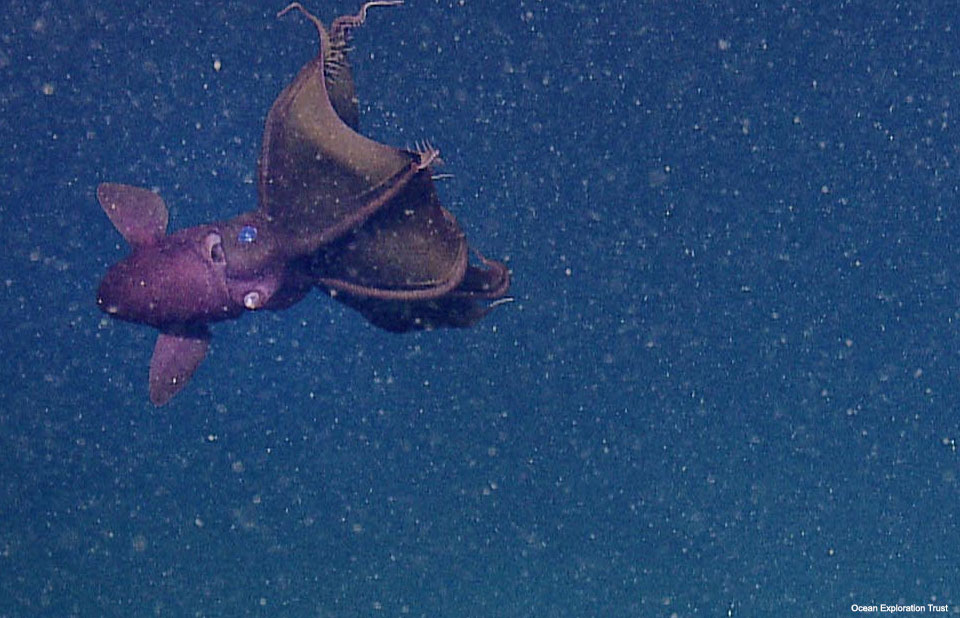
Despite its menacing moniker translating directly from Latin as "vampire squid from hell," Vampyroteuthis infernalis is entirely harmless to humans. It does not hunt live vertebrate prey, nor does it consume blood. Instead, this ancient cephalopod—the sole surviving member of its taxonomic order—occupies the oxygen minimum zones of the deep ocean, typically between 2,000 and 3,000 feet down.
The vampire squid earned its spooky reputation due to its dark, jet-black coloration, crimson-rimmed blue eyes, and an umbrella-like web of skin connecting its eight arms. Rather than actively chasing prey, it conserves precious metabolic energy by matching the density of surrounding seawater, allowing it to hang suspended in the water column. It feeds primarily on "marine snow"—a continuous shower of organic detritus, fecal pellets, and dead plankton drifting down from the upper layers.
To evade predators in total darkness, it relies on sophisticated bioluminescence. Specialized light-producing organs called photophores line its body, allowing it to modulate its silhouette and blend into the faint downwelling light. When heavily cornered, it can emit blinding clouds of bioluminescent mucus rather than traditional ink.
2. The Barreleye Fish (Macropinna microstoma)
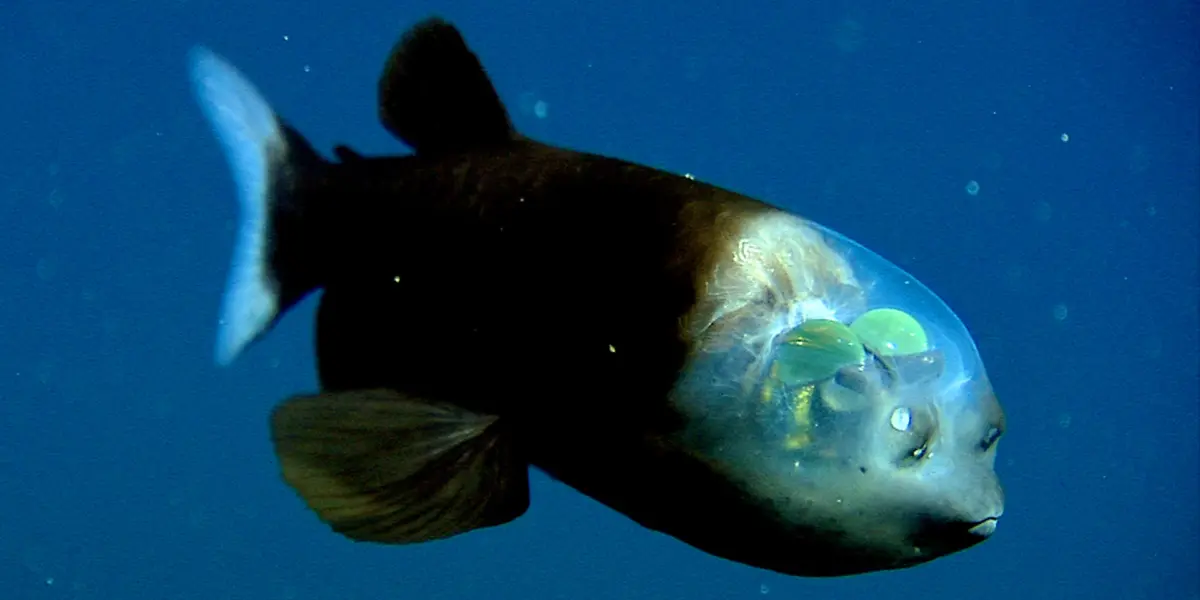
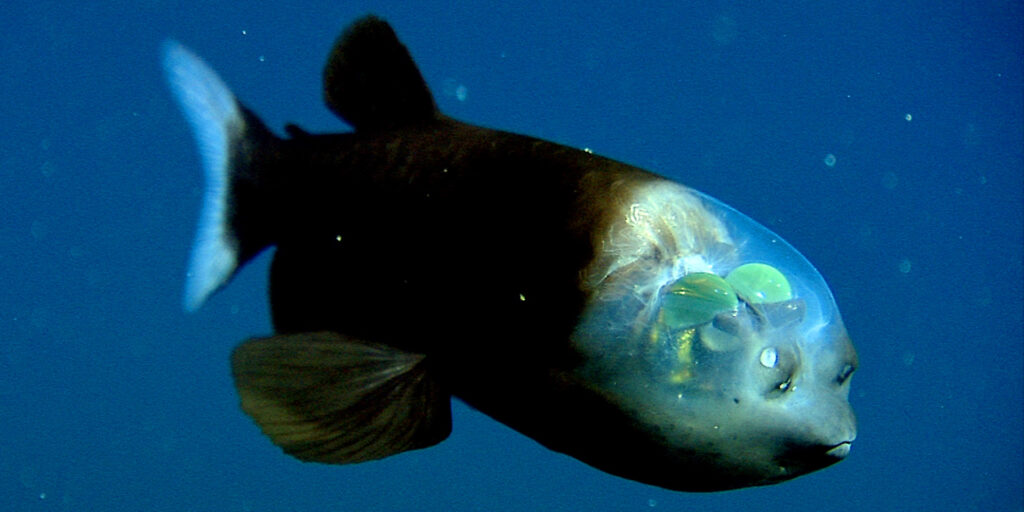
If extraterrestrials were to design a vertebrate with a transparent space helmet, the result would closely resemble the barreleye fish. Discovered in 1939 but rarely seen alive until recently, this remarkable creature features a completely transparent, fluid-filled dome over its head, exposing its internal organs and a pair of glowing, chartreuse-green tubular eyes.
For decades, marine biologists were perplexed by the barreleye’s anatomy because early specimens hauled to the surface suffered catastrophic tissue damage, destroying the delicate transparent shield. It was only through advanced ROV footage captured by MBARI researchers that scientists finally understood the fish’s mechanics. The barreleye’s tubular eyes can rotate upward within its translucent dome to scan the water column for silhouettes of prey against faint surface light, or pivot forward when it is time to feed.
3. The Giant Isopod (Bathynomus giganteus)
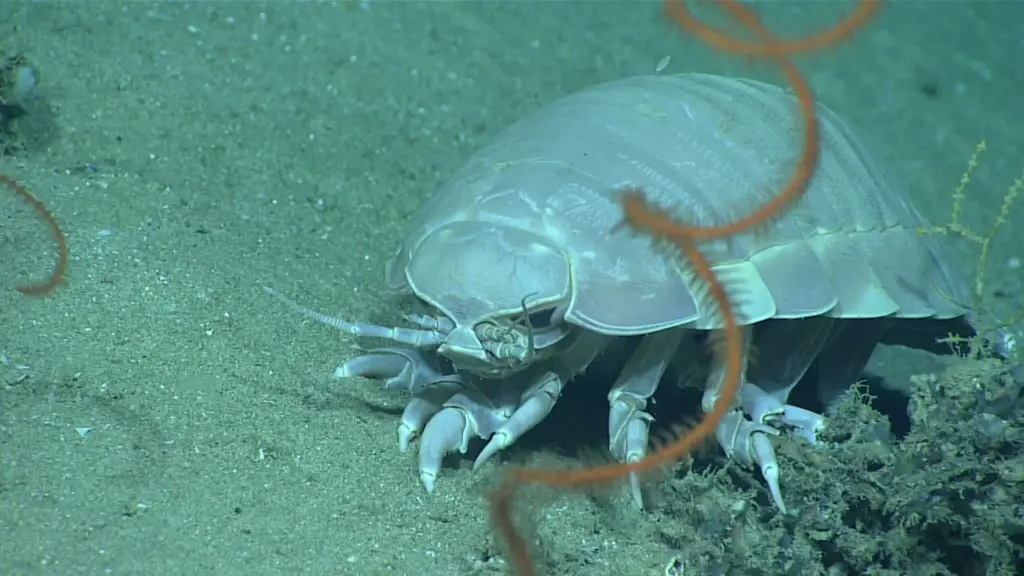
Imagine a terrestrial woodlouse, or roly-poly, scaled up to the size of a domestic housecat. That is the ecological equivalent of the giant isopod. Dwelling on the dark, muddy sea floors at depths reaching up to 7,000 feet, these gargantuan crustaceans can exceed 12 inches in length.
As distant relatives of crabs and shrimp, giant isopods showcase a prime example of "deep-sea gigantism," a biological phenomenon where species residing in cold, pressurized, nutrient-poor environments grow substantially larger than their shallow-water counterparts. Because food is notoriously scarce on the abyssal plain, giant isopods possess extraordinarily slow metabolic rates. Laboratory observations have proven they can survive for years without consuming a substantial meal, capitalizing on rare organic feasts such as whale falls.
4. The Anglerfish (Order Lophiiformes)
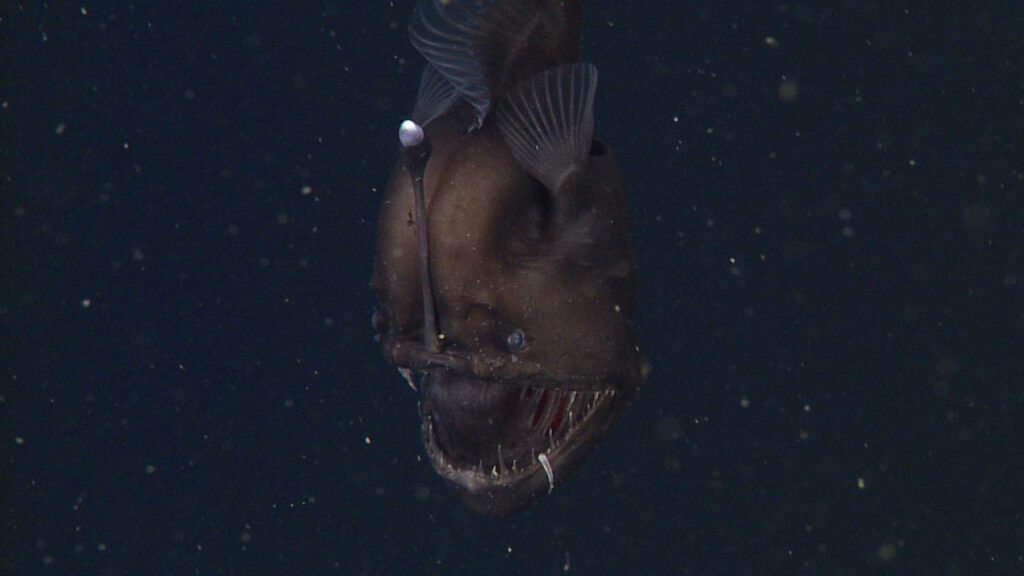
Few creatures embody the aesthetic of deep-sea nightmares quite like the anglerfish. Living in the bathypelagic zone where sunlight never penetrates, female anglerfishes utilize a modified dorsal fin ray—the illicium—tipped with a glowing, bioluminescent lure called the esca.
This biochemical beacon acts as a deadly neon sign, drawing curious fish and crustaceans straight toward the anglerfish’s cavernous mouth, which is lined with translucent, needle-like teeth and backed by a hyper-distensible stomach capable of swallowing prey larger than the predator itself. In a remarkable evolutionary twist, male anglerfishes are minuscule compared to females and exist primarily as mobile mating tools; upon finding a female, a male will fuse permanently to her body, dissolving his organs into hers to ensure reproductive access for life.
5. The Dumbo Octopus (Grimpoteuthis)
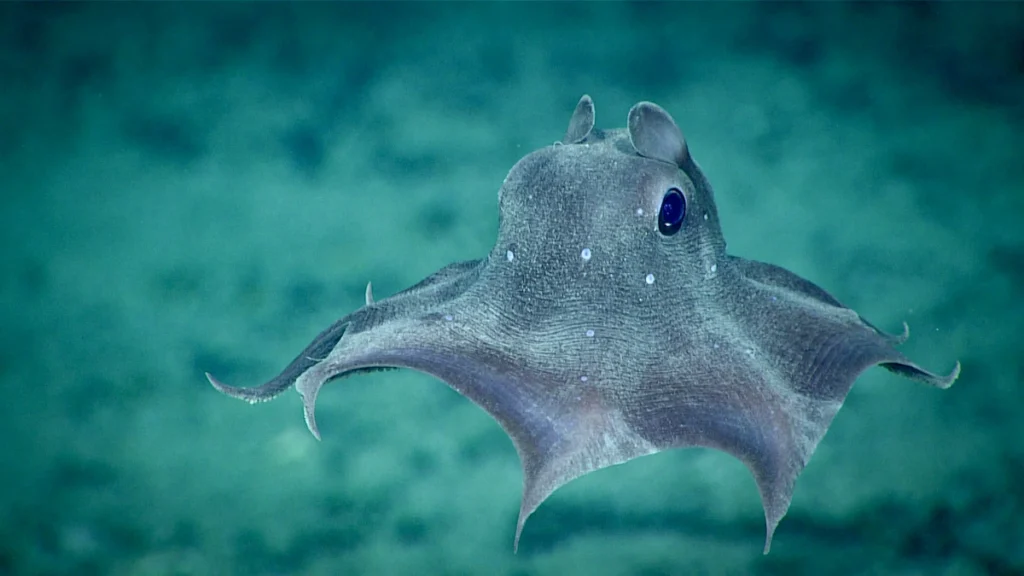
Named affectionately after Walt Disney’s iconic flying elephant due to the prominent, ear-like fins protruding from the sides of their mantles, dumbo octopuses are among the most endearing denizens of the deep. Typically measuring between 8 and 12 inches long, these cephalopods inhabit extreme depths ranging from 3,000 to over 13,000 feet, making them the deepest-living of all known octopus genera.
Unlike their shallow-water relatives, dumbo octopuses lack defensive ink sacs. At depths where natural light is nonexistent and visual predators are scarce, ink is metabolically unnecessary. Instead, they gracefully navigate the abyss by flapping their webbed arms and ear fins, drifting like spectral ghosts through the freezing water.
6. The Goblin Shark (Mitsukurina owstoni)
Often hailed as a "living fossil," the goblin shark is the sole surviving representative of the Mitsukurinidae family, a lineage that dates back roughly 125 million years. With a distinct, blade-like snout and semi-translucent skin that reveals a network of blood vessels underneath, this rare shark shifts in appearance from pale pink to grey depending on lighting conditions.
The goblin shark’s most defining feature is its jaw apparatus. Unlike most sharks, its jaws are highly protrusible; when prey comes within range, specialized elastic ligaments snap the jaw forward in a fraction of a second to snatch unsuspecting fish and squid before retracting smoothly back beneath its snout. Because encounters with humans are extraordinarily rare and accidental, much of its behavior remains shrouded in mystery.
7. Gelatinous Deep-Sea Organisms (Jellies and Ctenophores)
Not all deep-sea marvels possess hard carapaces, bones, or shells. Some of the ocean’s most ethereal residents are entirely gelatinous. Comprising over 95% water, deep-sea medusae and ctenophores (comb jellies) boast soft, translucent structures that lack brains, blood, and hearts, yet have successfully navigated Earth’s oceans for over 500 million years.
Many deep-sea gelatinous species utilize bioluminescence to create mesmerizing light shows. When disturbed, they emit waves of shimmering neon color across their bodies to deter predators, distract attackers, or communicate with conspecifics in the pitch-black void.
Supporting Context & Metrics
Creature Name
Typical Depth Range
Primary Survival Adaptation
Notable Feature
Vampire Squid
2,000 – 3,000 feet
Metabolic matching / Marine snow scavenging
Bioluminescent photophores
Barreleye Fish
2,000 – 2,600 feet
Transparent head shielding
Rotating tubular green eyes
Giant Isopod
500 – 7,000 feet
Slow metabolism / Deep-sea gigantism
Crustacean armor reaching 12+ inches
Anglerfish
3,300 – 13,000+ feet
Bioluminescent lure (esca)
Parasitic male mating system
Dumbo Octopus
3,000 – 13,000 feet
Fin-propelled swimming
Ear-like lateral fins
Goblin Shark
300 – 3,000+ feet
Rapid-fire protrusible jaws
Blade-like snout and translucent skin
Gelatinous Jellies
Variable (Surface to Abyss)
95%+ water composition
Neon bioluminescence and pulsing cilia
Official Statements and Conservation Context
Marine conservationists emphasize that these bizarre organisms are far more than mere biological curiosities; they are foundational components of a complex, interconnected global ecosystem.
"It’s easy to think of deep-sea creatures as mysteries, but these animals are essential parts of our ocean ecosystem. The deep ocean regulates climate, stores carbon and supports biodiversity on a massive scale. Yet much of it remains unexplored."
— Ocean Conservancy Representative
The deep ocean acts as the planet’s primary thermal and carbon sink, absorbing vast quantities of anthropogenic heat and carbon dioxide. Disruptions to benthic habitats through deep-sea mining, bottom trawling, and climate change threaten ecosystems that science has barely begun to document. Organizations like the Ocean Conservancy continue to advocate for robust marine protections, emphasizing that safeguarding the dark depths is vital for the long-term health of the entire biosphere.
Future Outlook
As marine robotics, autonomous underwater vehicles (AUVs), and environmental DNA (eDNA) sampling technologies advance, humanity stands on the precipice of a golden age in deep-sea exploration. Researchers predict that thousands of new species will be cataloged in the coming decades, shedding light on the biochemical pathways that allow life to thrive under extreme pressure and perpetual darkness.
The ongoing discovery of these alien-like organisms serves as a powerful reminder: while humanity looks outward toward the stars in search of strange life, some of the most extraordinary frontiers on our planet lie silently waiting in the dark, crushing depths of our own global ocean.