










Executive Overview
For decades, the global energy transition has marched steadily forward in the electricity and light transportation sectors. Wind turbines, solar arrays, and lithium-ion batteries have successfully transformed the way we power our homes and light our cities. Yet, a monolithic obstacle has stubbornly blocked the path to a net-zero future: heavy industry.
Roughly 20 percent of all energy consumed globally is dedicated to creating what engineers call "process heat"—the intense thermal energy required to forge steel, melt glass, manufacture chemicals, and bake cement. Historically, this level of heat could not be generated by electricity. It demanded fire, fueled by massive quantities of coal or methane. These "hard-to-abate" sectors have long been considered the final frontier of decarbonization, largely because traditional electric heating elements melt, degrade, or fail long before reaching the extreme temperatures required for heavy manufacturing.
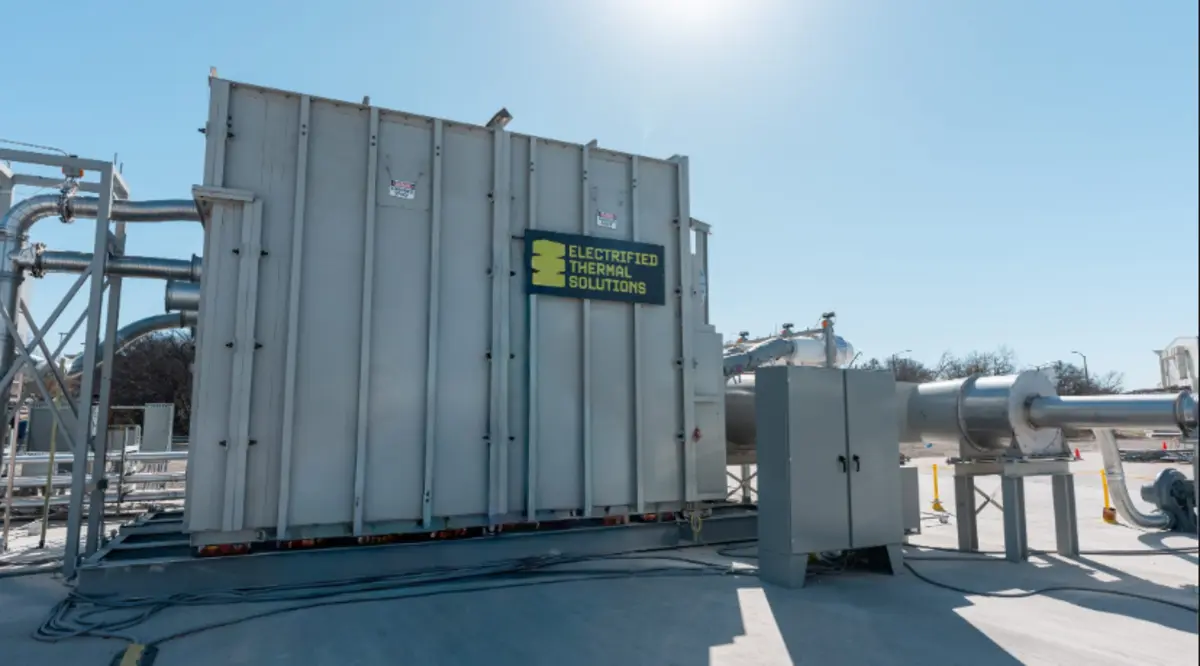
Enter Electrified Thermal Solutions (ETS), an MIT spin-off that has spent more than a decade developing a deceptively simple yet revolutionary solution: the Joule Hive thermal battery. By re-engineering the chemistry of standard firebricks to make them electrically conductive, ETS has unlocked a 95-percent-efficient method to turn cheap, excess renewable electricity into temperatures soaring up to 1,800°C (3,272°F).
Following years of rigorous laboratory research, successful commercial-scale pilot testing, and critical funding wins, the technology has officially crossed the threshold from theory to reality. In late 2026, global cement giant Holcim completed the installation of Joule Hive thermal batteries at one of its primary production plants, while chemical manufacturer Ashland advances a Department of Energy-backed deployment in Kentucky. This comprehensive report explores the mechanics, milestones, and monumental industrial implications of the technology that is finally electrifying the un-electrifiable.
Detailed Chronology: From MIT Lab to Industrial Deployment
The journey of Electrified Thermal Solutions is a textbook case of how deep-tech innovations move from academic curiosity to commercial viability. The timeline of this transformation reveals a steady, calculated march toward industrial scale.
The Formative Years (Pre-2022)
More than twelve years ago, researchers at the Massachusetts Institute of Technology began asking a fundamental question: Could ordinary refractory materials—specifically firebricks, which have lined industrial furnaces for centuries—be adapted to carry electrical currents?
Co-founder Daniel Stack and his colleagues realized that by subtly altering the chemistry of firebrick to include a higher concentration of metallic oxides, they could transform a standard insulator into an active resistor. Crucially, this innovation bypassed the need for exotic, expensive, or fragile heating elements that typically burn out under extreme thermal loads.

The Breakout and Validation Phase (2022–2024)
By 2022, the technology had matured enough to catch the attention of energy analysts and climate tech investors. The core breakthrough—stacking these conductive firebricks inside an elevator-sized, heavily insulated container known as a "Joule Hive"—proved capable of storing high-temperature heat for up to three days with minimal thermal loss.
The momentum accelerated dramatically in 2024. Specialty chemical manufacturer Ashland secured up to $35 million in matching grants from the U.S. Department of Energy (DOE). The funding was earmarked to integrate Joule Hive thermal batteries into Ashland’s ISP Chemicals facility in Calvert City, Kentucky, marking the company’s first major commercial deployment path. Partnering with the Tennessee Valley Authority (TVA), the project aimed to replace polluting methane-fired boilers with clean, grid-charged thermal storage.
The Commercial Milestone (2025–2026)
Before risking deployment in a live, high-stakes manufacturing plant, ETS constructed a commercial-scale demonstration system at the Southwest Research Institute (SwRI) in San Antonio, Texas. This testing ground served as the ultimate crucible for the technology.
By mid-2026, the SwRI system successfully logged more than 1,000 hours of continuous operation. This milestone provided the ironclad proof-of-concept data required by risk-averse industrial executives.
The validation immediately bore fruit. On September 15, 2026, ETS made a watershed announcement: Holcim, one of the largest cement producers in the world, had completed the installation of Joule Hive thermal batteries at one of its facilities. This landmark partnership not only cemented ETS’s commercial viability but also brought Holcim on board as an investment partner, signaling that global heavy industry is officially ready to pivot away from combustion.
Supporting Context & Metrics: The Physics and Math of the Joule Hive
To understand why the Joule Hive is causing a paradigm shift in industrial engineering, one must examine the staggering scale of the problem it solves—and the elegant simplicity of its physics.
The Anatomy of Process Heat
Process heat accounts for roughly one-fifth of all global energy consumption. When people think of industrial heat, they often imagine lower-temperature applications like pasteurizing milk or drying paper. However, the vast majority of industrial emissions stem from high-temperature end uses:
- Steel Production: Requires temperatures around 1,500°C to reduce iron ore.
- Cement Kilns: Operate at approximately 1,450°C to transform limestone into clinker.
- Chemical Manufacturing: Demands massive volumes of high-temperature steam (often exceeding 500°C) to drive complex catalytic reactions.
Historically, electric resistance heaters could not survive these thermal thresholds, and electric arc furnaces were limited in their application scope. This left fossil-fuel combustion—burning coal or methane—as the sole viable mechanism to reach these temperatures.
Inside the Joule Hive
ETS solved this limitation by rethinking the heating element itself. In a traditional electric heater, a separate wire or coil carries the current and transfers heat to the surrounding environment. In the Joule Hive system, the brick is the heating element.
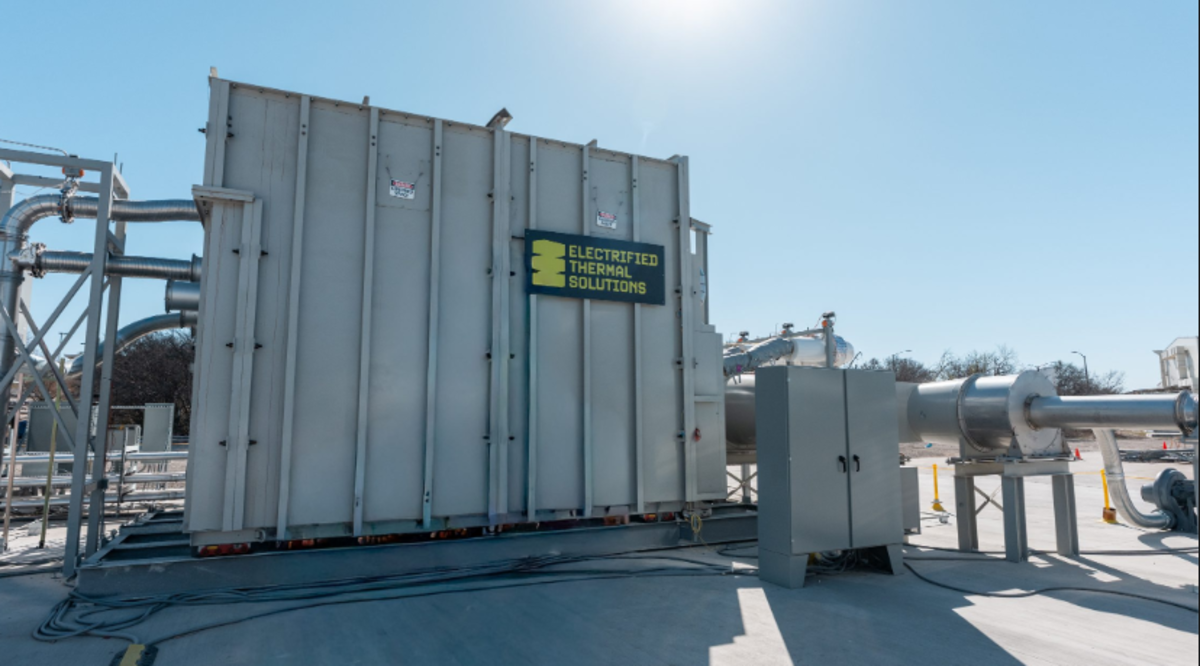
As electrons pass directly through the modified metallic-oxide firebricks, internal resistance converts electrical energy into thermal energy with astonishing efficiency.
- Operating Temperature: Up to 1,800°C—hot enough to manufacture steel, cement, glass, and high-pressure industrial steam.
- Energy Efficiency: The entire charging and storage cycle operates at approximately 95 percent efficiency.
- Storage Duration: The elevator-sized insulated enclosures can retain their immense heat for up to three days, acting as giant thermal batteries.
- Grid Friendliness: By decoupling the charging cycle from the release cycle, industrial facilities can draw power during off-peak hours when renewable energy generation (wind and solar) is abundant and cheap, sparing local grids from sudden spikes in demand.
The Decarbonization Math in Kentucky and Beyond
The environmental stakes of this technology are vividly illustrated by the Ashland project in Calvert City, Kentucky. In 2022, the facility’s methane-fired boilers emitted 72,000 tons of carbon dioxide—equivalent to the annual emissions of roughly 17,000 gasoline-powered passenger cars. In a small town of just 2,500 residents, this single plant represented a massive local pollution footprint.
According to Department of Energy projections, replacing those methane boilers with ETS Joule Hive batteries charged via clean electricity will slash the plant’s greenhouse gas emissions from steam generation by nearly 70 percent.
Crucially, experts note that industrial decarbonization in sectors like cement requires a two-pronged approach. While ETS eliminates the emissions generated by burning fossil fuels for heat, other pioneering MIT spin-offs like Sublime Systems are tackling the chemical emissions released when limestone is converted into cement. Combined, these technologies offer a realistic roadmap to true net-zero concrete.
Official Statements: Perspectives from Industry Leaders
The transition from lab-scale innovation to heavy-industrial implementation requires deep trust between agile startups and conservative legacy corporations. Key stakeholders have voiced their optimism regarding what the Joule Hive technology represents for the global manufacturing sector.
Daniel Stack, Co-Founder and CEO of Electrified Thermal Solutions:
"There’s no exotic metals in here, there’s nothing that’ll burn out. Holcim’s decision to deploy our technology validates years of work to bring electrified heat to high-temperature industrial-scale applications that no other technology or company can achieve. This agreement follows the recent turn-on and successful 1,000+ hours of operation of our commercial demonstration system and shows that global industrial producers are ready to move this technology from demonstration to deployment."
Ram Muthu, Head of Operational Excellence at Holcim:
"Electrifying high-temperature industrial heat is one of the advanced technologies we are incorporating in our decarbonization strategy, and this deployment allows us to evaluate its potential. Working with Electrified Thermal gives us a path to accelerate decarbonization as part of our industry-shaping sustainability road map."
Curt Jawdy, Senior Manager at the Tennessee Valley Authority:
"Simpler is always better. The fact that the brick is also the heating element, and you just supply electricity to the brick itself, simplifies the system significantly. The ability to charge these thermal batteries during off-peak hours allows industrial facilities to decarbonize without placing greater strain on the utility’s electric grid."
Future Outlook: The Road Ahead for Electrified Heavy Industry
As Electrified Thermal Solutions looks beyond its initial deployments with Holcim and Ashland, the horizon for industrial electrification has never looked brighter.
The implications of the Joule Hive extend far beyond cement and specialty chemicals. Power generation itself stands to benefit immensely. Most conventional power plants rely on high-temperature steam to drive massive turbines. By deploying Joule Hive batteries at power stations, utilities could transition away from coal and natural gas boilers entirely, utilizing thermal storage to balance grid fluctuations while utilizing existing steam-turbine infrastructure.
Furthermore, as global carbon border adjustments, tightening regulatory frameworks, and corporate net-zero pledges put mounting pressure on heavy industries, the demand for commercially proven decarbonization tools will skyrocket. ETS has successfully navigated the proverbial "valley of death" that claims the vast majority of clean-tech startups, moving from academic research papers to live industrial assets in just over a decade.
By proving that electricity can do the heavy lifting previously reserved for fossil-fuel fire, Electrified Thermal Solutions has not only cracked the code of the hardest-to-abate sectors—it has laid the foundational brickwork for the next industrial revolution.