



Executive Overview
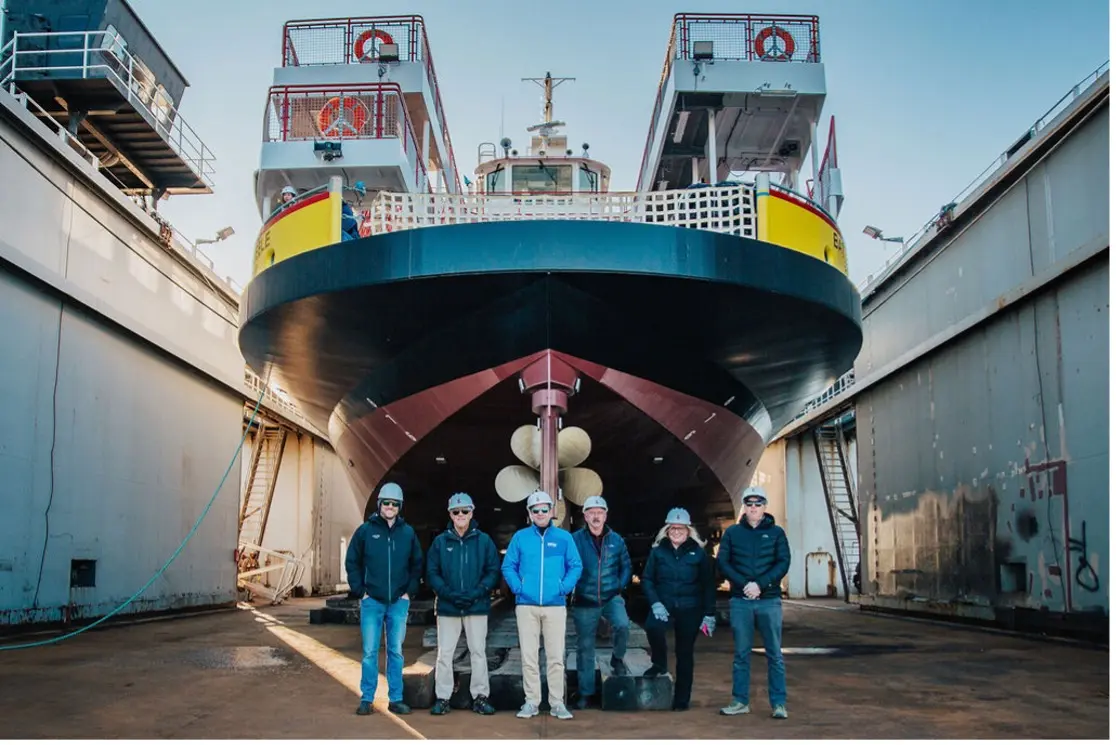
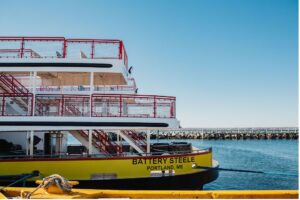
The maritime transportation landscape of the American Northeast is undergoing a quiet yet profound revolution. Far from the industrial shipyards of the mid-Atlantic and the bustling commercial hubs of Boston and New York, a milestone in sustainable civil engineering is currently navigating the waters of the Atlantic Ocean. The Battery Steele, Casco Bay Lines’ eagerly anticipated 164-foot steel vessel, has officially departed Rhode Island and is charting a course up the New England coast toward its permanent home in Portland, Maine.
Representing a monumental leap forward for public transit infrastructure in Casco Bay, the Battery Steele is not merely a replacement for aging tonnage; it is a technological showcase. Equipped with a cutting-edge diesel-electric hybrid propulsion system, this vessel stands as one of the very first of its kind commissioned for a public passenger and vehicle ferry service in the United States. Designed by the renowned naval architecture firm Elliott Bay Design Group and meticulously brought to life by Senesco Marine in North Kingstown, Rhode Island, the ferry embodies a delicate, deliberate balance between honoring local historical heritage and aggressively embracing a zero-emission future.
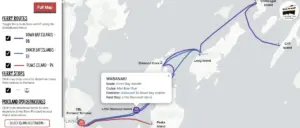
When the vessel enters commercial service this fall following a rigorous phase of final commissioning, shoreside integration, and comprehensive crew training, it will primarily ply the heavily trafficked route between Portland and Peaks Island. In doing so, it will ultimately succeed the venerable Machigonne II, a workhorse that has served the island community faithfully for decades. Yet, the Battery Steele brings to this historic route an entirely new operational paradigm: a transition from traditional fossil-fuel combustion to advanced, battery-backed propulsion.
Projected to slash carbon dioxide emissions by up to 800 metric tons annually, the vessel is engineered to dramatically shrink the carbon footprint of Casco Bay Lines while delivering a remarkably smoother, quieter ride for commuters, tourists, and freight operators alike. Named in homage to the colossal World War II-era military fortification on Peaks Island—a treasured local landmark that symbolizes both resilience and community stewardship—the Battery Steele bridges generations. It carries forward the industrial grit of mid-century defense engineering while pointing the bow steadfastly toward an era of environmental stewardship and technological innovation.
Detailed Chronology: From Blueprint to the Atlantic Voyage
The realization of the Battery Steele is the culmination of years of meticulous strategic planning, rigorous fleet evaluation, naval architecture design, and heavy industrial construction. To understand the significance of the vessel’s current journey up the Atlantic seaboard, one must retrace the timeline of a project designed to future-proof Casco Bay’s critical maritime lifeline.
Phase I: Fleet Evaluation and Conceptualization (2018–2021)
For generations, Casco Bay Lines has served as the vital umbilical cord connecting the islands of Casco Bay to the commercial and cultural hub of mainland Portland. However, rising operational costs, tightening environmental regulations, and the inevitable degradation of aging hulls prompted transit leadership to initiate a comprehensive Fleet Evaluation Project. The goal was unambiguous: evaluate the long-term structural and environmental needs of the service and design a next-generation vessel capable of meeting the unique logistical demands of the Peaks Island run.
During this period, naval architects at the Elliott Bay Design Group were tasked with conceptualizing a vessel that could handle high-volume passenger loads, vehicular freight, and the rigorous tidal and weather conditions of the Gulf of Maine. Crucially, leadership made the visionary decision to pivot away from traditional diesel-mechanical propulsion in favor of a hybrid architecture, positioning Casco Bay Lines at the vanguard of green maritime transit.
Phase II: Engineering and Construction at Senesco Marine (2022–Early 2024)
Once the design parameters were finalized, the contract for construction was awarded to Senesco Marine, a premier shipyard located in North Kingstown, Rhode Island, known for its superior vessel construction and skilled maritime craftsmanship. Over the course of construction, the shipyard became a hive of activity where advanced electrical engineering converged with heavy-duty structural steelwork.
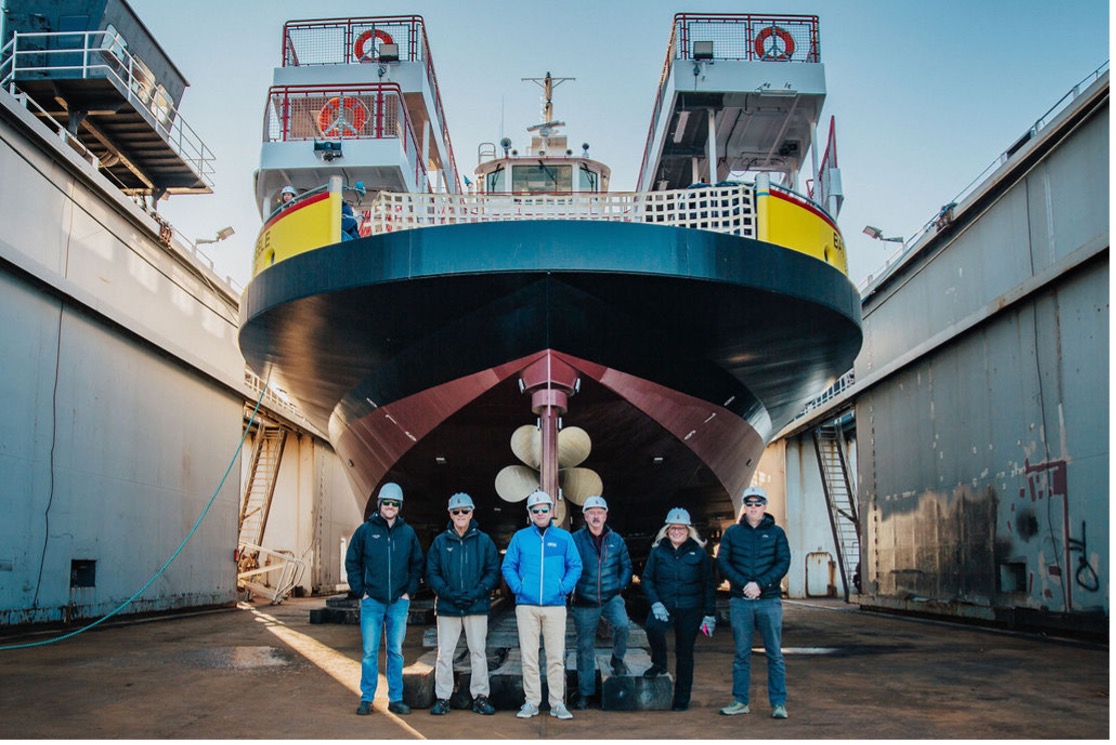
Constructing a diesel-electric hybrid ferry requires an extraordinary level of precision. Unlike conventional vessels where a large diesel engine directly turns the propeller shaft via a transmission, the Battery Steele relies on an intricate network of onboard generators, power management systems, and high-capacity lithium-ion battery banks. The hull itself—measuring an impressive 164 feet in length—was fabricated to exacting marine standards, designed to optimize hydrodynamic efficiency while housing complex electrical conduits and thermal management systems necessary to maintain battery longevity in harsh New England marine environments.
Phase III: The Spring Launch and Christening (April 2024)
The culmination of years of labor reached a symbolic crescendo in early April, when executives, board members, and operational personnel from Casco Bay Lines traveled to the Senesco Marine facility in North Kingstown. In a time-honored maritime tradition, the atmosphere was charged with celebration as community stakeholders gathered to watch the vessel meet the water for the very first time.
Amid speeches highlighting the engineering triumphs and the collaborative effort behind the project, a bottle of champagne was formally broken across the hull in honor of the Battery Steele. Following the launch, the vessel entered the crucial outfitting and preliminary dockside testing phase, where engineers systematically tested the electrical grid, propulsion drives, safety systems, and hotel loads to ensure flawless integration.
Phase IV: The Atlantic Transit and Summer Commissioning (Summer 2024)
With dockside trials successfully concluded, the Battery Steele recently cleared the shipyard slipways and officially entered the open waters of the Atlantic Ocean. Currently making its steady northward journey along the New England coastline, the vessel’s arrival in Portland harbor later this summer will mark a major milestone for the region.
Upon docking in Portland, the vessel will not immediately enter passenger service. Instead, it will enter a mandatory commissioning window. This period will be dedicated to fine-tuning the shoreside fast-charging infrastructure at the Portland terminal, conducting sea trials under varying load and weather conditions, and running comprehensive training regimens for Casco Bay Lines captains, engineers, and deckhands. If all goes according to schedule, the Battery Steele will officially welcome its first paying passengers and vehicles this autumn, inaugurating a historic new chapter for Maine public transportation.
Supporting Context & Metrics: The Engineering of Sustainability
To fully appreciate the transformation represented by the Battery Steele, one must examine the metrics and engineering paradigms that differentiate it from traditional public ferries. Maritime transportation has historically been a significant contributor to regional air pollution and greenhouse gas emissions. Traditional passenger ferries, which must idle at docks and maintain high torque levels during maneuvering, burn thousands of gallons of marine diesel daily, releasing particulate matter, sulfur oxides, and carbon dioxide directly into coastal ecosystems.
The Battery Steele disrupts this carbon-heavy model through an advanced diesel-electric hybrid propulsion system.
Propulsion Architecture and Operational Efficiency
At the heart of the vessel’s design is its capacity to operate primarily on stored electrical energy. Rather than running large diesel engines continuously at variable speeds—which is inherently inefficient—the Battery Steele utilizes a robust battery bank to power its electric propulsion motors during standard transits across Casco Bay.
- Shoreside Charging Integration: The vessel is engineered to interface with high-capacity charging infrastructure installed at the Portland terminal. While loading and unloading passengers and vehicles, the ferry can rapidly top off its battery reserves, ensuring that subsequent runs across the bay can be executed with zero tailpipe emissions.
- Onboard Backup Generation: To guarantee absolute year-round reliability—especially during peak winter storms or unexpected grid fluctuations—the vessel is equipped with clean-burning auxiliary diesel generators. These generators serve a dual purpose: they can provide direct propulsion or recharge the battery banks when shoreside power is unavailable or during extended operational profiles.
- Emissions Reductions: Environmental impact modeling indicates that the deployment of the Battery Steele will prevent up to 800 metric tons of carbon dioxide ($CO_2$) emissions annually. This reduction is equivalent to removing hundreds of passenger vehicles from Maine highways each year, directly improving air quality in downtown Portland and around the fragile marine habitats of Casco Bay.
Acoustic and Community Impact
Beyond its carbon-reduction metrics, the hybrid system delivers an equally vital benefit: noise mitigation. Traditional mechanical diesel ferries produce a persistent, heavy low-frequency rumble and vibration that permeates cabins and carries across the water to waterfront properties on Peaks Island and the Portland mainland.
Because electric propulsion motors operate with exceptional quietness, passengers aboard the Battery Steele will experience a markedly more serene transit. The reduction in underwater radiated noise also benefits local marine wildlife, minimizing acoustic disruption to fish populations, harbor seals, and migratory birds that inhabit the pristine waters of Casco Bay.
Official Statements and Local Significance
The naming of the vessel—Battery Steele—is a deliberate nod to local history that resonates deeply with the residents of Peaks Island and the broader Portland community.
Honoring the Legacy of Battery Steele
Constructed during the height of World War II as part of the Harbor Defenses of Portland, the original Battery Steele on Peaks Island was an engineering marvel of its time. Designed to house two massive 16-inch naval guns capable of shelling enemy fleets far out in the Atlantic, the installation was one of the largest concrete and steel gun batteries ever built in the United States. Though the guns were eventually scrapped in the post-war era, the imposing structure remained an indelible part of the island’s landscape.
Through grassroots preservation efforts that began in the 1990s, the former military installation has undergone a profound transformation. What was once a classified, highly restricted military bastion has been reclaimed by the community as a public space for historical exploration, ecological reflection, and human connection.
By christening their newest flagship Battery Steele, Casco Bay Lines has woven this narrative of transformation directly into the fabric of the vessel. The name serves as a bridge between the island’s fortified past and its sustainable, forward-looking present. It reflects a shared community identity rooted in resilience, ingenuity, and a fierce pride in local heritage.
Industry Leadership and Collaborative Vision
Speaking on the broader implications of the project, representatives from Casco Bay Lines have repeatedly emphasized that the vessel represents a collective triumph of regional cooperation. The partnership between Maine transit planners, the naval architects at Elliott Bay Design Group, and the master shipbuilders at Senesco Marine demonstrates that regional public transportation agencies can successfully spearhead complex technological transitions.
"This is an exciting and important step forward for the future of ferry service in Casco Bay," noted transit officials during the milestone launch event in Rhode Island. "As one of the first electrically propelled ferries built in New England, Battery Steele positions Casco Bay Lines at the forefront of cleaner maritime transportation. When it enters service, it will carry not just passengers and vehicles, but a renewed commitment to the future of Casco Bay."
Future Outlook: A New Standard for New England Ferries
As the Battery Steele continues its historic transit up the Atlantic coast toward Portland, its impending arrival signals more than just the addition of a single vessel to a local fleet; it establishes a new benchmark for sustainable maritime operations across the northeastern United States.
The maritime industry faces mounting pressure from federal and state regulatory bodies to decarbonize operations. However, transitioning a fleet of heavy commercial vessels is fraught with financial, engineering, and logistical hurdles. By successfully designing, financing, constructing, and deploying a high-capacity hybrid passenger ferry, Casco Bay Lines is providing a tangible blueprint for other municipal and private ferry operators navigating the same environmental mandates.
The Roadmap Ahead for Casco Bay Lines
Once the Battery Steele successfully completes its final commissioning and crew training phases this autumn, marine operations teams will closely monitor its performance metrics. Data gathered from battery degradation rates, energy consumption per run, shoreside charging efficiency, and maintenance intervals will inform the future fleet evaluation strategies of Casco Bay Lines. Should the vessel perform up to its projected standards—as engineering models strongly suggest it will—it is highly likely that subsequent fleet modernizations will lean even more aggressively into full electrification and alternative marine fuels.
Furthermore, the introduction of the Battery Steele will alter the daily rhythms of the Peaks Island route. Commuters who rely on the service 365 days a year will enjoy enhanced vessel reliability, a vastly improved passenger environment featuring modern amenities, and the quiet satisfaction of knowing their daily commute is actively preserving the pristine ecological health of Casco Bay.
As the vessel rounds Cape Cod and sets its sights on the Gulf of Maine, it carries the hopes of a forward-thinking transit agency, an engaged island community, and an industry eager for sustainable solutions. When the Battery Steele finally ties up at the Portland terminal and welcomes its first commuters this fall, it will not only connect Portland to Peaks Island—it will successfully bridge the gap between historical heritage and the clean, electric horizon of 21st-century maritime transportation.