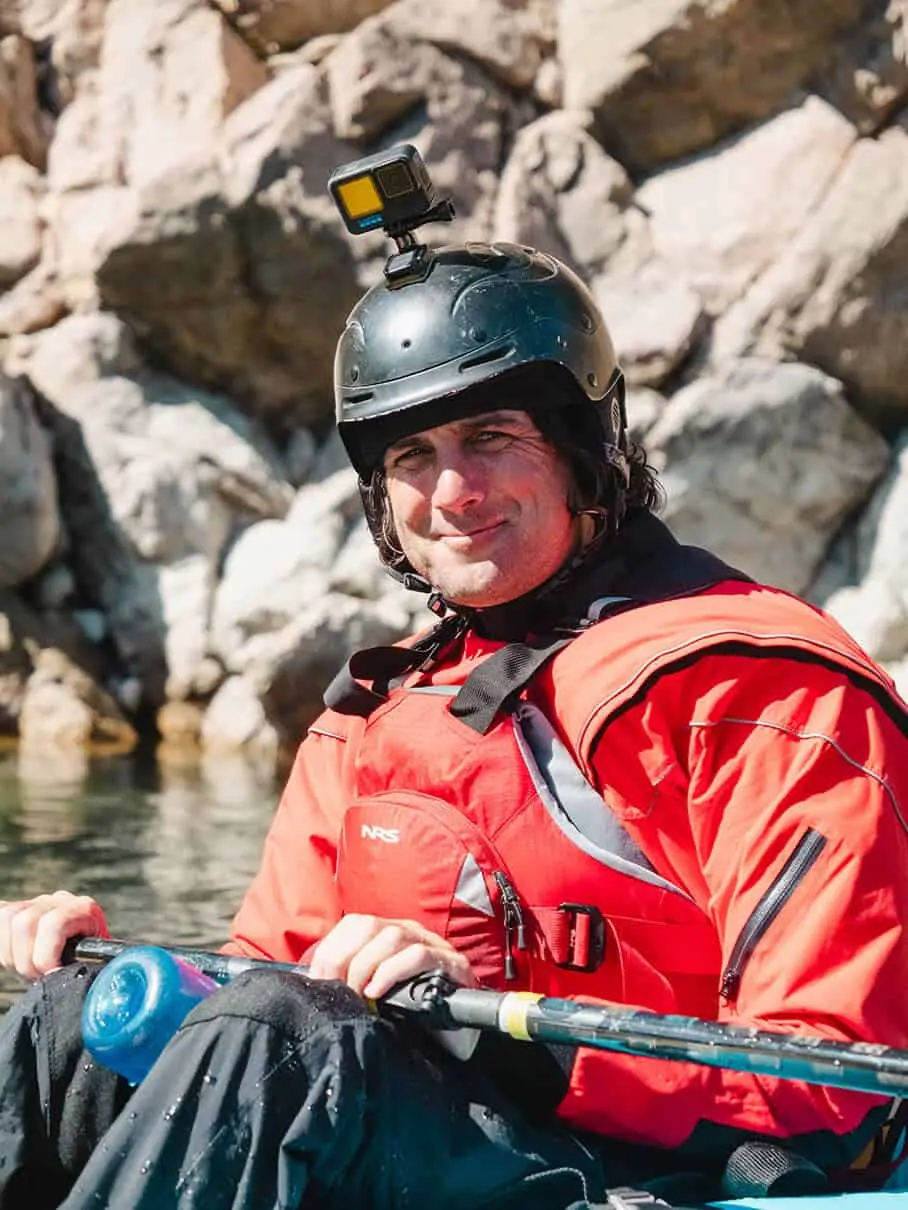
For 43-year-old Yak Van Dam, life has always been measured in current, volume, and drop. Growing up in rural New Zealand, he gravitated toward the relentless energy of whitewater, quickly realizing that a traditional office environment was incompatible with his appetite for adventure. Over a 16-year career as a professional river guide, Van Dam chased roaring waters across New Zealand’s North Island—tackling legendary runs along the Kaituna River and navigating the churning hydraulics near Huka Falls. River running was not merely a profession; it was his identity, his community, and his sanctuary.
That life screeched to a halt six years ago during a weekend excursion to Italy while he was working as a guide on Switzerland’s Vorderrhein. A tragic slip off a 42-foot canyoning ledge resulted in a devastating impact against the cliffside, leaving Van Dam paraplegic. The accident abruptly severed his connection to the water, plunging him into a prolonged period of physical recovery, emotional mourning, and profound uncertainty.
Yet, human resilience often finds a way through the most impassable gorges. Five years after his injury, a chance encounter with packrafting ignited an improbable comeback. By blending adaptability, specialized gear, and unyielding determination, Van Dam cracked open a new chapter on the river. Today, his journey from the sterile confines of a Swiss hospital room back to the roaring cadence of Class III rapids has been immortalized in the award-winning short film Riverbound: The Story Has Just Begun, capturing the imagination of the global outdoor community and redefining what is possible for adaptive athletes in extreme sports.
Detailed Chronology: From the Kaituna to the Canyon Ledge
Roots in the Current
Van Dam’s romance with whitewater began during his formative years in New Zealand. Raised in the rural expanses of a country renowned for its wild, untamed landscapes, he stumbled upon river running through an outdoor education course. The experience was transformative. While peers plotted careers bound to cubicles and desks, Van Dam felt an immediate, magnetic pull toward the river’s dynamic volatility.
"I was never going to make an office job," Van Dam recalls.
That sentiment crystallized the moment he stepped into a raft during his professional guide training. He knew instantly that his life would be spent navigating the world’s most challenging river systems. Over the next decade and a half, Van Dam built a robust reputation as a seasoned waterman. He logged countless hours guiding clients and pushing his own limits across New Zealand’s premier waterways. His backyard playground included the steep, technical drops of the Kaituna River and the high-volume fury of runs near Huka Falls—waters that demand absolute respect, split-second decision-making, and deep technical proficiency.
The Turning Point in Italy
By his late thirties, Van Dam’s guiding career had taken him across the globe. Six years ago, while stationed in Switzerland working on the Vorderrhein—an alpine classic known for its powerful, glacier-fed currents—he and three close friends decided to maximize a weekend off. They packed their gear and drove south across the border into Italy to explore the region’s steep limestone canyons.
Canyoning, which involves descending narrow gorges through a combination of swimming, scrambling, and cliff-jumping, carries inherent risks. On the second major jump of the excursion, disaster struck. Launching from a formidable 42-foot ledge, Van Dam slipped mid-air. The miscalculation caused him to slam violently against the rock face on his descent before plunging into the water below.
The physical toll was catastrophic. The impact fractured vertebrae and inflicted severe trauma to his spinal cord, resulting in paraplegia. The roaring rivers he had dominated for 16 years were suddenly replaced by the sterile, quiet environment of a Swiss hospital room, where he would spend the next six months facing the hardest battle of his life.
The Brutal Illusion of the Pool
Initial medical assessments revealed a glimmer of hope: Van Dam’s spinal injury was relatively low on the column, leaving him with a degree of residual hip movement. For someone whose mind was hardwired to the water, this anatomical detail sparked an immediate psychological defense mechanism.
Confined to his bed, Van Dam’s mind drifted back to kayaking. Logic, he convinced himself, was on his side.
"I thought, kayaking is going to be easy because you just use your hips," he reflects.
Buoyed by this hypothesis, he eagerly anticipated his first test session in the hospital’s rehabilitation swimming pool. Equipped with a kayak, Van Dam slid into the water, expecting his muscle memory and lower-body mobility to seamlessly carry him through a traditional eskimo roll.
Instead, reality struck with crushing force. As he initiated his first roll, he immediately flipped, lost control, and fell out of the boat. The subtle nuances of balance, core stability, and lower-body integration that an able-bodied kayaker takes for granted were missing. The water, once a familiar and welcoming ally, felt foreign and unforgiving.
"Kayaking, which I was going to do in my head while lying in bed, was just gone," Van Dam admits, describing the realization as brutal.
In that single moment in the hospital pool, the psychological tether holding him to his past life snapped. Whitewater vanished from his vocabulary, his thoughts, and his future.
Supporting Context & Metrics: The Packrafting Revolution
Rediscovering the Flow Through Innovation
For five years, Van Dam lived as a spectator to the sport he once defined. The adaptive sports community has made incredible strides in recent decades, but finding a watercraft that bridges the gap between extreme whitewater performance and the unique biomechanical realities of a paraplegic athlete remains a formidable engineering challenge. Traditional hard-shell whitewater kayaks rely heavily on foot braces, knee hooks, and tight cockpit fits to transfer energy and maintain balance—elements that are largely inaccessible or unsafe for someone with lower-body paralysis.
The turning point arrived quietly, disguised as a casual invitation from friends. Five years post-accident, Van Dam was introduced to packrafting—specifically, lightweight inflatable rafts designed for backcountry exploration and rugged river travel.
Initially, his ambitions were modest. Packrafting presented a low-stakes, seemingly safer avenue to simply tag along with his paddling friends, soak up the river atmosphere, and share in the camaraderie of the canyon. He wasn’t looking to conquer legendary drops; he just wanted to be back on the water.
Unlocking the Alpacka Advantage
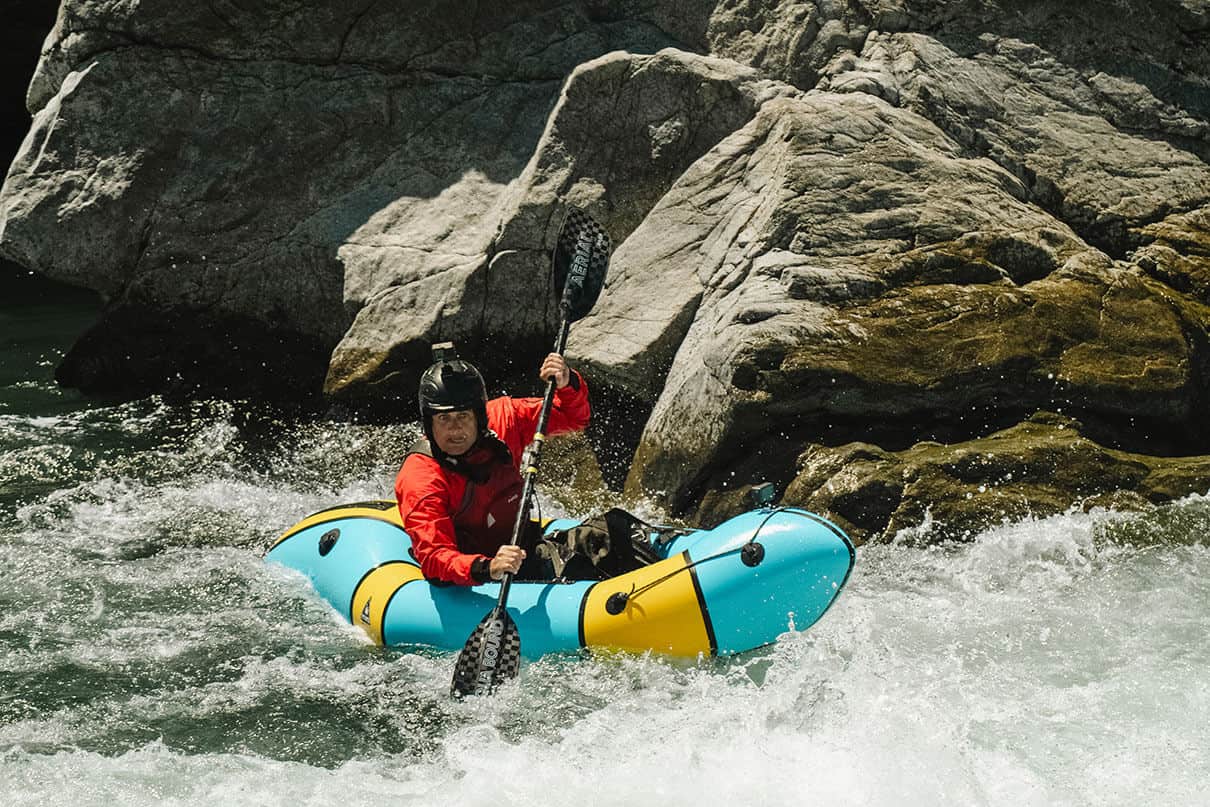
The transition, however, unlocked a mechanical revelation. Stepping into an Alpacka raft, Van Dam quickly realized that the boat’s forgiving design, high initial stability, and open configuration addressed his physical constraints in ways a traditional kayak never could.
During a routine outing, he tested the waters: crossing an eddyline, executing eddy turns, and practicing ferry glides across the current. Crucially, when he purposely tested his limits and capsized, he discovered something that had eluded him in the Swiss hospital pool—he could easily climb back into the craft.
The boundaries of his recovery expanded exponentially. What started as a cautious float quickly escalated into a high-octane pursuit.
"It got bigger and bigger until the finale was running a class III section [of the Upper Buller]. It blew my mind where we took it," Van Dam says, reflecting on his progression. "It was game on. All because we were in packrafts, which cater to what I need to be on the whitewater."
The Metrics of Resilience
To contextualize Van Dam’s achievement, running Class III whitewater in a packraft as a paraplegic athlete requires a sophisticated combination of upper-body strength, rapid decision-making, and psychological fortitude. Class III rapids are characterized by:
Moderate, irregular waves capable of swamping undecked or improperly loaded watercraft.
Complex hydraulics, including strong eddies, turbulent eddy lines, and swift cross-currents.
Obstructions such as large boulders and strainers that demand precise maneuvering space.
By mastering these technical hurdles without the lower-body bracing used in traditional kayaking, Van Dam has established a new benchmark for adaptive river navigation, proving that equipment innovation can democratize extreme outdoor recreation.
Official Statements & Personal Reflections
The emotional arc of Van Dam’s transition from isolation to celebration underscores the profound psychological dimensions of adaptive adventure sports. Spinal cord injuries frequently strip individuals of their autonomy, casting a long shadow over their sense of self-worth and community connection.
"There have been a lot of tears being in a wheelchair and missing out on a lot of the stuff I used to do," Van Dam shares candidly. "I was worried that would be the case again [with packrafting]. But it was the opposite. It was just celebrations, high fives, such great moments, and you just keep ticking goals off and achieving stuff."
This resurgence of success fundamentally altered his social landscape. Before packrafting, the phone calls inviting him on river trips had dwindled, replaced by the isolating silence of rehabilitation. Once he proved his capabilities in a packraft, the dynamic shifted immediately. The phone started ringing again: "We’re going packrafting. Do you want to come?"
Beyond the adrenaline and the social integration, Van Dam notes a profound shift in his internal landscape. While he jokes about finally developing the broad shoulders he always wanted from powering his raft solely through upper-body mechanics, his perspective on nature has undergone a deeper evolution.
"Having that taken away—the freedom of just being on the river, looking at nature—and then going back to it, I’m appreciating it so much more."
Future Outlook: Riverbound and the Adaptive Sports Horizon
Yak Van Dam’s story is no longer just a personal triumph; it has become a beacon for the broader adaptive outdoor movement. His remarkable comeback has been captured on film, charting his grueling lows and exhilarating highs in a documentary titled Riverbound: The Story Has Just Begun.
The film has already struck a powerful chord within the international adventure film community, capturing the prestigious Spirit Award at the New Zealand Mountain Festival. As part of its ongoing global trajectory, Riverbound is featured prominently on the international touring circuit for the 2026 Paddling Film Festival, inspiring audiences from casual outdoor enthusiasts to elite athletes across multiple continents.
The Broader Impact on Adaptive Paddling
Van Dam’s journey highlights an urgent and ongoing evolution within the outdoor industry: the imperative for inclusive gear design and accessible extreme sports infrastructure. Traditional action sports have historically catered to able-bodied participants, often treating adaptive athletes as an afterthought or confining them to sanitized, low-risk environments.
By pushing packrafting into technical Class III terrain, Van Dam demonstrates that extreme sports can—and should—evolve to accommodate diverse physical abilities. The rise of versatile watercraft like packrafts, combined with adaptive seating innovations and community-driven initiatives, is rapidly dismantling physical and cultural barriers in outdoor recreation.
As Riverbound continues its global screening tour through 2026, Yak Van Dam’s legacy extends far beyond the rivers of New Zealand or the alpine runs of Europe. He stands as living proof that while a tragic accident can alter a person’s trajectory, the fundamental drive to seek out adventure, community, and the raw power of moving water cannot be easily contained. For Van Dam, the story has truly just begun.