








Executive Overview
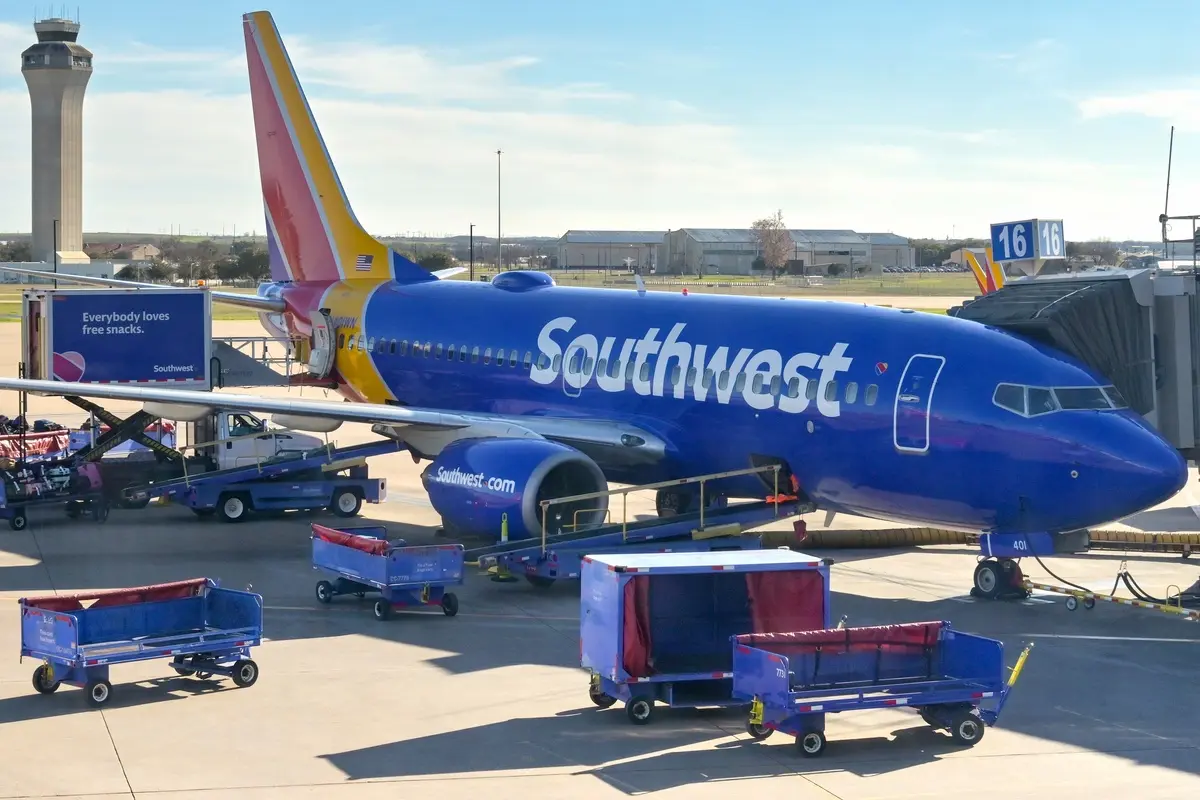
In a seismic shift for the commercial aviation industry, Southwest Airlines has officially announced plans to construct and operate its very first dedicated network of airport lounges. Long celebrated as the quintessential low-cost carrier (LCC)—famous for its egalitarian open-seating policies, lack of traditional first-class cabins, and cheerful, no-frills operational philosophy—Southwest is fundamentally redefining its value proposition.
The initial rollout will see proprietary lounges open in four major hubs and high-demand markets: Austin-Bergstrom International Airport (AUS), Baltimore/Washington International Thurgood Marshall Airport (BWI), Nashville International Airport (BNA), and Daniel K. Inouye International Airport in Honolulu (HNL).
Slated to make their official debut in 2027, these flagship spaces represent far more than a simple upgrade to the passenger experience. They are the physical manifestation of a multi-year, high-stakes corporate transformation. To bring this ambitious project to life, Southwest has forged a strategic partnership with financial powerhouse JPMorgan Chase. This alliance will not only fund and shape the physical spaces but will also yield a brand-new, co-branded credit card engineered specifically to grant cardholders seamless access to the premium retreats.
Furthermore, airline executives have confirmed that the initial four-airport footprint is just the beginning. At least seven additional lounges are already firmly slated for development over the next several years, targeting a mix of high-demand business and leisure corridors.
While specifics regarding square footage, architectural design, and interior aesthetics remain tightly under wraps, the carrier has promised “high-quality amenities,” curated dining options, and integrated travel benefits. This strategic pivot underscores a broader reality: even the most staunchly egalitarian low-cost airlines must evolve to capture lucrative, high-yield business travelers and affluent leisure consumers who have come to view airport lounges as an essential baseline of modern air travel.
Detailed Chronology
The Evolution of a Low-Cost Pioneer
To understand the magnitude of Southwest’s lounge announcement, one must look at the historical trajectory of the airline. Founded in 1967 and commencing operations in 1971, Southwest built its entire brand identity on simplicity, efficiency, and democratization. By utilizing a single aircraft type (the Boeing 737) to lower maintenance and training costs, flying point-to-point routes rather than through a congested hub-and-spoke system, and eliminating assigned seating, meals, and first-class cabins, Southwest passed significant savings directly onto the consumer.
For decades, this formula worked brilliantly, making Southwest the largest domestic carrier in the United States by passenger volume. However, the expectations of the American traveler have shifted dramatically over the past fifteen years. As legacy carriers like Delta Air Lines, United Airlines, and American Airlines heavily invested in lavish airport lounges—transforming them from quiet waiting rooms into sprawling, amenity-rich retreats complete with chef-driven buffets, cocktail bars, and shower suites—low-cost carriers found themselves at a distinct disadvantage when trying to woo corporate travelers and high-spending frequent flyers.

The Turning Point: Pressure from Activist Investors and Changing Markets
The announcement of the lounge network does not happen in a vacuum. Over the past twenty-four to thirty-six months, Southwest Airlines has faced intense financial pressure from activist investors, most notably Elliott Investment Management. Amid softening domestic yields, rising labor costs, and operational inefficiencies, activist stakeholders demanded a comprehensive reevaluation of Southwest’s core business model.
In response, airline leadership initiated a series of historic departures from longstanding policies. In late 2024, Southwest stunned the aviation world by announcing it would finally abandon its legendary open-seating system in favor of assigned seats, alongside the introduction of extra-legroom seating options.
The unveiling of the lounge network in Austin, Baltimore, Nashville, and Honolulu represents the next logical and aggressive step in this corporate metamorphosis. By partnering with JPMorgan Chase—a titan in the lucrative credit card rewards space—Southwest is directly targeting the high-margin ancillary revenue streams that have fueled the profitability of its legacy competitors for years.
The Roadmap to 2027 and Beyond
- The Announcement Phase (Late 2024 – 2025): Establishing the contractual framework with JPMorgan Chase, securing prime real estate leases at AUS, BWI, BNA, and HNL, and initiating preliminary architectural design phases.
- The Financial Integration (2025 – 2026): Developing the accompanying co-branded Chase credit card products, restructuring the Rapid Rewards loyalty tiers to incorporate lounge access metrics, and finalizing supply chain and catering partnerships.
- The Debut Phase (2027): Grand openings of the inaugural four lounges in Austin, Baltimore, Nashville, and Honolulu.
- The Expansion Phase (2027 – 2030+): Rollout of the remaining seven-plus planned lounges across unidentified domestic and international leisure and business markets.
Supporting Context & Metrics
The Economics of the Airport Lounge
Why are airlines so eager to build and operate spaces that historically served as cost centers? The answer lies in the lucrative intersection of co-branded credit card portfolios and high-margin customer loyalty.
According to financial analysts, legacy carriers generate billions of dollars annually not by flying airplanes, but by selling frequent flyer miles to banks like JPMorgan Chase, American Express, and Citi. These banks then issue credit cards that allow consumers to rack up miles on everyday purchases. To make these credit cards attractive to consumers willing to pay annual fees ranging from $95 to $695, issuers must offer compelling perks—chief among them being airport lounge access.
By launching proprietary lounges tied to a new JPMorgan Chase credit card, Southwest is unlocking a multi-billion-dollar profit engine. The airline can monetize its Rapid Rewards database by converting casual leisure travelers into high-spending credit cardholders who route all their household and business spending through the Southwest ecosystem.
Target Markets: A Strategic Geographical Breakdown
The selection of Austin, Baltimore, Nashville, and Honolulu for the inaugural wave of lounges is a masterclass in demographic and operational targeting:
- Austin-Bergstrom International Airport (AUS): A booming technology and cultural hub, Austin represents the quintessential high-yield business market. Tech executives, venture capitalists, and affluent professionals frequently traverse AUS, making it a prime battleground where Southwest must compete directly with Delta, American, and United for lucrative corporate accounts.
- Baltimore/Washington International Thurgood Marshall Airport (BWI): A historic stronghold for Southwest, BWI serves as a massive dual-purpose gateway. It captures both leisure travelers heading to and from the Mid-Atlantic region and government, defense, and corporate contractors commuting along the Northeast Corridor.
- Nashville International Airport (BNA): As Music City experiences unprecedented population and tourism growth, BNA has transformed into one of the fastest-growing medium-to-large hub airports in the United States. It is a magnet for high-spending leisure travelers and corporate conventions alike.
- Daniel K. Inouye International Airport (HNL): Honolulu represents Southwest’s crown jewel for long-haul leisure operations. Serving flights from the U.S. mainland to Hawaii, HNL is a market where travelers are embarking on major vacations and are actively seeking premium travel experiences from the moment they arrive at the airport.
Official Statements
While Southwest Airlines has kept detailed architectural renderings and precise operational blueprints close to the vest, key executives have released guiding statements that illuminate the strategic vision driving the initiative.
In comments detailing the partnership, the carrier emphasized that the lounge network is designed to complement its ongoing modernization efforts.
"The introduction of a lounge network represents a strategic investment in Rapid Rewards and our most loyal customers," noted Southwest’s Chief Customer Officer during the initial briefing. "As we continue to evolve our product offerings to meet the changing preferences of today’s travelers, partnering with JPMorgan Chase allows us to deliver world-class hospitality both in the air and on the ground."
Industry analysts have been quick to dissect these statements. The explicit linkage between the lounge network and the Rapid Rewards loyalty program signals that lounge access will likely be tiered. While holders of the newly announced co-branded JPMorgan Chase credit card will undoubtedly gain entry, it is widely anticipated that elite status holders within the Rapid Rewards program—along with day-pass purchasers—will also be accommodated, depending on capacity constraints.
JPMorgan Chase executives echoed the enthusiasm, highlighting the natural synergy between Southwest’s massive domestic footprint and Chase’s dominant position in the travel rewards credit card market. For Chase, adding Southwest to its stable of airline partners deepens its reach into the middle-to-upper-tier travel market, providing a compelling counterweight to competitors locked into exclusive relationships with Delta, United, and American.
Future Outlook
Challenges and Growing Pains
As Southwest embarks on this historic transformation, the carrier faces significant operational and cultural hurdles. Building and managing airport lounges requires a specialized set of skills that differs vastly from running a point-to-point airline. Real estate acquisition within major terminal complexes is notoriously difficult, expensive, and subject to prolonged bureaucratic delays involving airport authorities, municipal governments, and construction unions.
Furthermore, Southwest must carefully manage customer expectations. The airline’s existing passenger base—accustomed to a friendly, egalitarian atmosphere where everyone received the same basic level of service—may experience friction as the airline begins catering explicitly to premium credit cardholders and elite frequent flyers. Ensuring that the introduction of lounges does not alienate its core demographic while successfully capturing high-yield travelers will require a delicate balancing act from the airline’s marketing and communications teams.
The Long-Term Horizon for Southwest Airlines
Looking ahead to 2027 and beyond, the launch of the Austin, Baltimore, Nashville, and Honolulu lounges—followed by at least seven additional locations—signals the permanent end of Southwest as a traditional, stripped-down low-cost carrier.
By embracing assigned seating, premium legroom options, and now a proprietary lounge network backed by JPMorgan Chase, Southwest is positioning itself as a hybrid carrier capable of competing across all segments of the commercial aviation market. If executed successfully, this strategy will not only appease activist investors and boost the airline’s financial valuation, but it will also fundamentally rewrite the passenger experience for millions of loyal travelers who can finally enjoy a cup of coffee and a quiet place to sit before boarding their Southwest flight.