







Executive Overview
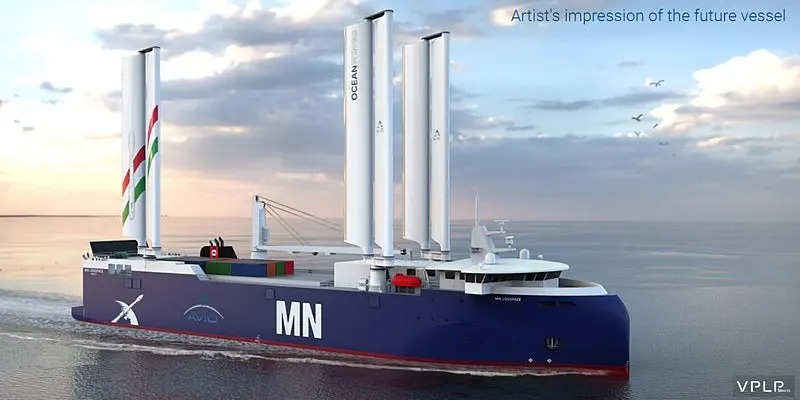
In a milestone move for both maritime transportation and sovereign space infrastructure, Compagnie Maritime Nantaise—a subsidiary of France’s Sogestran Group—officially awarded a shipbuilding contract to Guangzhou Shipyard International (GSI) on August 21, 2026. The contract entails the construction of a highly specialized, next-generation Roll-on/Roll-off (RoRo) cargo vessel designed explicitly to serve the complex supply chain demands of Europe’s aerospace industry. Scheduled to enter operational service by 2030, the vessel will primarily transport space launch vehicles, satellites, and delicate payload components from manufacturing hubs across Europe to the Guiana Space Centre in Kourou, French Guiana.
+-----------------------------------------------------------------------------------+
|                            PROJECT OVERVIEW & METRICS                             |
+----------------------+------------------------------------------------------------+
| Buyer                | Compagnie Maritime Nantaise (Sogestran Group)              |
| Shipbuilder          | Guangzhou Shipyard International (GSI)                     |
| Naval Architects     | Knud E. Hansen & VPLP Design                               |
| Contract Date        | August 21, 2026                                            |
| Service Entry        | 2030                                                       |
| Primary Cargo        | Avio Vega-C stages, Ariane 6 components, satellites        |
| Propulsion System    | Dual-fuel conventional machinery + 3 OceanWings sails      |
| Destination          | Guiana Space Centre (Kourou, French Guiana)                |
+----------------------+------------------------------------------------------------+
The design represents a joint architectural effort between Danish naval architecture firm Knud E. Hansen and French yacht and commercial vessel design studio VPLP Design. Fusing advanced aerodynamic wind-assisted propulsion with heavy-lift, cleanroom-grade maritime transportation, the ship features three automated OceanWings rigid sails, an optimized hydrodynamic hull, weather-routing artificial intelligence, and dual-fuel machinery capable of operating on drop-in biofuels.
The vessel’s main operational priority will be transporting core stages of Avio’s Vega-C light-lift rocket from Italy, alongside oversized subassemblies for Ariane Group’s heavy-lift Ariane 6 rocket from ports in France, Germany, and Spain. By combining wind propulsion with decarbonized fuels, the vessel establishes a new benchmark for low-carbon aerospace logistics, directly addressing the European Space Agency’s (ESA) stringent sustainability mandates and the European Union’s broader maritime decarbonization targets under the Fit for 55 policy framework.
Detailed Chronology & Project Evolution
The procurement of this specialized vessel is the culmination of a multi-year effort to modernize European space logistics, replacing legacy infrastructure with green shipping technologies.
PROJECT DEVELOPMENT TIMELINE
====================================================================================
[2022–2024] -------------------> Architectural Feasibility & Hydrodynamic Studies
                                 Joint development by Knud E. Hansen & VPLP Design.
[2025] ------------------------> Procurement Tender Issued
                                 Sogestran / MN open bidding for international yard.
[August 21, 2026] -------------> Contract Execution
                                 Formal signing between Compagnie Maritime Nantaise & GSI.
[2027–2028] -------------------> Keel Laying & Hull Fabrication
                                 Construction commences at GSI facilities in Guangzhou.
[2029] ------------------------> Fitting Out & Sea Trials
                                 Installation of OceanWings and propulsion integration.
[2030] ------------------------> Entry into Service
                                 Maiden voyage to Europe and transit to Kourou.
====================================================================================
The Legacy Context
For over two decades, strategic maritime transportation for European space hardware relied on specialized vessels such as the MN Toucan and MN Colibri, operated by Compagnie Maritime Nantaise. These ships were purpose-built to haul Ariane 5 rocket stages and satellite payloads across the Atlantic Ocean. However, as the European space sector transitioned toward the Ariane 6 and Vega-C launch families—and as global maritime shipping faced increasingly strict environmental regulations—the need for a larger, modern, and environmentally capable fleet became evident.
The proof-of-concept for wind-assisted space hardware transport was established by the vessel Canopée, which entered service in 2023 to carry Ariane 6 components. Building upon lessons learned from Canopée, Compagnie Maritime Nantaise initiated a tender process in 2025 for an expanded, highly versatile RoRo vessel capable of handling both the Ariane 6 and the Vega-C supply chains, while incorporating advancements in automated wind propulsion and payload climate controls.
Contract Signing and Industrial Alignment
On August 21, 2026, executives from Sogestran Group and Compagnie Maritime Nantaise finalized the shipbuilding contract with Guangzhou Shipyard International. GSI, a subsidiary of China State Shipbuilding Corporation (CSSC), was selected for its experience in constructing complex RoRo, car carrier, and dual-fuel vessels.
Under the agreed timeline, detailed engineering will conclude in late 2026, followed by steel cutting and keel laying in 2027. Shipbuilder trials and wind-propulsion integration are slated for 2029, paving the way for full commercial commission by 2030.
Supporting Context & Technical Metrics
Transporting satellite payloads and rocket stages presents severe maritime engineering challenges. The cargo is extremely expensive, structurally delicate, sensitive to humidity and thermal fluctuations, and susceptible to dynamic acceleration forces caused by ocean waves.
                               VESSEL LAYOUT SCHEMATIC

     +-------------------------------------------------------------------------+
     | [Open Weather Deck] - Oversized Fairings & Non-Sensitive Cargo          |
     |                     | Sail 1 |      | Sail 2 |      | Sail 3 |          |
     +-------------------------------------------------------------------------+
     | [Main RoRo Deck] - Heavy Launch Vehicle Components / Roll-on Trailers   |
     +-------------------------------------------------------------------------+
     | [Climate-Controlled Hold] - Satellites / Cleanroom-Grade Payloads       |
     +-------------------------------------------------------------------------+
     | [Engine Room] - Biofuel-Compatible Machinery & Hybrid Power Systems     |
     +-------------------------------------------------------------------------+
Specialized Cargo Configurations
To handle diverse aerospace payloads, the vessel integrates three specialized stowage zones:
- Main RoRo Deck: Engineered with high-load deck capacity and low-angle stern and side ramps to facilitate the smooth loading of mobile transport frames carrying heavy rocket stages, such as Avio’s Vega-C solid and liquid propellant motors.
- Climate-Controlled Compartment: A sealed, environmentally monitored hold featuring continuous HVAC control, HEPA air filtration, positive pressure capability, and strict vibration-damping systems. This compartment acts as a cleanroom on the water, protecting sensitive satellites, optical payloads, and delicate avionics modules from saltwater spray, humidity, and temperature variations during transatlantic transit.
- Flexible Open Weather Deck: Designed with adjustable securing points to accommodate oversized structural components, such as fairings, tail cones, and auxiliary support equipment for Ariane 6 and future launch architectures.
Wind-Assisted Propulsion: The OceanWings System
The primary technological feature of the vessel’s decarbonization suite is its wind-assisted propulsion system (WAPS), featuring three automated OceanWings rigid sails developed in partnership with VPLP Design and Ayro.
                      OCEANWINGS WINGSAIL CONCEPT

                             /|
                            / |  <- Two-Element Composite Rigid Wing
                           /  |  <- Automated Pitch & Camber Adjustment
                          /   |  <- Self-Trimming based on Wind Sensor Data
                         |    |
                         |    |  <- Vertical Reefing / Folding System
                         |    |
                      +--+----+--+
                      | Deck Base|
+----------+- Automated Aerodynamics: The OceanWings operate as two-element, vertical rigid wingsails. They automatically adjust their angle of attack, camber, and rotation based on real-time meteorological data gathered by mast-mounted sensors, optimizing forward thrust without manual crew intervention.
- Fuel and Emissions Reduction: The three wingsails are projected to reduce fuel consumption and greenhouse gas emissions by 25% to 35% on typical transatlantic transit routes between Western Europe and French Guiana.
- Safety Protocols: In heavy weather or when entering port facilities, the wingsails can be lowered or feathered to minimize windage and ensure safe maneuverability.
Propulsive Efficiency and Decarbonized Engine Architecture
In addition to the OceanWings, the vessel features an optimized hydrodynamic hull form developed by Knud E. Hansen, designed using Computational Fluid Dynamics (CFD) modeling to minimize wave-making resistance.
+-----------------------------------------------------------------------------------+
|                        PROPULSION & EFFICIENCY METRICS                            |
+------------------------------------+----------------------------------------------+
| Primary Wind Assist                | 3 x Automated OceanWings Rigid Sails         |
| Auxiliary Machinery                | Biofuel-compatible dual-fuel internal comb.  |
| Propulsive Fuel Savings            | 25% – 35% average annually via wind assist   |
| Hydrodynamic Optimization          | CFD-refined bulbous bow & low-drag stern     |
| Voyage Optimization                | AI-driven dynamic weather routing            |
| Target Target Destination Route    | Europe (Livorno/Bordeaux/Bremen) -> Kourou   |
+------------------------------------+----------------------------------------------+
The ship’s conventional engines will run on drop-in biofuels (such as Hydrotreated Vegetable Oil [HVO] or fatty acid methyl esters [FAME]) or synthetic e-fuels. When combined with dynamic weather routing algorithms—which compute transit paths based on ocean currents, sea state, and wind vectors—the vessel provides a sustainable logistical link for Europe’s launch facilities.
Official Statements & Industry Perspectives
Executives across the maritime, aerospace, and naval architecture sectors highlighted the strategic necessity and technological ambition of this new shipbuilding contract.
Spokesperson for Compagnie Maritime Nantaise (Sogestran Group):
"This contract represents a natural evolution of our strategic partnership with Europe’s space industry. For decades, our vessels have safely delivered the critical components that allow Europe to reach orbit. With this new ship, built in close collaboration with Guangzhou Shipyard International, Knud E. Hansen, and VPLP Design, we are proving that heavy aerospace logistics can coexist with strict environmental standards. By combining wind propulsion with advanced climate-controlled cargo environments, we are delivering a reliable, future-proof asset for European space sovereignty."
Lead Architect, Knud E. Hansen:
"Designing a ship capable of housing delicate aerospace hardware while incorporating large-scale wind-assisted propulsion systems required deep structural and aerodynamic integration. The geometry of the vessel must handle dynamic wind loads from the OceanWings without compromising stability or inducing vibrations that could impact cargo on board. Through advanced CFD modeling and structural simulation, we have achieved a hull and deck configuration that maximizes wind capture while providing smooth sea-keeping characteristics."
Representative from VPLP Design:
"The integration of three OceanWings sails on this RoRo vessel is a major endorsement of wind-assisted propulsion for specialized commercial shipping. Wind power is no longer just an experimental concept; it is now a practical tool for decarbonizing long-range cargo routes. Our automated system ensures that the vessel captures maximum aerodynamic thrust on the Atlantic crossing to French Guiana, reducing fuel burn while maintaining strict delivery schedules."
Future Outlook & Strategic Imperatives
The ordering of this vessel comes at a critical time for European space infrastructure, commercial shipping regulations, and green technology deployment.
                           STRATEGIC IMPACT MATRIX

 +--------------------------+--------------------------+--------------------------+
 |  EUROPEAN SPACE ACCESS   |  MARITIME DECARBONIZATION|   SUPPLY CHAIN RESILIENCE|
 +--------------------------+--------------------------+--------------------------+
 | • Dedicated sealift for  | • Early compliance with  | • Unified transport for  |
 |   Vega-C & Ariane 6      |   IMO 2030/2050 targets  |   multi-country suppliers|
 | • Protects launch schedules| • Avoids EU ETS carbon  | • Cleanroom transport    |
 |   to Guiana Space Centre |   tax penalties          |   limits hardware risk   |
 +--------------------------+--------------------------+--------------------------+
Reinforcing European Space Autonomy
In recent years, securing independent access to space has become an essential geopolitical priority for the European Union and the European Space Agency. Launch operations at the Guiana Space Centre depend entirely on maritime transport to move rocket stages, solid fuel boosters, fairings, and satellites from manufacturing sites in Italy, Germany, France, Spain, and Switzerland to South America.
By dedicating a purpose-built, high-capacity RoRo vessel to the combined Vega-C and Ariane 6 ecosystems, Compagnie Maritime Nantaise helps prevent supply chain bottlenecks, ensuring launch vehicles arrive on schedule to support European commercial and defense satellite deployments.
Regulatory Pressures and Maritime Decarbonization
The commercial shipping sector faces accelerating regulatory pressure to decarbonize. The inclusion of maritime transport in the European Union Emissions Trading System (EU ETS) in 2024, alongside the FuelEU Maritime regulation, penalizes carbon-intensive vessels operating in European waters.
                               REGULATORY DRIVERS

   EU ETS Compliance    --->   Financial penalties for carbon emissions
   FuelEU Maritime      --->   Mandatory reduction in fuel GHG intensity
   IMO 2030 / 2050      --->   Global targets for maritime zero-emission transition
         |
         +--> DRIVING ADOPTION OF: Hybrid Wind-Biofuel Architecture
By deploying a ship powered by rigid wingsails, biofuel-compatible engines, and optimized routing systems, Compagnie Maritime Nantaise hedges against carbon pricing fluctuations and long-term fuel costs.
Setting a Precedent for Hybrid Industrial Shipping
When this specialized RoRo vessel enters service in 2030, it will serve as an operational model for industrial high-value cargo transport. Demonstrating that delicate payloads can be transported using wind-assisted propulsion, this vessel will encourage other specialized transport sectors—such as offshore wind component logistics, high-precision industrial machinery, and automotive transport—to adopt hybrid wind propulsion systems.
Through this project, Compagnie Maritime Nantaise, Sogestran Group, and their design partners are demonstrating that high-tech industrial transportation can meet stringent environmental standards while safeguarding strategic launch infrastructure.