









Executive Overview
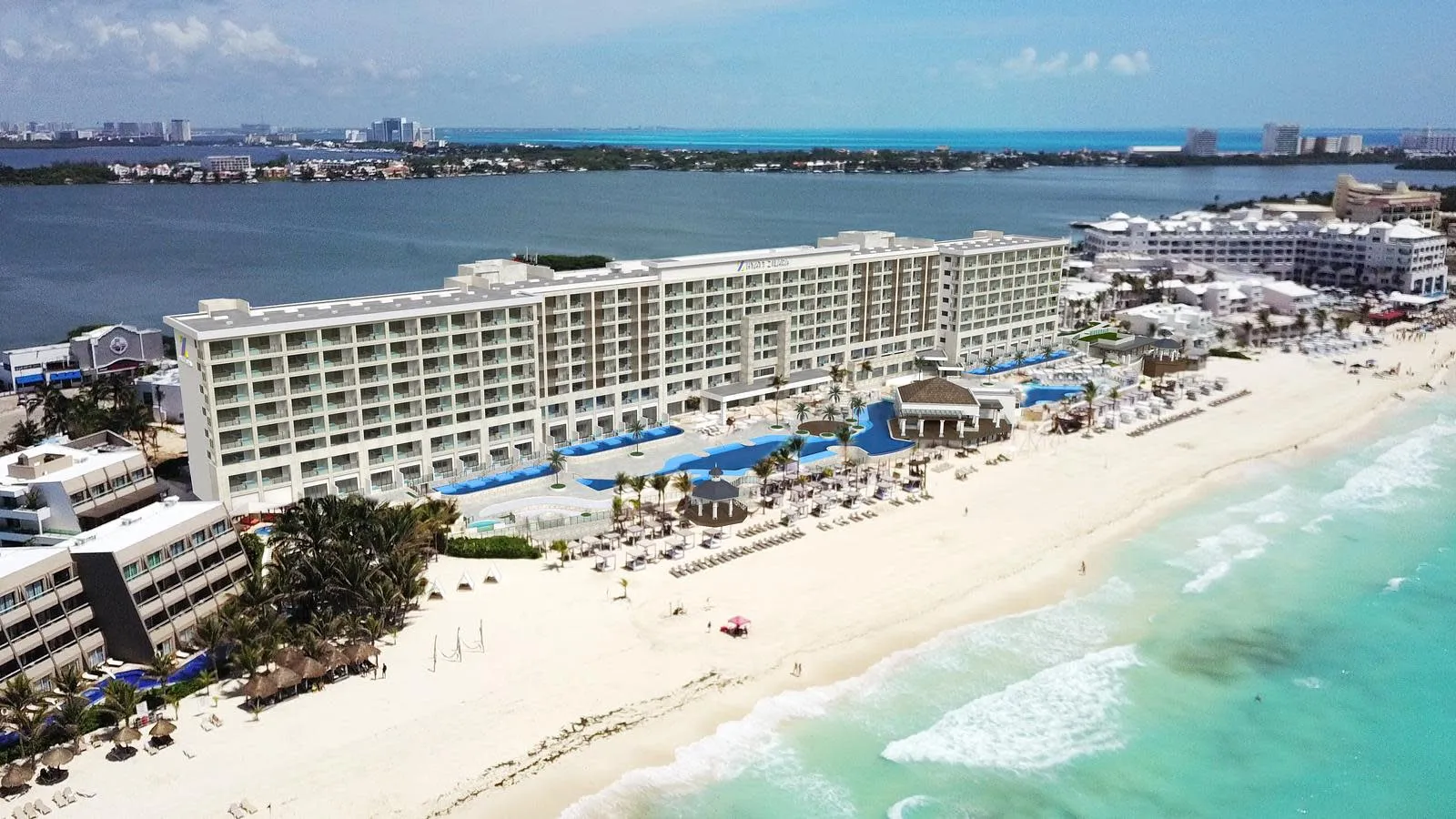
In the high-stakes landscape of Mexican Caribbean hospitality, standing still is the equivalent of moving backward. No property understands this dynamic better than the Hyatt Zilara Cancun. Situated along the prime, palm-fringed sands of Cancun’s legendary Hotel Zone, this adults-only all-inclusive resort has long held a foundational place in the region’s tourism ecosystem. Now, following an extensive, top-to-bottom renovation, the property has officially flung open its doors once more, signaling a bold new chapter for a resort that helped pioneer the modern branded all-inclusive movement.
This is far more than a routine, superficial refresh of a familiar address. Hyatt has completely overhauled the resort’s 310 guest suites, reimagined its expansive public domains, re-engineered its wellness infrastructure, and completely rewritten its culinary identity—culminating in the debut of an exclusive, reservation-only speakeasy.
The timing of this grand reopening is strategically profound. Cancun is currently experiencing an unprecedented wave of ultra-luxury and high-end all-inclusive development, welcoming deep-pocketed competitors and ambitious new builds from virtually every major hotel flag in the world. By taking one of its crown jewels offline for a comprehensive reinvention, Hyatt is not merely defending its historical territory; it is raising the competitive bar for the entire Hotel Zone. For discerning travelers seeking a seamless blend of adults-only sophistication, localized design, and frictionless accessibility from North America, the newly reborn Hyatt Zilara Cancun reasserts itself as a formidable heavyweight in Caribbean luxury.
Detailed Chronology: From 2013 Debut to Modern Masterpiece
To fully appreciate the weight of the resort’s current transformation, one must examine its historical trajectory within Hyatt’s corporate expansion.
2013: Breaking Ground in the All-Inclusive Space
Over a decade ago, the hospitality industry viewed all-inclusive resorts primarily through the lens of mass-market volume rather than bespoke luxury. That paradigm shifted in November 2013, when Hyatt officially inaugurated the Hyatt Zilara Cancun. As the hospitality giant’s very first branded all-inclusive property in the bustling heart of Cancun, the resort served as a proof-of-concept. It demonstrated that discerning travelers would embrace an all-inclusive model built on elevated culinary programs, sophisticated design, and rigorous service standards.
The Intervening Decade: A Rapidly Evolving Market
In the years following the Zilara debut, consumer expectations shifted dramatically. Travelers no longer viewed all-inclusive stays as a compromise on dining or design. Instead, the market demanded hyper-personalized wellness itineraries, experiential dining rooted in local gastronomy, and high-design aesthetics that rivaled traditional European-plan urban luxury hotels.
Recognizing this seismic shift, Hyatt embarked on an aggressive expansion campaign, scaling its footprint across the Caribbean and Mexico. Yet, true hospitality leadership requires looking inward as much as outward. While developing new properties, Hyatt leadership recognized that legacy flagships like the Zilara Cancun required a visionary overhaul to remain competitive against a new generation of hyper-modern resorts.

The Rebirth and Phased Evolution
The recent renovation project spanned months of intensive engineering, interior design updates, and structural enhancements. Every square foot of the property—from the arrival lobby to the beachfront cabanas—was reassessed. The resort transitioned from its traditional early-2010s aesthetic into a sanctuary of contemporary Yucatecan luxury.
Following a soft unveiling and an initial wave of media exposure in the spring, the fully realized resort is now operating at peak capacity. It stands as a physical manifestation of Hyatt’s ongoing portfolio evolution: proving that legacy infrastructure, when paired with modern design sensibilities, can successfully outpace brand-new competitors.
Supporting Context & Metrics: Architecture, Amenities, and Economics
Design and Accommodations: A Nod to the Yucatán
The physical transformation of the resort’s 310 suites is anchored in a deep respect for regional geography and natural textures. Hyatt’s design teams deployed a warm, earthy color palette, incorporating local artwork and handcrafted details that pay homage to the Yucatán Peninsula.
Despite the fresh interior design, the architectural core of the resort remains focused on its primary asset: the Caribbean Sea. Every category of accommodation—ranging from expansive ocean-view junior suites to coveted swim-up rooms and ultra-luxurious presidential quarters—is engineered to frame the striking turquoise waters of the Hotel Zone.
- Ocean View Junior Suite King: Measuring an impressive 653 square feet, these entry-level luxury accommodations defy standard hotel room sizing. They feature furnished private balconies complete with hammocks, spa-inspired rain showers, and double jetted tubs designed for romantic relaxation.
- Swim-Up Accommodations: Tailored specifically for aquatic enthusiasts, these suites grant guests direct access to pool spaces straight from their private terraces.
- Premium & Presidential Suites: Reserved for extended stays or travelers seeking maximum square footage, these spaces offer elevated amenities, priority concierge services, and oversized living areas.
Public Spaces and the Zen Spa
Beyond the guest rooms, the transformation extends across the property’s expansive grounds. The pool decks and beachfront have been entirely recrafted, featuring upgraded architectural shading, premium loungers designed for all-day comfort, and an optimized beachfront footprint that maximizes guest privacy.
Simultaneously, the resort’s signature Zen Spa underwent a complete reimagining. It now boasts state-of-the-art hydrotherapy circuits, multisensory treatment rooms, and an expanded, holistic wellness program designed to counter the stresses of modern urban life.
The Culinary Revolution and the All-Inclusive Race
In the contemporary all-inclusive arena, food and beverage programs are the ultimate battleground. Historically, resorts competed on the sheer volume of their buffet lines. Today, the metric for success is culinary authenticity and scarcity.
Hyatt Zilara Cancun overhauled all 12 of its dining and drinking venues, transforming the property into a gastronomic destination. The crown jewel of this culinary overhaul is Bokeh, an intimate, reservation-only speakeasy with a strict capacity of just 23 guests. Housed within an Art Deco-inspired hideaway, the 90-minute experience pairs craft mixology, boutique wines, and live musical performances.
Other notable dining concepts include:
- Casa Adelita: An exclusive, small-format Yucatecan dining concept limited to a single daily seating of 10 guests, offering an immersive dive into indigenous Mexican flavors.
- Olio D’Olivia: A waterfront Italian venue focusing on artisanal pastas, rich risottos, and coastal-inspired dishes.
This pivot toward micro-dining experiences reflects a broader industry truth: travelers increasingly value intimacy, exclusivity, and storytelling over generic dining halls.
Pricing Dynamics and Market Positioning
A review of recent booking data via digital hotel aggregators illustrates the dynamic nature of luxury resort pricing. Following the initial unveiling of the renovated property, peak snapshots registered rates hovering around $644 per night. However, subsequent rate checks for fall travel placed entry-level all-inclusive rates at $546 per night (based on rates retrieved on September 1).
This pricing architecture positions the Hyatt Zilara Cancun in a sweet spot of the adult-only luxury market:
- It sits comfortably above standard upper-midscale all-inclusives, ensuring an upscale clientele and high service ratios.
- It remains accessible compared to the newest ultra-luxury all-inclusive products debuting across the Mexican Caribbean, offering exceptional value for money when factoring in premium dining, top-shelf spirits, and upscale accommodations.
Unrivaled Logistics: The South Florida Connection
For international travelers, logistical ease is a major component of vacation planning. Geographically, Cancun remains an unbeatable proposition for North American travelers, particularly those departing from South Florida.
- Flight Times: Nonstop flights from Miami International Airport (MIA) to Cancún International Airport (CUN) consistently clock in at under two hours.
- Ground Transit: Upon arrival, the resort sits approximately 20 minutes away by car. Located at kilometer 11.5 of Boulevard Kukulcan, the property occupies a prime central position within the Hotel Zone, sparing guests the lengthy, grueling transfers often required for remote properties in Costa Mujeres or the southern reaches of the Riviera Maya.
Official Statements and Industry Perspective
The philosophy behind the multi-million-dollar renovation is best summarized by those steering the ship. General Manager Eduardo Rojas encapsulated the resort’s operational ethos during the rollout:
“These new enhancements blend modern luxury with local character.”
This sentiment is echoed throughout the broader hospitality analyst community. Industry watchers note that Hyatt’s strategy with the Zilara Cancun is a masterclass in asset lifecycle management. Rather than letting a pioneer property age gracefully into obsolescence, the corporate parent chose to inject capital where it matters most: experiential dining, wellness infrastructure, and localized interior design.
By doing so, Hyatt ensures that the property can successfully go toe-to-toe with newer market entrants, such as the upcoming regional debut of Park Hyatt’s all-inclusive concept in the neighboring Riviera Maya. Where new builds must work to establish a reputation, the Hyatt Zilara Cancun leverages its decade-old brand equity while offering a product that feels entirely brand new.
Future Outlook: The Next Decade of Adults-Only Luxury in Cancun
As the Mexican Caribbean continues to absorb wave after wave of hospitality investment, the definition of luxury all-inclusive travel will keep evolving. The successful relaunch of the Hyatt Zilara Cancun provides a clear blueprint for how legacy properties can thrive in an increasingly crowded marketplace.
Looking ahead, the property is well-positioned to capitalize on several accelerating travel trends:
- The Experience Economy: The success of venues like Bokeh and Casa Adelita proves that modern travelers crave curated, hard-to-get experiences over passive consumption.
- Wellness Integration: With the revamped Zen Spa and expanded holistic programming, the resort meets the surging global demand for health-conscious travel.
- Frictionless Escapes: The combination of a rapid two-hour flight from South Florida, a brief 20-minute airport transfer, and a fully comprehensive all-inclusive structure makes the resort an ideal vehicle for the modern weekend micro-cation as well as extended romantic getaways.
Ultimately, the return of the Hyatt Zilara Cancun is not merely the reopening of a hotel; it is the revitalization of a destination anchor. By marrying its trusted historical address with cutting-edge design, intimate culinary concepts, and a steadfast commitment to an adults-only ethos, Hyatt has ensured that one of Cancun’s original luxury pioneers will remain a dominant force in the conversation for the next decade and beyond.