







By Luis Estévez-Salmerón, Associate Director, International Government Relations
Published in partnership with global environmental news networks
Executive Overview
As the global community faces a fractured geopolitical landscape and a profound crisis of institutional fatigue, multilateralism is arguably experiencing its most precarious era in modern history. Traditional avenues of international cooperation—particularly those anchored within United Nations frameworks—are continuously strained by rising nationalist tensions, shifting economic priorities, and diplomatic gridlock. Yet, amid this systemic drift, the natural world continues its relentless transformation, demanding urgent, coordinated intervention.
Nowhere is this imperative more pronounced than in the Earth’s life support system: the global ocean.
This June, political leaders, scientists, civil society advocates, and philanthropic pioneers will converge in Mombasa, Kenya, for the 11th Our Ocean Conference. Scheduled for June 16–18, 2026, this high-stakes summit arrives at a watershed moment. The planetary threats facing our marine environments—accelerating ocean warming, severe acidification, runaway biodiversity loss, and the ever-expanding tide of plastic pollution—do not pause for political stalemates or electoral cycles.
Rather than retreating into isolationism or waiting for ideal geopolitical conditions, the global community must leverage the historic momentum of the Our Ocean platform to secure concrete, enforceable commitments. From the bustling artisanal fishing villages of the Chilean coastline to the shores of East Africa, the message is unequivocal: the ocean remains our greatest planetary equalizer, and safeguarding its future is not merely an environmental preference, but an absolute existential prerequisite.
Detailed Chronology: From Regional Roots to Global Mobilization
Growing Up Along the Pacific Rim
To understand the urgency of marine conservation is to understand the intimate relationship humanity shares with the sea. Growing up in Chile—a nation that traces a slender, resilient ribbon of land between the snow-capped majesty of the Andes and the sprawling expanse of the Pacific Ocean—the sea was never perceived as mere scenery. With more than 4,000 kilometers of rugged coastline, Chile’s identity is inextricably bound to the tides.
For generations, artisanal fishermen, coastal cooperatives, and entire families have drawn their livelihoods directly from the Pacific. They understand the ocean’s rhythms, its generosity, and its fragility. This localized perspective mirrors a global truth: hundreds of millions of people worldwide rely on marine ecosystems for food security, economic stability, and cultural survival.
The Evolution of the Our Ocean Conference
Recognizing that marine degradation transcends national boundaries, the international community required an agile, results-oriented mechanism to bypass traditional diplomatic inertia. Launched over a decade ago, the Our Ocean Conference was conceived not as a talkingshop, but as a transaction-based platform designed to secure measurable, high-impact commitments from diverse stakeholders.
Since its inception, the conference has mobilized an extraordinary 2,900-plus commitments valued at approximately $169 billion. These resources have directly translated into tangible on-the-water results: the designation of vast marine protected areas (MPAs), the enhancement of maritime security protocols, the funding of sustainable blue economies, the modernization of fisheries management, and the deployment of robust climate-resilience infrastructure across vulnerable coastal states.
Crucially, the success of the Our Ocean model lies in its uncompromising accountability. Governments, non-governmental organizations (NGOs), private sector leaders, and philanthropic institutions do not merely make abstract pledges; they are held to transparent reporting standards regarding the delivery and execution of their investments.
The Road to Mombasa (2026)
Over the years, organizations like Ocean Conservancy have maintained an unbroken presence at every iteration of the conference. As the summit prepares for its historic gathering in Mombasa, Kenya, the agenda has expanded to meet the compounding realities of the twenty-first century.
The 11th conference will focus heavily on intersecting fronts:
- Ocean-Climate Diplomacy: Integrating marine health directly into global climate policies and Nationally Determined Contributions (NDCs).
- A Fossil Fuel-Free Ocean: Accelerating the transition away from offshore drilling and marine-based carbon intensive activities.
- Responsible Offshore Renewable Energy: Scaling wind and wave power while rigorously safeguarding local marine habitats.
- Combating Plastic Scourge: Building international coalitions to tackle consumer plastic waste and eradicate abandoned, lost, and discarded fishing gear (ALDFG)—often referred to as "ghost gear."
Yet, even among these monumental priorities, a newly emerging frontier demands immediate international attention: the protection of the ocean’s deep, uncharted twilight zone.
Supporting Context & Metrics: The Crisis of the "Twilight Zone"
While coastal waters and shallow coral reefs receive significant global attention, the deeper realms of the marine ecosystem remain dangerously vulnerable to commercial exploitation before science has even fully mapped their intricacies.
Unlocking the Secrets of the Mesopelagic Zone
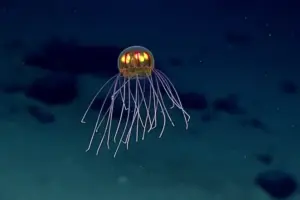
The mesopelagic zone, colloquially known as the "twilight zone," spans depths of 200 to 1,000 meters beneath the ocean’s surface. Long dismissed as a barren underwater desert, modern marine science has revealed it to be one of the most critical, dynamic ecosystems on Earth.
- Biomass Abundance: Conservative scientific estimates suggest that the twilight zone harbors upwards of 90% of the entire ocean’s fish biomass.
- Trophic Connectivity: It serves as the primary feeding ground for a vast array of prey species that, in turn, sustain commercially vital fisheries, majestic marine mammals, and apex predators.
- The Biological Carbon Pump: Through natural vertical migrations, twilight zone organisms actively transport carbon from surface waters down into the deep ocean. This biological pump sequesters an estimated 2 to 6 gigatons of carbon annually—roughly double the total annual emissions of all passenger cars worldwide. This process is an indispensable mechanism for global climate stability.
The Threat of Premature Exploitation
Despite its planetary importance, the mesopelagic zone remains largely unprotected by international legal frameworks. In recent years, a surging global demand for fishmeal, aquaculture feed, and marine-derived health supplements has driven intense commercial interest toward harvesting the biomass of the twilight zone.
Allowing industrial fishing fleets to vacuum up the mesopelagic zone without precautionary management could trigger catastrophic, irreversible cascades across the entire marine food web while critically disrupting the ocean’s natural carbon sequestration capacity.
The Mesopelagic Zone Conservation Challenge
To preempt this looming crisis, Ocean Conservancy, alongside the Environmental Defense Fund, the Marine Conservation Institute, and a coalition of global partners, is launching the Mesopelagic Zone Conservation Challenge at the Mombasa conference.
This ambitious voluntary initiative unites governments, leading research institutions, and civil society organizations under a unified mandate:
- Enforce a Precautionary Approach: Halt unchecked commercial expansion until robust scientific baselines are established.
- Accelerate Scientific Research: Fund deep-sea monitoring to fully understand species interactions and carbon dynamics.
- Integrate Protections: Embed twilight zone conservation metrics directly into regional and international fisheries management frameworks.
This initiative builds upon critical foundational momentum established last year, when the International Union for Conservation of Nature (IUCN) World Conservation Congress adopted Resolution 035, formally urging member states worldwide to protect the structural and ecological integrity of the mesopelagic zone.
Official Statements & Stakeholder Perspectives
The converging crises of climate change, biodiversity loss, and systemic pollution form what scientists and policymakers increasingly term the "triple planetary crisis." These threats do not operate in silos; they amplify one another within the marine environment, compounding the pressure on coastal communities and global supply chains.
Speaking on the imperative of collective action ahead of the Mombasa summit, international policy advocates emphasize that institutional fatigue must not breed apathy.
"We meet in Mombasa at a deeply challenging time for multilateralism. Processes we have long relied upon, including those hosted by the United Nations, face real geopolitical headwinds, competing national priorities, and institutional weariness," notes Luis Estévez-Salmerón, Associate Director of International Government Relations.
"It would be easy to retreat—to wait for better, calmer political conditions. But the ocean cannot wait. The ocean is warming and acidifying. Biodiversity loss is accelerating. Plastic pollution chokes coastlines from Mombasa to Valparaíso. This is precisely why platforms like the Our Ocean Conference matter more than ever: they prove that concrete action remains possible when nations choose collaboration over isolation."
Environmental leaders stress that the ocean acts as a diagnostic mirror for the planet. It absorbs over 90% of excess heat generated by anthropogenic greenhouse gas emissions and roughly a quarter of all carbon dioxide emissions.
"The ocean does not care about geopolitics," Estévez-Salmerón adds. "It does not pause for elections or diplomatic negotiations. It continues to warm, to acidify, to absorb our plastics and our carbon. And it continues to sustain billions of people who depend on its health for their very survival."
Future Outlook: A Call to Action from the Global South
As the international community gathers on the shores of East Africa, the stakes could not be higher. The 2026 Our Ocean Conference offers a definitive litmus test: can global leaders rise above fragmented national interests to secure the future of our shared blue planet?
The path forward requires an unyielding commitment to multilateral cooperation, transparency, and science-based management. Whether it is phasing out fossil fuels, curbing the influx of plastic waste, or establishing rigorous protections for the fragile twilight zone, the solutions exist. What is required is the political will to implement them at scale.
In the words of Chile’s legendary Nobel laureate and poet, Pablo Neruda:
“Necesito del mar porque me enseña.”
(I need the sea because it teaches me.)
The ocean continues to teach us profound lessons about resilience, interdependence, and survival. It asks nothing of humanity save for our attention and our action. As the delegates take their seats in Mombasa, the global community must heed that lesson, recognizing that in protecting the ocean, we are ultimately protecting ourselves.
For ongoing updates, commitments tracking, and live coverage from the 11th Our Ocean Conference in Mombasa, Kenya, subscribe to marine conservation alerts and stay engaged with international environmental policy updates.