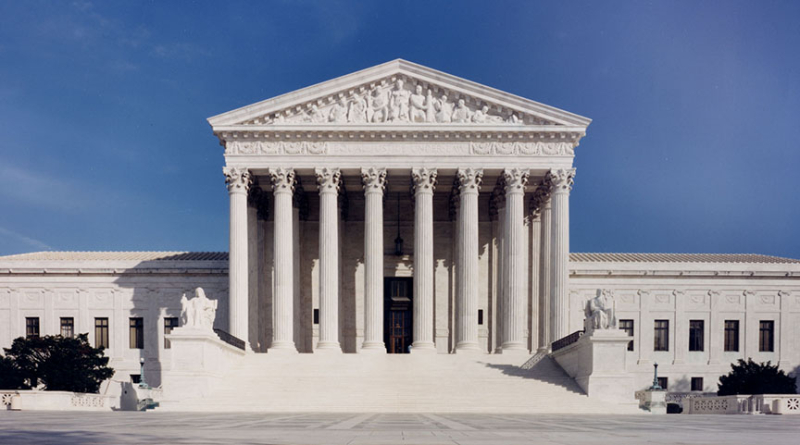
At first glance, a publication dedicated to clean technology, renewable energy transitions, and the global decarbonization movement might seem out of its depth wading into the murky waters of federal judicial reform. After all, what do lifetime appointments, appellate court sizes, and constitutional jurisprudence have to do with solar arrays, wind turbines, and electric vehicles?
The answer is deceptively simple and profoundly consequential: everything.
Across the United States, a conservative judicial apparatus—cultivated over decades by well-resourced special interest networks—has steadily dismantled the legal and administrative architecture designed to protect public health, curb carbon emissions, and manage environmental commons. When the highest court in the land creates fictional doctrines to shield the fossil fuel industry, chips away at fundamental voting rights, or threatens bedrock protections like the EPA’s Endangerment Finding, judicial oversight becomes a direct bottleneck to climate progress.
This deep entanglement between the federal judiciary and energy policy has reignited a fierce national debate over the structural integrity of the Supreme Court. From proposals to expand the bench to 13 justices to demands for staggered 18-year term limits, civil rights advocates, legal scholars, and everyday citizens are asking a foundational question: How can a democracy successfully pivot toward a clean energy future when its apex court is captured by ideological interests? This investigation explores the intersection of judicial reform, historical precedent, and environmental governance, examining why mending a broken institutional framework may be the most critical climate strategy of our time.
Detailed Chronology: A Multi-Decade Institutional Capture
To understand the current crisis facing the federal judiciary, one must look beyond the immediate political dogfights and examine a multi-decade strategy executed by ideological architects. For over sixty years, a coordinated network of conservative foundations, libertarian think tanks, and fossil fuel beneficiaries—most notably spearheaded by networks funded by billionaires like Charles and David Koch—methodically built a pipeline for grooming, vetting, and appointing judges who would look favorably upon corporate deregulation and state rollback.
This long game reached structural fruition during the Obama administration, when Republican leadership in the Senate, masterminded by Senator Mitch McConnell, initiated unprecedented procedural roadblocks. The strategy peaked in 2016 with the historic refusal to hold confirmation hearings for Supreme Court nominee Merrick Garland, effectively holding a vacant seat open for nearly a year. Conversely, the rules were rapidly altered years later to fast-track appointments in the closing weeks of alternative electoral cycles, cementing a conservative supermajority.
Concurrently, legislative bodies have spent decades abdicating their constitutional responsibilities. Rather than casting votes on controversial environmental or regulatory frameworks that might haunt them at the ballot box, members of Congress across both major parties routinely outsourced power to executive agencies—and, by extension, to the courts.
As these institutional norms frayed, the Supreme Court began systematically rewriting the rules of administrative law. Landmark rulings—such as those undermining the Chevron deference doctrine or threatening the EPA’s Endangerment Finding—have effectively transferred regulatory authority from trained scientific experts to a lifetime-appointed judicial branch whose members frequently hold direct financial stakes in the very industries petitioning for deregulation.
Supporting Context & Metrics: Public Sentiment and Historical Precedents
As frustration with judicial overreach boils over, public discourse has shifted from quiet academic debates to urgent demands for systemic overhaul. Recent pulse-checking data highlights a stark disconnect between the American public and the immovable nature of the Supreme Court.
A September public opinion poll conducted by veteran Florida news correspondent JC Bruce provides a revealing window into voter sentiment. When asked whether the Supreme Court should be expanded, remain at nine members, or be otherwise altered, roughly 60 percent of respondents supported expanding the bench, while only 32 percent favored maintaining the status quo. On the question of implementing term limits for justices, the response was virtually unanimous: 99 percent of participating voters favored term limits, with just 1 percent opposed.
The Historical Mutability of the Court
Defenders of the current system often invoke the sacred permanence of a nine-member bench, framing any structural alteration as an assault on American traditions. Yet, historical facts tell a different story. The United States Constitution does not enshrine the number nine; it leaves the sizing of the Supreme Court entirely up to Congress.
Throughout the 19th century, the size of the bench fluctuated frequently in response to national expansion and shifting judicial districts. During the Reconstruction era following the Civil War, the court size ranged from as many as ten justices to as few as six. At the time, these adjustments were deployed as mechanisms to integrate readmitted states and enforce the newly minted promises of the 14th Amendment.
Today, the structural argument for expansion is equally grounded in administrative reality. When the nine-member standard was firmly established, the federal judiciary was divided into nine distinct judicial circuits, creating a logical tie between circuit oversight and Supreme Court oversight. In the modern era, the federal court system has expanded to thirteen judicial districts. Proponents of court expansion argue that scaling the bench to match the thirteen circuits provides a clear, rational administrative framework—though critics warn that simply changing numbers is no panacea.
Official Statements & Expert Perspectives
Navigating the minefield of judicial reform requires separating genuine institutional repair from partisan wishful thinking. Experts across legal and civil rights advocacy fields offer starkly different warnings and blueprints for the future.
Gabe Roth, executive director of the nonpartisan watchdog group Fix the Court, cautions against viewing structural expansion as a magical silver bullet. In an interview with JC Bruce, Roth dismissed both the rigid "Keep Nine" defense and uncalculated expansionist demands as cynical strategies.
"I think it just is part of this magical thinking that all of a sudden we’re going to have 13 justices and everything is going to be okay in the federal judiciary," Roth noted. "That voting rights will come back, abortion rights will come back, and that’s not how cases reach the court."
Instead, Roth advocates for phased-in, regularized term limits—a standard practiced by nearly every other modern democracy and mirrored in 49 out of 50 U.S. state apex courts. Pointing to legislation introduced by Representative Ro Khanna, Roth supports an 18-year service cap that ensures every presidential administration gets an equal opportunity to nominate two justices during a standard four-year term (specifically in their first and third years). This would eliminate the chaotic lottery system of modern confirmations, where one president may secure multiple lifetime appointments while another secures zero.
Lessons from Reconstruction
Looking back to the post-Civil War era, David Gans, director of the Human Rights, Civil Rights, and Citizenship Program at the Constitutional Accountability Center, emphasizes that structural court reform must go hand-in-hand with expanding federal jurisdiction. Writing on lessons from Reconstruction via analysis published in Salon, Gans observed that while Congress successfully utilized legislative tools like the Habeas Corpus Act of 1867 and Section 1983 to empower federal courts, a regressive Supreme Court ultimately gutted the 14th Amendment to appease shifting national moods on racial justice.
"Reconstruction provides an important reminder that Congress has many tools available to it to ensure that the Supreme Court and the federal judiciary upholds our whole Constitution’s bedrock promises of liberty and equal justice," Gans stated. However, he warned that without a fundamental shift in institutional accountability, simply shifting the composition of the court risks repeating historical failures where new appointees still succumbed to prevailing political regressions.
Opponents of court reform, meanwhile, maintain that expanding the bench threatens judicial independence. Representative Andy Biggs of Arizona, who introduced a constitutional amendment in Congress to permanently lock the Supreme Court at nine members, argued that such measures are vital to protect the institution from being weaponized by shifting political majorities.
"This action will protect the Court’s legitimacy, preserve the checks and balances that safeguard our cherished freedoms, and ensure every American’s rights remain secure — no matter who holds political power," Biggs claimed during congressional debates. Critics, however, counter that the court’s legitimacy has already been severely compromised by partisan capture, making defensive arguments for the status quo ring hollow.
Future Outlook: Reclaiming Democratic Integrity
As the United States stares down existential threats—ranging from the accelerating climate crisis and biodiversity collapse to rising economic inequality—the functionality of its governing institutions has never been more critical.
Fixing a broken federal judiciary requires moving past superficial fixes and tackling systemic corruption at its roots. Beyond structural reforms like 18-year term limits and bench adjustments, lawmakers must institute rigid ethical constraints. Allowing members of Congress, the executive branch, or Supreme Court justices to trade individual stocks in industries directly impacted by their regulatory decisions is a glaring conflict of interest. Implementing comprehensive bans backed by punitive financial penalties—such as fines three times the size of any realized gains—would be a vital step toward restoring public trust.
Ultimately, adding a handful of judges to the Supreme Court will not heal a democratic body politic suffering from deep structural decay. True reform demands a courageous Congress willing to reclaim its constitutional duties, resist the pull of special interest funding, and rededicate itself to the foundational principle of equal justice under law. For the clean energy movement, environmental advocates, and citizens alike, the message is clear: protecting the planet requires first protecting the integrity of the democratic instruments built to govern it.