








Executive Overview
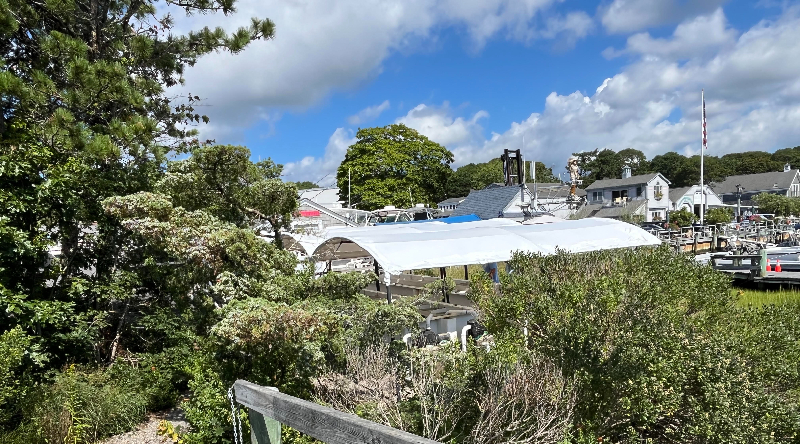
Along the historic coastline of Cape Cod, Massachusetts, a quiet ecological revolution is unfolding beneath the surface of its picturesque harbors and serene bays. While classic New England aesthetics—weathered shingle homes, docked pleasure craft, and the omnipresent scent of salt and seaweed—define the upper Cape landscape, an innovative environmental strategy is taking root in the water. Towns facing stringent regulatory, environmental, and legal mandates to restore declining water quality are increasingly looking past traditional civil engineering solutions. Instead, they are turning to an unexpected, highly efficient ally: shellfish aquaculture.
In Falmouth, local authorities have discovered that cultivating millions of filter-feeding bivalves, primarily oysters, offers a powerful, nature-based mechanism to extract excess nitrogen from fragile estuarine ecosystems. What began as an exploratory measure to comply with the federal Clean Water Act has evolved into a rapidly expanding municipal framework. Backed by sophisticated geographic information systems (GIS) and robust community-private partnerships, Falmouth is dramatically scaling up its aquaculture footprint.
By transforming sustainable seafood production into an environmental management tool, the town is simultaneously cleaning its waters, boosting local economies, and creating a scalable model for coastal communities nationwide. This investigative report examines the mechanics, metrics, and broader implications of Falmouth’s pioneering approach to ecological restoration.

Detailed Chronology: From Regulatory Pressure to Municipal Expansion
The integration of commercial and municipal shellfish farming into Cape Cod’s infrastructure was not born out of a desire for agricultural expansion alone; it was forced by urgent environmental necessity.
The Regulatory Catalyst (Pre-2018)
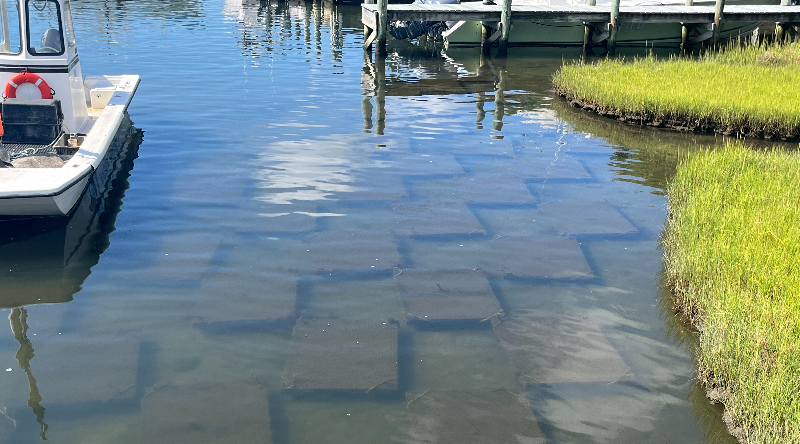
For decades, Cape Cod’s densely populated watersheds have suffered from chronic nitrogen loading, driven largely by traditional septic systems, wastewater runoff, and historical land-use patterns. This nutrient surplus triggers severe eutrophication, leading to oxygen-depleted dead zones, rampant algae blooms, and the degradation of critical fish and shellfish habitats.
Faced with stringent Total Maximum Daily Load (TMDL) requirements mandated by state and federal clean water laws, the Falmouth Select Board tasked its Water Quality Management Committee with identifying cost-effective, environmentally sound alternatives to traditional, multi-million-dollar sewering projects. For years, the town analyzed various non-traditional remediation methods. Among them, shellfish aquaculture emerged as an option that was not only quantitatively proven to remove nitrogen, but was also deeply rooted in the cultural fabric of Cape Cod and warmly embraced by the community.
Establishing the Framework (2018–2020)
A pivotal study published in 2018 by Roger Williams University detailed how Falmouth was developing a comprehensive Rotational Aquaculture Plan. Designed to permit limited private and municipal shellfish farming, the plan aimed to harness estuarine ecosystems to meet legal water quality obligations while generating economic benefits for all water users.
To streamline the permitting and site-selection process, the initiative adopted MA-ShellfAST—an online aquaculture siting tool supported by the NOAA Sea Grant Aquaculture Extension and Technology Transfer program. This GIS-based platform synthesized complex environmental, legal, and municipal data layers into an interactive map. It allowed prospective growers and regulatory agencies to evaluate biophysical characteristics, avoid navigational and ecological conflicts, and map out proposed sites before submitting formal applications.
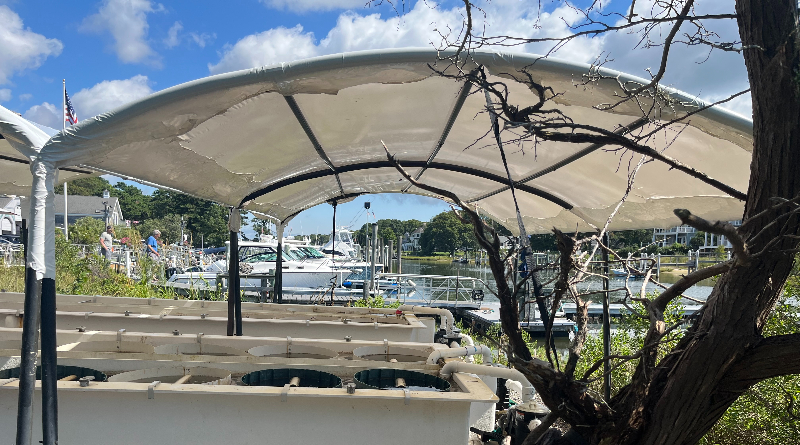
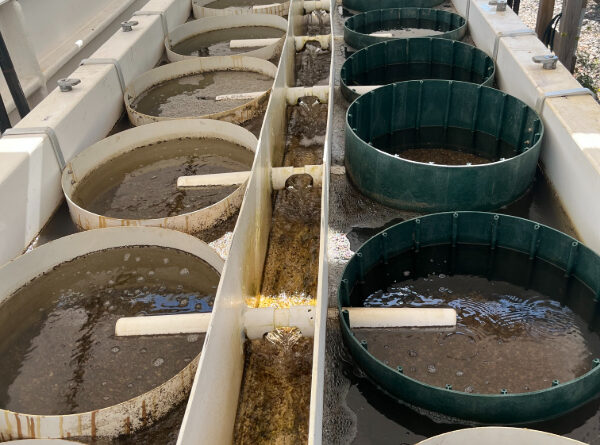
By 2020, commercial momentum was clearly visible. Operations like Ward Aquafarms began deploying their initial rounds of seed oysters into the Eel River, utilizing land-based upwellers during the fragile nursery phase before transferring maturing bivalves to grow-out bags in local waters. Shellfish farms soon dotted the landscape, establishing footprints in the Eel River, Seapit River, Megansett, and along the Nantucket Sound coastline.
Scaling Up for the Future (2025 and Beyond)
The success of these early pilot programs paved the way for massive structural growth. In 2025, Deputy Director R. Charles Martinsen III presented an ambitious roadmap to the Falmouth Water Quality Management Committee, announcing plans to more than quadruple the town’s aquaculture acreage.
The program was slated for an expansion ranging from 80 to 140 active acres, scaling up production targets to a staggering 1.3 million oysters. Far from being a financial drain on taxpayers, the program was engineered to be self-sustaining. Commercial growers pay the municipality leasing fees of roughly $19,600 per farm and have the option to rent specialized growing gear, such as floats and mesh bags. All revenue generated through these leases is funneled directly into a dedicated revolving account used exclusively to purchase the next generation of shellfish seeds.
Supporting Context & Metrics: The Science of Bivalve Filtration
To truly understand why Falmouth is betting its environmental future on oysters, one must examine the hard data regarding nitrogen remediation costs and ecological efficiency.
Quantifying Nitrogen Removal
Oysters are natural biological filters. As they feed on phytoplankton and suspended organic matter, they absorb and sequester nitrogen within their tissue and shells. When the mature oysters are harvested and removed from the water column, that nitrogen is permanently extracted from the local ecosystem.
Data collected between 2021 and 2024 from aquaculture projects in the Eel River provided undeniable proof of concept. According to presentations by Water Quality Management Committee member Thomas Duncan, the shellfish harvested from the Eel River removed an amount of nitrogen equivalent to the entire waste output produced by 26 single-family homes.
A Comparative Cost Analysis
When evaluated against alternative engineering approaches to nutrient management, the financial advantages of aquaculture become starkly apparent:
- Shellfish Aquaculture: Yields high-volume nitrogen extraction at a fraction of the capital cost, heavily subsidized by private growers who turn a profit on the harvested product.
- Urine-Diverting Systems: While effective at source separation, decentralized approaches carry significant household infrastructure costs, averaging roughly $2,088 per equivalent unit of nitrogen removed.
- Innovative & Alternative (I/A) Septic Systems: Upgrading residential wastewater infrastructure with advanced denitrifying septic systems requires enormous capital investment, running approximately $1.17 million for an equivalent scale of nitrogen reduction.
While aquaculture alone cannot completely solve Cape Cod’s complex nitrogen crisis, it serves as an indispensable, low-impact tool when paired with centralized sewering, progressive zoning, and upgraded septic technologies.
Official Statements and Local Insights
The success of Falmouth’s aquaculture program is rooted in a collaborative ecosystem involving municipal leaders, academic institutions, and commercial growers who view environmental stewardship as an economic engine.
"The potential acreage for aquaculture is expanding, more than quadrupling what we have now," noted Deputy Director R. Charles Martinsen III during his briefing to the Water Quality Management Committee, highlighting the municipal commitment to scaling up nature-based remediation.
Commercial entities have similarly praised the unique geographic and chemical advantages of the upper Cape. The Cape Cod Oyster Company, which operates a sprawling 22.8-acre farm within the Seapit River, emphasizes that its location is "ideally suited for aquaculture." Fed by nutrient-rich freshwater runoff from the Moonakis and Little Rivers and flushed by clean saltwater tides from Vineyard Sound, the estuary creates optimal chemical conditions for rapid bivalve growth and exceptional flavor profiles.
Local researchers also emphasize the value of regional testbeds. The 2,800 acres of land and water managed by the Waquoit Bay National Estuarine Research Reserve provide a pristine, highly monitored platform for scientific investigation. Having supported hundreds of studies over three decades, Waquoit Bay stands as one of the most thoroughly analyzed estuaries in the Northeast. Collaborative projects bridging academic research, state agencies, and commercial harvesters ensure that every expansion phase is rigorously monitored for ecological balance.

Furthermore, the industry’s resurgence marks a historic full circle for Cape Cod. While the region’s initial natural abundance of wild oysters was practically exhausted by 1840—prompting early, rudimentary transplanting efforts—today’s resurgence is powered by advanced disease-resistant strains, specialized scientific hatcheries, refined winter-storage techniques, and sophisticated market demand.
Future Outlook: A Blueprint for Coastal Resilience
As climate change, rising coastal temperatures, and intensified human development continue to pressure marine ecosystems, municipal leaders across the United States are searching for scalable, cost-effective resilience strategies. Falmouth’s integrated aquaculture model provides a compelling blueprint.
By leveraging tools like MA-ShellfAST to optimize spatial planning, communities can eliminate regulatory guesswork, avoid user conflicts, and fast-track ecological recovery projects. Moreover, the economic self-sufficiency of the model—where lease revenues directly fund seed propagation—proves that environmental conservation does not have to rely solely on perpetual public subsidies.
For the residents, commercial fishers, and visitors who walk down the gravel driveways toward the Falmouth harbors, the presence of these burgeoning oyster farms represents far more than a thriving local seafood industry. Every harvested shell is a testament to an innovative marriage of ecology and economy—proving that sometimes, the most sophisticated solution to modern pollution is found by letting nature get back to work.