







Executive Overview
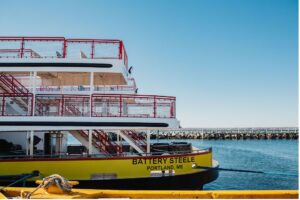
The maritime transportation landscape of northern New England is undergoing a quiet yet profound revolution. In the crisp dawn of early April, the shipyard of Senesco Marine in North Kingstown, Rhode Island, played host to a time-honored maritime tradition: the ceremonial smashing of a champagne bottle against a hull, marking the launch of the Battery Steele. Today, that 164-foot steel vessel has officially entered the open waters of the Atlantic Ocean, making its steady northward journey up the craggy New England coastline toward its permanent home in Portland, Maine.
For Casco Bay Lines and the tight-knit community of Peaks Island, this milestone represents far more than a routine fleet upgrade. The Battery Steele is not merely a replacement for the aging Machigonne II; it is a technological marvel and a statement of intent. Equipped with one of the first cutting-edge diesel-electric hybrid propulsion systems ever deployed on a public passenger ferry in the United States, the vessel bridges the gap between industrial maritime heritage and a zero-emission future.
As the ship navigates toward Portland this summer—where it will undergo rigorous final commissioning and comprehensive crew training before entering service in the fall—it brings with it the promise of cleaner air, quieter waters, and a modernized transit infrastructure. In an era where coastal communities face the dual pressures of climate change and growing populations, the Battery Steele offers a compelling blueprint for sustainable public transportation. By merging advanced battery storage technology with traditional shipbuilding craftsmanship, Casco Bay Lines is charting a course that honors local history while fearlessly embracing the demands of tomorrow.
Detailed Chronology: From Concept to Open Waters
The journey of the Battery Steele from a conceptual blueprint to an ocean-going reality is a testament to years of meticulous planning, engineering ingenuity, and cross-state collaboration.
Phase I: The Vision and Design
The genesis of the project lies in Casco Bay Lines’ comprehensive Fleet Evaluation Project. Recognizing the limitations of aging infrastructure and conventional diesel-mechanical propulsion, transit planners and naval architects sought a design that could meet the rigorous, year-round demands of the Casco Bay route while dramatically reducing the organization’s carbon footprint.
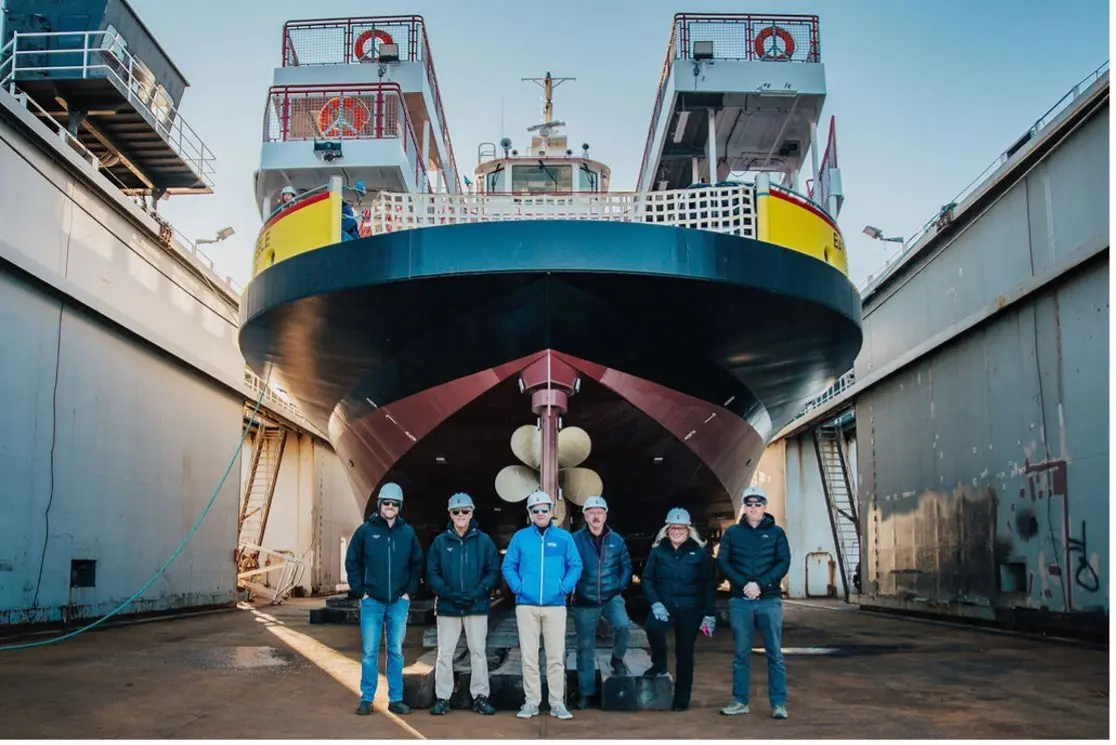
The task of bringing this vision to paper fell to the renowned Elliott Bay Design Group. The naval architects were charged with a complex mandate: design a vessel capable of handling Maine’s volatile coastal weather, accommodating both walk-on passengers and vehicles, and integrating an unprecedented hybrid propulsion architecture without sacrificing reliability or passenger capacity. The result was a robust, 164-foot steel design centered around an advanced energy storage system.
Phase II: Construction at Senesco Marine
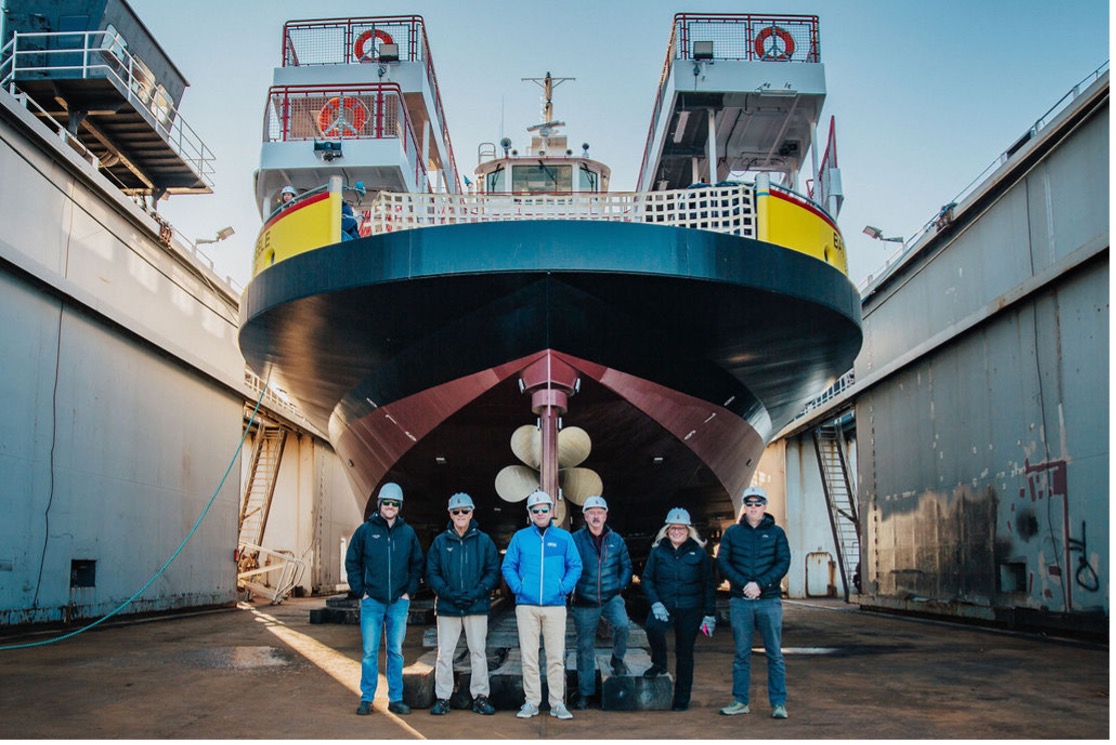
With blueprints finalized, the construction contract was awarded to Senesco Marine, a premier shipbuilder located along the industrial waterfront of North Kingstown, Rhode Island. Over many months, skilled shipwrights, marine electricians, and metalworkers brought the Battery Steele to life.
The construction process required absolute precision. Unlike standard diesel ferries, the Battery Steele required the integration of heavy-duty marine battery banks, sophisticated power management systems, and specialized shoreside charging interfaces. Every weld, cable run, and structural reinforcement was executed to meet the exacting standards of the United States Coast Guard and modern maritime classification societies.
Phase III: The April Launch and Atlantic Transit
The culmination of this meticulous labor occurred in early April. Dignitaries, shipyard workers, and representatives from Casco Bay Lines gathered at the Senesco Marine facility for the vessel’s official christening and launch. Following a successful splash into the water and initial basin testing, the vessel remained docked for preliminary dockside trials.
Now, having successfully completed its initial sea trials in Rhode Island waters, the Battery Steele has embarked on its delivery voyage. Entering the Atlantic Ocean, the vessel is navigating past Cape Cod and up the Gulf of Maine. Its impending arrival in Portland Harbor later this summer will mark the beginning of its final operational phase. Once docked at the Portland terminal, the ferry will undergo intensive systems commissioning, integration with newly installed shoreside charging infrastructure, and mandatory safety drills and training for Casco Bay Lines crews, setting the stage for its public debut this autumn.
Supporting Context & Metrics: Engineering a Greener Future
To fully appreciate the significance of the Battery Steele, one must examine the technological leap it represents over traditional ferry designs. For decades, public ferries have relied exclusively on diesel-mechanical propulsion systems—reliable workhorses that, unfortunately, generate significant noise, particulate matter, and greenhouse gas emissions.
The Power of Hybrid Propulsion
The Battery Steele alters this paradigm through its state-of-the-art diesel-electric hybrid propulsion system. Rather than relying solely on internal combustion engines to turn the propeller shafts, the vessel utilizes a sophisticated battery-dominant architecture.
During normal operations on the Portland-to-Peaks Island route, the vessel will draw its primary energy from high-capacity marine-grade battery banks. These batteries will be systematically recharged at the Portland terminal via shoreside charging infrastructure during loading and unloading windows. Onboard backup diesel generators are integrated into the system to ensure absolute redundancy and operational reliability, guaranteeing that service remains uninterrupted even during extreme weather events or extended grid outages.
Quantifiable Environmental Impact
The transition from conventional diesel mechanics to hybrid-electric power yields immediate, measurable environmental benefits:
- Carbon Reduction: Casco Bay Lines projects that the Battery Steele will prevent up to 800 metric tons of carbon dioxide ($CO_2$) emissions annually. To put this in perspective, this reduction is equivalent to removing approximately 170 passenger vehicles from Maine highways each year.
- Air Quality Improvements: By minimizing the operation of diesel engines while docking and maneuvering in close proximity to residential areas, the vessel significantly cuts local emissions of nitrogen oxides ($NOx$) and particulate matter ($PM2.5$), directly improving air quality for both passengers and island residents.
- Noise Mitigation: Traditional marine diesels produce a constant, low-frequency hum and vibration that reverberates across the water. The electric drive train offers a dramatically quieter ride, preserving the tranquil acoustic environment of Casco Bay.
Honoring a Legacy: The Story of Battery Steele
True to Casco Bay maritime tradition, the naming of the vessel pays homage to local history. The Battery Steele is named after the historic World War II-era military fortification located on Peaks Island.
Constructed in 1942 as part of the Harbor Defenses of Portland, Battery Steele was one of the largest and most formidable gun batteries in the United States, designed to house two 16-inch naval rifles capable of firing shells weighing over 2,000 pounds across a range of 25 miles. Though the fort never fired its guns in combat, it stands today as a monumental relic of mid-century military engineering and a profound source of community pride on Peaks Island.
Beginning in the 1990s, concerted local preservation and land-trust efforts transformed the former military installation from an abandoned zone into a treasured public park and wildlife habitat—a space dedicated to exploration, historical reflection, and community connection. By naming their newest, most forward-thinking vessel after this landmark, Casco Bay Lines has forged a poetic bridge across time: a ship that embodies the steadfast defensive strength of the past while championing environmental stewardship for the future.
Official Statements and Industry Perspectives
The introduction of the Battery Steele has sent ripples of excitement throughout the New England maritime sector, positioning Casco Bay Lines as a pioneer in sustainable regional transit.
Transportation officials and environmental advocates alike have praised the project for its holistic approach to modernizing public infrastructure. In statements released following the April launch, leadership from Casco Bay Lines emphasized that the investment reflects a long-term commitment to the communities they serve.
"Our newest vessel has entered the Atlantic Ocean and will soon be making its way up the coast of New England towards Portland," noted a spokesperson for Casco Bay Lines. "This is an exciting and important step forward for the future of ferry service in Casco Bay. The Battery Steele is designed to meet the needs of the Peaks Island community while supporting a cleaner, quieter ride across the bay."
Naval architects from Elliott Bay Design Group have likewise highlighted the collaborative nature of the build. Designing a vessel that balances passenger comfort, vehicular utility, and cutting-edge energy storage required overcoming complex engineering hurdles. Working alongside Senesco Marine, the design and construction teams successfully integrated heavy electrical systems into a compact, seaworthy hull without compromising the passenger-friendly layout that regular commuters have come to expect.
From an industry standpoint, maritime analysts view the Battery Steele as a bellwether for other regional ferry operators across the United States. As federal and state regulators tighten emissions standards and push for fleet electrification, the successful deployment of a hybrid-electric ferry in the challenging sea-states of the North Atlantic provides a proven, scalable model for other operators to follow.
Future Outlook: The Next Chapter for Casco Bay Lines
As the Battery Steele rounds Cape Cod and steams toward its new berth in Portland Harbor, anticipation among island residents and daily commuters is reaching a fever pitch.
The Transition Plan
Upon its arrival later this summer, the vessel will enter a critical phase of operational readiness. Technicians from the propulsion system manufacturers, shoreside electrical engineers, and Casco Bay Lines marine operations staff will collaborate on the final commissioning process. This includes testing the automated shoreside charging connection at the Portland terminal, calibrating the energy management software, and verifying system redundancies.
Concurrently, captains, engineers, and deckhands will undergo comprehensive training programs. Operating a diesel-electric hybrid vessel requires a specialized skill set distinct from traditional mechanical-drive ferries, encompassing everything from high-voltage safety protocols to optimized power management during varying tidal and weather conditions.
Entering Service
By the fall, the Battery Steele is scheduled to formally enter active service, taking over the vital commuter and tourist route between Portland and Peaks Island. As it gradually supersedes the veteran Machigonne II, passengers stepping aboard will immediately notice the difference—not only in the vessel’s modern amenities and smoother handling, but in the serene quietude of its electric approach to the docks.
Looking beyond the autumn rollout, the successful integration of the Battery Steele serves as the cornerstone of Casco Bay Lines’ broader Fleet Evaluation Project. The insights, operational data, and technical lessons gleaned from this vessel will undoubtedly inform the future replacement and modernization strategies for the remainder of the fleet.
For the residents of Peaks Island, who rely on the ferry system as their literal and figurative lifeline to the mainland, the arrival of the Battery Steele is a moment of civic pride. It guarantees reliable, high-capacity transportation for decades to come while actively safeguarding the pristine waters and clean air of Casco Bay.
As the vessel completes its historic delivery voyage up the New England coast, it carries more than just steel, batteries, and the promise of mechanical efficiency; it carries the collective aspirations of a coastal community stepping boldly into a sustainable, cleaner maritime future.
For ongoing updates regarding the arrival, commissioning schedule, and public open-house events for the Battery Steele, passengers and community members are encouraged to visit the official Casco Bay Lines Fleet Evaluation Project page.