






Executive Overview
In the dynamic and highly competitive world of modern commercial cruising, inventory management is a high-stakes balancing act. Cruise lines utilize sophisticated algorithms to predict passenger cancellations, no-shows, and cabin utilizations, aiming to sail at maximum capacity without exceeding safety regulations or available berths. However, when these predictive models miscalculate, or when demand surges unexpectedly, lines are forced to take extraordinary measures to clear out inventory.
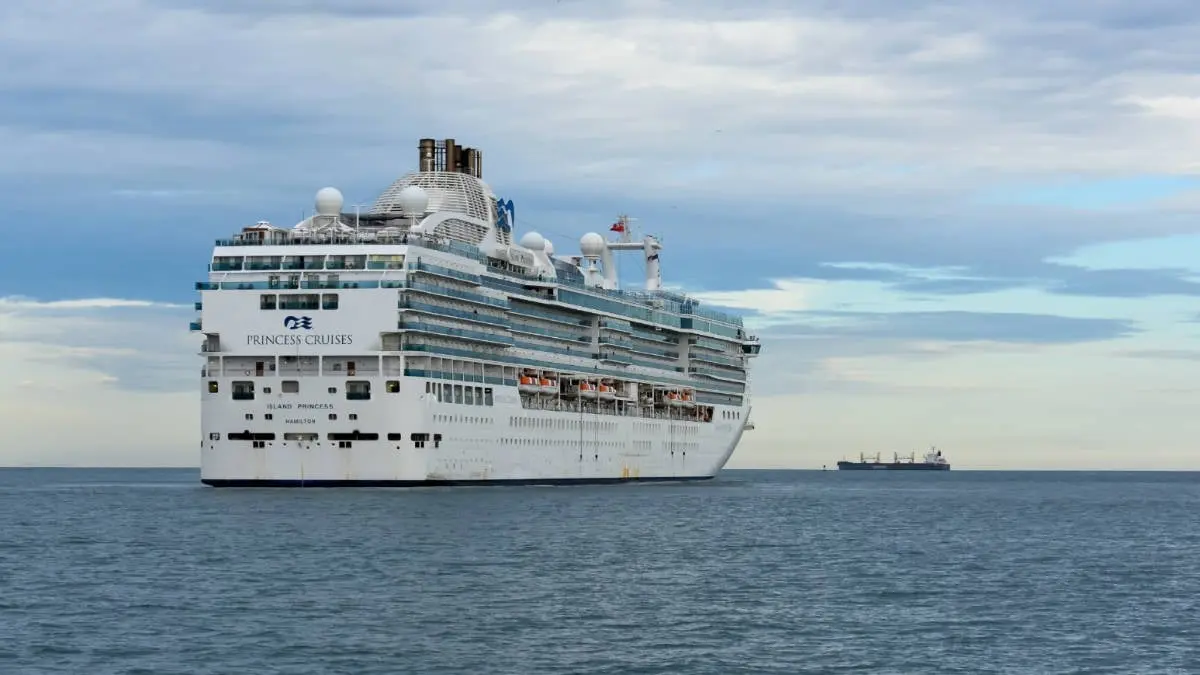
This exact scenario has unfolded for Princess Cruises concerning an upcoming, highly sought-after voyage aboard the 2,210-passenger Island Princess. Scheduled to embark on September 16, 2026, a 4-night coastal repositioning cruise from Vancouver, British Columbia, to Los Angeles, California, has become the center of unexpected travel adjustments. Faced with an apparently maxed-out or oversold ship, Princess Cruises has initiated a proactive outreach campaign, presenting select booked passengers with a remarkably generous compensation package in exchange for voluntarily relinquishing their cabins.
The offer—which includes a 100% cash refund of the cruise fare, a Future Cruise Credit (FCC) equal to 100% of the base fare paid valid for two years, and up to $800 in independent travel expense reimbursements—has sent ripples of excitement through the cruising community. While cruise lines occasionally offer compensation or incentives to alter travel plans, the scale of this package has prompted widespread speculation regarding the operational state of the vessel. Is the Island Princess merely running at peak capacity, or has a severe overbooking administrative error forced the cruise line to aggressively buy back cabins to avoid a logistical nightmare at the pier?
This comprehensive report examines the mechanics of the Island Princess offer, explores passenger reactions and industry implications, details the ship’s strategic repositioning schedule, and places this incident within the broader context of modern cruise line inventory management.
Detailed Chronology: The Evolution of the September 16, 2026 Voyage
The Itinerary and Operational Context
The voyage at the heart of this operational shuffle is a relatively brief, yet uniquely positioned, 4-night coastal cruise. Designated to depart on September 16, 2026, the Island Princess will pull away from Vancouver following the conclusion of its extensive Alaska season.
Unusually for a multi-day commercial sailing, this specific itinerary features zero port calls. Instead, the 4-night journey consists entirely of three consecutive, uninterrupted sea days cruising down the scenic Pacific Coast of North America before culminating in Los Angeles on September 20, 2026. For many travelers, "nowhere cruises" or transit-heavy sea day itineraries appeal specifically to those looking to relax, enjoy shipboard amenities, and experience the vessel itself without the rush of shore excursions. Despite—or perhaps because of—this restful profile, the sailing captured the imagination of travelers, driving sales figures well beyond initial projections.
The Outreach Campaign Begins
As the summer of 2026 approaches and final payment windows close, automated and manual inventory checks revealed that the ship’s passenger manifest was on track to hit, or potentially exceed, maximum allowable capacity. Rather than waiting for embarkation day to face potential denied-boarding crises—a public relations and logistical nightmare—Princess Cruises opted for early intervention.

Beginning in mid-2025 and continuing through early phases of the booking cycle, select guests received targeted electronic communications from the cruise line. The message was clear, polite, and undeniably alluring:
"Due to the popularity of your upcoming September 16th cruise on Island Princess you are eligible for exceptional savings should you choose to change your travel arrangements," the communication stated.
The letter outlined a multi-tiered compensation scheme designed to make altering or canceling travel plans not just painless, but financially advantageous for the consumer.
The Compensation Structure
The incentives bundled into the Princess Cruises voluntary cancellation offer are among the most robust seen in the contemporary cruise industry outside of major dry-dock cancellations or severe regulatory disruptions. The package includes:
- Full Cash Refund: A 100% refund of all monies paid toward the base cruise fare, returned directly to the original form of payment.
- Future Cruise Credit (FCC): A 100% Future Cruise Credit matching the exact dollar amount of the base cruise fare paid. This credit is valid for two years from the date of issue, providing ample time for guests to rebook alternative itineraries across the Princess fleet.
- Independent Travel Expense Reimbursement: Acknowledging that many guests already secure flights, rail tickets, or pre-cruise hotel stays independently, Princess Cruises offered up to $800 per guest to cover non-refundable or changing expenses associated with these arrangements, disbursed upon the presentation of valid receipts.
This layered compensation model effectively allows travelers to recoup their entire financial investment, receive an identical value in future travel currency, and clear themselves of any financial penalties related to pre-booked transportation.
Supporting Context & Metrics: Overbooking Realities and Passenger Reactions
The Overbooking Phenomenon
In commercial aviation and the cruise industry alike, overbooking is a calculated gamble. Cruise lines routinely sell more staterooms than physically exist on a ship, relying on historical data which dictates that a predictable percentage of passengers will cancel due to illness, family emergencies, or changing life circumstances prior to sailing.
When cancellation rates match mathematical models, ships sail at 100% capacity, maximizing revenue for both the cruise line and onboard vendors. However, when economic conditions shift, consumer confidence rises, or a specific itinerary captures viral attention, cancellation rates can drop significantly. When fewer people drop out than anticipated, the line faces an excess of bodies and a shortage of berths—a situation formally known as being oversold.
While Princess Cruises stopped short of explicitly confirming that the Island Princess September 16 voyage was overbooked, the circumstantial evidence is compelling. The voyage currently displays as completely sold out across all stateroom categories on the official Princess Cruises booking portal. Furthermore, the sheer financial weight of the voluntary buyback offer strongly implies that the line views securing voluntary cancellations as far more cost-effective and brand-safe than dealing with bumped passengers at the terminal in Vancouver.
Social Media Buzz and Community Reactions
Within hours of the first emails landing in passenger inboxes, word spread rapidly across digital cruising communities, dedicated Facebook planning groups, and social media platforms like Threads.

Reactions among the affected demographic were largely positive, characterized by a mix of surprise and opportunistic glee. One prominent post shared across social channels highlighted the unexpected financial windfall experienced by a booked passenger:
"It was ok for us! It’s a nowhere cruise and we’re going to Hawaii in 2 months!" one traveler shared in an unofficial Facebook planning group. "For some reason they gave us a bigger credit than what we paid for the cruise. Couldn’t resist!"
Another traveler, detailing the offer on Threads under the handle @mikemedley, expressed absolute certainty regarding the root cause of the outreach: “My cruise over booked [sic] and not enough rooms for all the travels [sic],” they wrote.
For travelers who had booked the short coastal repositioning cruise as a casual getaway, the ability to pivot to a longer or more exotic vacation—using a complimentary FCC while keeping their original cash—presented an unmissable arbitrage opportunity.
Precedents Across the Fleet
This maneuver is not entirely unprecedented within the broader Carnival Corporation ecosystem, of which Princess Cruises is a premier brand. Cruise Hive recently reported on a nearly identical voluntary buyback offer extended to guests booked aboard the Emerald Princess ahead of a heavily compressed, sold-out September 1 sailing to Alaska.
In both instances, the cruise lines demonstrated a willingness to leverage aggressive financial incentives to smooth out operational bottlenecks before they manifest as customer service failures at the gangway. By encouraging flexible travelers to step aside voluntarily, Princess preserves its high Net Promoter Scores (NPS) and avoids the adversarial dynamics of involuntary denied boardings.
Official Statements and Operational Caveats
Despite the excitement generated online, Princess Cruises has maintained a measured and tightly controlled communication strategy. Company representatives have emphasized that the voluntary offer is strictly a targeted, availability-dependent measure rather than an open-ended invitation for all 2,210 passengers to cancel.
Terms and Conditions of the Buyback
Cruise line management has underscored several critical caveats for participants:
- Subject to Availability: The offer is not guaranteed to every guest who applies. Princess reviews requests on a rolling basis, prioritizing cabins whose release best resolves specific manifest imbalances (such as specific occupancy tiers or designated accessible staterooms).
- Confirmation Requirement: Guests have been explicitly warned not to cancel independent travel arrangements—such as non-refundable flights to Vancouver or pre-cruise hotel nights—until they have received formal, written confirmation from Princess Cruises that their request to alter their voyage has been approved and processed.
- Involuntary Bump Contingency: Industry analysts note that if too few passengers accept the voluntary buyback, cruise lines retain the contractual right to involuntarily bump passengers based on check-in order or fare class, compensating them according to the passage contract. However, aggressive voluntary incentives like those deployed on the Island Princess rarely fail to secure the necessary room.
Future Outlook: The Strategic Positioning of the Island Princess
To fully understand why Princess Cruises is so intensely protective of the passenger manifest for this specific 4-night sailing, one must examine the broader logistical puzzle of the Island Princess deployment schedule for the autumn of 2026.
The Alaska Finale
The September 16, 2026 coastal cruise does not exist in a vacuum; it serves as the critical connective tissue between two major operational eras for the vessel. The ship will pull into the Port of Vancouver at 7:30 a.m. on the morning of September 16, directly concluding its final Alaska deployment of the 2026 season.
This season has been historic for Princess Cruises, marking what the company has billed as its largest-ever Alaska program, deploying multiple vessels across intricate Gulf of Alaska and Inside Passage routes. The Island Princess specifically will have just completed a 7-night "Voyage of the Glaciers" itinerary northbound and southbound from Whittier, Alaska, bringing thousands of weary, glacier-gazing travelers to the end of their northern holiday.
The Great Panama Canal Pivot
The turnaround in Vancouver on September 16 is rapid and unforgiving. The ship must discharge its terminating Alaska passengers, clear customs, provision, load new supplies, and embark the coastal cruise passengers all within a matter of hours.
Following the 4-night sea-day intensive sprint down the coast, the Island Princess will slide into the Port of Los Angeles on the morning of September 20, 2026. There is no lingering in Southern California. That very same afternoon, the ship is scheduled to embark on a massive, highly complex 16-night Panama Canal cruise traversing from Los Angeles all the way to Fort Lauderdale, Florida, ultimately arriving on October 6, 2026.
Conclusion: A Masterclass in Modern Fleet Management
The logistical tightrope walked by the Island Princess—pivoting immediately from a grueling Alaska season into a brief coastal repositioning, followed instantly by a multi-week trans-continental Panama Canal voyage—leaves zero room for error. Every single stateroom must be accounted for, and structural weight and passenger capacity limits must be adhered to with absolute precision.
By offering a full cash refund, a 100% future cruise credit, and up to $800 in travel expense reimbursements, Princess Cruises has transformed a potentially disruptive inventory overage into a masterclass in proactive customer relations. For the lucky passengers flexible enough to bite, the deal represents an unexpected travel windfall. For Princess Cruises, it represents a small price to pay to ensure that the Island Princess cuts through the Pacific waters smoothly, on schedule, and precisely at maximum capacity.