






September 16, 2026
Executive Overview
In a major development at the intersection of maritime engineering and aerospace logistics, renowned Danish naval architecture firm KNUD E. HANSEN has been officially awarded the contract to develop the Basic Design for a pioneering Roll-on/Roll-off (RoRo) vessel. Commissioned by French shipowner Compagnie Maritime Nantaise (a subsidiary of the Sogestran Group), this highly specialized vessel is dedicated to the transport of sensitive European space cargo, including next-generation launch vehicles, booster stages, and satellites.
The announcement follows the formal signing of a landmark shipbuilding contract between the joint owners—Compagnie Maritime Nantaise and Sogestran—and Guangzhou Shipyard International (GSI), one of China’s premier shipbuilders.
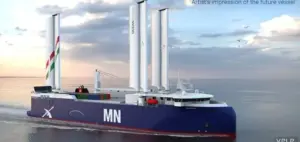
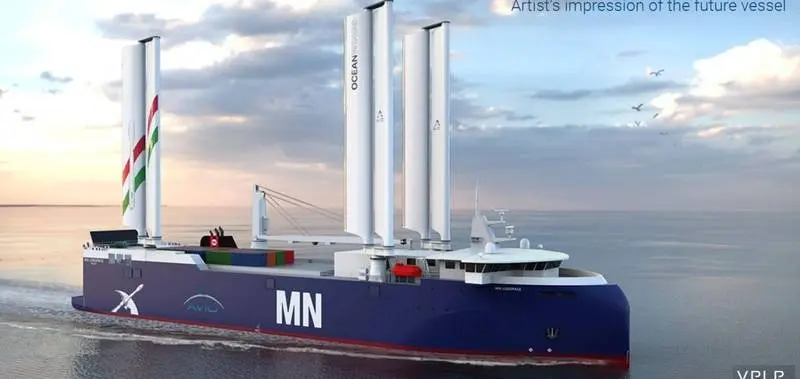
Designed in close collaboration with the French naval design house VPLP Design and key aerospace stakeholders, the vessel represents a paradigm shift in industrial shipping. It fuses stringent cargo-safety requirements with cutting-edge environmental technology, most notably an advanced Wind-Assisted Propulsion System (WAPS). As global pressure mounts on the maritime sector to decarbonize, and as the European space sector demands highly reliable, low-emission supply chains, this vessel stands as a blueprint for the future of industrial logistics.
+-------------------------------------------------------------------------+
|                         PROJECT STAKEHOLDERS                            |
+-------------------------------------------------------------------------+
|  • Shipowner/Operator: Compagnie Maritime Nantaise & Sogestran Group    |
|  • Conceptual Design Partners: VPLP Design & Project Stakeholders       |
|  • Basic Design Architect: KNUD E. HANSEN                               |
|  • Shipbuilder: Guangzhou Shipyard International (GSI), China           |
|  • Primary Cargo: European Space Industry (Launchers, Satellites)      |
+-------------------------------------------------------------------------+
Detailed Chronology: From Concept to Construction
The journey toward this shipbuilding contract has been a multi-year, highly collaborative effort aimed at solving one of the most complex logistical puzzles in the industrial sector: the safe, efficient, and sustainable transport of aerospace components across the Atlantic Ocean.
   [ Conceptual Phase ]
            │  (Collaborative design workshops with VPLP & MN)
            ▼
   [ Feasibility & Wind Studies ]
            │  (Hydrodynamic testing & WAPS integration analysis)
            ▼
   [ Shipyard Tendering ]
            │  (Selection of Guangzhou Shipyard International - GSI)
            ▼
   [ Contract Signing (Sept 2026) ]
            │  (Official commercial agreement finalized)
            ▼
   [ Basic Design Phase (Current) ] ──► [ Class Approval & Construction ]
       (Led by KNUD E. HANSEN)
The Genesis of the Project
The European space program, centered around the Ariane launcher family, relies on a highly distributed manufacturing network. Rocket components, structural fairings, and liquid propulsion stages are manufactured across various European nations—including France, Germany, Italy, and Spain—before being assembled and transported to the Guiana Space Centre in Kourou, French Guiana.
Given the physical dimensions and fragility of these components, air transport is financially and logistically prohibitive, leaving ocean transport as the sole viable pipeline. This transatlantic route demands a vessel capable of navigating open ocean swells while maintaining a exceptionally stable ride to protect the sensitive payloads, followed by navigation through the shallow, narrow waters of the Kourou River to reach the specialized port of Pariacabo.
The Design Partnership
To address these challenges, Compagnie Maritime Nantaise partnered with VPLP Design, a firm globally recognized for its pioneering work in ocean racing yachts and wing-sail technology. VPLP led the initial conceptual design, integrating advanced aerodynamics with a stable hull form.
Following the successful conceptualization and the subsequent finalization of the shipbuilding contract with GSI, the project transitioned into its critical engineering phase. KNUD E. HANSEN was brought in to spearhead the Basic Design. This phase bridges the gap between the initial aesthetic and functional concept and the highly detailed production engineering executed by the shipyard. KNUD E. HANSEN will apply its deep expertise in RoRo stability, structural engineering, and machinery systems to ensure the vessel meets all international class requirements, safety standards, and operational parameters.
Technical Specifications, Metrics, and Green Technology Integration
Transporting rocket stages requires a vessel that behaves more like a floating cleanroom and scientific laboratory than a standard cargo ship. The technical parameters of this new RoRo are tailored to manage the delicate physics of aerospace logistics.
Cargo Care and Stability Metrics
- Volumetric Focus: Space cargo is characterized by low density and high volume. The vessel features expansive, unobstructed cargo decks with high overhead clearance to accommodate oversized rocket boosters and payload fairings.
- Microclimate Control: The cargo holds are fully enclosed and equipped with sophisticated HVAC systems capable of maintaining precise temperature, humidity, and pressure limits. Active air-filtration systems prevent particulate contamination of sensitive satellite components.
- Motion Mitigation: To protect delicate instrumentation from structural fatigue and excessive G-forces during Atlantic crossings, the vessel incorporates advanced stabilization systems. This includes optimized hull lines developed through extensive Computational Fluid Dynamics (CFD) modeling, active anti-roll tanks, and high-efficiency stabilizer fins.
- Shallow Draft Navigation: The vessel’s hull form is optimized to maintain a shallow draft, enabling safe passage through the river estuary in French Guiana, even when fully laden.
Wind-Assisted Propulsion System (WAPS)
At the heart of the vessel’s environmental strategy is the integration of wind-assist technology. Building on the operational success of modern wing-sails, the new RoRo will feature vertical, automated rigid sails designed to harvest wind energy and directly convert it into thrust.
       [ Automated Wind-Assisted Propulsion ]

                 /|  /|  /|
                / | / | / |   <--- Automated Rigid Wing-Sails
               /  |/  |/  |        (Adjustable angle of attack)
              /___/___/___/
             |____________|  <--- Specialized Low-Emission RoRo
~~~~~~~~~~~~~~~~~~~~~~~~- Aerodynamic Thrust: The automated sails dynamically adjust their angle of attack relative to the true wind direction, maximizing aerodynamic lift while minimizing drag.
- Fuel and Emission Reductions: By offloading a significant portion of the propulsion requirements from the main engines to the wind, the vessel is projected to reduce fuel consumption and greenhouse gas emissions by 20% to 30% compared to conventional vessels on the same transatlantic route.
- Weather Routing Integration: The WAPS will operate in tandem with advanced meteorological routing software. This system calculates the most energy-efficient route across the Atlantic by analyzing real-time wind patterns, wave heights, and currents, choosing paths that maximize wind-assist capability without compromising arrival schedules.
Strategic and Geopolitical Context of European Space Logistics
The construction of this vessel is not merely a commercial shipping transaction; it is a strategic asset for European sovereign space access.

+--------------------------------------------------------------------------+
|                      STRATEGIC LOGISTICAL PIPELINE                       |
+--------------------------------------------------------------------------+
|                                                                          |
|  [European Manufacturing] ---> [Bremerhaven/Le Havre]                    |
|                                         │                                |
|                                         ▼ (Ocean Transit via WAPS RoRo)  |
|                                         │                                |
|  [Guiana Space Centre]    <--- [Pariacabo Port, Kourou]                  |
|                                                                          |
+--------------------------------------------------------------------------+
Securing Autonomous Access to Space
For the European Space Agency (ESA) and industrial prime contractors like ArianeGroup, maintaining a robust, independent supply chain is paramount. Any disruption in the transport of launcher components from European manufacturing hubs to the launch pad in Kourou halts the entire launch manifest. By commissioning a bespoke, state-of-the-art vessel operated by experienced French partners (Compagnie Maritime Nantaise and Sogestran), the European space sector secures its logistical pipeline against external market shocks and vessel shortages.
Alignment with Green Mandates
Both the maritime and aerospace industries are under intense regulatory scrutiny to reduce their carbon footprints. The European Union’s Fit for 55 package, the inclusion of shipping in the EU Emissions Trading System (EU ETS), and the incoming FuelEU Maritime regulations impose strict penalties on carbon-intensive shipping.
At the same time, space agencies are actively seeking to minimize the lifecycle environmental impact of space exploration. Implementing a wind-assisted, highly efficient transport vessel directly aligns with these sustainability mandates, proving that high-tech industrial logistics can adapt to the green transition.
Official Statements and Collaborative Synergy
The realization of this project relies on a complex web of cooperation among European designers, French shipowners, and a leading Chinese shipyard.
A representative from KNUD E. HANSEN commented on the engineering challenge:
"Developing the Basic Design for a vessel of this complexity is a testament to our team’s versatility. We are bridging the gap between highly innovative aerodynamic concepts, such as wind-assisted propulsion, and the practical, rigorous realities of structural steel, machinery integration, and international class compliance. Our close cooperation with Compagnie Maritime Nantaise, Sogestran, VPLP, and Guangzhou Shipyard International ensures that this vessel will not only be highly efficient but also exceptionally reliable under the demanding conditions of transatlantic space logistics."
A spokesperson from Compagnie Maritime Nantaise emphasized the strategic value of the partnership:
"This vessel represents the next step in our commitment to supporting the European space industry with safe, state-of-the-art logistics solutions. By combining the visionary conceptual work of VPLP, the deep engineering expertise of KNUD E. HANSEN, and the world-class shipbuilding capabilities of Guangzhou Shipyard International, we are creating a vessel that sets a new standard for low-emission, high-security industrial shipping."
Future Outlook: Construction, Delivery, and Beyond
With the shipbuilding contract signed and the Basic Design phase underway under the stewardship of KNUD E. HANSEN, the project moves forward on a structured timeline toward steel cutting, keel laying, and eventual launch at GSI’s facility in China.
       2026                 2027                 2028                 2029
        │                    │                    │                    │
        ▼                    ▼                    ▼                    ▼
[Basic Design] ───► [Steel Cutting] ───► [Keel Laying & Launch] ───► [Sea Trials & Delivery]
Engineering Milestones
Over the coming months, KNUD E. HANSEN will focus on:
- Structural Optimization: Ensuring the hull can withstand the localized stresses imposed by the heavy, rigid wind-assist structures while maintaining weight targets.
- Systems Integration: Designing the auxiliary propulsion, electrical grids, and automated control systems to seamlessly manage the transition between mechanical and wind power.
- Class Approval: Liaising with major classification societies to secure the necessary approvals for the vessel’s innovative design features.
A Template for Specialized Shipping
The broader implications of this vessel reach far beyond the aerospace sector. As the maritime industry grapples with the transition away from fossil fuels, the successful deployment of wind-assisted propulsion on a highly sensitive cargo route will serve as a powerful proof of concept.
If a vessel carrying multi-million-dollar satellites and precision-engineered rocket boosters can rely on wind-assist technology to cross the Atlantic safely and on schedule, it demonstrates that WAPS is a mature, dependable technology ready for widespread adoption across the global merchant fleet.
Summary of Project Impact
| Feature | Project Impact & Significance |
|---|---|
| Primary Mission | Secure, low-vibration transport of European launch vehicles and satellites. |
| Environmental Target | 20% to 30% reduction in fuel consumption and CO2 emissions via wind-assist. |
| Key Innovation | Fully automated, rigid wing sails (WAPS) integrated with advanced meteorological routing. |
| Collaborative Effort | Danish naval architecture (KNUD E. HANSEN), French design (VPLP), and Chinese shipbuilding (GSI). |
| Strategic Value | Bolsters European sovereignty in space access through a resilient, green maritime supply chain. |