









By Katie Hogge Moore
Senior Manager, Digital Engagement, Ocean Conservancy
3-Minute Read
Executive Overview
When marine conservation makes headlines, the spotlight is rarely cast on creatures measuring mere millimeters. Public attention is instinctively drawn to the ocean’s heavyweights—graceful humpback whales, apex predatory sharks, and sweeping manta rays. Yet beneath the crashing waves and deep within the intricate architecture of coral reefs, a microscopic revolution is quietly unfolding every second of the day. At the helm of this invisible orchestration is the goby, a member of the family Gobiidae.
Comprising over 2,000 formally recognized species, gobies represent the largest family of marine fish on Earth. Distributed extensively across tropical, subtropical, and temperate waters—thriving everywhere from hypersaline marine trenches and brackish estuaries to freshwater alpine streams—these diminutive powerhouses defy their size through astonishing biological complexity. Ranging from species barely scraping six inches down to the dwarf pygmy goby (Trimmatom nanus), which tops out at a microscopic eight millimeters, gobies challenge our perceptions of ecological power dynamics. Far from being passive bystanders in the aquatic theater, these creatures function as foundational keystones of marine health. Through specialized behaviors, symbiotic relationships, and intricate habitat engineering, gobies prove that in the vast blue expanse, size is no metric of ecological importance.
Detailed Chronology & Scientific Discovery
The scientific appreciation of the goby family has evolved dramatically over centuries of ichthyological research. While local fishers and early coastal inhabitants long recognized these resilient bottom-dwellers, formal taxonomic classification began in earnest during the 18th and 19th centuries as naturalists cataloged the dizzying biodiversity of tropical reef systems.
- The Late 18th Century: Early taxonomists established the family Gobiidae, initially grouping species primarily by morphological similarities such as separated dorsal fins and localized benthic habits.
- The Mid-20th Century: Marine biologists began diving deeper, moving beyond static taxonomy to observe live specimens in situ. Researchers documented the revolutionary behavioral adaptations of gobies, unlocking how creatures like the mudskipper branch out from fully aquatic environments into intertidal zones, effectively straddling the evolutionary boundary between water and land.
- The Turn of the 21st Century: Advanced genetic sequencing and micro-imaging technologies revealed the staggering scale of goby speciation. Cryptic species—fish visually identical to one another but genetically distinct—were discovered hidden inside coral heads, expanding the recognized family tree by hundreds of species.
- Recent Breakthroughs (2025–2026): Cutting-edge studies out of institutions like the University of Miami Rosenstiel School of Marine, Atmospheric, and Earth Science illuminated the direct biochemical ties between cleaner goby foraging and coral reef microbial health. Science finally validated what deep-sea observers suspected for decades: these tiny fish actively shape the biological defense mechanisms of entire reef systems.
Supporting Context & Metrics: Anatomy, Behavior, and Ecological Architecture
To understand why the goby is indispensable to the ocean, one must examine the extraordinary evolutionary toolkit gifted to this massive family of fish.
1. Specialized Benthic Anatomy
Most gobies are specialized bottom-dwellers. Because they inhabit high-energy environments battered by relentless tidal currents and crashing surf, they require specialized locomotion. The pelvic fins of most goby species have fused over evolutionary time to form a powerful, muscular suction cup. This anatomical adaptation allows the fish to anchor themselves securely to smooth rocks, wave-swept boulders, and fragile coral branches. Certain freshwater and amphidromous species utilize this very suction mechanism to scale vertical waterfalls during their upstream migrations. Furthermore, many gobies possess an innate cognitive mapping ability, utilizing visual cues of marine terrain to navigate back precisely to their home tide pools after foraging excursions.
2. Foraging, Bioturbation, and Ecological Hygiene
As they scour the ocean floor for copepods, polychaete seaworms, and micro-crustaceans, gobies act as vital agents of bioturbation. Their constant sifting and burrowing aerates sediment layers, preventing stagnant zones from forming on the seafloor and helping to keep suffocating algal blooms in check.
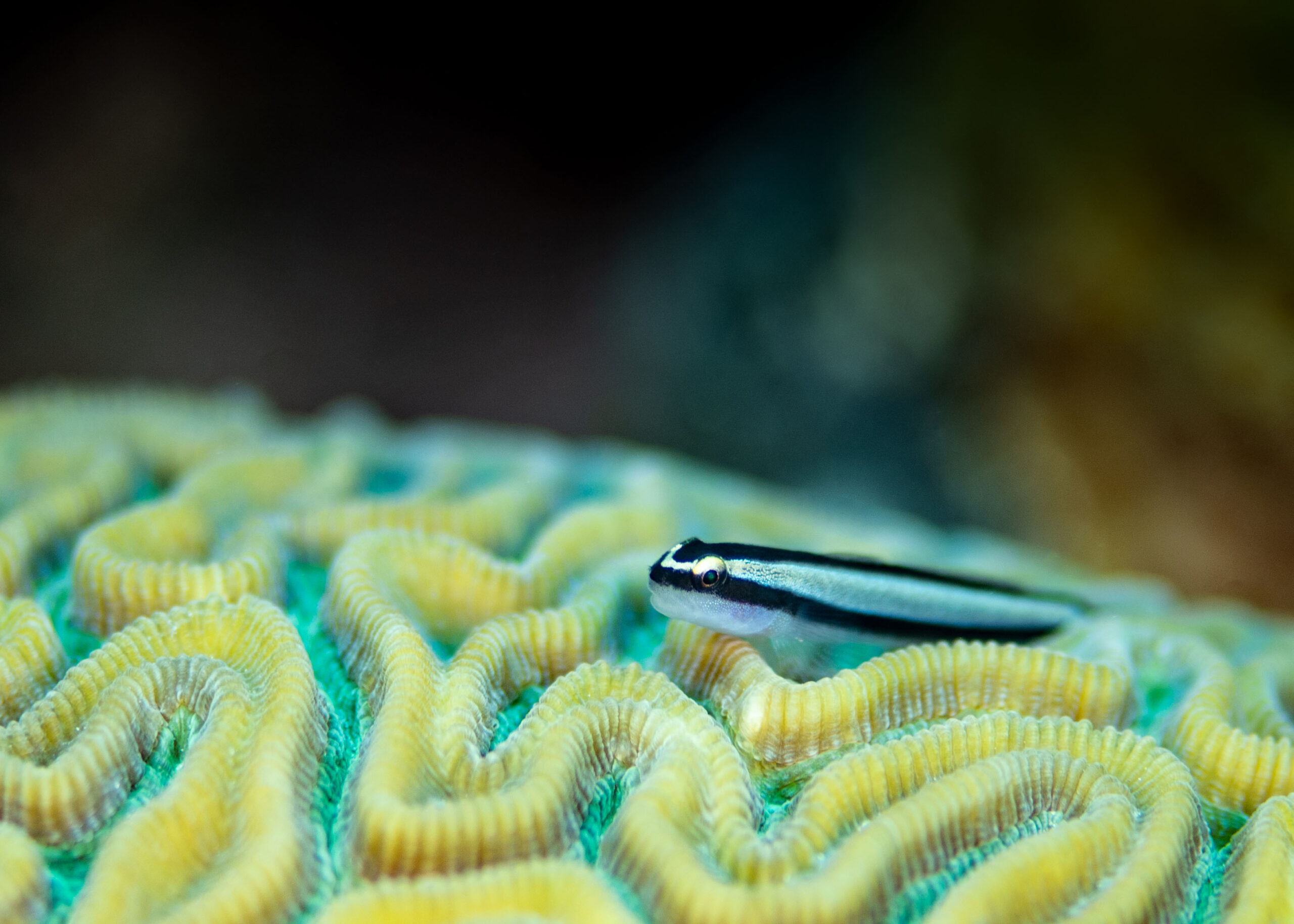
Adding to this utility are "cleaner" goby species. These micro-cleaners establish cleaning stations on reefs, inviting larger predatory fish—and even passing marine reptiles—to submit to parasite removal. It operates as an underwater spa day: the host fish receives crucial pest control, while the goby enjoys a reliable, high-protein buffet. Recent microbiological investigations confirm that this cleaning behavior directly influences the bacterial communities living on coral surfaces, reducing the load of pathogenic microbes that can trigger tissue necrosis and disease.
3. Intra-Species Dynamics: Guarders vs. Sneaker Gobies
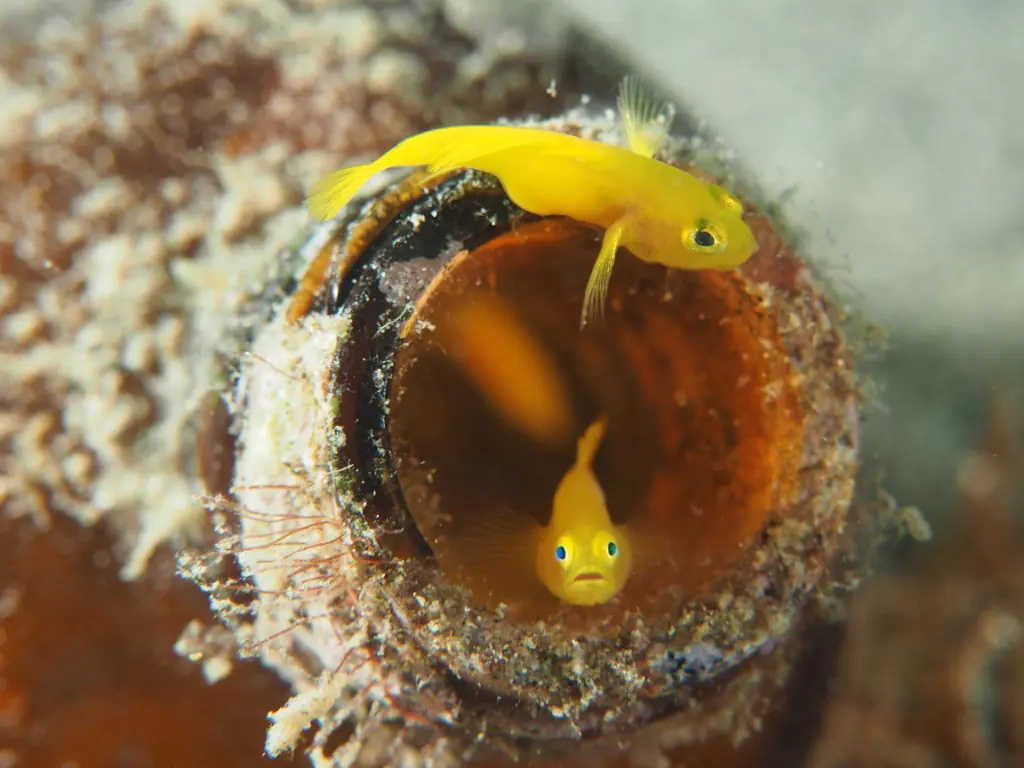
The behavioral portfolio of the goby extends far beyond cleaning and foraging into complex social and reproductive strategies. Male gobies are famously defensive protectors of their egg clutches. Larger, dominant males—frequently termed "guarder" gobies—expend massive amounts of metabolic energy constructing pristine nests beneath shells, rocks, or coral rubble to attract females. Once eggs are laid and fertilized, these guarders stand tireless vigil, fanning oxygen-rich water over the developing embryos and aggressively chasing off interlopers.
However, evolutionary pressures have birthed an alternative reproductive strategy: the "sneaker" goby. Smaller, non-territorial males bypass the arduous task of nest-building and guarding altogether. Instead, these stealthy operators lie in wait, slipping undetected into a guarder’s carefully maintained nest to rapidly release their own milt over the eggs before fleeing into the shadows. In an underwater soap opera worthy of prime-time television, unsuspecting guarder males frequently spend weeks dutifully raising broods that contain the genetic offspring of these cunning interlopers.
Official Statements and Expert Perspectives
Marine conservationists and academic researchers increasingly emphasize that ignoring micro-fauna like gobies leaves a massive blind spot in global conservation strategies.
Dr. Elena Vance, a senior coral reef ecologist, notes:
"When we look at a degraded reef, our eyes naturally drift to the loss of large stony corals or the disappearance of charismatic megafauna like sharks and turtles. But the canary in the coal mine is often found in the micro-ecosystem. If cleaner gobies and sediment-sifting bottom-dwellers vanish, the cascading collapse of microbial balance and nutrient cycling spells doom for the entire habitat faster than most people realize."
Conservation strategists at the Ocean Conservancy underscore that resilience begins at the base of the food web.
"Every species, down to the eight-millimeter dwarf pygmy goby, holds a structural thread in the tapestry of our blue planet," says internal project leadership. "Protecting the ocean requires us to safeguard entire ecosystems, ensuring that the environments supporting our smallest inhabitants remain resilient against anthropogenic pressures."
Future Outlook: Threats and the Path Forward
Despite their resilience and global distribution, gobies are facing unprecedented environmental stressors in the 21st century. Because many goby species are intimately bound to coastal zones, estuaries, and coral reefs, they sit directly in the crosshairs of human-induced climate change and habitat destruction.
- Coral Bleaching and Degradation: Rising ocean temperatures—driven by anthropogenic carbon emissions—trigger widespread thermal stress in scleractinian corals. As coral reefs bleach and structurally collapse, the intricate micro-habitats, crevices, and hiding spots relied upon by reef-dwelling gobies are obliterated.
- Coastal Development and Pollution: Estuarine and mangrove-dwelling gobies face severe habitat fragmentation due to coastal land reclamation, industrial runoff, and plastic pollution. Chemical toxins bioaccumulate in shallow-water sediments, directly impacting the bottom-feeders that ingest micro-particles during foraging.
- Warming Waters and Hypoxia: Ocean warming decreases dissolved oxygen levels in shallow waters, creating hypoxic "dead zones" where benthic fish struggle to respire.
Charting a Sustainable Course
The plight of the goby serves as both a warning and a call to action. Healthy gobies serve as bio-indicators of overall aquatic health; their presence signals a functioning, biodiverse web of life, while their decline warns of systemic environmental failure.
Reversing these trends demands immediate, coordinated global action. Mitigating greenhouse gas emissions to curb ocean warming, enforcing stricter protections for delicate coral reefs, and cleaning up our coastal watersheds are non-negotiable steps for marine survival.
The ocean is counting on us—from the majestic blue whale breaching on the horizon to the tiny, resilient goby guarding its nest beneath a grain of sand.
Take action today. Visit the Ocean Conservancy’s Action Center to join the movement protecting our marine ecosystems for generations to come.