






Executive Overview
The global container shipping landscape is on the cusp of a major structural realignment, driven by rumors of an unprecedented multi-billion-dollar shipbuilding campaign by Danish maritime giant A.P. Moller-Maersk. For several years, Copenhagen-based Maersk championed a strategy of strict capacity discipline, prioritizing its "integrator" logistics model and capping its fleet size around 4.1 to 4.3 million twenty-foot equivalent units (TEU). However, recent intelligence from leading maritime broker circles and industry analysts suggests a dramatic strategic pivot.
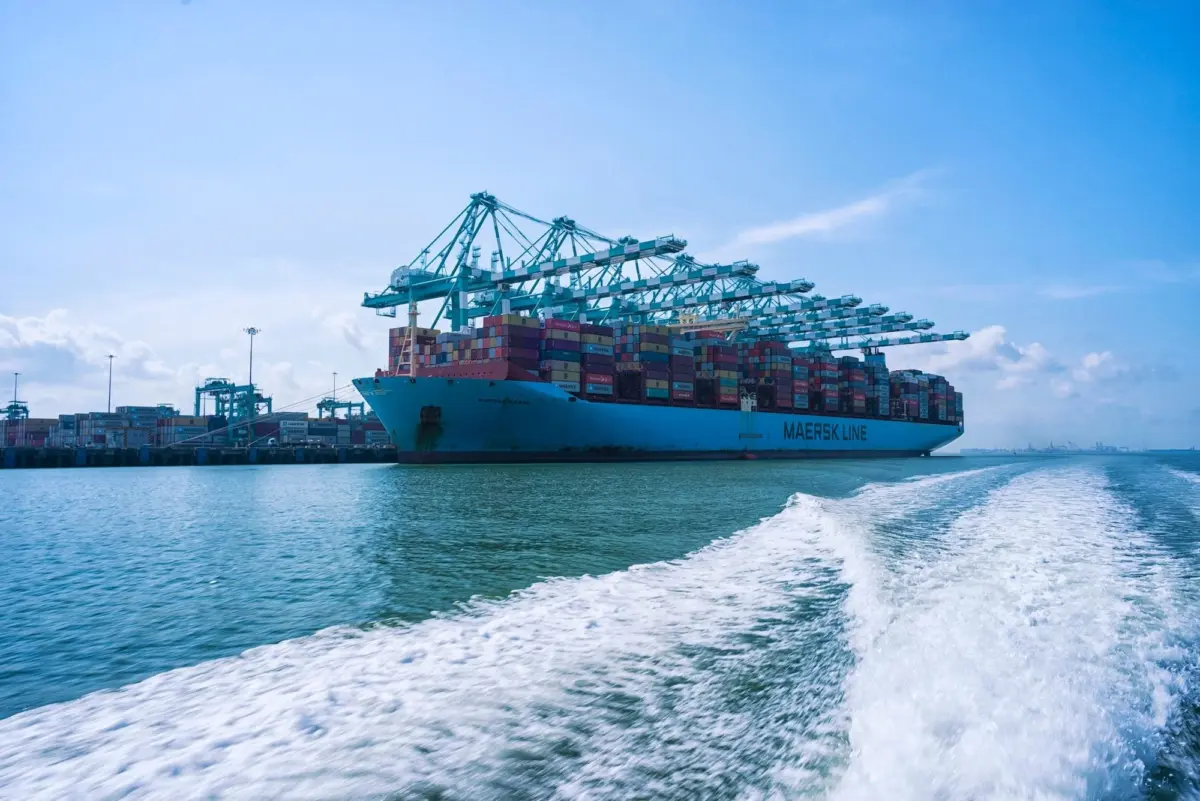
Faced with a looming tonnage deficit, intense competitive pressure from rivals like Mediterranean Shipping Company (MSC) and CMA CGM, and the impending launch of the Gemini Cooperation with Hapag-Lloyd, Maersk is reportedly negotiating massive newbuilding orders. According to data compiled by industry watchdogs Linerlytica and Alphaliner, the Danish carrier could be in the process of doubling its newbuilding pipeline. The rumored orders—ranging from 30 to 40 ultra-large container vessels (ULCVs) of up to 24,000 TEU—could inject between 840,000 and 1.5 million TEU of modern, dual-fuel capacity into Maersk’s fleet, securing its competitive standing into the next decade.
Detailed Chronology of the Rumored Orders
The genesis of these rumors lies in the charter market, where Maersk has exhibited uncharacteristic urgency. Over the course of late 2024, analysts at Linerlytica observed that the Danish carrier had become the most active player in the charter arena, scrambling to secure short-to-medium-term tonnage. This aggressive chartering activity was driven by an immediate operational reality: Maersk faces a highly restricted delivery schedule of new ships over the next 12 months, even as several of its existing chartered vessels are scheduled for redelivery to their owners.
To maintain its global service coverage without suffering a contraction in market share, Maersk has had to pay premium charter rates. However, chartering is a short-term band-aid. To address its long-term structural capacity shortage, the carrier is reportedly preparing a massive newbuilding program with deliveries slated from late 2029 through 2030.
[Late 2024: Charter Market Scramble]
               │
               ▼
[Linerlytica Leak: Unconfirmed Orders]
 ├── 12 x 24,000 TEU (Jiangsu Yangzijiang)
 ├── 12 x 19,000 TEU (Hengli HI)
 └──  6 x 18,600 TEU (New Times Shipyard)
               │
               ▼
[Alphaliner Analysis: Alternative Bidding Strategy]
 ├── ~20 x Megamax (≥24,000 TEU)
 └── ~20 x Neo-Panamax (18,000 - 20,000 TEU)
               │
               ▼
[The CMA CGM Variable]
 └── Yangzijiang LOI may belong to French rival CMA CGM (Jacques Saade Mk-III Class)
The Linerlytica Projection
Linerlytica’s weekly new vessel order intelligence published unconfirmed reports that Maersk has already finalized or is close to finalizing orders for 30 vessels across three distinct size classes and three Chinese shipyards:
- Twelve 24,000 TEU Megamax ships to be built by Jiangsu Yangzijiang Shipbuilding.
- Twelve 19,000 TEU vessels assigned to Hengli Heavy Industries (Hengli HI).
- Six 18,600 TEU units contracted with New Times Shipbuilding.
If confirmed, this 30-ship series would instantly add 627,600 TEU of nominal capacity to Maersk’s pipeline.
The Alphaliner Counter-Analysis
Shortly after the Linerlytica reports surfaced, analysts at Alphaliner suggested that Maersk’s actual ambitions might be even larger and structured differently. Alphaliner’s intelligence indicates that Maersk has issued formal requests for proposals (RFPs) to premier Chinese and South Korean shipbuilders for a two-pronged "mega" order of up to 40 vessels:
- Approximately twenty Megamax vessels boasting a minimum capacity of 24,000 TEU.
- Approximately twenty ultra-large vessels ranging between 18,000 and 20,000 TEU.
Under Alphaliner’s model, assuming an average vessel size of 21,000 TEU across the rumored 40-ship program, Maersk would add roughly 840,000 TEU to its orderbook.
The CMA CGM Plot Twist
The situation is further complicated by overlapping shipyard negotiations. Alphaliner raised a critical caveat regarding the twelve 24,000 TEU vessels linked to Jiangsu Yangzijiang Shipbuilding. While some brokers have assigned this order to Maersk, Yangzijiang recently signed a Letter of Intent (LOI) for twelve dual-fuel Megamax boxships with an "undisclosed shipping line."
Alphaliner believes that French carrier CMA CGM is the most probable actor behind this specific LOI. CMA CGM has been actively looking to expand its "Megamax" footprint and already has a strong relationship with Yangzijiang, which is currently constructing ten MARIC-designed, LNG dual-fuel "Jacques Saade Mk-III" class ships (24,212 TEU) for the French line. The first of those vessels was delivered in May 2024, with the remainder due by March 2028. A follow-up order of twelve sister ships would align perfectly with CMA CGM’s established fleet expansion strategy.
Supporting Context & Metrics
To appreciate the scale of Maersk’s rumored expansion, it is necessary to examine the carrier’s orderbook metrics relative to its global competitors. For years, Maersk sat comfortably at the top of the global liner rankings. However, it was overtaken by MSC in early 2022. Since then, MSC has built a massive lead, while CMA CGM has aggressively closed the gap on Maersk for the number-two spot.
| Carrier | Existing Fleet Capacity (TEU) | Confirmed Orderbook (TEU)* | Orderbook-to-Fleet Ratio | Rumored Orderbook additions (TEU) | Projected Orderbook (TEU) |
|---|---|---|---|---|---|
| MSC | ~6,000,000 | ~1,800,000 | ~30% | — | ~1,800,000 |
| Maersk | ~4,300,000 | 870,000 | 20.2% | +840,000 to +1,180,000 | 1,500,000 to 2,050,000 |
| CMA CGM | ~3,800,000 | ~1,000,000 | ~26% | — | ~1,000,000 |
| COSCO | ~3,200,000 | ~800,000 | ~25% | — | ~800,000 |
*Data as of late August/September 2024 baseline. Figures are rounded for analytical comparison.
Analyzing the Metrics
- The August Baseline: At the end of August, Maersk’s confirmed orderbook stood at approximately 870,000 TEU, representing roughly 20.2% of its active fleet.
- The Linerlytica Scenario: If the 30-ship order (627,600 TEU) is confirmed, Maersk’s orderbook climbs to nearly 1.5 million TEU, elevating its orderbook-to-fleet ratio to a robust 32%.
- The Alphaliner Mega-Scenario: If Alphaliner’s 40-ship projection materializes in full, Maersk’s overall newbuilding program would swell from its current baseline to a staggering 2.05 million TEU spread across 134 ships. This would position Maersk as the owner of the second-largest orderbook in maritime history, comfortably ahead of COSCO and CMA CGM, and second only to MSC.
Operational Drivers: The Red Sea Factor and Yard Constraints
Two external factors are driving this sudden appetite for new tonnage. First, the ongoing geopolitical disruptions in the Red Sea have forced carriers to bypass the Suez Canal, rerouting vessels around the Cape of Good Hope. This longer transit route requires roughly 10-15% more vessel capacity just to maintain weekly service frequencies on Asia-Europe and Asia-US East Coast loops.
Second, global shipyard slots are severely constrained. Premier yards in South Korea (HD Hyundai, Samsung Heavy Industries, Hanwha Ocean) and China (CSSC Group, Yangzijiang, New Times) are largely booked out through 2027 and 2028. By securing slots for late 2029 and 2030 delivery now, Maersk is hedging against future yard shortages and ensuring it has a steady stream of modern, fuel-efficient tonnage to replace aging vessels as they reach the end of their operational lifespans.
Decarbonization and the Fuel Technology Dilemma
Any massive newbuilding program initiated today must navigate the complex regulatory landscape of maritime decarbonization. With the International Maritime Organization (IMO) targeting net-zero greenhouse gas emissions by or around 2050, and the European Union’s FuelEU Maritime regulations imposing strict penalties on carbon intensity starting in 2025, propulsion technology is a critical factor in these orders.
              [The Decarbonization Divide]
                           │
         ┌─────────────────┴─────────────────┐
         ▼                                   ▼
  [Green Methanol]                     [Dual-Fuel LNG]
  • Championed by Maersk               • Favored by CMA CGM
  • Zero-carbon potential              • Mature supply chain
  • Higher fuel production costs       • Methane slip concerns
  • Limited green supply in 2024       • Lower capital cost for engines
Maersk has been a pioneer in the adoption of green methanol, famously launching the Laura Maersk and the 16,000 TEU Ane Maersk series. However, green methanol remains expensive and scarce. Industry insiders speculate that Maersk’s new orders will feature highly flexible dual-fuel propulsion systems. While methanol dual-fuel remains Maersk’s signature technology, the carrier has recently shown a pragmatic willingness to explore liquefied natural gas (LNG) and bio-LNG dual-fuel designs to ensure operational flexibility across different global trade lanes.
Conversely, if Alphaliner’s hypothesis is correct and CMA CGM is the operator behind the Yangzijiang Megamax LOI, those vessels will almost certainly utilize LNG dual-fuel propulsion, utilizing the French carrier’s preferred "Jacques Saade" engineering template.
Official Statements and Industry Commentary
As is customary with high-stakes maritime contracts, both the shipyards and the ocean carriers have maintained a strict "no comment" policy. Under standard non-disclosure agreements (NDAs) governing pre-contractual Letters of Intent, public disclosures are withheld until final board approvals are secured and first down payments are cleared.
When questioned about the rumored orders, a spokesperson for Maersk declined to comment on "market speculation," reiterating only that the company "continuously reviews its fleet composition to ensure it meets operational requirements and environmental targets." Representatives from Jiangsu Yangzijiang and New Times Shipyard similarly declined to comment on client negotiations.
Despite the official silence, market analysts have been vocal about the strategic necessity of this move:
"Maersk has found itself in a difficult position," noted an analyst from Linerlytica. "They spent several years focusing on their land-side logistics integration, while competitors like MSC and CMA CGM poured their pandemic-era profits directly into new ships. Now, with the Gemini Cooperation on the horizon, Maersk needs to ensure it has the physical assets to deliver on its high reliability promises. They cannot rely indefinitely on an expensive, volatile charter market."
Alphaliner’s editorial team echoed this sentiment, emphasizing the competitive dynamics of the East-West trade lanes:
"To run highly efficient, weekly loop services on the Asia-Europe trade—which is the backbone of global container shipping—you need modern, identical Megamax vessels. If Maersk wants to maintain its relevance as a top-tier global carrier, it simply has to match the scale of its peers. A 40-ship mega-order would signal to the market that Maersk is ready to defend its territory."
Future Outlook: The Gemini Cooperation and Beyond
The strategic implications of Maersk’s rumored newbuilding spree extend far beyond simple capacity metrics. They are deeply intertwined with the upcoming launch of the Gemini Cooperation in February 2025.
The Gemini Hub-and-Spoke Network
The Gemini alliance, forged between Maersk and German carrier Hapag-Lloyd, represents a radical departure from traditional alliance structures. Rather than offering a sprawling network of direct port-to-port calls, Gemini will pioneer a highly structured "hub-and-spoke" model.
[Asia Ports] ──► (Shuttle) ──► [Mega Hub Terminal] ──► (Megamax Ocean Loop) ──► [European Hub] ──► (Shuttle) ──► [Regional Ports]Under this design:
- Megamax Ocean Loops: Ultra-large mainliners (18,000 to 24,000 TEU) will run high-frequency, high-speed shuttle services strictly between a limited number of consolidated mega-hub terminals (e.g., Singapore, Rotterdam, Tanjung Pelepas).
- Dedicated Shuttle Services: Smaller, highly efficient regional shuttle vessels will distribute cargo from these mega-hubs to secondary regional ports.
To achieve their stated goal of 90% schedule reliability—a target far higher than the current industry average of 50-60%—Maersk and Hapag-Lloyd require absolute control over their tonnage. They cannot afford to rely on mismatched, chartered-in vessels with varying speed profiles and fuel efficiencies. The rumored 18,600 TEU, 19,000 TEU, and 24,000 TEU vessels are precisely the types of standardized, highly efficient "ocean loop workhorses" required to make the Gemini hub-and-spoke system viable.
The Risk of Future Overcapacity
While these orders make operational sense for Maersk’s long-term strategy, they introduce a renewed risk of global overcapacity by the turn of the decade. If the geopolitical tensions in the Red Sea subside and vessels return to the shorter Suez Canal route, the global shipping industry could suddenly find itself with a massive surplus of slot capacity.
However, Maersk appears to be betting that the structural retirement of older, polluting steamships—driven by increasingly punitive global carbon taxes—will absorb much of this incoming capacity. By securing state-of-the-art, dual-fuel vessels for 2029 and 2030, Maersk is preparing for a future where only the greenest and most efficient fleets will be permitted to operate profitably. Whether this multi-billion-dollar gamble pays off will define the Danish giant’s legacy for the next quarter-century.