






Executive Overview
At sea, a medical emergency transforms a voyage of leisure into a high-stakes race against time. On Tuesday, September 8, 2026, this grim reality unfolded aboard the Disney Wonder, a premier vessel operated by Disney Cruise Line. Just a single day after embarking on its scheduled September 7 roundtrip voyage from Vancouver, British Columbia, the ship found itself at the center of an intricate and dramatic maritime rescue operation. An injured crew member—affectionately referred to as a "cast member" within the Disney ecosystem—required an immediate, complex medical evacuation.
The operation showcased the seamless cooperation between private commercial cruise operators and elite military search-and-rescue units. Responding to the urgent distress call, the Royal Canadian Air Force (RCAF) deployed a coordinated multi-aircraft response utilizing its specialized aviation assets. The successful mission, executed over the frigid and unpredictable waters of the North Pacific, highlighted the rigorous safety protocols, split-second decision-making, and profound operational synergy required to pull off a mid-ocean airlift.
While the incident disrupted the routine of the voyage temporarily, it underscored the unwavering commitment of both maritime crews and public safety personnel to human life. As the cruise industry continues to navigate remote itineraries—particularly in the demanding Alaskan theater—incidents of this magnitude serve as a vital reminder of the invisible safety nets operating just beyond the horizon of vacationers.
Detailed Chronology: The September 8 Rescue Operation
The timeline of events on Tuesday, September 8, 2026, began well before the public eye caught wind of the unfolding drama. Maritime emergencies in remote waters demand meticulous coordination between a ship’s bridge team, corporate response cells, and national defense agencies.
The Distress Call and Positioning
The emergency call from the Disney Wonder was logged in the early afternoon. At the time of the incident, the vessel was navigating a notoriously remote stretch of the Pacific Northwest coastline, positioned approximately 113 miles northwest of Port Hardy and roughly 327 miles northwest of Vancouver. This isolated geographic location precluded any quick diversion to a local clinic or standard port facility, instantly elevating the severity of the situation and making a vertical airlift the only viable medical intervention strategy.
The RCAF Response
Upon receiving the distress notification, the Rescue Coordination Centre turned to the Royal Canadian Air Force’s 442 Transport and Rescue Squadron, stationed out of 19 Wing Comox on Vancouver Island. Demonstrating rapid deployment capabilities, the squadron scrambled a dual-aircraft package designed to maximize safety and operational efficiency:
- The CH-149 Cormorant Helicopter: Tasked with the physical execution of the hoist and transport of the patient.
- The CC-295 Kingfisher Aircraft: Deployed to act as an overhead coordinator, providing top-cover, communication relay, and navigational support for the Cormorant crew over the vast ocean expanse.
The Execution on the Bow Deck
As the two RCAF aircraft closed in on the cruise ship, the bridge crew of the Disney Wonder coordinated closely with the aviation team. To prepare for the high-risk maneuver, rescue personnel issued specific operational directives to the ship’s command:
- Radar Deactivation: The rescue team requested that the Disney Wonder temporarily power down its shipboard radar systems to prevent electronic interference and safeguard the sensitive avionics of the hovering helicopter.
- Speed Adjustment: The vessel was instructed to reduce its forward momentum, throttling down to a stable speed of 5 knots (approximately 5.75 miles per hour) to minimize wind turbulence over the deck and create a predictable platform for the hoist.
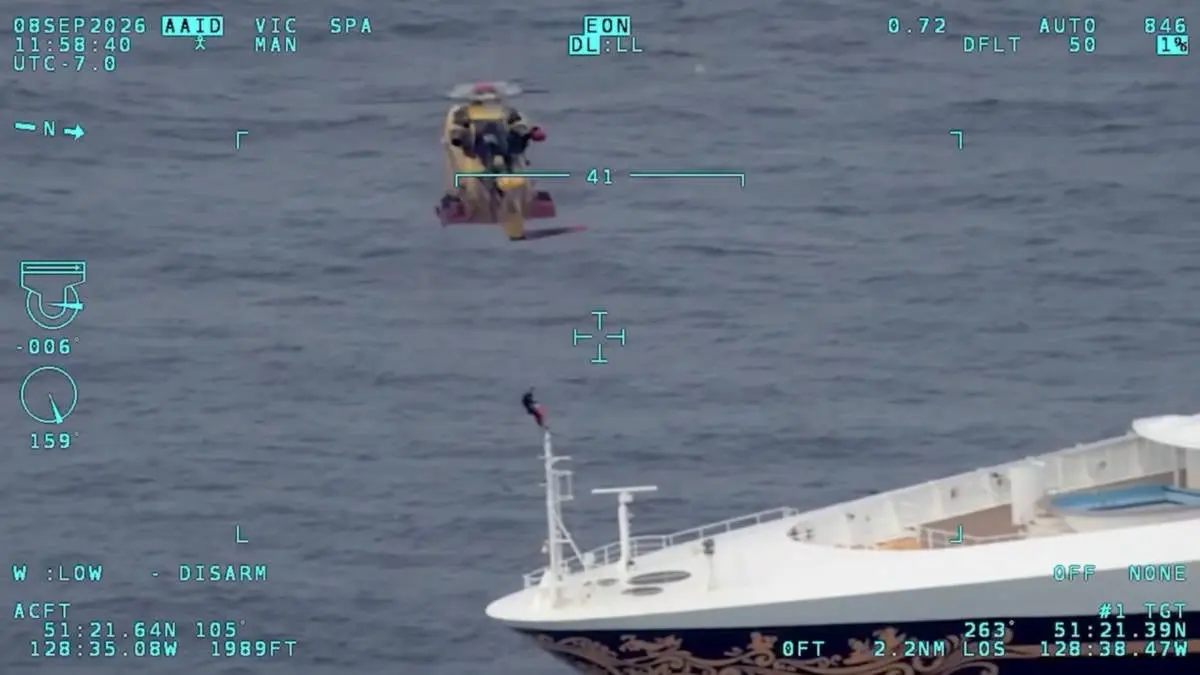
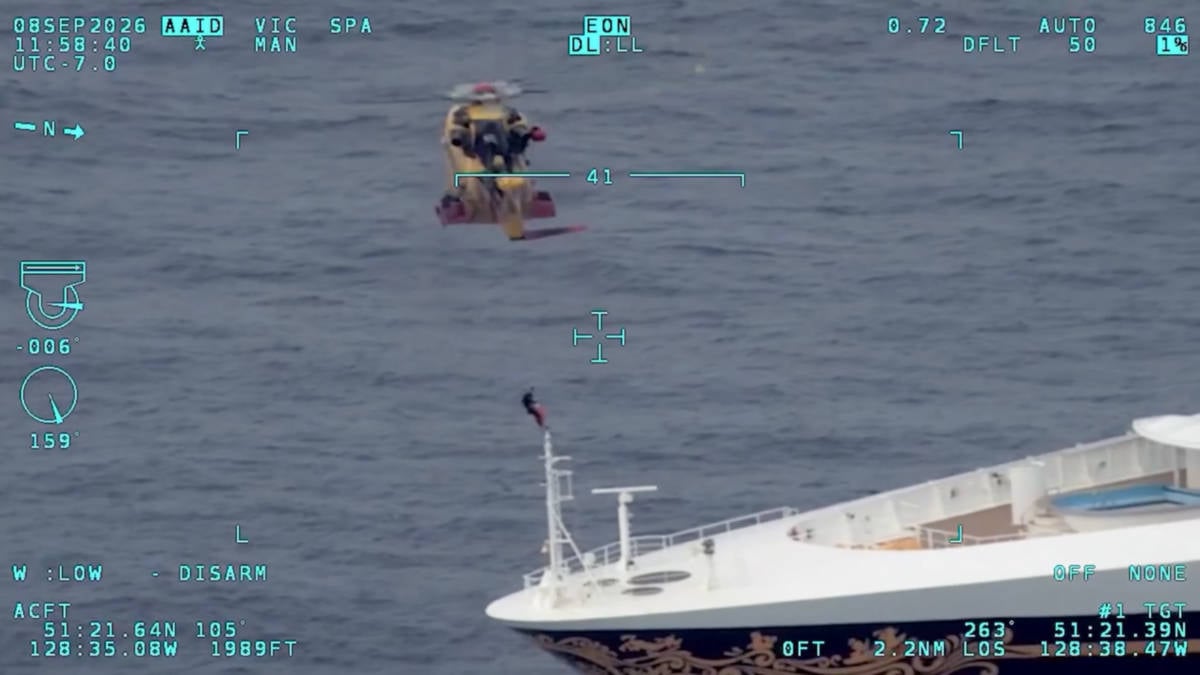
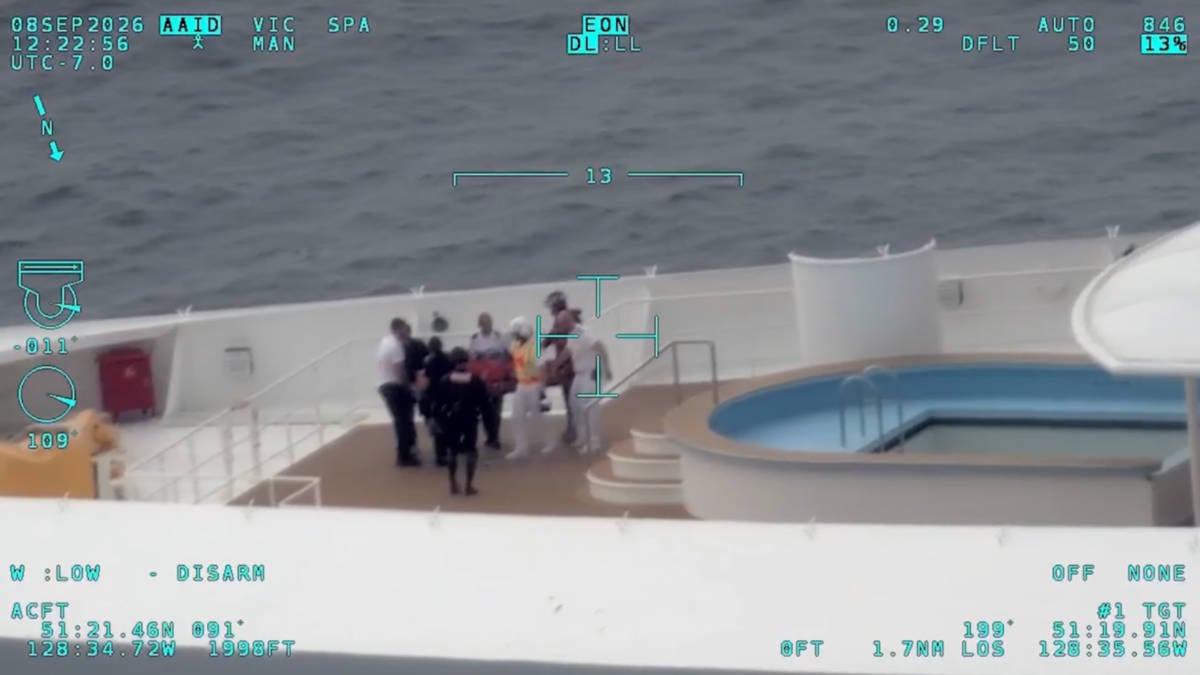
With the ship stabilized, the Cormorant positioned itself precisely over the vessel’s bow deck. Video footage subsequently released by the RCAF captured the tense, highly skilled moments as two specialized search-and-rescue technicians (SARtechs) were lowered from the helicopter’s belly down to the rolling deck.
Working efficiently against environmental pressures, the SARtechs secured the injured cast member into a specialized rescue harness. In a delicate vertical dance, both the patient and the rescue technicians were hoisted back up into the aircraft cabin as the helicopter maintained a steady, hovering lock against ocean crosswinds.
Communication Over the Radio
Acoustic logs and radio transcripts captured during the operation offer a rare, humanizing window into the professional calm that defines military and maritime rescues. As the operation concluded and the patient was safely secured inside the aircraft, the radio crackled with professional gratitude:
- "Disney Wonder, from Rescue 915, thanks for your help, you can resume your speed," the rescue team confirmed, signaling the end of the restricted zone.
- "Thank you very much for your help, much appreciated," the ship’s crew responded on behalf of the vessel.
With the transfer complete, the Disney Wonder resumed its standard navigational speed and course, while the Cormorant turned its nose toward Vancouver Island.
Supporting Context & Metrics: The Disney Wonder and Alaska Itineraries
To fully understand the logistical gravity of this evacuation, one must examine the operational profile of the Disney Wonder and the nature of cruise deployment in the Pacific Northwest.
The Vessel and Workforce
The Disney Wonder is a staple of the Disney Cruise Line fleet. Homeported out of Vancouver, British Columbia, for the lucrative seasonal Alaska market, the ship acts as a floating resort designed to immerse families in Disney magic while navigating some of the world’s most dramatic coastal fjords and glacier-carved waterways.
However, behind the whimsical facade lies a massive logistical operation. The ship accommodates approximately 950 international crew members—duly designated by the cruise line as "cast members." These individuals hail from dozens of countries across the globe, working long contracts to deliver world-class hospitality, entertainment, and culinary services. Because crew members live and work aboard the vessel for months at a time, the ship’s internal infrastructure must function as both a workplace and a self-contained community, complete with advanced onboard medical centers staffed by licensed physicians and nurses. When medical needs exceed the capabilities of the shipboard hospital, external agencies must step in.
The Cruise Itinerary
The incident occurred during a classic 7-night roundtrip voyage that had departed Vancouver on Sunday, September 7, 2026. This particular itinerary is designed to take guests and crew deep into the pristine wilderness of Southeast Alaska, featuring scheduled port calls at premier regional destinations including:
- Ketchikan: Renowned for its rich Alaska Native history and dense totem pole displays.
- Juneau: The state capital, accessible only by air or sea, framed by the majestic Mendenhall Glacier.
- Skagway: The historic gateway to the Klondike Gold Rush.
The voyage was slated to conclude with a return to Vancouver on Monday, September 14, 2026. Despite the dramatic midday diversion on September 8, cruise operators and maritime authorities confirmed that the emergency caused no structural alteration to the ship’s itinerary, allowing the cruise to continue its scheduled port calls without further delay.
Official Statements and Patient Privacy
In the wake of high-profile maritime incidents, public curiosity naturally gravitates toward the identity of the patient and the specific nature of their medical crisis. However, established protocols within both the corporate cruise sector and healthcare industries heavily prioritize privacy and ethical responsibility.
Protecting Privacy
Neither Disney Cruise Line nor the Royal Canadian Air Force disclosed the identity of the injured cast member, nor did they publicly detail the precise nature of the injury or medical emergency. Industry experts emphasize that this is standard, necessary practice. Broadcasting individual health details would violate medical privacy laws and subject the patient—and their family and friends—to unwarranted public scrutiny during an already vulnerable and stressful time.
The Chain of Medical Custody
Following the mid-ocean hoist, the CH-149 Cormorant sped toward Vancouver Island, landing at 19 Wing Comox. From this military staging ground, the patient underwent a seamless secondary transfer, being handed over to British Columbia Emergency Health Services (BCEHS).
A BCEHS medical transport helicopter was waiting to receive the patient, immediately flying them onward to an appropriately equipped regional hospital capable of providing definitive, specialized medical care. As of reporting, no further official updates regarding the cast member’s ongoing medical condition have been released, though industry observers remain hopeful for a full recovery.
Comparative Analysis: Medical Evacuations in the Modern Cruise Era
While an airlift by a military helicopter captures the public imagination, medical evacuations are a frequent, if often unseen, reality of the global cruise industry. Cruise lines operating fleets of massive vessels across diverse oceans must maintain robust emergency response frameworks tailored to every imaginable geography.
A Spectrum of Evacuation Modalities
The method chosen to evacuate a guest or crew member depends on a rigid matrix of variables:
- Geographic Proximity to Land: How far is the ship from the nearest coastline or port equipped with advanced trauma facilities?
- Nature of the Medical Emergency: Is it a cardiac event, severe trauma, acute appendicitis, or a psychological crisis requiring immediate intervention?
- Asset Availability: What military, coast guard, or private rescue assets are within operational range and fuel limits?
1. Vertical Airlifts (Helicopters)
As demonstrated by the Disney Wonder incident, when a ship is operating hundreds of miles out at sea—far beyond the reach of local port tugs or fast rescue boats—aviation assets are the only viable solution. Recent analogs highlight this global reliance on air rescue. For instance, just days prior on Saturday, August 29, 2026, a cruise passenger was dramatically airlifted from the Carnival Legend while navigating the English Channel, requiring precise international maritime-aviation coordination.
2. Shore-Side Boat Transfers
When a ship is operating relatively close to land or transiting narrow straits, water-based transfers are frequently utilized. A prime example occurred on Tuesday, August 25, 2026, when a guest aboard the Carnival Firenze was rushed ashore via a specialized lifeguard transport boat while the vessel was transiting the short 30-mile stretch between Long Beach, California, and Catalina Island. This method avoids the immense fuel and operational costs of dispatching aircraft when a surface vessel can safely intercept or pull alongside the cruise liner.
3. Emergency Port Diversions
In scenarios where an evacuation is urgent but does not require immediate, mid-ocean vertical extraction, the ship’s captain will often alter course to pull directly into the nearest available port, allowing the patient to walk or be wheeled off the gangway directly into a waiting land ambulance.
Future Outlook: Safety, Innovation, and Maritime Preparedness
As the cruise industry continues to expand—pushing deeper into remote polar regions, rugged Alaskan waters, and undiscovered itineraries—the infrastructure supporting health and safety at sea must evolve in lockstep.
The Unsung Heroes of the Sea
Incidents like the Disney Wonder rescue serve as a powerful testament to the skill, bravery, and selflessness of search-and-rescue personnel worldwide. Whether it is the pilots and SARtechs of the Royal Canadian Air Force’s 442 Transport and Rescue Squadron, the bridge teams of commercial cruise liners, or the onboard medical staff performing triage under immense pressure, these professionals operate as a cohesive global safety net.
Ongoing Commitment to Crew and Guest Welfare
For Disney Cruise Line, the successful execution of the September 8 operation reinforces the effectiveness of its safety management systems. Training crew members to execute complex deck-clearing protocols, coordinate with military aircraft, and maintain calm under pressure is a year-round mandate.
Ultimately, while vacations are built on the promise of escapism, magic, and relaxation, the intricate machinery behind maritime safety ensures that behind every magical sunset at sea is a dedicated network of professionals ready to respond when the unexpected occurs. The prompt, textbook execution of the Disney Wonder airlift stands as a shining example of modern maritime rescue at its finest, ensuring that safety remains the ultimate anchor of the high seas.