






Executive Overview
The Port of Antwerp-Bruges—Europe’s second-largest shipping hub and a pivotal nexus for international trade—has finalized a landmark €500 million syndicated revolving credit facility (RCF). Provided by a consortium of six leading domestic and international financial institutions, the transaction marks the inaugural phase of a comprehensive, new long-term financing framework designed to underpin an unprecedented €5 billion capital expenditure (CapEx) program spanning the next decade.
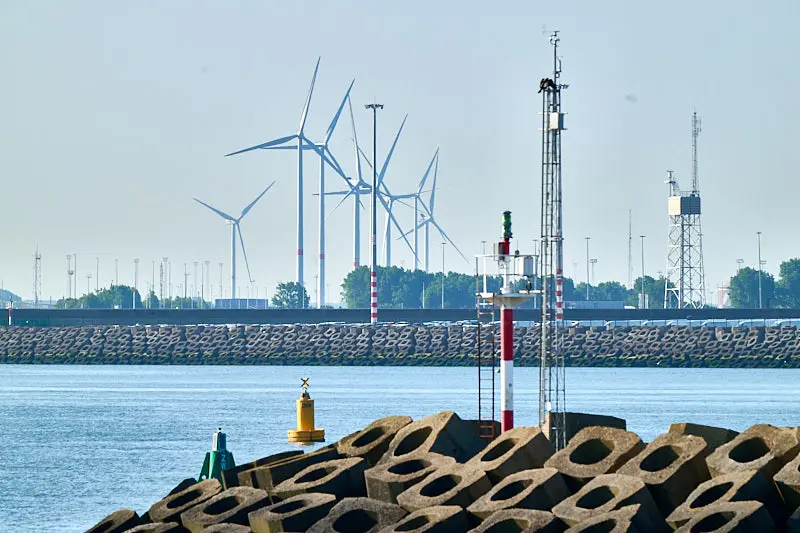
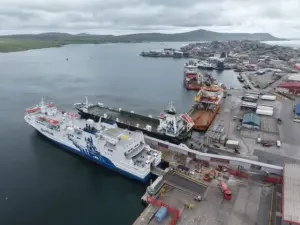
This strategic injection of liquidity provides the Port Authority with financial flexibility as it embarks on a series of capital-intensive projects. Among the core infrastructure initiatives earmarked for immediate funding are the extensive modernization and deepening of the Europa Terminal in Antwerp, alongside the expansion and decarbonization of the dedicated cruise and roll-on/roll-off (Ro-Ro) terminals in Zeebrugge.
By aligning its capital allocation strategy with stringent Environmental, Social, and Governance (ESG) principles, the Port of Antwerp-Bruges is positioning itself not merely as a high-capacity freight hub, but as a pioneer in green logistics, energy transition, and sustainable maritime infrastructure within the Hamburg-Le Havre port range.
+-----------------------------------------------------------------------------------+
|                        PORT OF ANTWERP-BRUGES FINANCING AT A GLANCE               |
+-----------------------------------------------------------------------------------+
| Initial Facility Size : €500 Million Revolving Credit Line (RCF)                  |
| 10-Year CapEx Target  : ~€5 Billion Total Investment Program                      |
| Lead Coordinator/Agent: KBC Bank                                                  |
| ESG Coordinator       : ABN AMRO                                                  |
| Participating Syndicate: Belfius, Rabobank, Crédit Agricole CIB, Société Générale |
| Key Projects Identified: Europa Terminal Redevelopment (Antwerp)                  |
|                         Zeebrugge Cruise & Ro-Ro Terminal Decarbonization         |
+-----------------------------------------------------------------------------------+
Detailed Chronology and Financing Framework
Evolution of the Post-Merger Capital Strategy
The securing of this €500 million credit line represents a crucial financial milestone following the historical 2022 merger between the Port of Antwerp and the Port of Zeebrugge. The unified entity, operating under a single corporate and operational structure, required a modernized, agile balance sheet capable of supporting cross-site developments across both liquid bulk, containerized freight, automotive, and passenger segments.
Over the past 24 months, management evaluated multiple debt-financing vehicles to replace legacy credit lines and establish a unified corporate treasury function. The newly structured RCF provides a flexible, multi-currency liquidity buffer that can be drawn down dynamically in tandem with project timelines, mitigating carry costs associated with upfront long-term bond issuances while preserving access to favorable pricing structures.
Syndicate Architecture and ESG Integration
The banking syndicate comprises a balance of Belgian financial powerhouses and international corporate banking institutions with strong maritime and infrastructure finance desks:
- KBC Bank served as the overall Finance Coordinator and Facility Agent, managing the transaction structure, documentation, and operational syndicate management.
- ABN AMRO took on the specialized role of Sustainability Coordinator, establishing the framework necessary to integrate sustainability-linked key performance indicators (KPIs) into the facility’s ongoing terms.
- Belfius Bank, Rabobank, Crédit Agricole Corporate and Investment Bank (CIB), and Société Générale participated as co-underwriters and lending partners, underscoring strong regional and pan-European banking confidence in the port authority’s credit profile.
The integration of ABN AMRO as Sustainability Coordinator signals that pricing on drawdowns under this facility will likely be tied to specific ESG metrics. These metrics are expected to measure progress on carbon reduction targets, shore-power installation ratios, and circular economic development across the port’s vast industrial estate.
Supporting Context and Key Metrics
The Core Infrastructure Pillars
The €500 million credit facility acts as the flexible foundation for an integrated portfolio of infrastructure upgrades spanning the dual sites of Antwerp and Zeebrugge.
                       €5 Billion 10-Year Investment Program
                                         |
         +-------------------------------+-------------------------------+
         |                                                               |
  Antwerp Infrastructure                                        Zeebrugge Infrastructure
         |                                                               |
  +------+: Modernization of Europa Terminal                      +------+: Cruise Terminal Expansion
  |        - Draft Deepening (13.5m to 16m)                        |        - Onshore Power Integration
  |        - 700,000 TEU Added Capacity                           |        - Ro-Ro Hub Electrification
  |        - Electric Automated Stacking Cranes                   |
  |                                                               +------+: Green Molecules Platform
  +------+: Energy Transition Hub                                          - Hydrogen/Ammonia Import Links
           - Antwerp@C CO2 Network                                         - Carbon Capture Interconnects
           - Hydrogen Infrastructure
1. Europa Terminal Redevelopment (Antwerp)
The Europa Terminal, situated downstream from the locks on the right bank of the Scheldt River, is undergoing a multi-year, multi-phase overhaul designed to accommodate Ultra-Large Container Vessels (ULCVs) with drafts up to 16 meters.
- Engineering Scope: The project entails the demolition and reconstruction of a 1,200-meter-long quay wall. The old quay wall is being replaced with a reinforced, deeper structure using an advanced civil engineering methodology that allows container operations to continue on remaining sections throughout the construction lifecycle.
- Capacity Expansion: Once fully commissioned, the modernized terminal will add approximately 700,000 TEU (Twenty-Foot Equivalent Units) of handling capacity, while simultaneously increasing operational efficiency per square meter of dockland.
- Electrification & Decarbonization: The project incorporates automated, zero-emission stacking cranes (Automated Stacking Cranes – ASCs) powered entirely by green electricity, replacing conventional diesel-straddle carrier fleets and reducing scope 1 emissions within the yard.
2. Zeebrugge Terminal Operations & Green Shipping Hub
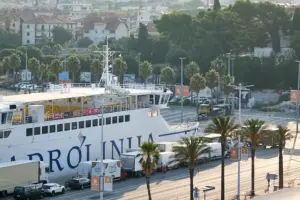
In Zeebrugge, funding is targeted at cementing the port’s role as a primary European gateway for vehicle logistics (Ro-Ro) and passenger cruise lines, while embedding decarbonization infrastructure into maritime operations.
- Shore-Power Integration (Cold Ironing): Funds will support the installation of high-voltage shore power connections across cruise and Ro-Ro berths. This infrastructure allows berthed vessels to shut off auxiliary diesel generators, drawing grid-supplied renewable power to eliminate localized sulfur oxides ($SO_x$), nitrogen oxides ($NO_x$), and particulate emissions.
- Passenger & Ro-Ro Logistics Optimization: Redevelopment of passenger terminal facilities to handle next-generation cruise liners alongside expanded staging yards for automotive logistics, supporting the rapid growth of electric vehicle (EV) imports from global manufacturers.
Quantitative Overview: Port Operations & Strategic Target Metrics
| Metric | Current Baseline (Unified Port) | Target / Post-Investment Projection |
|---|---|---|
| Annual Freight Throughput | ~271 million tonnes | >300 million tonnes |
| Container Capacity (Antwerp) | ~12.5 million TEU | ~15+ million TEU (via Europa & ECA projects) |
| Direct & Indirect Employment | ~164,000 jobs | Projected increase of 10,000+ logistics/tech roles |
| CO2 Emissions Reduction | Baseline 2020 metrics | 55% reduction by 2030; Net-Zero by 2050 |
| Shore Power Coverage (Zeebrugge) | Selective cruise berths | 100% of major cruise and key Ro-Ro berths by 2030 |
Official Statements and Stakeholder Perspectives
The corporate leadership of the Port of Antwerp-Bruges, alongside its banking partners, framed the transaction as a vote of confidence in the port’s structural resilience and long-term vision.
Port Authority Executive Leadership
Jacques Vandermeiren, Chief Executive Officer of the Port of Antwerp-Bruges, highlighted the strategic imperative of securing liquid credit in a volatile global market:
"To maintain our competitive edge in the North European port range, continuous investment in cutting-edge infrastructure and decarbonization is non-negotiable. Securing this €500 million revolving credit facility provides us with the financial agility required to execute our ambitious €5 billion master plan. The commitment of six major financial institutions reflects deep market trust in our unified port strategy, our financial health, and our vision to become the driver of Europe’s green energy transition."
Annick De Ridder, Vice-Mayor of the City of Antwerp and President of the Board of Directors of the Port of Antwerp-Bruges, emphasized the economic multiplier effect of the CapEx strategy:
"This landmark transaction ensures that both Antwerp and Zeebrugge remain world-class logistical platforms. The redevelopment of the Europa Terminal alone is a masterpiece of sustainable engineering that will safeguard our position as a preferred port of call for international shipping lines, creating direct value and job security for the region."
Syndicate Bank Representatives
Speaking on behalf of the lead administrative bank, a senior representative from KBC Corporate Banking stated:
"As lead coordinator and agent, KBC is proud to facilitate this transformative credit line for the Port of Antwerp-Bruges. The port represents the backbone of the Belgian economy and a fundamental hub for international trade flows. This structured RCF provides the operational flexibility and liquidity profile needed to support capital-intensive developments in a dynamic economic climate."
Representing the sustainability framework, an executive from ABN AMRO added:
"Integrating sustainability into corporate finance structures is essential for the transition of heavy transport and maritime hubs. As Sustainability Coordinator, ABN AMRO worked closely with the Port Authority to ensure that ESG priorities—ranging from energy efficiency to shore-power expansion—remain integral to their ongoing balance sheet management."
Future Outlook and Strategic Imperatives
Navigating Geopolitical and Economic Shifts
The securing of external credit comes at a critical juncture for European maritime hubs. Ports across North-West Europe are grappling with fluctuating container volumes driven by macroeconomic headwinds, global supply chain realignments, and shifting trade routes resulting from geopolitical tension in the Red Sea and East Asia.
By establishing a flexible €500 million credit buffer, the Port of Antwerp-Bruges insulates its long-term infrastructure pipeline from short-term market volatility. Unlike project-specific loans with rigid disbursement terms, the RCF allows executive management to draw down, repay, and redraw capital in alignment with macroeconomic conditions, raw material cost fluctuations, and contractor schedules.
+-----------------------------------------------------------------------------------+
|                        STRATEGIC PRIORITIES FOR THE NEXT DECADE                   |
+-----------------------------------------------------------------------------------+
| 1. Container Modernization : Deepening Europa Terminal; advancing Extra Capacity   |
|                              Antwerp (ECA) initiative.                            |
| 2. Green Energy Hub        : Developing Antwerp@C CO2 transport network; establishing |
|                              hydrogen import corridors at Zeebrugge.              |
| 3. Regulatory Alignment    : Meeting EU Fit for 55, FuelEU Maritime, and EU ETS     |
|                              compliance deadlines.                                |
| 4. Digitalization          : Implementing port-wide digital twin technology for   |
|                              real-time vessel tracking and berth allocation.      |
+-----------------------------------------------------------------------------------+
The Green Hydrogen and Energy Transition Hub
Beyond container handling and Ro-Ro operations, a key objective of the €5 billion investment program is to transform the Port of Antwerp-Bruges into the primary energy gateway for Western Europe.
- Hydrogen Import Hub: Zeebrugge is being developed into a major landing point for green hydrogen and hydrogen derivatives (such as liquid ammonia and methanol) imported from South America, North Africa, and the Middle East. The facility strategy includes pipelines connecting Zeebrugge to the industrial cluster in Antwerp and onward into the German hinterland via the European Hydrogen Backbone network.
- Antwerp@C CO2 Infrastructure: In Antwerp, home to Europe’s largest integrated chemical cluster, capital investments will support the Antwerp@C project—an initiative aimed at capturing, liquefying, and exporting millions of tonnes of industrial $CO_2$ for long-term offshore geological storage.
EU Regulatory Compliance and Market Position
The financial roadmap directly supports compliance with increasingly stringent European Union environmental directives:
- EU ETS for Shipping: As the EU Emissions Trading System extends to maritime transport, shipping lines face carbon financial obligations. Ports offering low-carbon infrastructure, shore-power connections, and alternative fuel bunkering (methane, hydrogen, methanol) will gain a distinct competitive edge.
- FuelEU Maritime & Alternative Fuels Infrastructure Regulation (AFIR): Mandates targeting the greenhouse gas intensity of energy used on board ships, alongside requirements for shore-power availability by 2030, require significant capital expenditure at the quay level—precisely the investment targeted by this new financial agreement.
By executing this strategic financing model, the Port of Antwerp-Bruges not only secures its capital needs for immediate works like the Europa and Zeebrugge terminals, but also solidifies its role as an indispensable, sustainable infrastructure foundation for Europe’s industrial future.