





Executive Overview
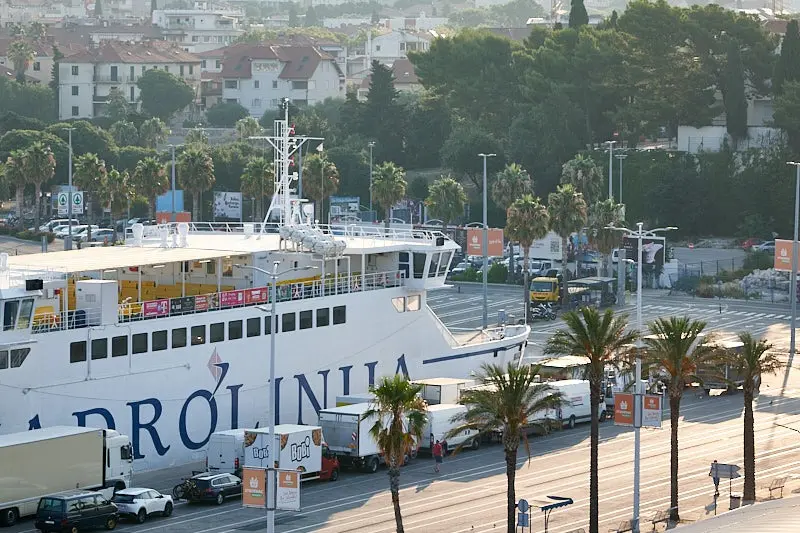
Croatia’s flagship state-owned ferry operator, Jadrolinija, has formally initiated the most extensive fleet modernization program in its modern history. Facing an aging inventory of ships and increasingly stringent European Union climate mandates, the maritime carrier has committed to an investment framework estimated between €200 million and €260 million to build ten next-generation vessels by 2030.
This strategic pivot aims to resolve a dual operational dilemma. On one hand, Jadrolinija acts as a vital public transport provider, maintaining essential connections between the Croatian mainland and populated archipelagos across the Adriatic Sea. On the other, the operator faces significant financial headwinds. Financial reports reveal that despite generating €195.1 million in revenue and serving 12.6 million passengers alongside 3.8 million vehicles, the company posted a net loss of €8.7 million.
To reconcile public service obligations with commercial and environmental mandates, Jadrolinija’s capital expenditure plan prioritizes decarbonization and operational efficiency. The strategic roadmap includes seven eco-friendly, low-emission Roll-on/Roll-off (Ro-Ro) passenger ferries and three fully electric passenger-only vessels. This transition represents a major shift away from carbon-intensive diesel propulsion, aligning the carrier with the EU’s Fit for 55 policy and broader maritime sustainability goals.
Detailed Chronology and Strategic Blueprint
The Path to Modernization: A Decade-Long Roadmap
The current renewal plan is the result of years of internal audits and technical feasibility studies, driven by the operational limitations of Jadrolinija’s legacy fleet. Over the past decade, the carrier relied heavily on second-hand market acquisitions and targeted retrofits to maintain schedule capacity. However, rising fuel prices, costlier marine maintenance, and strict EU emissions accounting made new construction necessary.
+-------------------------------------------------------------------+
|               JADROLINIJA 2030 FLEET MODERNIZATION                |
+-------------------------------------------------------------------+
|  Target Capital Investment: €200M – €260M                         |
|  Timeline: 2024 – 2030                                            |
|                                                                   |
|  +-----------------------------+   +---------------------------+  |
|  |    7 ECO-FRIENDLY FERRIES   |   |  3 FULLY ELECTRIC SHIPS   |  |
|  | High-Capacity Ro-Ro Vessels |   | Short-Sea Passenger Craft |  |
|  | Hybrid / Low-Emission Tech  |   | Zero Direct Emissions     |  |
|  +-----------------------------+   +---------------------------+  |
+-------------------------------------------------------------------+
The execution phase of the 2030 fleet strategy centers on public procurement, design tenders, and regional industrial participation.
Procurement Framework and Vessel Specifications
The design specifications of the ten new builds are tailored to the distinct geography and port infrastructure of the Croatian coastline:
- Seven Eco-Friendly Ro-Ro Ferries: Designed primarily for high-density, medium-to-long-distance island routes (such as Split–Supetar, Split–Hvar, and Zadar–Preko). These vessels will feature hybrid propulsion architectures, combining highly efficient diesel-electric engines with battery storage banks to minimize fuel burn during transit and eliminate local emissions while docked.
- Three Fully Electric Passenger Ships: Engineered specifically for shorter, high-frequency coastal runs and intra-island links (such as the Šibenik and Zadar archipelagos). Designed with lightweight composite hulls and advanced lithium-ion energy storage systems, these ships will operate with zero direct emissions, providing quiet operation on fragile coastal routes.
Engineering specifications—including draft, ramp load capacities, passenger accommodations, and turn-around speeds—are being calibrated to fit the physical constraints of historic Croatian ports, many of which cannot accommodate deep-draft or over-length vessels.
Supporting Context and Operational Metrics
Fleet Demographics: The Challenge of an Aging Fleet
Jadrolinija currently operates a fleet of 58 vessels, comprising Ro-Ro ferries, coastal catamarans, and traditional passenger ships. The central driver for this major investment is the advancing age of the fleet, which currently averages approximately 28 years.
| Metric | Current Fleet Status / Performance |
|---|---|
| Active Vessels | 58 ships |
| Average Fleet Age | ~28 years |
| Peak Summer Operations | >600 departures per day |
| Annual Passenger Volume | 12.6 million |
| Annual Vehicle Volume | 3.8 million |
| Annual Revenue | €195.1 million |
| Net Financial Result | -€8.7 million (Loss) |
In maritime transport, operating vessels past the quarter-century mark introduces significant systemic vulnerabilities:
- Escalating Maintenance Expenditures: Aging marine engines, hull plating, and auxiliary machinery require frequent overhauls, driving up dry-dock costs and risk of unscheduled downtime.
- Elevated Fuel Consumption: Legacy propulsion systems consume significantly more marine gasoil (MGO) per nautical mile compared to modern hull designs and hybrid powertrains.
- Regulatory Compliance Penalties: Older vessels face growing financial penalties under the expanded EU Emissions Trading System (ETS) and FuelEU Maritime regulations, which penalize carbon-intensive maritime operators.
Operational Pressures: The Seasonal Demand Surge
Jadrolinija’s business model is defined by extreme seasonality. During the winter off-season, the operator runs a reduced schedule to preserve essential island lifelines, often operating at a loss due to low passenger volumes.
Conversely, during the peak summer tourist season, the operator ramps up capacity to run more than 600 departures per day. This seasonal compression strains crew schedules, port turn-around times, and mechanical systems. The legacy fleet’s inability to efficiently handle this extreme volume variance directly contributes to the operational deficit.
OPERATIONAL STRAIN: SEASONAL CAPACITIES

  [WINTER]  =====> Low Demand / Mandatory Lifeline Routes (High Unit Costs)
  [SUMMER]  ==============================================================> High Demand (>600 daily departures)
Financial Analysis: Structural Deficits vs. Revenue Potential
The operator’s financial results—€195.1 million in revenue against an €8.7 million net loss—highlight the financial challenges facing state-owned ferry lines across Southern Europe:
- Public Service Obligations (PSOs): A substantial portion of Jadrolinija’s routes are legally mandated non-profitable lines that must run year-round to support permanent island residents. Government subsidies often only partially cover the inflation-adjusted costs of fuel, labor, and maintenance on these non-commercial routes.
- Fuel Volatility: As marine fuel prices fluctuate globally, legacy vessels without alternative or hybrid energy systems absorb the full impact of market surges.
- Capital Asset Depreciation: Older vessels lose commercial resale value rapidly while demanding larger emergency repair reserves, placing pressure on the company’s overall balance sheet.
Official Statements and Stakeholder Perspectives
Corporate and Government Directives
Jadrolinija’s management team and the Croatian Ministry of Sea, Transport and Infrastructure have emphasized that fleet modernization is not merely a preference, but an operational necessity to secure the carrier’s long-term commercial viability.
"This fleet renewal program represents a structural turning point for Jadrolinija. By committing €200 to €260 million through 2030, we are securing maritime lifelines for Croatian island communities and modernizing our fleet to meet modern European environmental standards," noted corporate leadership during strategic planning briefings.
Government officials have echoed these priorities, emphasizing that state support and EU funding mechanisms—including the National Recovery and Resilience Plan (NPOO) and the Connecting Europe Facility (CEF)—will be critical to co-financing the decarbonization push.
Island Community and Tourism Perspectives
For residents of Croatia’s inhabited islands, modernizing the ferry service is vital for socioeconomic survival. Representatives from island municipal councils have consistently advocated for:
- Improved Service Reliability: Newer vessels drastically reduce the risk of service cancellations caused by mechanical failures or bad weather (such as heavy Bura or Jugo winds).
- Increased Vehicle Capacity: Modern Ro-Ro deck designs allow for faster loading and unloading, reducing traffic gridlock at port terminals like Split, Zadar, and Dubrovnik during peak tourist months.
- Reduced Environmental Footprint: Local communities, whose economies rely on pristine marine environments, strongly support replacing older diesel ships with silent, zero-emission electric passenger craft.
Future Outlook: Infrastructure, Domestic Shipbuilding, and Green Corridors
The Infrastructure Challenge: Shore-Side Power and Charging
The success of Jadrolinija’s transition to zero-emission and hybrid vessels depends on shore-side infrastructure. Introducing three fully electric vessels and seven hybrid ferries requires upgrading the electrical grid at major Croatian ports.
+----------------------------------------------------------------+
|                 ADRIATIC GREEN CORRIDOR INITIATIVE              |
+----------------------------------------------------------------+
|                                                                |
|   +------------------+    High-Capacity    +---------------+   |
|   | Mainland Port    |==== Shore Power ====| Hybrid/Electric|   |
|   | Infrastructure   |     Charging Link   | Vessels       |   |
|   +------------------+                     +---------------+   |
|            ||                                      ||          |
|            /                                      /          |
|   +------------------+                     +---------------+   |
|   | Microgrid & Solar|                     | Zero-Emission |   |
|   | Buffer Batteries |                     | Island Transit|   |
|   +------------------+                     +---------------+   |
+----------------------------------------------------------------+
Key infrastructural priorities include:
- Onshore Power Supply (OPS): Installing high-capacity berth charging connections so hybrid ships can turn off their auxiliary engines completely while in port.
- Rapid Charging Terminals: Building dedicated medium-voltage fast-charging stations at island terminals to recharge fully electric passenger vessels during their standard 15-to-30-minute turnarounds.
- Grid Integration: Partnering with national utility providers (such as HEP) to ensure local island electrical grids can handle the load of fast-charging marine batteries without interrupting power to nearby residents.
Implications for the Croatian Shipbuilding Industry
The €200M–€260M program could also provide a significant boost to domestic shipyards, such as Brodosplit, Tehnomont, and 3. Maj.
Croatian shipbuilders have a long history of custom naval architecture, but they have faced increasing global competition from Asian and Turkish yards. If domestic shipyards secure the tenders for these green vessels, it would revitalize the local shipbuilding ecosystem, retaining skilled maritime engineering talent within Croatia and creating a center of expertise for small-to-medium green vessel manufacturing in the Mediterranean.
Broad Regional Impact: The Adriatic Green Maritime Corridor
By committing to ten low- and zero-emission vessels by 2030, Jadrolinija is positioning itself as an early adopter of green maritime transit in Southern Europe. This strategic shift addresses multiple operational challenges at once:
- Lowering Long-Term Operational Costs: Transitioning to electric and hybrid propulsion will insulate the company from volatile marine gasoil prices and reduce maintenance overhead.
- Eliminating Regulatory Risk: Phasing out carbon-intensive vessels helps Jadrolinija avoid escalating EU emissions taxes and penalty fees.
- Protecting Coastal Environments: Minimizing emissions and noise pollution helps preserve the delicate marine ecosystems of the Adriatic Sea.
This fleet modernization plan provides a clear strategy for balancing public service responsibilities with fiscal discipline. The success of the program will serve as a model for regional short-sea shipping operators across Europe navigating the transition toward zero-emission maritime transport.