






Executive Overview
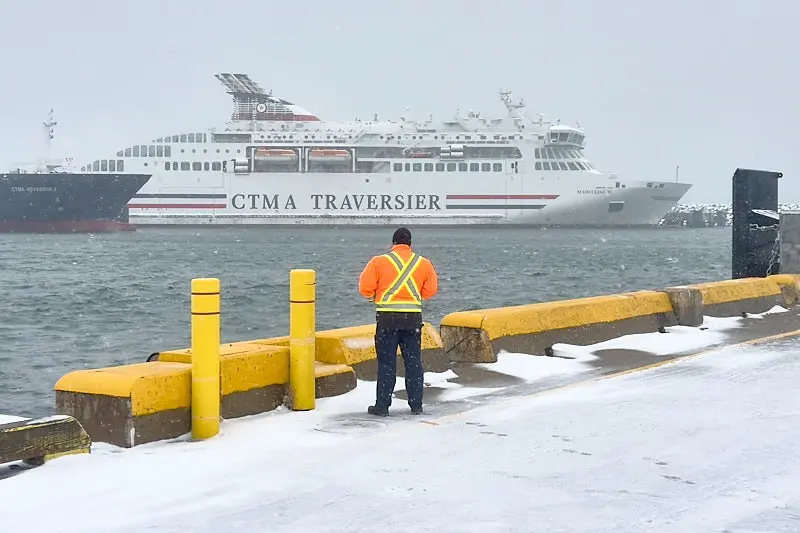
The continuous maritime supply line linking the isolated Magdalen Islands (Îles-de-la-Madeleine) to mainland Canada has cleared a pivotal regulatory hurdle ahead of an upcoming maintenance cycle. The Canadian Transportation Agency (CTA) has formally determined that no suitable Canadian-flagged vessel is available to substitute for the primary roll-on/roll-off passenger (Ro-Pax) ferry, MADELEINE II, during its scheduled four-month drydocking period.
The ruling, issued under Ruling W-2026-128 following Marine Notice 567543, opens the legal path for the vessel’s operator, Coopérative de transport maritime et aérien (CTMA), to temporarily charter the Cyprus-flagged Ro-Pax vessel SUPERSTAR II. CTMA plans to deploy the foreign ship between Cap-aux-Meules, Quebec, and Souris, Prince Edward Island, from November 15, 2026, to March 15, 2027. To account for winter sea ice that frequently locks Prince Edward Island’s harbors during mid-winter, the plan includes a contingency protocol to reroute operations to North Sydney, Nova Scotia.
While the CTA’s economic determination marks a critical regulatory milestone, it does not unilaterally grant operational authority. Final authorization hinges on the issuance of a temporary Coasting Trade Licence by the Minister of Public Safety, acting through the Canada Border Services Agency (CBSA), alongside safety and environmental compliance clearances from Transport Canada.
The impending deployment highlights a recurring vulnerability in Canada’s domestic maritime infrastructure: a shortage of high-capacity, ice-capable, Canadian-flagged replacement tonnage capable of maintaining vital passenger and freight lifelines during mandatory maintenance cycles.
+-----------------------------------------------------------------------------------+
|                           DEPLOYMENT AT A GLANCE                                  |
+------------------------+----------------------------------------------------------+
| Primary Operator       | CTMA (Coopérative de transport maritime et aérien)       |
| Primary Vessel Out     | MADELEINE II (Scheduled Maintenance)                     |
| Replacement Vessel     | SUPERSTAR II (Cyprus Flagged)                            |
| Proposed Service Period| November 15, 2026 – March 15, 2027                       |
| Primary Route          | Cap-aux-Meules, QC <--> Souris, PEI                      |
| Contingency Route      | Cap-aux-Meules, QC <--> North Sydney, NS (Ice Plan)     |
| Primary Regulatory Body| Canadian Transportation Agency (Ruling W-2026-128)      |
| Final Approving Body   | Minister of Public Safety / CBSA (Licence Pending)       |
+------------------------+----------------------------------------------------------+
Detailed Chronology
The regulatory process behind the temporary charter of SUPERSTAR II highlights the long lead times required to coordinate statutory vessel overhauls in accordance with Canadian maritime cabotage laws.
       [CTMA Fleet Assessment & Drydock Planning]
                           │
                           ▼
     [Market Survey: Search for Canadian Tonnage]
             (No Suitable Domestic Ships Found)
                           │
                           ▼
     [Application Filed Under Coasting Trade Act]
                           │
                           ▼
      [CTA Issues Marine Notice 567543 to Industry]
             (Objection Period Opens for Owners)
                           │
                           ▼
     [CTA Issues Determination: Ruling W-2026-128]
          (Zero Compliant Canadian Ships Offered)
                           │
                           ▼
   [PENDING: CBSA Duty Assessment & Public Safety Approval]
                           │
                           ▼
     [PENDING: Transport Canada Flag-State Inspections]
                           │
                           ▼
     [Target Operations Begin: Nov 15, 2026 - Mar 15, 2027]
Phase 1: Operational Assessment and Market Survey
Long-term vessel maintenance schedules require Ro-Pax ferries operating under Canadian regulations to undergo periodic out-of-water drydocking for hull inspection, propulsion system maintenance, and recertification by recognized classification societies. Facing a mandatory overhaul window for MADELEINE II in late 2026, CTMA conducted a market survey across the Canadian commercial fleet.
The objective was to identify a Canadian-registered Ro-Pax vessel featuring:
- Adequate passenger capacity;
- Vehicles and commercial freight capacity (lane-meters);
- Ice-class hull reinforcement suitable for early-to-mid winter conditions in the Gulf of St. Lawrence;
- Deck configurations compatible with the shore-side ramp infrastructure at Cap-aux-Meules and Souris.
The survey concluded that no duty-paid, Canadian-flagged vessel meeting these technical and operational criteria was idle or available for charter during the required timeframe.
Phase 2: Application for Coasting Trade Waiver
Recognizing the deficit in domestic tonnage, CTMA submitted a formal application under the Coasting Trade Act to secure a temporary licence for the foreign-flagged SUPERSTAR II.
Following established administrative protocols, the Canadian Transportation Agency issued Marine Notice 567543 to the domestic marine sector. This notice allowed Canadian vessel owners to challenge the waiver application by offering a suitable domestic alternative.
Phase 3: The CTA Determination (Ruling W-2026-128)
Upon the closure of the notice period, no Canadian shipowner stepped forward with an equivalent or suitable alternative vessel.
Consequently, the Agency rendered Ruling W-2026-128, establishing that:
- There is no suitable Canadian vessel available to perform the activity described in CTMA’s application.
- No identical or equivalent commercial marine service is offered by a Canadian operator during the prescribed period from November 15, 2026, to March 15, 2027.
Phase 4: Pending Approvals (2025–2026 Pipeline)
With the CTA’s economic hurdle cleared, the application transitions to regulatory authorities:
- Customs and Duty Evaluation: The Canada Border Services Agency must calculate applicable temporary import duties and taxes under the Coasting Trade Licence framework.
- Safety Inspections: Transport Canada Marine Safety and Security (TCMSS) will evaluate SUPERSTAR II to verify compliance with national safety, environmental protection, and crew qualification standards before issuing operational clearances.
- Ministerial Authorization: The Minister of Public Safety will issue the official Coasting Trade Licence once all duty assessments and safety prerequisites are satisfied.
Supporting Context & Maritime Metrics
The Geographical Reality: A Seasonal Lifeline
The Magdalen Islands archipelago, situated in the center of the Gulf of St. Lawrence, depends entirely on maritime transport for survival. While air service handles emergency medical transfers and urgent travel, maritime shipping carries the vast majority of goods, essential commodities, commercial exports, and passenger travel.
                 GULF OF ST. LAWRENCE

                      [Magdalen Islands]
                      (Cap-aux-Meules)
                             /
                            /
    Primary Route          /       Contingency Route
    ~5-Hour Crossing      /         ~8-10 Hour Crossing
                         /
                        v            v
                 [Souris, PEI]    [North Sydney, NS]
                 (Ice Vulnerable)  (Deep-Water / Icebreaker Priority)
The primary route connecting Cap-aux-Meules, Quebec, to Souris, Prince Edward Island, covers approximately 70 nautical miles and takes about five hours under normal conditions.
However, mid-winter shipping in the Gulf of St. Lawrence introduces severe operational hazards:
- Shallow Water & Fast Ice: The approaches to Souris, PEI, are prone to early, dense coastal ice buildup that can trap standard vessels, requiring heavy icebreaker intervention.
- The North Sydney Redirection: When ice conditions render Souris inaccessible, CTMA shifts its mainland terminal to North Sydney, Nova Scotia. This extends the open-water voyage to roughly 110 nautical miles, requiring greater vessel sea-keeping stability, fuel capacity, and structural hull integrity.
Regulatory Framework: The Coasting Trade Act
Canada’s Coasting Trade Act protects the domestic marine sector by reserving coastwise shipping—the transport of passengers and goods between Canadian ports—for Canadian-registered, duty-paid vessels.
+----------------------------------------------------------------------------------+
|                   CANADIAN COASTING TRADE WAIVER PROCESS                         |
+----------------------------------------------------------------------------------+
|                                                                                  |
|   1. APPLICANT IDENTIFIES NEED FOR FOREIGN VESSEL                               |
|      (Due to lack of available domestic market tonnage)                          |
|                                                                                  |
|   2. CANADIAN TRANSPORTATION AGENCY (CTA) EVALUATION                             |
|      * Publishes Marine Notice to domestic industry                              |
|      * Assesses technical suitability of any Canadian responses                  |
|      * Issues formal Ruling (e.g., Ruling W-2026-128)                             |
|                                                                                  |
|   3. TRANSPORT CANADA SAFETY INSPECTION                                          |
|      * Verifies foreign vessel meets Canadian safety and pollution codes         |
|      * Inspects crew certification and vessel maintenance records                |
|                                                                                  |
|   4. CANADA BORDER SERVICES AGENCY / PUBLIC SAFETY                               |
|      * Calculates applicable customs tariffs and taxes                           |
|      * Issues Coasting Trade Licence (Final Legal Authorization)                 |
|                                                                                  |
+----------------------------------------------------------------------------------+
To secure a temporary waiver to charter a foreign-flagged vessel, an operator must prove to the CTA that no domestic vessel is available. Even with a CTA determination, foreign-flagged vessels remain subject to temporary customs duties proportional to the ship’s value over the length of the charter period.
Comparative Vessel Metrics: Domestic vs. Foreign Charter
Deploying a substitute vessel requires close alignment between the incoming ship’s physical layout and existing port ramps, loading systems, and commercial throughput demands. The dynamic structural differences between the core vessel and its proposed substitute illustrate the logistical planning behind the route’s winter stability:
+-------------------------------+-----------------------+-----------------------+
| TECHNICAL SPECIFICATION       | MADELEINE II (Current)| SUPERSTAR II (Charter)|
+-------------------------------+-----------------------+-----------------------+
| Flag / Port of Registry       | Canada (Ottawa)       | Cyprus (Limassol)     |
| Service Purpose               | Year-round Ro-Pax     | Temporary Substitute  |
| Primary Winter Operational Period| Regular Service     | Nov 15, 2026 – Mar 15, 2027|
| Primary Ferry Route           | Cap-aux-Meules-Souris | Cap-aux-Meules-Souris |
| Alternative Winter Port       | North Sydney, NS      | North Sydney, NS      |
| Ice Class Standard            | Reinforced Hull       | Baltic / Ice-Capable  |
| Primary Cargo Types           | Trailers, Cars, Goods | Trailers, Cars, Goods |
+-------------------------------+-----------------------+-----------------------+
The substitute ship must match the deck height, ramp width, and electrical connections at Cap-aux-Meules to prevent major interruptions to freight delivery. Freight trucks carrying food, medicine, fuel tanks, and retail goods depend on these standard dock interfaces.
Official Regulatory Determinations
Analysis of CTA Ruling W-2026-128
The official determination issued by the Canadian Transportation Agency provides the economic justification for opening the route to a foreign-flagged vessel.
Extracts and legal thresholds established under Ruling W-2026-128 highlight the strictly evidence-based nature of the proceeding:
"The Agency, upon review of the application and in the absence of any offer of a suitable Canadian vessel by the domestic industry following the issuance of Marine Notice 567543, determines that there is no suitable Canadian vessel available to perform the service requested by CTMA."
The ruling emphasizes that the CTA’s mandate is strictly focused on market capacity and technical suitability:
"This determination confirms the unavailability of a Canadian vessel under the Coasting Trade Act. It does not, in itself, constitute an authorization to commence operations. The operation of the foreign vessel remains subject to the issuance of a coasting trade licence by the Minister of Public Safety, contingent upon meeting all statutory safety, customs, and immigration requirements."
Division of Regulatory Authority
                     FEDERAL REGULATORY JURISDICTION
                                    │
       ┌────────────────────────────┼────────────────────────────┐
       ▼                            ▼                            ▼
 [CANADIAN TRANSPORTATION    [TRANSPORT CANADA           [CANADA BORDER SERVICES
      AGENCY (CTA)]           MARINE SAFETY]                 AGENCY (CBSA)]
       │                            │                            │
       ├─ Market Availability Test  ├─ Hull Integrity Checks     ├─ Temporary Tariff Rates
       ├─ Technical Suitability     ├─ Environmental Standards   ├─ Immigrant & Crew Visa
└─ Ruling W-2026-128 └─ Safety Recertification └─ Final Licence Issue- Canadian Transportation Agency (Economic Gatekeeper): Tests the domestic market to ensure Canadian shipowners are given priority.
- Transport Canada (Safety and Operations): Inspects the foreign vessel (SUPERSTAR II) upon entering Canadian waters to ensure it complies with the Canada Shipping Act, 2001 and international maritime safety standards.
- Canada Border Services Agency & Public Safety (Customs and Licensing): Collects applicable temporary import duties and issues the official Coasting Trade Licence.
Future Outlook & Strategic Implications
Domestic Fleet Vulnerabilities
The necessity of chartering SUPERSTAR II highlights a structural deficit within Eastern Canada’s marine transportation infrastructure. The lack of domestic reserve vessels leaves critical regional supply chains exposed whenever a primary ferry enters extended maintenance.
When a domestic vessel enters drydock, operators face two main options:
- Secure an approved foreign charter via temporary Coasting Trade waivers;
- Accept severe service reductions that can disrupt isolated regional economies.
                       CANADIAN MARITIME SUPPLY CHAIN
                                    │
               ┌────────────────────┴────────────────────┐
               ▼                                         ▼
   [OPTION A: Domestic Reserve]              [OPTION B: Foreign Charter]
               │                                         │
    • High Domestic Investment                • CTA Waiver Process Required
    • Limited Commercial Return               • Vulnerable to Global Charter Rates
    • Few Ice-Capable Vessels                 • Subject to Customs & Tariff Duties
Strategic Transport Planning for the Magdalen Islands
The scheduled winter replacement of MADELEINE II by SUPERSTAR II represents a critical test of supply chain resilience for the Magdalen Islands archipelago.
                               2026-2027 TIMELINE

  MID-2025               MID-2026             NOV 15, 2026         MAR 15, 2027
     │                      │                      │                    │
     ▼                      ▼                      ▼                    ▼
[CBSA Duty       [Transport Canada       [SUPERSTAR II        [MADELEINE II
 Assessment]      Safety Inspection]      Deployment Begins]   Returns to Service]
Maintaining continuous, reliable sea transport between November 2026 and March 2027 will require careful operational execution across several key areas:
- Terminal Infrastructure Adaptation: CTMA must verify that ramp and mooring alignments at Cap-aux-Meules, Souris, and North Sydney are fully adapted to SUPERSTAR II before the service starts.
- Winter Weather Preparedness: Shifting operations to North Sydney, Nova Scotia, will require adjusted freight schedules to account for longer transit times across open water.
- Regulatory Completion: Timely processing of remaining CBSA and Transport Canada authorizations will be essential to avoid service delays heading into the late autumn transition.
By securing the CTA determination early under Ruling W-2026-128, CTMA has completed a crucial first step toward protecting the Magdalen Islands’ sole sea link during the 2026–2027 winter season.