








Executive Overview
In a dramatic validation of the resilience inherent in the domestic clean energy sector, a newly emerged startup has successfully acquired and revitalized a landmark battery recycling facility in Covington, Georgia. Operating under the banner of R3 Lithium, the enterprise steps directly into the footprint left by Ascend Elements, which unceremoniously entered Chapter 11 bankruptcy earlier this year following a confluence of construction disputes, canceled federal grants, and a precipitous collapse in global lithium prices.
Rather than marking the death knell for domestic critical mineral supply chains, this transition represents a hard reset. R3 Lithium secured the state-of-the-art facility—into which a previous owner poured roughly $150 million—entirely free of legacy liabilities. Bolstered by a fresh $15 million Series A funding round backed by heavyweights like Integral GlobalTech Partners, TDK Ventures, and Axial Partners, alongside more than $1 billion in pre-existing offtake contracts (including a landmark deal with global commodities giant Trafigura), R3 Lithium is poised to radically alter the economics of domestic battery recycling.
By retaining the original technical leadership and combining proprietary water-based extraction methodologies with local black-mass processing, R3 Lithium aims to supply over half of all domestically produced battery-grade lithium carbonate. This development not only underscores the viability of a circular economy for electric vehicles (EVs) and stationary energy storage systems (BESS) but also demonstrates how private enterprise and defense-adjacent critical infrastructure can survive political headwinds and macroeconomic shocks.
Detailed Chronology: From Ascend Elements to R3 Lithium
The road to R3 Lithium’s emergence was paved by both macroeconomic volatility and shifting political landscapes. To understand the significance of the Covington plant’s rebirth, one must trace the timeline of distress that befell its predecessor and the subsequent engineering of its corporate phoenix.
The Fall of Ascend Elements
In the spring of the previous year, Ascend Elements—once heralded as a crown jewel of the U.S. critical minerals strategy—found itself crushed beneath the weight of financial liabilities. The company filed for Chapter 11 bankruptcy protection following a toxic mix of construction disputes at its flagship Kentucky plant, the sudden cancellation of federal grants under a shifting federal policy environment, and a brutal crash in global lithium pricing.
Linh Austin, who assumed the role of President and CEO of Ascend Elements prior to the restructuring, pointed to longstanding financial obligations and liabilities predating his tenure as compounding factors. However, Austin maintained a steadfast belief in the underlying assets, particularly the Covington, Georgia plant. In early announcements regarding the restructuring, Austin emphasized that the facility had already achieved a historic milestone: in 2025, it became the first commercial-scale plant in the United States to produce 99-plus-percent pure lithium carbonate directly from end-of-life batteries and manufacturing scrap.
The Bankruptcy Court Reset
Faced with unsustainable debt, Ascend Elements utilized Chapter 11 as a court-supervised framework to restructure. Crucially, operations on the ground were insulated to preserve customer relationships and honour contractual obligations. This set the stage for a strategic asset transfer.
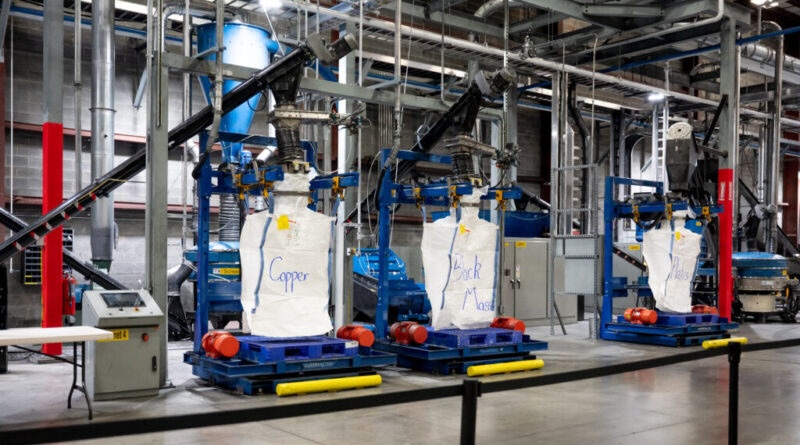
On July 26, R3 Lithium formally acquired the Covington facility. The structural advantage of the deal was immediate: R3 acquired a $150 million state-of-the-art asset with clean books and zero historical liabilities. This clean slate fundamentally recalibrated the economics of domestic lithium production, allowing the new entity to bypass the capital expenditure traps that typically plague scaling cleantech startups.
The Emergence of R3 Lithium
On September 10, R3 Lithium stepped fully out of stealth mode, announcing that it had not only taken over the physical plant but had also successfully retained the core leadership team responsible for its technological breakthroughs. Linh Austin transitioned into the role of CEO for R3 Lithium, while Ascend co-founder Dr. Eric Gratz assumed the mantle of Chief Technology Officer. Gratz, notably a member of the Technology Committee for the U.S. Department of Energy’s Li-Bridge public-private partnership (spearheaded by Argonne National Laboratory), brings vital institutional and scientific continuity to the enterprise.
With $15 million in new Series A capital earmarked for upgrading and optimizing the lithium carbonate production line, R3 Lithium is racing toward full commercial volume, projected for the latter half of the coming year.
Supporting Context & Metrics: Redefining Domestic Supply Chain Economics
The broader narrative surrounding electric vehicle adoption in the United States has frequently been characterized by fits and starts. Following legislative shifts—such as the policy adjustments enacted under the federal "OBBA" tax bill which altered federal EV tax credits—domestic EV sales experienced temporary contractions. Globally, however, industry analysts have long argued that the long-term success of electrification hinges on a robust, localized closed-loop recycling market.
The Threat of Supply Bottlenecks vs. Reality
Fears of an unforgiving lithium bottleneck have continually shadowed the clean energy transition. While stationary Battery Energy Storage Systems (BESS) for residential, commercial, and industrial use, alongside drones and military electrification programs, increasingly compete for the same raw materials, domestic recycling offers a vital pressure valve.
R3 Lithium’s operational model is designed to completely eliminate reliance on overseas refiners and primary mining operations. The Covington facility operates on a localized, closed-loop methodology:
- Shredding Capacity: The plant boasts an annual processing capacity of 30,000 metric tons of battery scrap and end-of-life cells.
- Lithium Carbonate Production: The primary production line yields 2,500 metric tons of battery-grade (99%+ purity) lithium carbonate per year, with pre-allocated physical space on the factory floor to double this output via an identical secondary line.
- Byproduct Monetization: Beyond lithium, the extraction process yields a high-value, highly concentrated metal oxide cake comprising critical elements including nickel, cobalt, manganese, and graphite. Notably, R3 projects that the market value of these recovered co-products will cover a significant portion—if not all—of the feedstock acquisition costs.
The Tech Advantage: Hydro-to-Cathode & Water-Based Precipitation
R3 Lithium utilizes a specialized calciner-based crystallization and water-based precipitation process. This methodology extracts lithium directly from recycled "black mass" (the pulverized mixture of cathode and anode materials) on a single site. By keeping the entire chain—from shredding to final chemical precipitation—under one roof, the company avoids the carbon footprint, logistical delays, and geopolitical vulnerabilities associated with shipping black mass overseas for refining in Asia.
Official Statements and Industry Alignment
The transition from a distressed corporate structure to a well-funded, liability-free startup has drawn praise from investors and industry stakeholders alike.
In statements released ahead of the formal September 10 coming-out announcement, R3 Lithium executives stressed that the mission remains entirely aligned with the foundational goals established during the plant’s inception, but with vastly improved financial footing.

"A previous owner built the site with approximately $150 million in investment; R3 acquired it with no liabilities, fundamentally resetting the economics of domestic lithium production," noted representatives for R3 Lithium in corporate disclosures.
Furthermore, the company’s existing commitments have remained entirely uninterrupted. The landmark "take-or-pay" offtake agreement with Trafigura—valued in the billions—remained fully active throughout the transition, providing an ironclad guarantee of revenue from day one.
Dr. Eric Gratz, CTO of R3 Lithium, emphasized the scientific rigor driving the enterprise: "Our ability to produce battery-grade lithium carbonate from 100% recycled content at commercial scale is no longer theoretical; we proved it on this exact floor. With our Series A funding, we are optimizing the process to meet unprecedented domestic demand."
The inclusion of investors such as TDK Ventures and Axial Partners highlights a growing institutional appetite for hard-tech manufacturing within the United States, particularly technologies that serve dual-use purposes across commercial automotive and defense sectors.
Future Outlook: Scaling Across North America and Europe
Looking ahead, R3 Lithium’s ambitions extend far beyond its flagship Covington footprint. The company has mapped out a disciplined, modular expansion strategy designed to avoid the over-extension that frequently catches capital-intensive startups off guard.
Modular Growth Tied to Offtake Agreements
According to the company’s strategic roadmap, future iterations of R3 Lithium’s recycling facilities will be deployed in modular units—each engineered to process 5,000 metric tons per annum. Crucially, these future units across North America and Europe will only break ground when underpinned by pre-secured offtake agreements. This risk-mitigation strategy ensures that supply scales in lockstep with verifiable industrial demand.
The Interplay Between EVs, BESS, and National Security
While the passenger EV market absorbs short-term policy fluctuations, the explosive growth of the BESS market guarantees a continuous, massive influx of spent stationary batteries into the recycling pipeline over the next decade. Moreover, the survival of programs like the Department of Energy’s Li-Bridge public-private partnership—which weathered recent political transitions largely due to the strategic importance of domestic critical minerals to national defense—signals a secure regulatory horizon for foundational battery processors.
As R3 Lithium ramps its Covington facility toward full operational capacity over the next year, it stands to single-handedly supply over 50% of the United States’ domestic lithium carbonate output. For the American clean energy ecosystem, the resurrection of the Covington plant is proof positive that temporary financial turbulence does not equal structural failure—it simply clears the path for leaner, smarter industrial innovators to lead the charge.