








Executive Overview
There is a distinct alchemy to the traditional beer garden. Unlike the cramped, inward-facing confines of a typical urban sidewalk café or the sterile intimacy of a modern lounge, the classic beer garden is an exercise in radical communality. It is built on long, unassigned wooden tables that force strangers to sit elbow-to-elbow, sharing plates, stories, and the collective hum of afternoon chatter beneath a canopy of mature trees. It is a social machine designed to dissolve the atomization of city life.
Nowhere is this architectural and social philosophy more vibrantly alive in New York City than at the Bohemian Hall & Beer Garden in Astoria, Queens. Widely recognized as the oldest operating beer garden in the five boroughs, this historic institution has been pouring frothy pints since the 1910s. Yet, its significance extends far beyond its longevity as a watering hole.
Founded not by a German enclave—as is the common American stereotype for such venues—but by Czech and Slovak immigrants seeking to preserve their language, culture, and solidarity in a rapidly industrializing New World, Bohemian Hall is a living museum. It has survived the agrarian-to-urban transformation of Queens, the catastrophic economic collapse of the Great Depression, the existential threat of Prohibition, and the hyper-gentrification of modern-day Astoria.
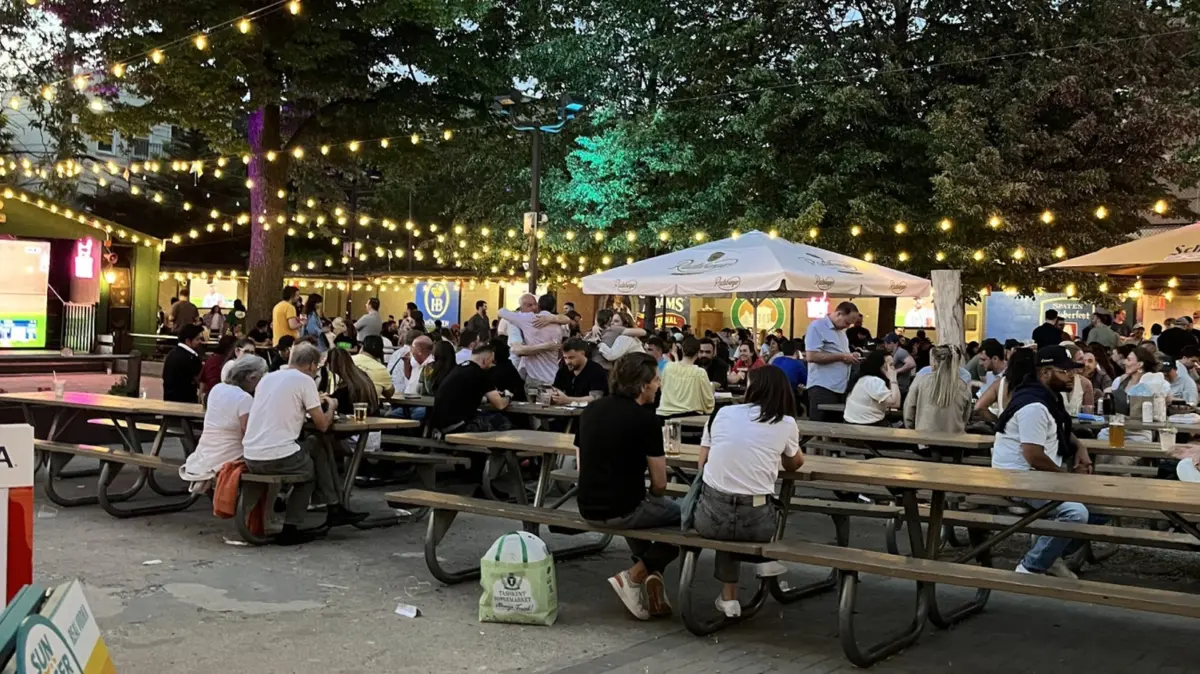
Today, as Astoria commands global attention as one of New York’s premier foodie destinations, Bohemian Hall & Beer Garden remains an anchor of authenticity. Spanning a massive, tree-shaded outdoor space furnished with over 100 tables, string lights, and wide umbrellas, it bridges the gap between old-world heritage and contemporary leisure. Whether drawing crowds for its annual Czech-Slovak festivals, serving up steaming plates of Central European comfort food, or simply pouring ice-cold pitchers of imported pilsners to escape the Manhattan grid, Bohemian Hall continues to prove that the most enduring social spaces are those rooted in community, history, and shared joy.
Detailed Chronology: From Farm Land to Immigrant Haven
To understand the stones and mortar of Bohemian Hall & Beer Garden, one must journey backward to an Astoria unrecognizable to modern commuters. In the late 19th century, this corner of Queens was a patchwork of family-run farms, dense woodlands, and scattered industrial development—a stark rural contrast to the urban density taking root across the East River in Manhattan.
According to historical records from the Czech Center New York, the late 1800s saw a substantial influx of Czech and Slovak immigrants settling in Queens. Fleeing political upheaval, economic stagnation, and the pressures of Austro-Hungarian rule in their European homelands, these newcomers sought out industrial and trade work in New York. However, assimilation carried a heavy psychological tax. Displaced from their cultural moorings, these immigrants faced linguistic barriers, intense nativist pressures, and the isolating shock of life in a burgeoning metropolis.
To combat this alienation, community leaders banded together. The Bohemian Citizens’ Benevolent Society was formed with a singular, vital mission: to create a physical sanctuary where Czech and Slovak immigrants could preserve their cultural identity, conduct meetings, practice folk traditions, and foster mutual aid.
[Late 19th Century] ➔ Immigrant influx to rural Astoria, Queens
[Early 1910s]       ➔ Purchase of farmland; construction of the original main hall
[1919]              ➔ Outdoor garden section completed
[1920–1933]         ➔ Survival through the Prohibition era (non-alcoholic operations/speakeasy culture)
[Mid-to-Late 20th]  ➔ Shifts in Astoria demographics; preservation of Central European traditions
[21st Century]      ➔ Transition into a premier NYC nightlife attraction & cultural landmark
To realize this vision, the Society purchased two adjacent lots that had previously served as farmland in Astoria. Here, they constructed the original Bohemian Hall, a building that still welcomes patrons today—if you step through the main bar’s entrance, you are standing in the very same room constructed by the founding members over a century ago.
The expansion of the property continued into the 20th century. In 1919, the Society completed the construction of the outdoor garden area. This timing carried an ironic twist of fate: just one year later, in 1920, the 18th Amendment went into effect, ushering in the Prohibition era. While countless breweries and saloons across the United States folded overnight, Bohemian Hall managed to navigate the dry years, adapting its operations, serving non-alcoholic beverages, and operating as a clandestine social hub.
When the repeal of Prohibition finally uncorked the nation in 1933, the garden roared back to life. Through the mid-20th century, as Astoria’s demographics shifted with successive waves of Greek, Italian, Middle Eastern, and Latin American immigration, Bohemian Hall remained steadfast. It resisted the wrecking ball of mid-century urban renewal, maintaining its physical footprint and serving as a living link to Queens’ multi-ethnic working-class history.
Supporting Context & Metrics: The Scale of Modern Operation
In the 21st century, the operational metrics and cultural footprint of Bohemian Hall & Beer Garden reflect its status as a heavyweight in New York City’s hospitality landscape. While newer, trendier bars and microbreweries frequently cycle through opening and closing phases across the city, Bohemian Hall commands consistent top-tier rankings.
Tripadvisor consistently lists the venue as the top nightlife attraction in Astoria, while regional publications like Best of the Boro have repeatedly crowned it the Best Beer Garden/Hall in Queens. These accolades are underpinned by a sprawling physical layout that is exceedingly rare within the space-constrained confines of New York City.
Operational and Environmental Breakdown
- Seating Capacity & Layout: The venue features over 100 outdoor tables nestled beneath mature London plane trees. The sprawling footprint allows for massive guest volumes during peak spring and summer weekends.
- Aesthetic & Atmosphere: Illuminated by industrial string lights and shaded by large canvas umbrellas, the garden maintains a rustic, park-like ambiance that insulates patrons from the surrounding urban grid.
- Beverage Program: The beverage menu honors Central European brewing traditions alongside American craft mainstays. It features an extensive rotation of Czech, German, and American beers on tap, supplemented by convenient six-can buckets for select labels. House wines, curated seasonal cocktails, and non-alcoholic options round out the menu.
- Culinary Offerings: The kitchen specializes in hearty Central European comfort food. Reviewer consensus points to the legendary "Bohemian giant pretzel" as a must-order staple, complemented by traditional sausages, goulash, and schnitzel.
- Accessibility: Located in Astoria, the garden is easily accessible via a 30- to 40-minute subway ride from Midtown Manhattan (via the N/W lines), making it a prime destination for both outer-borough locals and tourists looking to venture beyond Manhattan.
Furthermore, the venue serves as an economic engine for the neighborhood. By drawing thousands of visitors to Astoria weekly, it supports local supply chains, employs a diverse hospitality staff, and drives foot traffic to surrounding local businesses on 24th Avenue.
Official Statements and Cultural Programming
Beyond its commercial success as a hospitality venue, Bohemian Hall operates as a registered cultural center, fulfilling the original mandate laid down by the Bohemian Citizens’ Benevolent Society. The organization regularly collaborates with cultural entities, including the Czech Center New York, to host civic events, language meetups, and historical exhibitions.
In official programming outlines, the institution emphasizes its role as a living archive of diaspora culture. The crown jewel of this programming is the annual Czech-Slovak Festival, held every year around Memorial Day. This multi-day event transforms the beer garden into a vibrant celebration of Central European heritage, featuring:
- Live performances by traditional folk music ensembles and polka bands.
- Authentic dance troupes performing in historic regional costumes.
- Culinary showcases highlighting regional specialties.
- Educational presentations detailing the history of Czech and Slovak immigration to New York City.
+-------------------------------------------------------------------------+
|                  CULTURAL PROGRAMMING & EVENTS SNAPSHOT                 |
+------------------------------+------------------------------------------+
| Event Type                   | Description                              |
+------------------------------+------------------------------------------+
| Annual Czech-Slovak Festival | Memorial Day weekend tradition featuring |
|                              | folk music, dance, and heritage displays.|
+------------------------------+------------------------------------------+
| Seasonal Watch Parties       | High-capacity viewings for major         |
|                              | international soccer and sports matches. |
+------------------------------+------------------------------------------+
| Silent Discos                | Modern entertainment overlays blending   |
|                              | historic grounds with contemporary tech. |
+------------------------------+------------------------------------------+
| Happy Hour Programming       | Mid-week specials (Tuesday–Friday)       |
|                              | catering to local residents and workers. |
+------------------------------+------------------------------------------+
Historians and sociologists frequently point to venues like Bohemian Hall as critical infrastructure for immigrant communities. In a public statement regarding the preservation of historic ethnic institutions in New York, urban conservationists noted:
"Spaces like Bohemian Hall do not merely sell food and drink; they anchor the memory of the city. They provide physical proof of the labor, cultural contributions, and social organizations of working-class immigrants who built the foundations of modern New York."
By refusing to sanitize its historic rough edges or corporatize its aesthetic into a sterile "beer hall concept," management has maintained the venue’s integrity. Even as modern amenities—such as mid-week happy hours (running Tuesday through Friday) and tech-driven events like silent discos—have been integrated into the calendar, the core ethos remains unaltered.
Future Outlook: Preserving Heritage in a Rapidly Changing Astoria
As Astoria navigates the relentless pressures of gentrification, real estate development, and shifting cultural demographics, the future of Bohemian Hall & Beer Garden presents both unique challenges and profound opportunities.
The neighborhood surrounding the beer garden has transformed dramatically over the past two decades. Once a quiet enclave known primarily for its Greek and Eastern European communities, Astoria has evolved into one of New York’s most dynamic foodie hubs, drawing waves of young professionals, artists, and culinary entrepreneurs. This demographic shift has injected new energy—and new patrons—into Bohemian Hall, ensuring a steady stream of first-time visitors and younger generations discovering the magic of outdoor communal drinking.
However, this urban evolution brings friction. The rising cost of real estate in Queens places immense pressure on historic, low-rise cultural institutions. Unlike glass-and-steel residential developments that maximize square footage, Bohemian Hall’s sprawling, single-story footprint and open-air garden represent a radically inefficient use of land by modern speculative standards. The preservation of the property relies entirely on the stewardship of the Bohemian Citizens’ Benevolent Society and its commitment to mission over maximum financial yield.
Looking ahead, the institution’s long-term viability depends on its ability to balance modernization with historical reverence. Management continues to invest in infrastructure maintenance—protecting the ancient London plane trees that form the green canopy of the garden, updating kitchen operations to meet contemporary culinary standards, and expanding digital outreach to engage tourists planning their first trips to New York City.
Ultimately, Bohemian Hall & Beer Garden stands as a defiant monument against the erosion of public life. In an era increasingly dominated by digital isolation and transactional consumerism, the simple act of sitting at a long wooden table beneath a string of lights, passing a pitcher of pilsner to a neighbor you’ve just met, is a radical act. As long as those tables remain shaded by trees and filled with the murmur of diverse voices, the century-old dream of Astoria’s early Czech and Slovak pioneers will continue to thrive, pouring a fresh pint for every new chapter of New York City history.