For millions of travelers, exploring the historic streets, alpine peaks, and sun-drenched coastlines of Europe remains the ultimate bucket-list aspiration. The Old World offers an intoxicating mosaic of distinct cultures, timeless architecture, and deeply rooted culinary traditions that promise something transformative for every kind of wanderer. However, the logistical and financial realities of modern global travel—ranging from inflated international airfares and lengthy flight durations to rigid PTO policies and the ever-present hurdle of passport procurement—often make trans-Atlantic getaways entirely prohibitive.
Enter the Golden State. Boasting an expansive and radically diverse topography that spans over 163,000 square miles, California serves as a micro-continent capable of mirroring nearly every landscape found across the globe. For those who know precisely where to look, a weekend excursion within state lines can convincingly replicate the sights, sounds, and sensations of a European holiday, eliminating the need for customs lines or currency exchange desks.
Drawing from extensive, long-term residency and widespread travel across both regions, travel analysts have identified seven distinct California destinations that successfully evoke the distinct spirits of Denmark, Italy, England, Switzerland, and Scotland. Far from cheap theme-park replicas, these locales harbor deep historical roots, authentic architectural lineages, and microclimates that genuinely trick the senses into believing you have crossed the Atlantic.
Detailed Chronology: How California’s European Roots Took Shape
The uncanny European aesthetic found embedded in California’s geography is rarely a modern accident of real estate marketing; rather, it is the direct result of deliberate historical waves of immigration, visionary urban planning, and utopian architectural movements spanning the late 19th and mid-20th centuries.
The Scandinavian Experiment: Solvang’s Roots
The transformation of the Santa Ynez Valley into a slice of Scandinavia began in earnest in November 1911. A group of displaced Midwestern Danish-Americans, weary of harsh winters in Iowa and Minnesota, purchased nearly 9,000 acres of the historic Rancho San Carlos de Jonata Spanish land grant. Their mission was singular: establish a dedicated Danish colony complete with its own folk school. By the early decades of the 20th century, the town began erecting its iconic half-timbered buildings and windmills, cementing a cultural preservation effort that continues to draw millions of visitors seeking authentic Danish pastries and folklore.
The Venetian Dream of Abbot Kinney
Further south, the landscape of Los Angeles underwent a radical, water-bound metamorphosis in 1905. Real estate developer and conservationist Abbot Kinney envisioned an American cultural capital that would channel the romantic aquatic infrastructure of Northern Italy. Kinney dredged the marshlands south of Santa Monica to construct the "Venice of America," complete with electric gondolas, imported Venetian gondoliers, and miles of man-made canals. Though subsequent decades saw the paving over of the majority of these waterways to accommodate the rise of the automobile, the surviving residential canals continue to preserve a remarkably intact slice of turn-of-the-century Italian fantasy.
The Fairy-Tale Cottages of Carmel
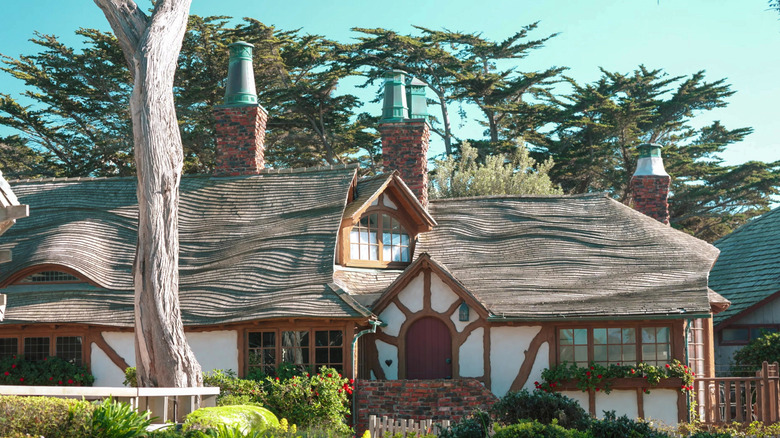
Along the Central Coast, the architectural narrative took a whimsical turn in the 1920s. Carmel-by-the-Sea, already established as an artist colony, became the canvas for builder and architect Hugh Comstock. Inspired by the traditional English countryside and illustrations from children’s fairy-tale books, Comstock began constructing small, asymmetrical wood-and-stone homes characterized by steeply pitched shingled roofs, clinker-brick chimneys, and leaded glass windows. These structures catalyzed a distinct local aesthetic ordinance, ensuring the town would forever maintain its Cotswold-esque charm.
Detailed Destination Analysis: The Top 7 European Lookalikes
[California's European Mirror Map - Conceptual Flow]
 ├── Northern California
 │    ├── Big Sur ──────────────> Scottish Highlands
 │    ├── Sausalito ────────────> Italian Coast
 │    └── Carmel-by-the-Sea ────> English Cotswolds
 │
 ├── Central & Eastern California
 │    ├── Solvang ──────────────> Danish Heartland
 │    └── Mammoth Lakes ────────> Swiss Alps
 │
 └── Southern California
      ├── Palos Verdes ─────────> Italian Riviera
      └── Venice Canals ────────> Venetian Waterways
1. Solvang: The Danish Heartland in the Santa Ynez Valley
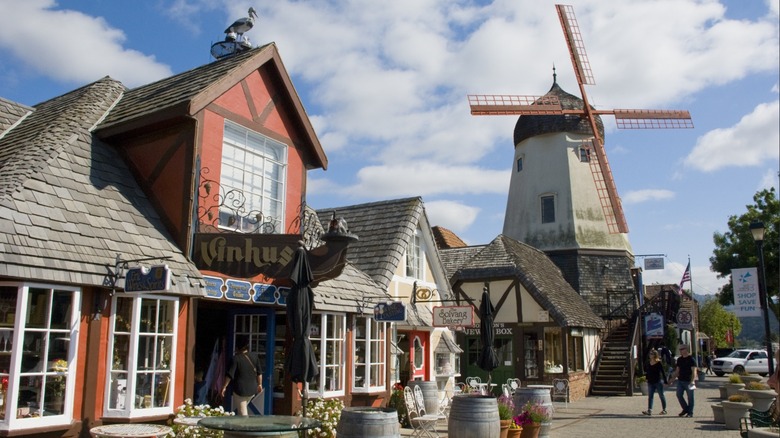
Situated roughly an hour’s drive inland from Santa Barbara, Solvang offers an immersive dive into Scandinavian culture without requiring a 10-hour flight to Copenhagen. The downtown core is dominated by traditional timber-framed architecture, towering working windmills, and gas-powered streetlamps.
Visitors can explore the Hans Christian Andersen Museum—located above the renowned Book Loft—which houses first editions and scale models honoring the legendary fairy-tale author. Culinary traditions are fiercely preserved here; local bakeries churn out traditional aebleskivers (round pancake puffs dusted with powdered sugar and served with raspberry jam) alongside authentic rye bread and butter cookies.
2. Sausalito and Palos Verdes: Duplicating the Italian Riviera
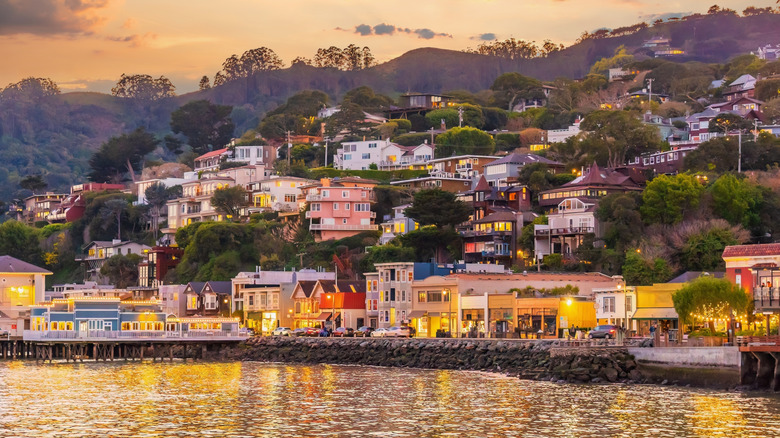
California features two distinct coastal regions that fiercely rival the dramatic topography of the Mediterranean. In the north, Sausalito cascades down steep hillside terraces toward the San Francisco Bay, its brightly colored Mediterranean-style villas, steep staircases, and bustling yacht harbors bearing an undeniable resemblance to coastal Italian fishing villages like Portofino.
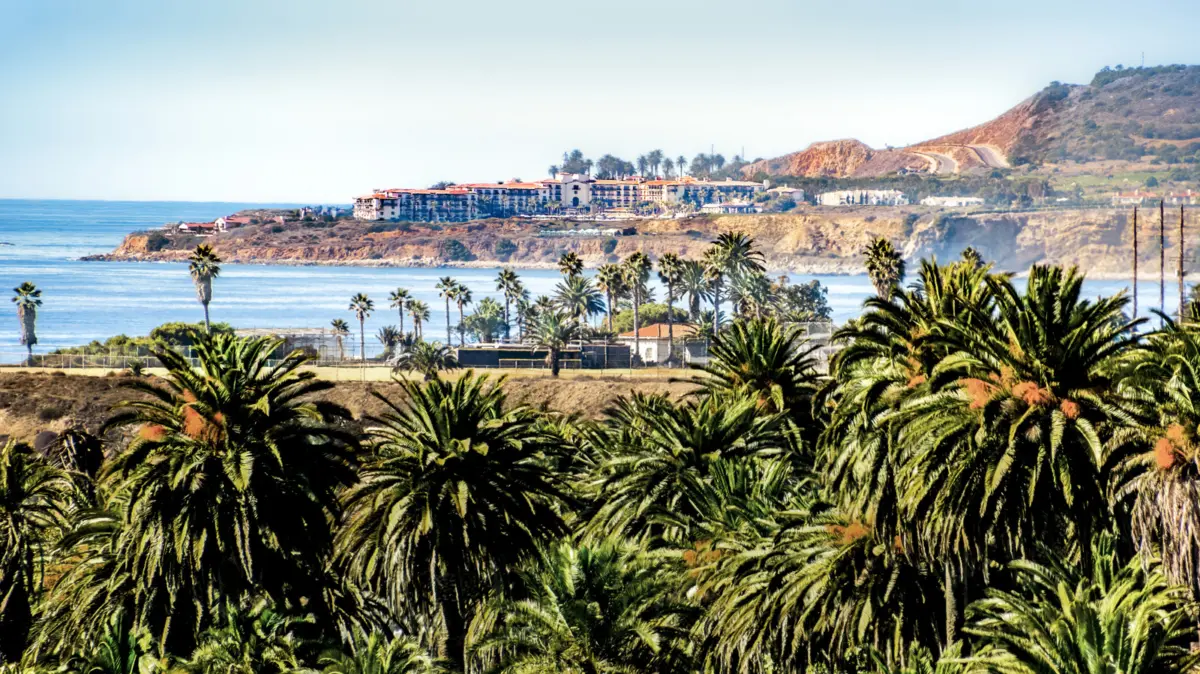
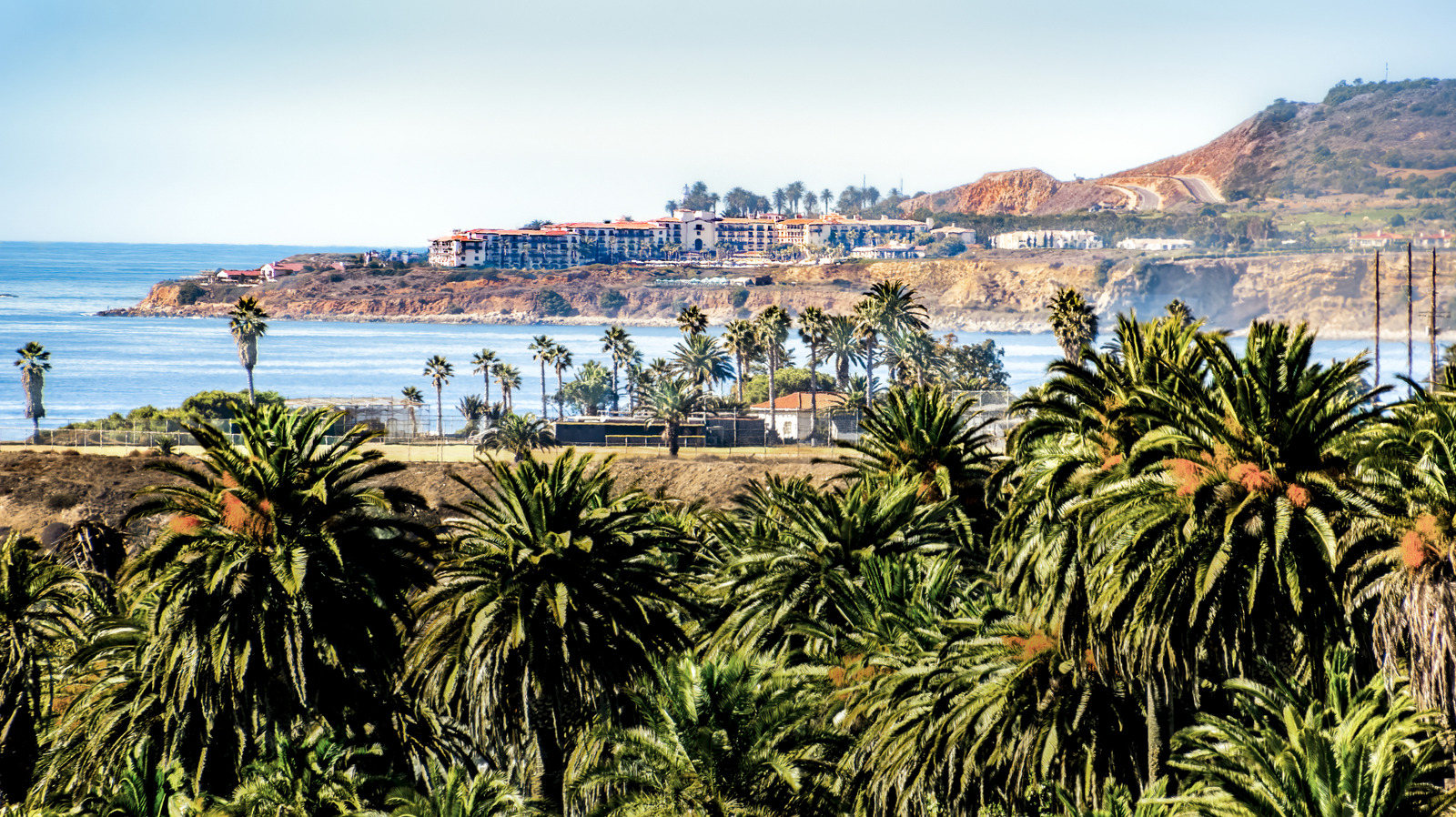
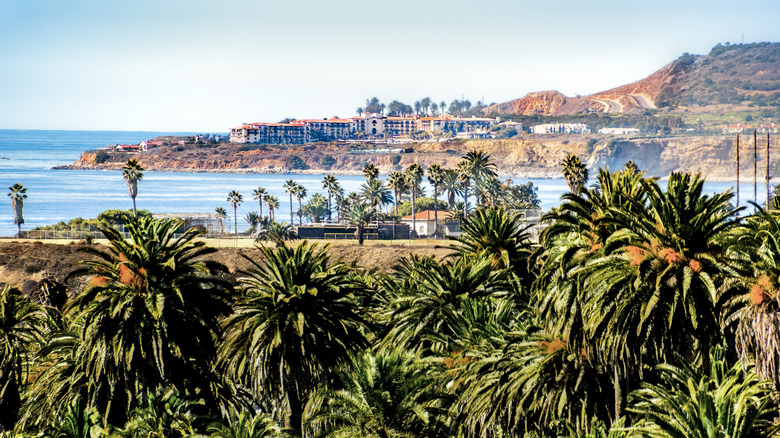
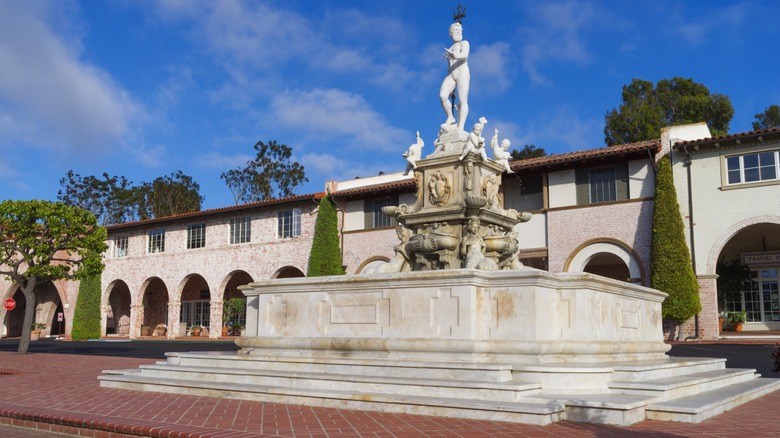
Down south, the Palos Verdes Peninsula in Los Angeles County provides an even more striking carbon copy of the Italian Riviera. The microclimate yields balmy breezes, dramatic coastal bluffs, and native olive and lemon groves. The Terranea Resort serves as an architectural homage to Mediterranean luxury, while Malaga Cove Plaza features the Neptune Fountain—an exact model of a historic masterpiece in Bologna, Italy—framed by grand stucco archways and classic red-tiled roofs.
3. Carmel-by-the-Sea: The English Cotswolds on the Central Coast
Tucked along the rugged Monterey Peninsula, Carmel-by-the-Sea transports visitors directly to a storybook village in the English countryside. The absence of traditional street addresses (residents rely instead on poetic house names and cross-streets) adds to the surreal, old-world enchantment.
Hugh Comstock’s surviving "Fairytale Cottages" feature rolling rooflines designed to mimic thatched straw, complemented by overgrown English gardens spilling over native stone walls. For travelers looking to fully embrace the British aesthetic, establishments like The Tuck Box offer traditional afternoon tea service complete with clotted cream scones, finger sandwiches, and fine loose-leaf teas served in cozy, low-ceilinged dining rooms.
4. Mammoth Lakes: The Swiss Alps of the Eastern Sierra
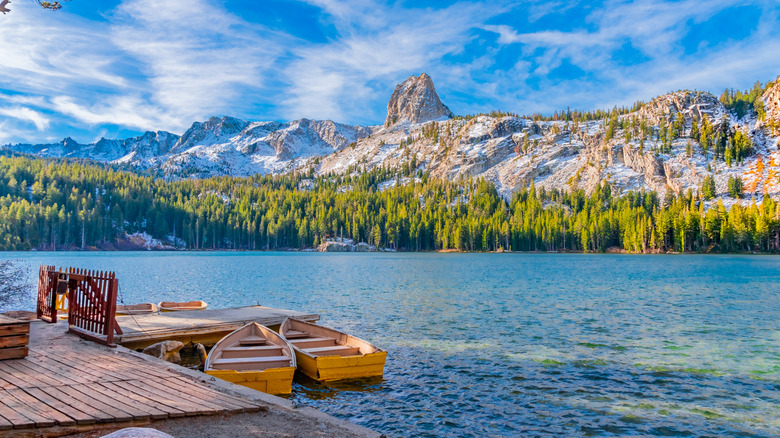
For travelers craving the jagged, snow-capped grandeur of Switzerland, the Eastern Sierra Nevada mountains offer an alpine sanctuary that rivals Zermatt or Interlaken. Rising to an elevation of 7,880 feet, Mammoth Lakes serves as a premier year-round adventure hub characterized by glacial valleys, towering granite crags, and crystal-clear high-altitude lakes.
Lake George, the highest driveable body of water in the Mammoth Lakes Basin, sits dramatically nestled beneath the towering shadows of Crystal Crag and the Mammoth Crest. Whether navigating alpine hiking trails in the summer months or carving fresh powder down steep bowls in the winter, the sheer scale of the vertical relief delivers an authentic European mountain resort atmosphere.
5. Big Sur: The Wild and Remote Scottish Highlands
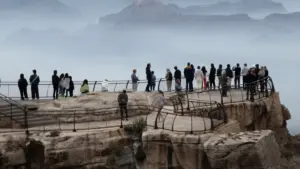
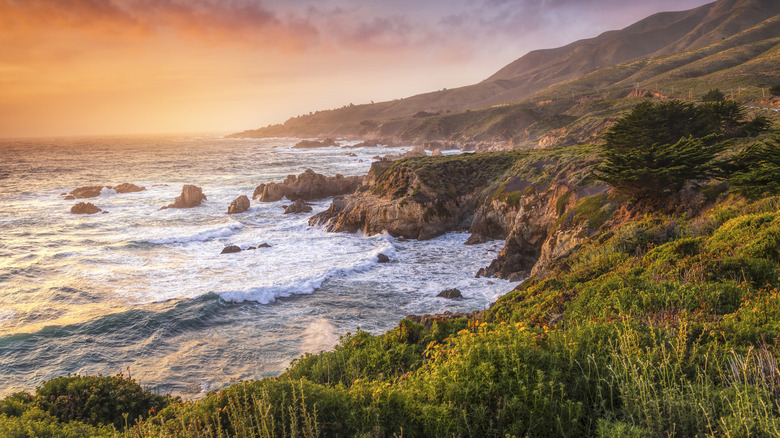
Where the sheer, fog-shrouded Santa Lucia Mountains plunge abruptly into the churning Pacific Ocean, California’s Big Sur coastline evokes the untamed, melancholic beauty of the Scottish Highlands and the Inner Hebrides.
The region’s volatile microclimate frequently blankets coastal bluffs in a thick, atmospheric sea fog, rolling over windswept grasslands and deep, fern-choked canyons. The sheer isolation of Route 1 encourages a profound sense of solitude, allowing travelers to experience the same raw, elemental connection to nature that defines the remote northern territories of the United Kingdom.
6. The Venice Canals: Recreating the Waterways of Northern Italy
Located just a short walk from the bustling boardwalks of Venice Beach, the historic Venice Canals neighborhood preserves a quiet, pedestrian-only sanctuary modeled directly after the historic Italian city. Built in 1905, the remaining six waterways are interlaced with romantic arched footbridges, vibrant coastal flora, and multi-million-dollar modern residences that blend seamlessly with bohemian beach culture.
A leisurely stroll along the canal banks reveals residents commuting via canoe or paddleboard, ducks navigating the calm waters, and historic architectural touches that feel entirely detached from the sprawling, asphalt-heavy grid of greater Los Angeles.
Supporting Context & Metrics: Travel Demographics and Economics
The rise in popularity of these European-style domestic escapes is supported by broader economic and travel trends. According to recent tourism data from Visit California, domestic leisure travel has seen a significant pivot toward "micro-vacations" and road trips as international flight costs fluctuate.
Cost Efficiency: A family road trip to a regional destination like Solvang or Carmel-by-the-Sea averages roughly 60% to 75% less than a comparable family holiday to Europe, factoring in airfare inflation, international hotel rates, and currency exchange fees.
Time Conservation: Eliminating international transit days allows travelers to maximize their actual vacation time. While a trip to the Scottish Highlands requires a minimum two-day travel buffer for flights and jet lag recovery, Big Sur is accessible via a comfortable weekend drive for millions of West Coast residents.
Environmental Impact: Choosing regional travel via electric vehicles or carpooling significantly reduces the carbon footprint associated with long-haul international aviation, aligning with a growing consumer demand for sustainable tourism options.
Official Statements and Industry Insights
Tourism boards and hospitality experts have increasingly leaned into these comparisons to market regional gems to domestic and international visitors alike.
"California has always been a land of grand geographic diversity, but what surprises many visitors is our ability to mirror the cultural architecture of the Old World," notes Caroline Beteta, President and CEO of Visit California. "Whether you are sipping a Danish pastry in Solvang or gazing out over the cliffside villas of Palos Verdes, these destinations prove that world-class cultural immersion doesn’t always require an international flight."
Architectural historians emphasize that the survival of these pockets of European design underscores California’s unique capacity for cultural assimilation and fantasy creation.
"Builders in the early 20th century weren’t merely copying European styles; they were curating an emotional experience," explains Dr. Aris Thorne, architectural historian specializing in West Coast development. "When Hugh Comstock built his cottages in Carmel, he understood that human beings crave narrative in their built environment. These towns endure because they successfully transport the human imagination across oceans without requiring a passport."
Future Outlook: The Evolution of Passport-Free Travel
As international travel costs remain high and environmental consciousness reshapes consumer habits, the demand for domestic European-style destinations is projected to climb steadily over the coming decade. Tourism boards in regions like Mammoth Lakes and the Santa Ynez Valley are investing heavily in infrastructure that supports sustainable, low-impact tourism while preserving the historic character that drew travelers there in the first place.
For the modern traveler, the ability to experience the rustic charm of the Cotswolds, the alpine majesty of Switzerland, or the maritime romance of Venice—all within the borders of a single American state—represents a powerful shift in how we define modern exploration. Ultimately, these seven destinations demonstrate that wonder, history, and architectural beauty are not confined to ancient European capitals; sometimes, they are just a tank of gas away.