










Executive Overview
In the realm of municipal governance and federal resource allocation, few failures carry the systemic weight—or the profound public indignation—of wasted transit funding. When millions, and sometimes billions, of dollars designated for public transportation are squandered, the repercussions extend far beyond delayed schedules and inflated deficits. They erode public trust, entrench car dependency, and, as critics wryly observe, invite a measure of divine retribution.
The statement, "When transit funds are wasted, God gets quite irate," serves as a poignant, albeit colorful, metaphor for a very terrestrial crisis: the systemic mismanagement of American public transit infrastructure. Across the United States, visionary projects intended to liberate cities from the stranglehold of vehicular congestion frequently devolve into cautionary tales of bureaucratic bloat, runaway budgets, and dashed community expectations.
This investigative feature examines the anatomy of transit funding waste, drawing on systemic patterns observed in urban planning and federal oversight up to 2026. By analyzing how capital is mismanaged, tracing the downstream effects on everyday commuters, and reviewing the institutional hurdles that prevent meaningful reform, this article provides a comprehensive look at why the stewardship of public transit funds remains one of the most critical governance challenges of our time.
Detailed Chronology: The Lifecycle of a Flawed Transit Project
To understand how transit funds are mismanaged, one must trace the typical lifecycle of a modern American infrastructure initiative. From its inception as an idealistic blueprint to its often-troubled operational phase, the path of a transit project is fraught with fiscal and administrative perils.
Phase I: Conception and the Politics of Promise
The lifecycle invariably begins with political ambition. Mayors, city councils, and regional transit authorities pitch high-profile projects—light rail extensions, bus rapid transit (BRT) corridors, or modernized commuter rail lines—as transformative solutions to urban gridlock and carbon emissions.
During this initial phase, optimistic cost estimates are frequently presented to the public and funding bodies. To secure buy-in from skeptical taxpayers and federal grantmakers, planners may downplay potential complexities. This sets the stage for future budgetary shortfalls. Environmental impact studies, community outreach programs, and initial engineering contracts consume significant portions of the seed money before a single yard of concrete is poured.

Phase II: Procurement and the Contractor Quagmire
Once a project breaks ground, it enters the procurement and construction phase—the period during which the vast majority of financial leakage occurs. American transit construction is notoriously expensive compared to its international counterparts. Factors driving these costs include:
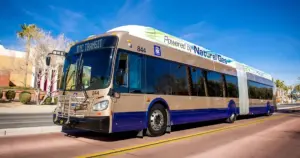
- Heavy reliance on private consultants and third-party contractors: Fragmented expertise often leads to miscommunication, redundant studies, and inflated billing rates.
- Complex regulatory environments: Navigating overlapping federal, state, and local environmental mandates creates administrative delays. Every month of delay incurs compounding interest and labor overhead.
- Scope creep: As local stakeholders demand modifications—such as aesthetic enhancements, station relocations, or additional grade separations—budgets swell without corresponding increases in dedicated revenue streams.
Phase III: The Budget Crisis and Emergency Bailouts
Inevitably, milestones are missed, and cost overruns come to light. The response from governing bodies typically follows a predictable script: emergency budget amendments, reallocation of funds from operating budgets to capital projects (or vice versa), and appeals to state legislatures or federal agencies for emergency bailouts.
By the time the project finally opens—often years behind schedule and billions over budget—the original financial architecture has been thoroughly compromised. Reduced operational budgets mean fewer service frequencies, aging rolling stock, and deferred maintenance on existing networks, creating a vicious cycle of decline.
Supporting Context & Metrics: The Anatomy of Fiscal Leakage
The financial hemorrhage within American transit is not merely a collection of isolated incidents; it reflects deep-seated systemic inefficiencies. According to data and analyses from urban planning watchdogs, several key metrics define the current crisis.
The Cost-Per-Mile Disparity
When compared to European and Asian democracies, American transit construction costs are an outlier. While cities like Madrid or Tokyo routinely build underground rail networks for a fraction of the cost per mile, American projects frequently exceed hundreds of millions—and sometimes billions—of dollars per mile.
This disparity is driven by several structural factors:

- Station Box Design: American underground stations are often designed with massive, cathedral-like footprints, incorporating extensive back-of-house facilities and redundant architectural features that drive up real estate and excavation costs.
- Utility Relocations: Unlike in many foreign jurisdictions where utility maps are standardized and government-owned utilities cooperate seamlessly, American transit agencies must negotiate with a patchwork of private utility companies, paying exorbitant fees to relocate underground infrastructure.
- Labor and Work Rules: Outdated work rules, high administrative overhead, and restrictive labor agreements can inflate labor costs well beyond standard market rates.
The Opportunity Cost of Wasted Capital
Every dollar mismanaged in a white-elephant transit project is a dollar denied to functional, community-level mobility. When capital budgets are drained by cost overruns on a single marquee rail line, transit agencies are forced to make painful concessions elsewhere:
- Service Cuts: Bus lines serving low-income, transit-dependent neighborhoods are reduced or eliminated.
- Deferred Maintenance: Critical safety upgrades, track replacements, and elevator repairs are postponed, leading to systemic reliability issues and safety hazards.
- Technological Stagnation: Agencies struggle to implement modern fare-payment systems, real-time tracking data, and zero-emission fleet transitions.
Official Statements and Institutional Perspectives
The debate over transit funding waste involves a tense dialogue between federal overseers, local transit operators, urban advocates, and the taxpaying public.
Federal Oversight and Accountability
Federal agencies, such as the Federal Transit Administration (FTA), hold discretionary authority over billions in capital investment grants. In recent years, federal watchdogs have tightened oversight, requiring rigorous risk assessments and financial plans before releasing funds.
However, critics argue that federal oversight often arrives too late. "By the time a project is flagged for severe cost overruns at the federal level, local matching funds have already been locked in, and abandoning the project would mean writing off billions in sunk costs," notes a senior transportation policy analyst. "Agencies are effectively holding taxpayers hostage: finish the over-budget project, or lose everything you’ve invested so far."
Local Transit Agency Realities
Local transit executives often defend their budgetary struggles by pointing to external pressures. Inflationary spikes in construction materials, labor shortages, and unexpected geotechnical challenges (such as unmapped subterranean utilities or unstable soil conditions) are frequently cited as unavoidable catalysts for budget growth.
Furthermore, leadership turnover within transit boards can disrupt long-term strategic continuity. Incoming directors often inherit flawed project structures initiated by their predecessors, forcing them to manage crises rather than innovate.

The Advocacy Perspective: Demanding Transparency
Urban mobility advocates and good-government organizations argue that financial mismanagement is curable through radical transparency and institutional reform. Groups pushing to end car dependency emphasize that public confidence is essential for transit expansion. When voters see tax dollars wasted on mismanaged rail lines or bloated administrative payrolls, they become deeply skeptical of future ballot measures dedicated to public transportation.
"If we want communities to embrace density, multi-modal streets, and robust transit networks, the institutions managing those systems must earn absolute trust," an urban policy advocate stated. "Transparency isn’t just about good bookkeeping; it’s a prerequisite for climate action and urban equity."
Future Outlook: Rebuilding Trust and Restoring Fiscal Integrity
As American cities look toward the mid-21st century, the stakes for public transportation have never been higher. With the imperative to reduce carbon emissions, alleviate crippling urban congestion, and provide equitable mobility options, the efficient use of transit funding is a matter of urban survival.
Key Reforms for the Future
To ensure that transit funds are spent judiciously—and to avoid invoking further "divine ire" from frustrated taxpayers and watchdogs—several structural reforms must be implemented across federal, state, and local levels:
- Standardized Cost Benchmarking: Federal grant-making bodies should establish strict cost-per-mile benchmarks, withholding discretionary funds from projects that exceed reasonable thresholds without exceptional justification.
- In-House Technical Expertise: Transit agencies must rebuild internal engineering and project management capabilities rather than outsourcing core responsibilities to expensive private consultants. Retaining institutional knowledge reduces miscommunication and curbs runaway billing.
- Streamlined Environmental Review: While environmental protection remains paramount, streamlining overlapping state and federal review processes can significantly reduce pre-construction delays and associated holding costs.
- Dedicated Oversight Boards: Independent inspector generals should be embedded within major transit capital projects from day one, authorized to audit expenditures in real-time and halt unauthorized scope creep before it balloons into a crisis.
Conclusion
The management of public transit funds is ultimately a test of institutional competence and civic responsibility. When systems are designed transparently, built efficiently, and maintained rigorously, public transportation serves as the beating heart of a thriving, sustainable city. Conversely, when funds are squandered through administrative bloat and poor planning, the damage extends far beyond the ledger balance—it undermines the collective future of American mobility. Reforming this process is not merely an exercise in accounting; it is an essential step toward building cities that work for everyone.