








Executive Overview
For decades, the standard playbook for luxury hospitality expansion has relied on a predictable formula: take a successful flagship property, strip away its localized idiosyncrasies, wrap it in a standardized corporate identity, and drop it into a high-net-worth market anywhere from London to Tokyo. This cookie-cutter approach—often referred to in the industry as "flag-planting"—has long been driven by the insatiable demands of real estate developers, private equity backers, and global brand managers. The primary goal has been rapid scalability, ensuring that a guest walking into a branded hotel or restaurant in Dubai experiences the exact same sensory inputs, service scripts, and visual codes as they would in New York or Paris.
However, a quiet yet profound paradigm shift is underway across the upper echelons of global hospitality and gastronomy. Discerning travelers, saturated by hyper-standardized luxury, are increasingly rejecting sanitized facsimiles of local culture in favor of authenticity, emotional resonance, and deep-rooted provenance.
A compelling alternative model has emerged—one that rejects the notion of the carbon-copy concept in favor of cultural translation. Rather than exporting a rigid operational blueprint, forward-thinking luxury brands are transferring their core ethos, creative philosophy, and operational DNA, allowing them to take root organically in foreign soil.
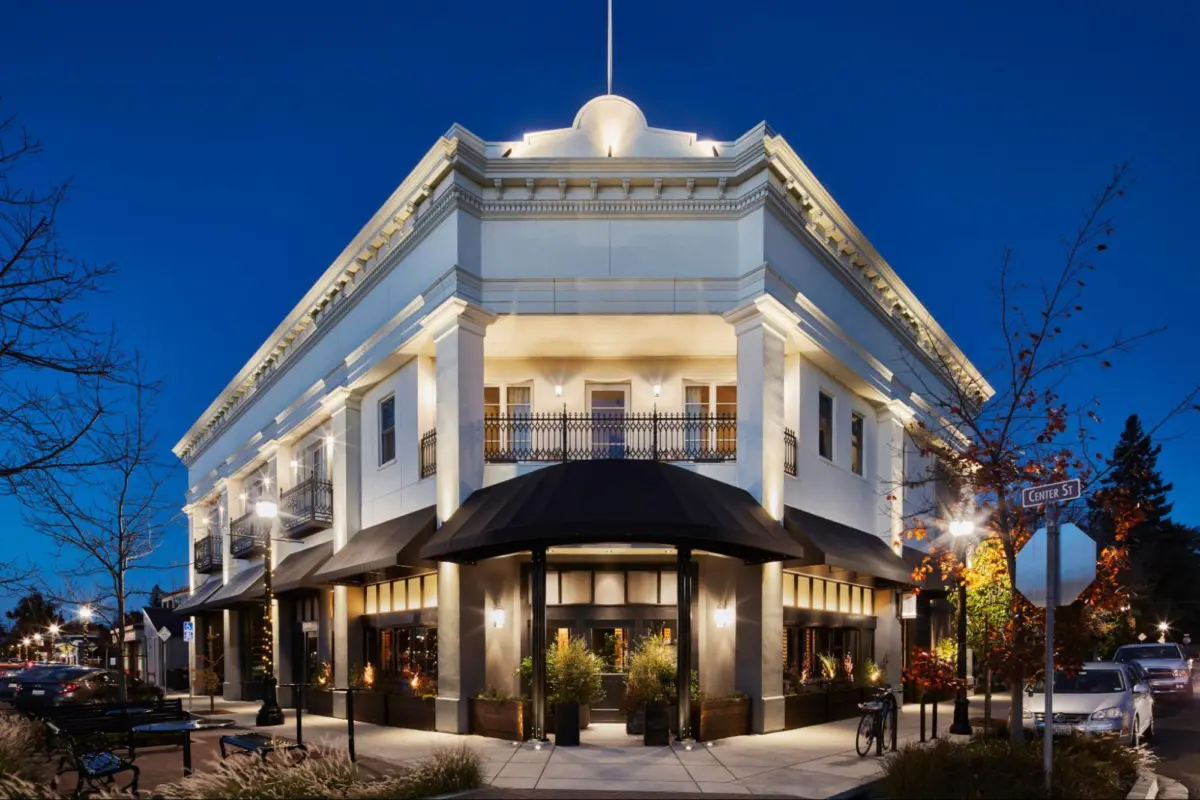
This nascent philosophy is vividly embodied by two culinary and hospitality touchstones: The Selvedge in Healdsburg, California, and SoNoMa by SingleThread, housed within the Capella Kyoto in Japan. When experienced firsthand, these destinations reveal a radical departure from traditional expansion. They prove that true luxury is not about imposing a dominant brand identity onto a new market, but about engaging in a respectful, sophisticated dialogue between two distinct cultures. This investigative report examines how these properties are redefining global luxury expansion, the pitfalls of the traditional flag-planting model, and what this means for the future of experiential hospitality.
Detailed Chronology: The Evolution of Global Luxury Expansion
To understand the revolutionary nature of the Selvedge-SoNoMa model, it is necessary to trace how luxury hospitality expansion evolved from localized artistry to globalized industrialization, and how the industry reached its current saturation point.
Era 1: The Era of the Grand Independent Icon (Pre-1990s)
For much of the 20th century, luxury hotels and restaurants were largely standalone enterprises. Properties like The Ritz in Paris, Raffles in Singapore, or The Plaza in New York were defined entirely by their geography. Their luxury stemmed from their exclusivity, their architectural permanence, and their deep integration into the social and cultural fabric of their home cities. Expansion was rare; reputation was built over generations through word-of-mouth and bespoke service.
Era 2: The Corporate Consolidation and Flag-Planting Boom (1990s–2010s)
As globalization accelerated and institutional capital poured into the hospitality sector, publicly traded hotel groups and multinational restaurant conglomerates demanded predictable growth metrics. The concept of the "global flagship" took hold. Brands realized that intellectual property could be monetized globally.
During this era, luxury expansion became synonymous with standardization. Design firms were hired to create universal palettes—muted grays, minimalist woods, and standardized lighting—that could be installed in any urban center. Service manuals dictated exact phrasing, greeting cadences, and operational procedures. While this minimized financial risk for investors, it catalyzed a homogenization of luxury. A traveler could wake up in a luxury suite in Hong Kong and, save for the view outside the window, feel as though they were in Chicago or Milan.
Era 3: The Crisis of Meaning and the Rise of Experiential Travel (2010s–2020)
By the late 2010s, cultural fatigue set in among high-net-worth consumers. The proliferation of lifestyle boutique hotels and celebrity-chef restaurant groups led to market saturation. Consumers began to value meaning over marble. The metric of luxury shifted from material opulence—thread counts and imported caviar—to access, narrative, and transformation. Brands that failed to adapt found themselves struggling to justify premium price points for experiences that felt increasingly generic.
Era 4: The Translation Model and Cultural Cross-Pollination (Present Day)
We have now entered an era defined by cultural translation. Exemplified by the creative synergy between SingleThread in Northern California and its Japanese expressions, this model flips the traditional expansion script. Instead of exporting a fixed American concept to Asia, or a European concept to the Americas, modern culinary leaders are recognizing that true luxury requires bidirectional inspiration.
The opening of SoNoMa by SingleThread inside Capella Kyoto earlier this year serves as a watershed moment in this chronology. It demonstrates that a restaurant can originate in the American West, draw deeply upon Japanese agrarian and culinary traditions for its foundational philosophy, and then be re-imported back to Japan not as a colonialist novelty, but as an affectionate, highly sophisticated mirror.
Supporting Context & Metrics: The Economics and Psychology of Modern Hospitality
To grasp why the cultural translation model is gaining traction, one must analyze the shifting economic pressures and consumer psychographics defining the contemporary luxury market.
The Disconnect Between Scale and Soul
According to recent industry analyses by global hospitality consultancies, over 65% of luxury travelers aged 25 to 45 report feeling that high-end hotels and restaurants have become "indistinguishable from one another." The pressure to maximize RevPAR (Revenue Per Available Room) and table turns has forced operators to streamline operations, often at the expense of local flavor.
When a brand expands rapidly without cultural grounding, it encounters what sociologists call the "atomization of soul." Distinctive qualities are reduced to visual codes—a signature flower arrangement, a specific uniform, or a branded amenity—while the underlying ethos is lost in translation.
The Financial Viability of Cultural Translation
Critics of the translation model often argue that it is too complex, labor-intensive, and risky for large-scale corporate deployment. Standardized concepts are cheaper to replicate because training programs can be centralized, supply chains locked down, and architectural designs mass-produced.
However, financial metrics in the post-pandemic luxury sector tell a different story. Highly localized, narrative-driven properties consistently achieve higher average daily rates (ADR) and stronger customer lifetime value (LTV) metrics than their cookie-cutter counterparts. Consumers are willing to pay a premium for authenticity because authenticity cannot easily be gamed or automated.
Furthermore, the risk profile of the translation model is mitigated by its reliance on deep local partnerships. By collaborating with elite domestic institutions—such as Capella Hotels in Kyoto—incoming brands leverage existing operational excellence, regulatory navigation, and local trust, minimizing the friction that typically plagues foreign market entries.
Official Statements & Industry Perspectives
The philosophy underpinning this shift has been articulated by leading figures in contemporary gastronomy and hospitality design, who view the traditional flag-planting strategy as an outdated relic of 20th-century corporate imperialism.
Reflecting on the experience of visiting SoNoMa by SingleThread inside Capella Kyoto, leading hospitality critics and observers have noted the stark contrast between imported culinary theater and genuine cultural synthesis:
"When I visited SoNoMa by SingleThread inside Capella Kyoto earlier this year, the proposition — a Northern California restaurant refracted back through Kyoto — could easily have landed as imported culinary theater. Instead, it felt specific, assured, and importantly, wildly creative. The team understood California, but also the Japanese roots that have long run through the source code of SingleThread. It was not a replica of Healdsburg, but rather it was an elegant translation."
This observation underscores a vital industry truth: the "source code" of many modern culinary movements is rarely monolithic. SingleThread in Healdsburg, California, for instance, has always worn its profound indebtedness to Japanese farming, kaiseki traditions, and aesthetic minimalism on its sleeve. Therefore, bringing an expression of SingleThread to Kyoto was not an act of cultural imposition, but a homecoming of ideas.
Industry veterans point out that this contrasts sharply with the prevailing corporate mindset:
"Luxury hospitality is in a flag-planting mood. Successful brands are being pushed into new cities and formats until their most distinctive qualities become reduced to visual codes and service scripts lost in the sauce of operations. Part of the soul gets left behind, or atomized."
As luxury groups look toward the remainder of the decade, executive leadership is being forced to reconsider whether rapid footprint expansion is worth the dilution of brand equity. The consensus among forward-looking operators is clear: future growth must prioritize depth of engagement over sheer breadth of coverage.
Future Outlook: Where Luxury Hospitality Goes From Here
As we look toward the horizon of global hospitality and travel, the success of the Selvedge-SoNoMa model points the way toward several transformative trends.
1. The Death of the Universal Luxury Aesthetic
The era of the minimalist, neutral-toned global hotel room is drawing to a close. Consumers are suffering from aesthetic fatigue. Future luxury properties will embrace radical localization, where interior architecture, material sourcing, and culinary programs are dictated entirely by the immediate environment rather than a corporate style guide based in London or New York.
2. Micro-Localization and Bidirectional Concepts
We will see a rise in "bidirectional" culinary and hospitality concepts—brands that move fluidly between two culturally linked markets. Rather than a one-way export pipeline from West to East or North to South, future expansions will look like cultural exchanges. A chef from Kyoto might open a concept in San Francisco that informs a subsequent project back in Japan, creating a continuous feedback loop of creativity and craftsmanship.
3. Redefining Operational Excellence
Operational efficiency will no longer be measured solely by adherence to rigid corporate manuals, but by the ability of local teams to exercise creative autonomy within a framework of shared values. Service scripts will give way to intuitive, culturally attuned hospitality that honors local customs and social nuances.
Conclusion
The lessons of The Selvedge in Healdsburg and SoNoMa in Kyoto are clear for any brand eyeing international expansion: culture cannot be packed into a shipping container and dropped into a foreign market. It must be translated, respected, and allowed to evolve.
For the luxury traveler, this evolution promises a return to genuine discovery. For the industry, it marks the painful yet necessary abandonment of the copy-paste era in favor of a richer, more soulful future where hospitality is measured not by how many flags a brand has planted across the globe, but by how deeply roots have taken hold wherever it chooses to land.