







Executive Overview
The Middle East slid closer to a comprehensive regional war on Tuesday as a series of coordinated, high-kinetic operations shattered a month-long operational lull. The conflict, which erupted into its current high-intensity phase in February following joint U.S. and Israeli operations against Iran, saw a dramatic expansion of its geographic boundaries. Iranian-backed Houthi forces in Yemen launched a massive, coordinated strike deep into Saudi Arabian territory, injuring dozens of civilians and igniting critical energy infrastructure. This bold escalation effectively broke a fragile, years-long de-escalation between Riyadh and Sana’a, embroiling a key U.S. partner directly back into the theater of war.
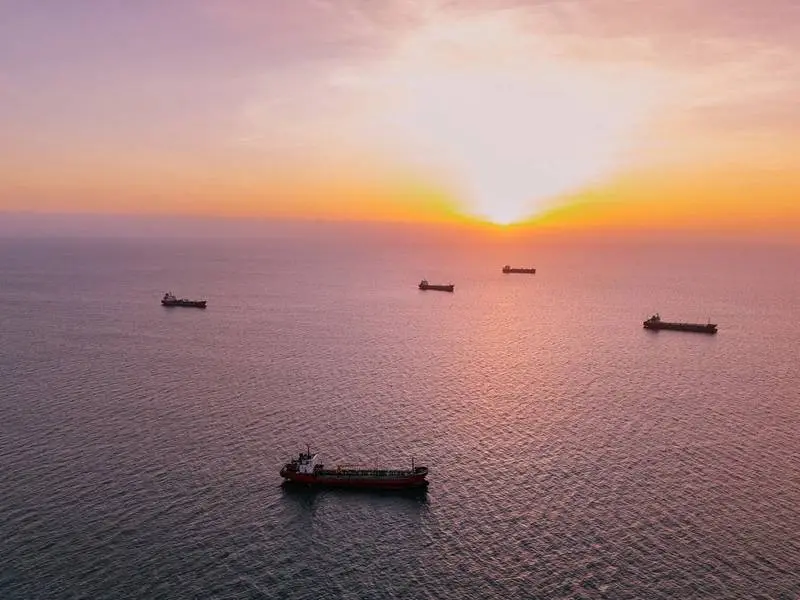
Simultaneously, the maritime domain witnessed a sharp spike in hostilities. U.S. Central Command (USCENTCOM) executed targeted strikes that destroyed five Iranian crude oil carriers—a direct response to repeated Iranian ballistic missile attacks targeting American warships in the Red Sea and Gulf of Aden.
In retaliation, the Islamic Revolutionary Guard Corps (IRGC) launched a direct ballistic missile strike against a strategic U.S. military installation near Al Azraq, Jordan. While Jordanian air defenses intercepted the vast majority of the incoming threats, the direct targeting of Jordanian territory underscores the vulnerability of Washington’s regional security partners.

As global oil markets react to the disruption of key transit corridors and production hubs, the latest cycle of violence highlights the limitations of Western deterrence strategies. Despite months of coalition airstrikes designed to degrade Iran’s conventional capabilities, Tehran and its regional proxies retain the asymmetric capacity to threaten global energy supplies, disrupt critical maritime chokepoints, and project power across multiple sovereign borders.
                       [THE MIDDLE EAST CONFLICT MATRIX]

                        +-----------------------+
                        |  United States / allied |
                        |   Coalition Forces    |
                        +-----------+-----------+
                                    |
            +-----------------------+-----------------------+
            | (Naval Strikes / Air Defenses)                 | (Air Defenses / Security)
            v                                               v
+-----------+-----------+                       +-----------+-----------+
|  Iranian Oil Tankers  |                       |  Jordan / Saudi Arabia|
|  & Shadow Fleet Assets|                       |  (Regional Partners)  |
+-----------+-----------+                       +-----------+-----------+
            ^                                               ^
            | (Retaliatory Missile Strikes)                 | (Drone & Missile Salvos)
            +-----------------------+-----------------------+
                                    |
                        +-----------+-----------+
                        |   Iran & IRGC Proxy   |
                        | "Axis of Resistance"  |
                        +-----------------------+
Detailed Chronology of the Tuesday Escalation
The day’s hostilities unfolded across three distinct geographic axes: the southwestern provinces of Saudi Arabia, the shipping lanes of the Arabian Peninsula, and the desert expanses of Jordan.
02:00 UTC                 08:00 UTC                 14:00 UTC                 19:00 UTC
   |-------------------------|-------------------------|-------------------------|
Houthi drone/missile      USCENTCOM destroys        IRGC launches             Reports emerge of
salvos strike southern    5 Iranian crude oil       ballistic missiles        damage to LNG carrier
Saudi energy hubs.        carriers at sea.          at Al Azraq base.         at Khor Fakkan, UAE.
The Houthi Offensive Against Saudi Arabia
In the early hours of Tuesday, Houthi forces launched a broad, synchronized offensive targeting critical civilian and industrial infrastructure in southwestern Saudi Arabia. According to military spokesmen in Sana’a, the group deployed a sophisticated mix of one-way attack drones and precision-guided ballistic missiles.
The strikes targeted four key urban and industrial centers:
- Khamis Mushait: Home to the King Khalid Air Base, a primary staging ground for Saudi military operations.
- Jazan: Site of a major Saudi Aramco refinery and petrochemical complex.
- Abha & Najran: Crucial regional hubs containing oil distribution networks and civilian infrastructure.
NASA satellite imagery captured the immediate aftermath of the strikes, revealing a massive plume of dense black smoke rising from the Jazan refinery, alongside a secondary column of white smoke billowing from an oil distribution facility in Abha. Saudi civil defense authorities confirmed that 73 people, including women and children, were wounded in the attacks. The scale of civilian casualties and the geographic spread of the targets represent the most significant offensive against Saudi territory since the current conflict intensified in February.
USCENTCOM Maritime Interdiction
As details of the Saudi strikes emerged, the U.S. military’s Central Command announced a major maritime interdiction operation. U.S. forces targeted and destroyed five Iranian crude oil carriers operating in regional waters. USCENTCOM subsequently released declassified video footage of the strikes, characterizing them as a necessary defensive response.
The action was prompted by two separate incidents over the preceding 48 hours in which the IRGC targeted a U.S. Navy warship with ballistic missiles. Although no American personnel were injured in those naval encounters, Washington chose to strike Iran’s economic lifelines rather than engage in a purely symmetrical exchange of naval fire.
The Missile Barrage on Al Azraq, Jordan
Following the destruction of its oil carriers, Iran launched a direct retaliatory strike against a U.S. military installation near Al Azraq in central Jordan. The IRGC claimed responsibility for the attack in statements broadcast by Iranian state media, which also aired footage of ballistic missiles rising from launch sites inside Iran.
The Jordanian Armed Forces deployed their air defense umbrella, successfully intercepting 18 of the 20 incoming ballistic missiles. The remaining two projectiles landed in uninhabited desert areas, resulting in zero casualties and minimal material damage. This strike follows a pattern of Iranian operations targeting U.S. installations in Jordan, including a lethal strike in July that claimed the lives of two American service members.
Unclaimed Incidents and Broadening Threats
The escalation quickly spilled into neighboring waters. A maritime security source reported that a liquefied natural gas (LNG) tanker sustained hull damage while anchored at the Emirati port of Khor Fakkan. While no group has claimed responsibility for the incident, the location is highly sensitive, sitting just outside the Strait of Hormuz.
Concurrently, the IRGC issued statements claiming to have targeted two U.S. Navy destroyers in the region, though Pentagon officials did not immediately verify these claims. Tehran also issued explicit warnings to Kuwait and Bahrain, threatening to target commercial shipping within their respective ports if they continued to facilitate U.S. naval operations.
Supporting Context & Metrics
The Global Energy Landscape
Despite the severity of the strikes on Saudi infrastructure and the destruction of Iranian tankers, global energy markets reacted with relative moderation. Benchmark Brent crude futures (LCOc1) rose by approximately one dollar per barrel following the news of the Jordanian attack, reaching their highest level since July 23.
Brent Crude Price Trend (USD per Barrel)
$95 |                                     * (Post-Jordan Strike)
    |                              *  *
$90 |                       *   *
    |                *   *
$85 |         *   *
    |  *   *
$80 +-----------------------------------------------------
    July 23                                    September (Current)
Market analysts attribute this containment to several factors:
- Strategic Reserves: High levels of global spare capacity, particularly within OPEC+ members outside the immediate conflict zone.
- Economic Headwinds: Slowing industrial demand in major importing economies, which has offset fears of localized supply disruptions.
- The "Shadow Fleet" Factor: The five tankers destroyed by U.S. forces operated as part of an illicit, unregistered maritime network used by the IRGC to bypass Western sanctions. Because these vessels operated outside the formal international supply chain, their removal did not directly impact official market volumes, though it severely degraded the IRGC’s primary revenue generation mechanism.
Comparative Military and Casualty Data
The human and material toll of Tuesday’s operations highlights the asymmetric nature of the current conflict. The following table details the impact across the primary theaters of engagement:
| Location / Target | Type of Attack | Assets Involved | Human Impact | Infrastructure Damage |
|---|---|---|---|---|
| Southwestern Saudi Arabia | Combined UAV & Ballistic Missile Salvo | Houthi-engineered loitering munitions, short-range ballistic missiles | 73 civilians wounded (including women and children) | Severe fires at Jazan refinery; localized damage to Abha distribution hub |
| Al Azraq, Jordan | Ballistic Missile Strike | 20 IRGC medium-range ballistic missiles | None (18 intercepted by Jordanian air defenses, 2 landed in open desert) | Negligible |
| Red Sea / Gulf of Aden | Precision Aerial and Naval Strikes | USCENTCOM assets (Carrier-based aircraft/naval surface vessels) | No reported U.S. casualties; Iranian crew casualties unconfirmed | 5 Iranian crude oil carriers destroyed and sunk |
| Khor Fakkan, UAE | Unspecified Maritime Sabotage | Likely limpet mine or waterborne improvised explosive device (WBIED) | None | Minor hull damage to commercial LNG tanker |
Official Statements
The rapid escalation prompted a series of sharp rhetorical exchanges from diplomatic and military leaders across the globe.
During an official state visit to Colombia, U.S. Secretary of State Marco Rubio addressed reporters, emphasizing Washington’s commitment to defending freedom of navigation and protecting its naval personnel:
"Iran continues to try to hit U.S. naval ships, and for every time they do that or try to do that, they’re going to lose tankers. We will not allow the IRGC to target American sailors with impunity while bankrolling their regional proxies through illicit oil sales. The equation is simple: if you threaten our forces, we will dismantle the economic engine that funds your aggression."
In Tehran, the IRGC released a statement via state-run media outlets, framing their missile strikes as a legitimate act of self-defense against Western imperialism:
"The brave forces of the Islamic Revolutionary Guard Corps have demonstrated that no act of aggression by the Great Satan or its regional lackeys will go unanswered. Our retaliatory strikes against American bases in Jordan and their naval assets in the holy waters of our region are a clear message. We possess both the will and the capability to strike the oppressors wherever they seek shelter."
Meanwhile, authorities in Amman sought to project calm while asserting their sovereign right to self-defense. A spokesperson for the Jordanian Government stated:
"Our heroic air defense forces successfully neutralized eighteen out of twenty hostile missiles launched toward our territory. Jordan remains a pillar of stability in this region. We will not allow our airspace or our soil to become an arena for proxy wars, and we will continue to coordinate with our international allies to ensure the security of our borders."
Future Outlook and Strategic Implications
The Collapse of the Yemen Peace Process
The Houthi strikes on Saudi Arabia mark a definitive end to the fragile truce that had largely held since 2022. For Riyadh, the attacks represent a profound challenge. Saudi Arabia has spent the last several years attempting to decouple itself from the costly Yemeni civil war to focus on domestic economic transformation under its "Vision 2030" initiative.
By pulling Riyadh back into the kinetic arena, the Houthis and their sponsors in Tehran have demonstrated that Saudi Arabia’s economic security remains hostage to the broader regional conflict. Moving forward, Riyadh faces a difficult choice: launch a costly retaliatory campaign that risks further strikes on its industrial heartland, or rely on U.S. defensive systems while pursuing quiet diplomatic backchannels to contain the damage.
                    [REGIONAL IMPACT PATHWAYS]

                  +----------------------------+
                  |  Resumption of Hostilities  |
                  +--------------+-------------+
                                 |
         +-----------------------+-----------------------+
         |                                               |
         v                                               v
+----------------------------+                 +----------------------------+
|  Economic Vulnerability    |                 |   Strategic Realignment    |
| - Threat to Vision 2030    |                 | - Pressure on US alliances |
| - High security expenditures|                 | - Risk of proxy spillovers |
+----------------------------+                 +----------------------------+
Chokepoint Warfare and Maritime Security
The targeting of the LNG carrier at Khor Fakkan and the explicit threats leveled against Kuwaiti and Bahraini ports signal a dangerous evolution in maritime warfare. The conflict is no longer confined to the Bab al-Mandab Strait at the southern entrance of the Red Sea. By threatening ports in the Persian Gulf, Iran is signaling its readiness to disrupt the Strait of Hormuz—the transit route for approximately one-fifth of the world’s liquid petroleum consumption.
A sustained campaign against commercial shipping in these waters would severely test the limits of international naval coalitions, likely driving up insurance premiums and shipping costs globally, even if oil production facilities themselves remain operational.
The Limits of Containment
The resumption of hostilities after the August lull suggests that neither the U.S.-led coalition nor the Iranian alliance network is prepared to back down. Washington’s strategy of targeted economic attrition—clamping down on Iranian oil exports while systematically destroying the "shadow fleet"—has succeeded in straining Tehran’s finances but has failed to deter its military operations.
As Iran continues to refine its ballistic missile and drone technologies, its ability to penetrate sophisticated air defense networks will remain a persistent threat to U.S. bases and regional allies alike. Without a comprehensive diplomatic off-ramp, the region appears locked in a highly volatile cycle of kinetic action and economic warfare, where a single miscalculation could trigger a direct, state-on-state confrontation.